

Your friends will be YouTubing recipes. You’ll be creating them.
Culinary school in the world*
Diploma & degree programs
Alumni
network†
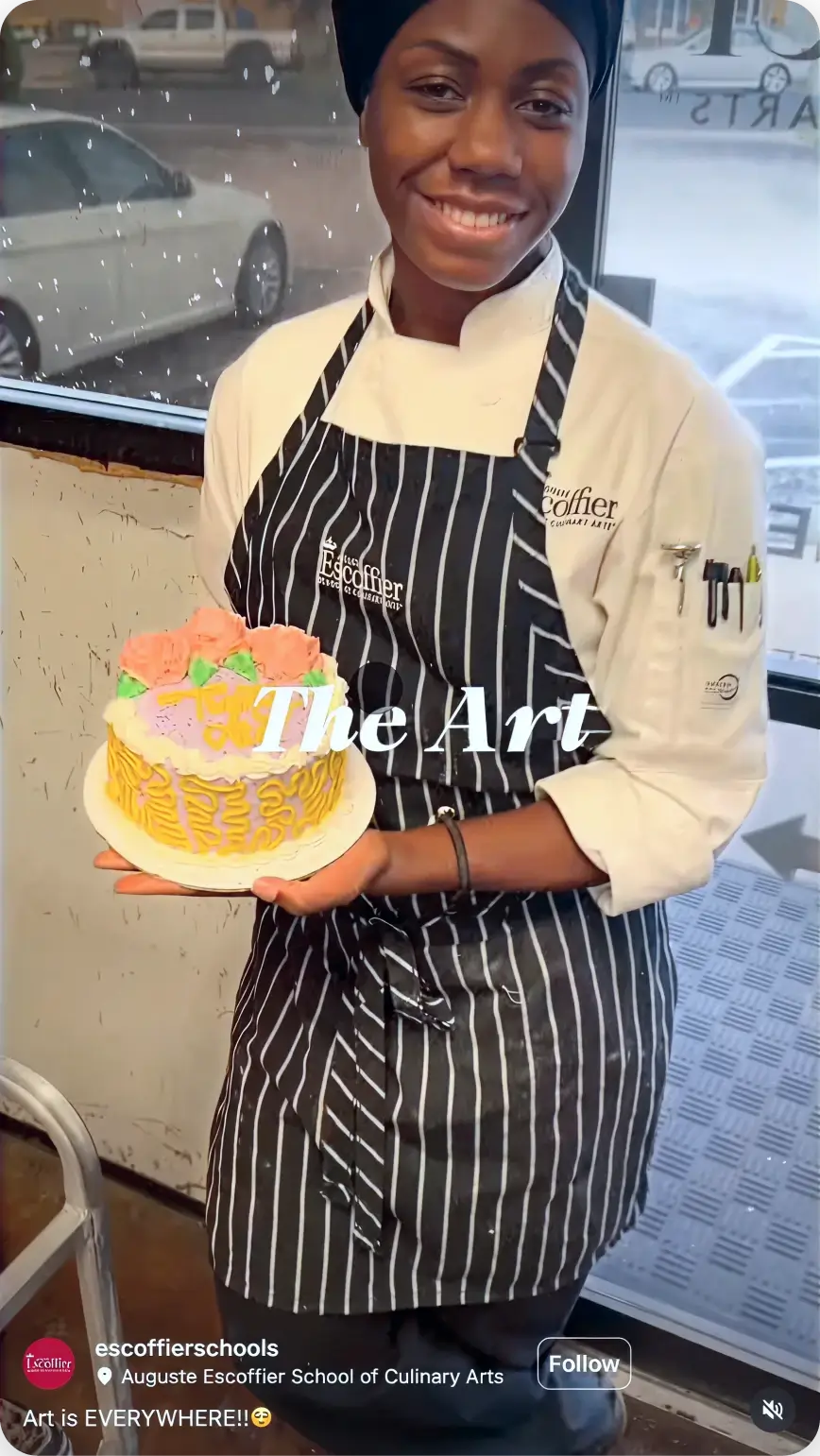
See What a Day at Escoffier Looks Like


*This information may not reflect every student’s experience. Results and outcomes may be based on several factors such as geographical region or previous experience.
Skills That Can Set You Apart


Traditional College vs. Escoffier
| Traditional 4-Year College | Escoffier  | |
| Time to Graduate | 4+ years | As little as 30-60 weeks |
| Real-World Experience | Not always included | Built into your program |
| Hands-On Training | More lecture time | Hands-on from the start |
| Industry Connections | Varies by school | Established employer partners |
| Learn What You Love | Gen-ed heavy courses | Culinary-focused courses |
*This information may not reflect every student’s experience. Results and outcomes may be based on several factors such as geographical region or previous experience.
Pick Your Home Base
Two lively campuses or the flexibility of online programs — wherever you are, Escoffier can meet you there.

A vibrant campus nestled in the foothills. Farm-to-table isn’t a buzzword here — it’s your backyard. Access to Colorado’s thriving food scene & outdoor lifestyle.
- Stunning mountain campus
- Boulder’s award-winning restaurant scene
- Sustainable, farm-to-table food culture

Austin’s food culture is exploding — and you’ll be right in the middle of it. BBQ, Tex-Mex, food trucks, fine dining — this city does it all.
- Vibrant, creative city energy
- Austin’s diverse restaurant industry
- Student-run Agricultural Learning Center

Can’t relocate? No problem. Our online programs combine flexible online learning with hands-on industry externships.
- Train from almost anywhere
- Hands-on industry externship
- Online platform to connect with classmates & instructors
Study Opportunities in France
Now Escoffier students can study at the renowned École Ducasse culinary institute in France and graduates can transfer credits towards a bachelor’s degree.
get detailsMore Affordable Than You Think*
We get it — tuition is a big question. The good news? Most Escoffier students receive financial aid.† There’s a path that can work for almost everyone.
†95% of Austin students and 59% of Boulder students who entered postsecondary education for the first time received some financial assistance in 2022-23 for those who applied and qualified, College Navigator, National Center for Education Statistics
‡International students are not eligible for Title IV financial aid.
Financial aid is available to those who apply and qualify.‡
Multiple scholarships are open for high school students like you.
Flexible plans that can help make tuition manageable.
You can keep costs down with our student-friendly tips.

*This information may not reflect every student’s experience. Results and outcomes may be based on several factors such as geographical region or previous experience.
You’re Closer Than You Think
No SAT, no essays, no years of experience. Here’s what you actually need to know.
Yes — students as young as 16 can enroll with parental consent, depending on the program.
You can apply before graduating, but proof of graduation is required for you to complete your enrollment process.
No prior culinary experience is required. Our programs are designed with beginners in mind.
Absolutely. We have multiple start dates throughout the year, so you don’t have to wait around.
 Apply during your junior or senior year — lock in your spot before graduation.
No Application Fee!
A Glimpse Into Your Future


See Escoffier for Yourself
Tour our campuses, observe a class, and meet our students & Chef Instructors.
schedule a personal visit
Read Up Before You Leap In
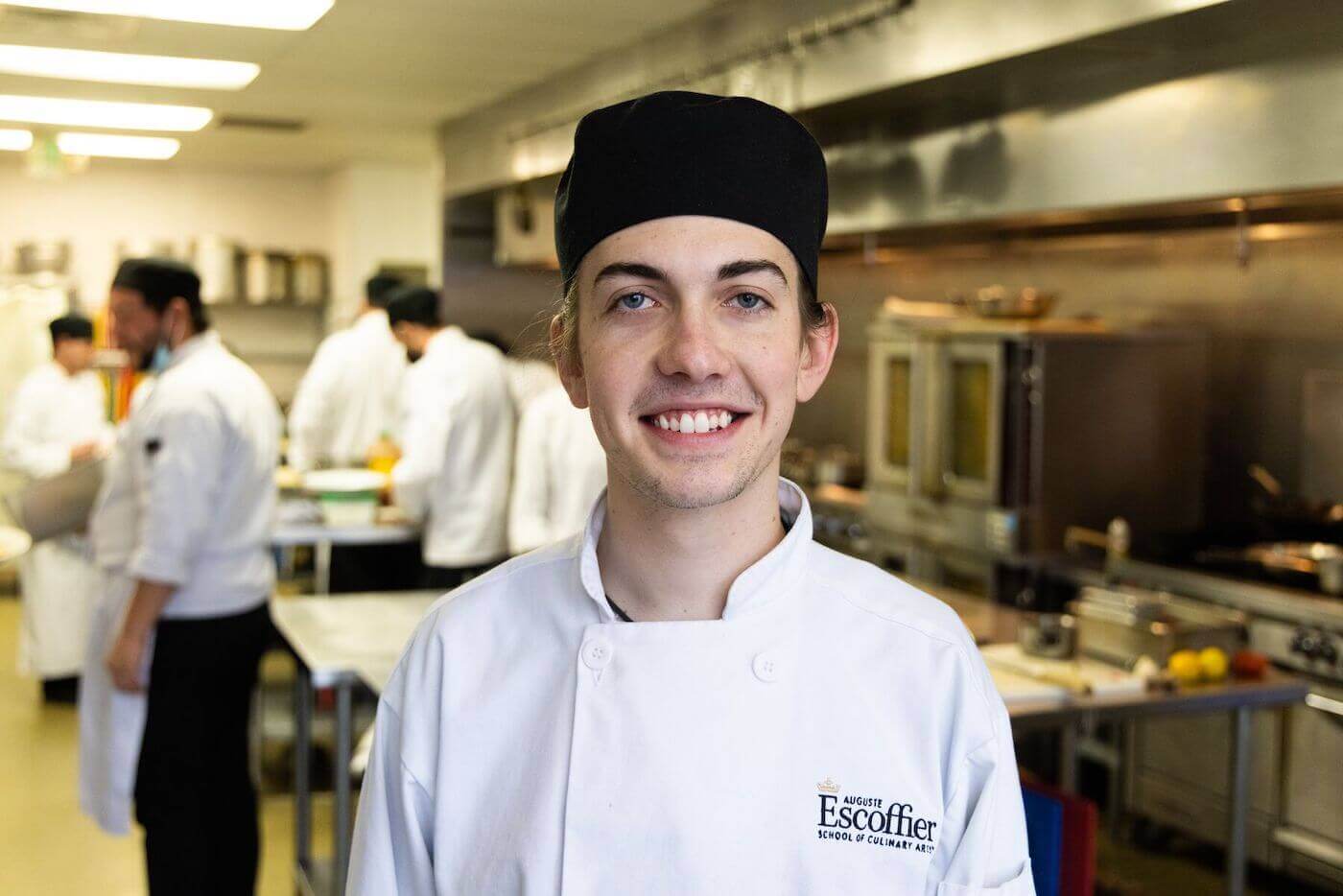
6 Ways to Afford Culinary School if You’re a High School Student
Cost doesn’t have to be a roadblock. Tips to help high school students budget and pay for culinary school.
Read Article
Is Culinary School Worth It in 2026?
Discover how culinary education can build skills, networks, and career opportunities faster than learning on the job.
Read Article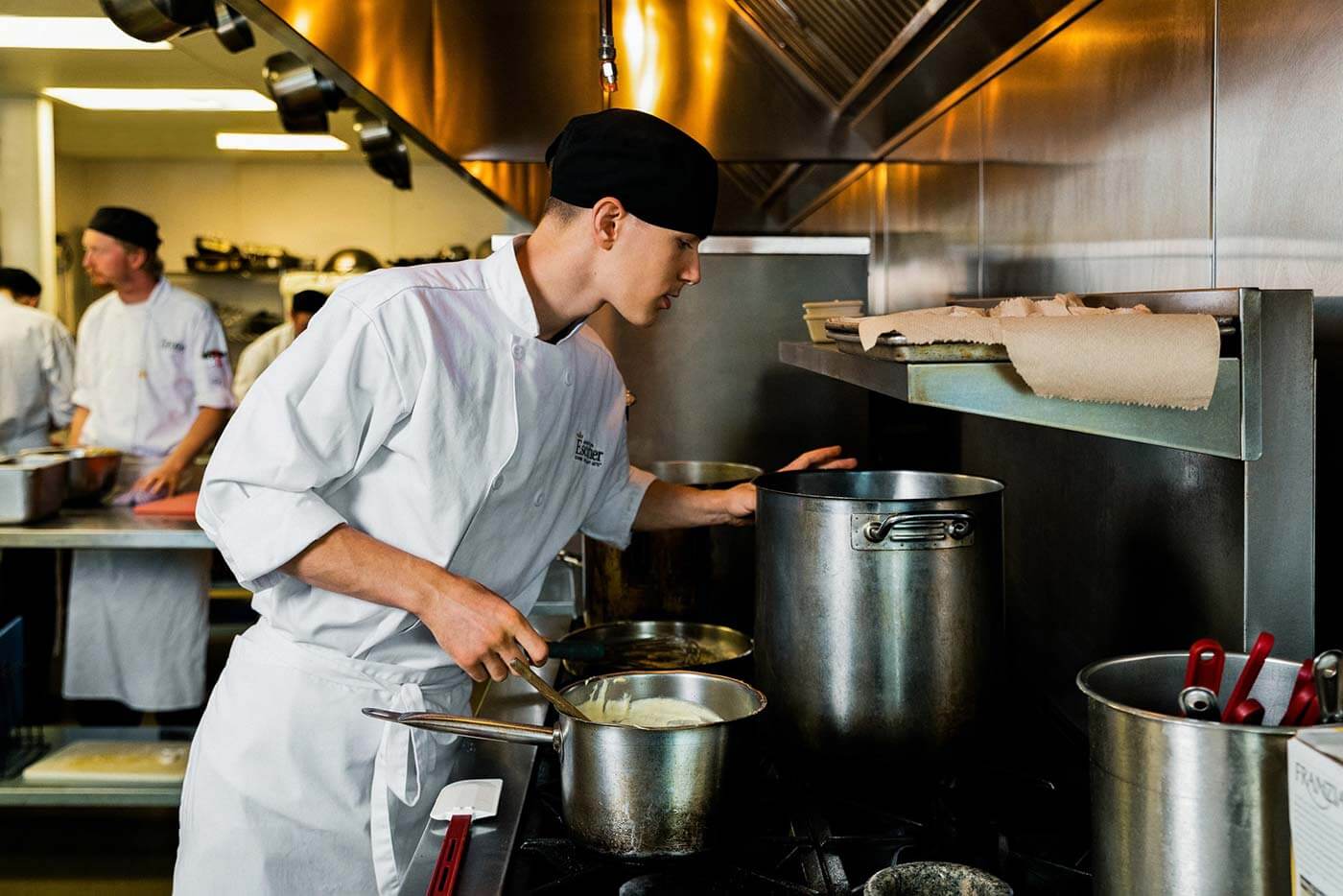
What Every High School Student Should Know About Culinary School
As high school ends, you may be wondering if a culinary education should be your next step. Here’s what to know.
Read Article
How To Shadow a Chef While in High School
Discover how to shadow a chef while in high school, including outreach tips, kitchen etiquette, and how to make a strong impression.
Read ArticleReady to Stop Dreaming and Start Cooking?
Your future in culinary arts starts with one click. Apply today and take the first step toward doing what you love — every single day.
No Application Fee!
Frequently Asked Questions for High School Students
Why choose culinary school instead of a 4-year college?
For students who love food and who want a focused, hands-on education, culinary school can be a compelling alternative to the traditional four-year college path. Rather than spending years in lecture halls memorizing concepts for tests, culinary students have the opportunity to develop real-world skills, and to put them into practice right away.
For students who want to get into the workforce quickly, a culinary school program can also potentially be a faster route. Diploma programs at Escoffier can be completed in 30-60 weeks (associate degree programs can take longer, at 60-84 weeks), and online options make it possible to pursue a credential while working or managing other responsibilities.
What makes Escoffier different from just learning on YouTube or TikTok?
While online videos can be a decent way to explore cooking, there are legitimate differences when it comes to building a real-world skill set. Simply put, professional kitchens require professional skills—precise knife cuts, standardized techniques, and terminology that signals you’re ready for the job. Learning to execute those skills consistently under pressure is very different from watching someone else do it at home.
At Escoffier, Chef Instructors provide personalized feedback, which can help you correct mistakes before they become habits. The curriculum also goes beyond cooking and can include business concepts like menu development, inventory management, and profit and loss—skills that can be harder to develop on your own, but may be essential if you want a culinary career.
How long will it take me to graduate?
The amount of time it takes you to graduate depends on the program you select. At Escoffier, diploma programs can be completed in 30-60 weeks, while degree programs can take 60-84 weeks. Check out our program directory for the specific duration of the programs that interest you most.
What’s a typical week like as a student?
The answer depends on whether you attend one of Escoffier’s campuses or study online.
On our Boulder and Austin campuses, students can experience a mix of classroom learning and hands-on kitchen time, working alongside classmates and studying under experienced Chef Instructors. When not in class, students can take advantage of everything that these two vibrant food cities have to offer.
For online students, each week follows a consistent rhythm: studying new techniques through readings and video content, completing hands-on cooking assignments in your own kitchen, participating in discussions with peers, and receiving personalized feedback from Chef Instructors on your work. Most students can expect to spend around 15–23 hours per week on coursework, depending on their program and learning pace. Because coursework can be completed on your own schedule, our online programs can be a flexible option for students balancing other commitments.
What does culinary school cost, and what help can I get to pay for it?
Program costs vary depending on the credential, location (campus or online), and area of study you choose, so it’s worth speaking with Admissions to get specifics for the program you’re interested in.
As for financial help, there are several options that may be available to those who apply and qualify. Federal financial aid—including grants and student loans—may be accessible through the FAFSA® process, since Escoffier is an accredited institution.
Escoffier also offers need-based scholarships through the Escoffier Scholarship Foundation, and scholarship awards are available to participants and winners in select high school culinary competitions, including FCCLA, ProStart®, and SkillsUSA. Additional scholarships and grants may be available from industry groups and private organizations as well.
Can I work while I’m in school?
Yes, many Escoffier students balance school with jobs, and the online programs are designed with that kind of flexibility in mind. Online coursework is available 24/7, so you can study before a shift, after work, on weekends, or whenever fits your schedule. Weekly assignments are released on Wednesdays and due the following Tuesday, giving you a predictable structure to plan around.
It can even be possible for a current food service job to count toward your required industry externship if it meets the program’s criteria—meaning you could potentially fulfill that requirement while continuing to earn income.
How can Escoffier help me get hired after graduation?
Career Services support at Escoffier can begin while you’re still in school and continues after graduation. The team can help you build and refine your resume, develop a professional culinary portfolio, and prepare for interviews through mock sessions and personalized feedback. They can also connect you with job opportunities through Escoffier’s network of national and international employer partners and through EConnect, a platform that links culinary professionals with career-minded employers.
You also have the opportunity to get support from a professional recruiter through Gecko Hospitality, which offers personalized, one-on-one placement assistance to Escoffier graduates.
Additionally, every Escoffier program includes at least one industry externship—real-world experience in a professional kitchen or foodservice business that can help you build connections and may even lead to a job offer.
What jobs can I get after I graduate?
The culinary industry is wide, and graduates may find opportunities in many different environments. Common starting roles in the kitchen can include prep cook, line cook, and baker, with potential to grow toward pastry chef, sous chef, executive chef, or private chef over time. Hospitality-focused graduates may pursue roles in restaurant management, hotel food and beverage operations, catering, or event planning.
Beyond the kitchen, the culinary industry also includes careers in food writing, recipe development, food styling, nutrition coaching, and entrepreneurship. The specific path can depend on your program, interests, and the experience you build along the way.
Can I use this to start my own business someday?
Absolutely! What you do with your education is up to you, and entrepreneurship is a very real path for Escoffier graduates. The culinary skills, business knowledge, and professional connections you may develop during your program can all contribute to building something of your own, whether that’s a restaurant, a food truck, a pop-up concept, a catering company, or even a specialty food product line.
If starting a business is already on your radar, Escoffier’s Food Entrepreneurship programs may be worth exploring. They’re designed specifically for students who want to understand both the culinary and business sides of running a food operation.
Is there an online community if I’m not on campus?
Yes. Escoffier offers several ways for students to connect with one another and with their Chef Instructors, including chat rooms, live interactive sessions, and collaborative opportunities. Students can form study groups, share tips and experiences, and build professional relationships that can last well beyond graduation.
Chef Instructors also play an active role in fostering community—guiding discussions, answering questions, and encouraging student interaction during live sessions. For students who engage actively, this online environment can feel as connected as a traditional classroom.
After graduation, the Escoffier Alumni Association can extend that sense of community further, connecting graduates with a network of thousands of former students around the world.
Will I earn a diploma or degree, and what’s the difference?
Escoffier offers both diplomas and associate degrees, and the right choice depends on your goals. Diplomas are the faster option (they can be completed in 30-60 weeks) and tend to focus on core culinary techniques and hands-on kitchen skills. They can be a strong fit if you want to enter the workforce quickly.
Associate degree programs can take 60-84 weeks and they typically go deeper, adding business, operations, and leadership coursework alongside culinary training. Both options include a hands-on industry externship, and diploma credits may be applied toward a degree later if you decide to continue your education.
I’m a parent. Is Escoffier a good choice for students coming straight from high school?
Escoffier can be a strong option for students who know food is their passion and want to start building toward a culinary career right away. Escoffier is an accredited institution, meaning its programs meet established standards for educational quality—and accreditation means eligible students may qualify for federal financial aid, scholarships, and grants to help with costs.
Escoffier students can access support systems throughout their program (and even after) to help them get the most out of their education. Every Escoffier student can have access to a Success Coach who can help them stay on track and find resources like tutoring if desired. Career Services can work with students while they’re still enrolled and continues to support graduates with resume help, interview prep, and job leads. For a young person stepping into a new chapter, that kind of structure and support can make a real difference.
I teach high school culinary arts. How can I connect my students with Escoffier?
Teachers, counselors, and other educators can access a library of Escoffier resources to help support students with an interest in the culinary arts—including dozens of videos and recipes, plus handouts, assessment tools, and more. You can use these complimentary resources to supplement your curriculum and help your students develop their culinary skills.
For students interested in exploring whether culinary school could be right for them, you might encourage your students to first reflect on what they want their post-high school path to look like, then explore Escoffier’s program offerings to identify which programs align with those goals. It can also be worthwhile for them to review Escoffier’s scholarships and grants page, since several awards are specifically available to competitors in high school culinary programs like FCCLA, ProStart®, and SkillsUSA.
With that groundwork done, a conversation with Escoffier Admissions can give each student personalized insight into whether Escoffier is the right fit, which program might best support their vision, and what their next steps would look like.