

Alana Kysar: The Untold Truth About Hawaiian Food
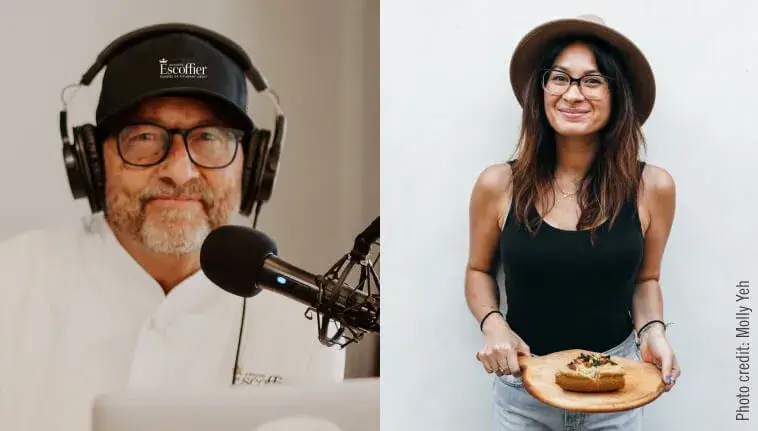
In today’s episode, we’re joined by Alana Kysar, cookbook author, recipe developer, photographer, and the voice behind Aloha Kitchen and Aloha Veggies.
Alana shares how returning home to Hawai‘i reshaped the way she sees food, culture, and her role as a storyteller. She reflects on building her career through blogging, the lessons that come with wearing many creative hats, and why good things take time. We talk about the layered nature of Hawaiian cuisine, the responsibility of telling cultural stories with care, and how her work blends tradition with a fresh, vegetable-forward approach. She also opens up about identity, creativity, and what it means to create food that feels both personal and representative of a place.
Join us as Alana challenges what people think they know about Hawaiian food and reveals why every dish is really a story about home, culture, and connection.
Watch the podcast episode:
Don't Miss The Next Podcast Episode!
Get the latest episode of The Ultimate Dish delivered right to your inbox every week.
Email Address:
Jump to a Section
- FULL TRANSCRIPT
- Working from Home in Hawai'i
- Fix, Feast, Flair
- Good Things Take Time
- The Layers of Hawai'i - and of Alana
- Local Foods and Sustainability
- A Focus on Veggies
- Honoring a Food's Roots
- The Interconnectedness of Stories and Skills
- Alana Kayser's Ultimate Dish
Episode Notes and Resources
TRANSCRIPT
Kirk Bachmann: Hello everyone, my name is Kirk Bachmann, and welcome back to The Ultimate Dish. Today we’re joined by cookbook author, recipe developer, photographer, and storyteller, Alana Kysar.
Alana was born and raised in Hawai‘i and has built a remarkable career celebrating the islands’ rich multicultural culinary heritage through food, through food writing, recipe development, and visual storytelling.
Her debut book – which I love – Aloha Kitchen, became an instant standout several years ago in the culinary world. It was named one of the best cookbooks of the year by The New York Times, NPR, and Library Journal, and was also a finalist for the prestigious IACP Cookbook Awards. That’s big. That’s huge.
Alana first gained national attention through her blog, Fix Feast Flair, which she launched in 2015. The blog quickly earned recognition as Saveur Magazine’s Best New Voice, establishing her as an exciting voice in food storytelling.
After spending more than a decade living and working in California, Alana returned home to Hawai‘i, where she now lives in Kula, Maui, working from her home studio and continuing to share the flavors, traditions, and stories of the islands.
Her newest cookbook – yay! – set to release this spring – you heard it here – Aloha Veggies: Veg-Forward Recipes Celebrating the Flavors of Hawai‘i, explores Hawaiian cuisine through a vibrant plant-forward lens – I love that – reimagining beloved local dishes while celebrating the incredible produce and agricultural traditions of the islands.
So get ready for a conversation about culture, vegetables, storytelling, and how food connects us to place and community.
Alana, welcome to The Ultimate Dish. How are you?
Alana Kayser: Thank you so much for having me. I’m great. It’s a beautiful day right now.
Working from Home in Hawai’i
Kirk Bachmann: Imagine that! Imagine that. For a native, what is a beautiful day? What’s the temp? What’s the sky look like?
Alana Kayser: I’m up in Kula, so I’m up on the mountain.
Kirk Bachmann: Mountain, yeah.
Alana Kayser: So we’re about ten to fifteen degrees cooler than any other part. I think it’s about 70-ish right now.
Kirk Bachmann: I love that. I love that. I had to go online, and I found a video that showed the topography of the area. It really is mountainous. How high does that region get in terms of feet?
Alana Kayser: Good question. I’m at about thirty-one hundred.
Kirk Bachmann: Yeah, that’s nothing to sneeze at. That’s a decent size.
Alana Kayser: Yeah, your ears pop when you go up the hill if you’re not used to it.
Kirk Bachmann: Yeah. I love that. I love that. To put it in perspective, Denver’s the Mile-High City. We’re at 5280. Not that much higher than where you are now. Does that effect – would you call that high altitude cooking sometimes, or baking?
Alana Kayser: I haven’t had any of those issues. I think we’re right at the sweet spot.
Kirk Bachmann: That’s the sweet spot. Yeah. Pun intended.
Again, thank you so much. It’s very early in Hawai‘i – just past 7:30– and in Boulder, we’re at 11:30. We’re almost up to lunch, so thank you for taking that time in your day.
I was fascinated because it takes discipline and courage to work in your own home studio. I’d love to know what a typical day looks like. How do you stay motivated to get focused and intentional on the job? Because you’re home, and then over there, you’re at work.
Alana Kayser: Yeah. I think it’s like every single job that I’ve ever had where if you don’t get ready for the day, meaning, for me, I do my hair. I wash my face, all of those kinds of things. If I don’t do that and I don’t change into clothes that I consider work clothes, the day is over for me before it’s even begun. So that is number one.
Kirk Bachmann: Yeah. That’s a good point. I get it. You can’t sit in your jammies all day long and expect to get work done.
Alana Kayser: No, you can’t. I’ve tried.
Kirk Bachmann: I love it. Part two of that question. For me, I’ll set the stage a little bit. I think they just try to stroke my ego a little bit, but my kids, they love Dad’s world-famous pasta, which is nothing other than Alfredo. It’s quick; it’s easy; they know they’ll get fed in moments. I season it up. They tend to like it. What’s that dish? No photos, no testing, no pressure, no deadlines. What’s that simple, simple dish that you find yourself making for you or your family and friends over, and over, and over again?
Alana Kayser: I think that dish changes, but right now in this moment, we have a lot of kalo, which is also called taro, growing in our backyard.
Kirk Bachmann: Oh wow!
Alana Kayser: So I’ve been harvesting every week. We have a lot. I make this thing called kalo or taro poke. You essentially steam it first to cook it all the way through. You dice it up, and then you toss it with all the seasonings that you’d like on your poke. For me, for this particular one, I do toasted macadamia nuts. I do green onions, some sweet onions. There’s Hawaiian salt, some shoyu, which is also called soy sauce. I’m like, “What are the right words for this?” And then toasted sesame oil. The whole thing, it sounds like it wouldn’t work. It is so good. You can eat it hot. You can eat it cold. In my new book, I have a dish called Taro Mash. And you essentially take that same dish, that taro poke, and you kind of mash it together and you scoop it on. It’s your starchy side.
Kirk Bachmann: Could you replace that for a typical golden potato, mashed potato type of thing? Do you think?
Alana Kayser: I think you could. Yeah. I mean, the thing about taro, which is really cool, is that anything you can do with a potato you could do with taro, but I think that in many ways, it’s almost better. It had more flavor going on. I think you could easily do it with potatoes.
Kirk Bachmann: You think starchier?
Alana Kayser: It’s starchier. It’s almost sticky, but it’s magic, and it’s worth sourcing out if you don’t see it all the time.
Kirk Bachmann: It’s funny. Is the season for taro right now?
Alana Kayser: I think it’s year-round. It’s year-round at my house.
Kirk Bachmann: Probably at your house. And the reason I bring that up: there’s a really sexy restaurant in Denver called Bruto, Michelin one-star, and just yesterday they posted – the chef and the sous chef – posted some really cool things that they were doing with taro. One was they dried it and almost used it like flour for something, but they had to age it for a while. That’s why I asked the question about starch. If you were going to make bread or something with it, it probably needs to settle down a bit. I thought maybe it’s the season. I’ll send you the link.
Alana Kayser: Yes, please.
Fix, Feast, Flair
Kirk Bachmann: What they did was really fabulous.
Let’s talk about Fix, Feast, Flair. I love this because we have a food entrepreneurship program at Escoffier online. People want to write about food. People want to talk about food. People love blogs. We have a blog at Escoffier. You launched yours in 2015. It quickly gained attention. You earned Saveur’s Best New Voice. How wonderful! The storyline, I guess I would say, is very similar to when Gaby Dalkin, who we had on the show not too long ago –
Alana Kayser: I love her.
Kirk Bachmann: She was fabulous. She was really fun. What inspired you to start documenting recipes and those stories online? It seems like a long time ago, 2015, but still kind of early in that space, right? Where did that motivation come from?
Alana Kayser: I loved food blogs. I woke up in the morning, and I checked to see if there was a new post on all my favorite blogs. At the time, I was working for Williams-Sonoma’s corporate office. I was bringing in all the baked goods and whatnot that I was making. One of the guys that I was working with said, “You should do more with this. This is really special.” My husband – well, at the time, he was my boyfriend – gave me a domain name for Christmas.
Kirk Bachmann: No way!
Alana Kayser: Yeah. That was kind of it.
Kirk Bachmann: That’s so clever. What was it?
Alana Kayser: I think it was Fix, Feast, Flair. I think we had had a conversation. “Hypothetically, if you were to do a blog, what would you call it?” At the time, I thought I was very creative, and that’s what I came up with.
Kirk Bachmann: Yeah, people remember it. When you look back on those early blog posts, was it more personal, or were you hoping to share something special about Hawaiian food in particular that maybe you felt wasn’t being represented elsewhere in the world or online?
Alana Kayser: That’s actually not what I started with. I started with what I saw out there, which was anything I was baking that I thought was really beautiful. I somehow didn’t realize that people wanted the stories of Hawai‘i, because for me, they were just everyday stories. That was my history and my life, and I didn’t think twice about it. Then I shared a recipe. I don’t remember what it was any more, but it was something from home. It was the most popular thing on the blog, and it was like, “Oh! People want this. That’s cool.”
Good Things Take Time
Kirk Bachmann: You’re right. I think people like information. Today, fast forward, I think they want it fast. They want it as quickly as they can possibly get it.
Food blogging, specifically, requires that you wear many hats, many toques if you will. You have to be the writer, the recipe developer. Again, I say this to a lot of guests who have found incredible success. I always want to have that little tagline that a lot of work went into it. A lot of work that a lot of people haven’t seen. It’s an important message to our students that this doesn’t happen overnight. You’re also the photographer and then the editor. Probably the toughest part: what stays, what goes. What are the biggest lessons? I ask this question for our audience, for our students. What are some of the biggest lessons that you learned in those early years? And then I’ll have a follow-up question to that.
Alana Kayser: I think it’s really that good things take time. You want to get everything out as fast as possible, but I think that taking a minute to look at it and make sure that you’re happy with it, that you are proud of what you’re putting out, that makes a huge difference. Because I definitely fell into the hole of, “I have to get it up!” Rushed it out, and then I’m like, “This thing has typos. Oh, I didn’t put the measurement on this.” Those are really important details. Just taking the time.
Kirk Bachmann: Good things take time. That’s really good advice. Young people today – everyone today – is looking for information as fast as possible. The message I’m feeling, too, is that you did a lot of this for yourself, not necessarily to just go through the motions of pushing something out. At what point, Alana, did you realize that your blog could be something bigger, even a cookbook? Is that something that you thought about right away, or did that take some time?
Alana Kayser: It took a lot of time, actually. I met with my now agent over a year before I even started the book process because she had seen it. She was like, “I think that there’s something here. I think you could write a cookbook.”
And I said, “Mmm. No thank you.”
Kirk Bachmann: My wife has the book. I took it home to prepare, and lo and behold, it wasn’t in my bag this morning. What she likes – and she cooks a lot – she loves to take a recipe, and I think a lot of people do – and make it her own. I always tell our friends that if they come over and she makes something versus me, I always tell them to really enjoy it because they’ll never get it again. Because she just ad libs. “Oh, I forgot that, but I put this in.” But what she loves more than anything is to get a little bit of a visual, not necessarily even just the dish, but the landscape. She kind of feels it and interprets it. Maybe that was part of your goal.
If I could say, your debut cookbook introduced your readers to some flavors and cultural influences that were very, very familiar to you growing up, but probably really, really new to a lot of people. I mean, show of hands: who’s had taro? Right? Show of hands. What was that process of translating your work from a digital platform to a cookbook? Are there dishes – or all of the dishes. Eighty-five recipes, I think – that feel especially personal to you? Was this a personal extension of you and your mind and your heart and your kitchen to your clients, to your guests, to your students?
Alana Kayser: It really was, but the first book, Aloha Kitchen, really was an extension of my entire state, all of Hawai‘i. I wanted everyone to feel represented and to feel like they could see themselves in the pages. It was even more than just me; it felt like a big undertaking.
Kirk Bachmann: Again, I’m going to make you blush. I wrote a few things down. It just feels, when you go through your book, it feels more than just a collection of recipes. It’s much, much more than that. I felt, in some ways, shaped by the influences that you introduce. It feels almost – getting way too emotional – it almost feels intimate and really grounded. As a cook, I can appreciate that. Was that the goal? Or was that a serendipitous by-product?
Alana Kayser: Oh, it was a hundred percent the goal.
Kirk Bachmann: One of the things that I love about your story is that it shows that there are many different paths to experience the culinary world today. Not everyone has to follow the traditional restaurant route. That’s what our students are raising their hands about. They have different ideas. Some people build their careers through restaurants – that’s fine – through hotels, others through media, writing, photography, cookbook – like you did. For our students, Alana, who may be passionate about food but unsure of where their path might lead them or what they should do first, what advice would you give them? Big question.
Alana Kayser: It’s a huge question. You know, I think you have to sit down with yourself and think about what is the most exciting aspect of being in the kitchen for you. If you sit down when you’re in your home kitchen, and you’re testing and whatever, you’re taking pictures because you’re like, “This is really beautiful” or “The plating is really spectacular here.” I think you just look at the one thing that is most inspiring, and then you build off of that.
The Layers of Hawai’i – and of Alana
Kirk Bachmann: I love that. That’s good advice. It’s almost too simple of advice, right? People will complicate that. Let’s connect the dots a little bit, too. Hawaiian food culture, returning home in many ways. You spent more than a decade living and working in California before you returned home. What was it like coming back to Maui and seeing the food culture through a different perspective? Was it a different perspective?
Alana Kayser: Yeah. Hugely different. I think that being from Hawai‘i, I thought that I really was tapped in, but when you go back a few times a year to visit, it’s very different than living in a place. Coming back as an adult, I really started to look at it as, “Oh. Okay. This is what I’ve got to work with all day, every day.” For me, when I looked at the food culture, I was like, “Is there room in this conversation to expand on it?” Ultimately, yes, there absolutely is. That was what was really exciting to me. I kind of looked around. I was like, “Ooh, we’re really starting to focus on the farmers. That’s awesome. How can we fold them into the local food culture and that conversation?” That’s really why Aloha Veggies exists.
Kirk Bachmann: I’m not trying to have a therapy session here, but I’m fascinated by the similarities, probably, and climate. Did you feel that your relationship with the food that you grew up with in Hawai‘i changed after being away for a decade? Or did you change?
Alana Kayser: Both. I think that my relationship with food as a whole changed. Living in California for over a decade, you get really used to having these veg-forward options available to you almost anywhere and everywhere. Then, you come home to a place where I knew it was a very meat-centric diet, having written Aloha Kitchen, having grown up here. But I think that I thought somehow in my mind that I’d still have access to a lot of those veg-forward dishes. When you get here and you’re like, “That doesn’t exist yet, but can it?” Then the wheels started turning, and I thought, “Yeah, I would love to be the person that contributes in a meaningful way to the conversation.”
Kirk Bachmann: It reminds me. Marc Vetri was on the show about a year ago or so. He’s a Philly guy, but he spent a ton of time in Italy. He tells a similar story of how he experienced it first-hand, and how he came back. Somehow, some way, had to make it his own. Vetri-cuisine in many ways, like Kayser-cuisine.
Your cooking, your expression of cooking, in my opinion beautifully weaves together not only Hawaiian ingredients, but this sort of Japanese influences. A sense of perfection or place. When you think about your culinary identity today – and this is a big question for students – what dish or what style of cooking would you say most clearly tells your story? And what does it reveal about where you’ve been and where you’re heading?
And to set the tone, I ask this question is we often have students that come to us with completely different ideas of what they plan on doing when they leave. “I’m going to be at a Michelin-star restaurant.” Then all of a sudden, they’re interested in viticulture and they’re heading to California. Everything changes. I’m curious if there was a moment or a dish that tells your story?
Alana Kayser: I think there are probably many. The dish that I think embodies who I am right now in this moment is from my new cookbook. It really does blend Japanese cooking styles with the local Hawai‘i food scene, here. It’s a shoyu kabocha dish where you basically simmer it in this soy sauce that has garlic and ginger and some brown sugar, those kinds of notes: sweet, salty, umami. I think that it is the expression of my home in the sense that it is part Japanese, it is part local Hawai‘i food. Then it is part me in the way that I’m eating now. It’s served over a whipped tofu. It’s topped with a green onion oil. All these layers are me.
Kirk Bachmann: I like that. I like that. It’s a beautiful analogy. Just to take that a little bit further, Hawai‘i has a really incredible, fascinating identity that has been shaped by so many cultural influences. We’ve mentioned Japanese, Filipino, Chinese, Portuguese, Native. How do those cultural layers show up every day in cooking on the island? Does it vary from island to island? Is there a huge misconception because we see these beautiful menus in your book? Is that very traditional cooking in Hawai‘i?
Alana Kayser: I’d say both of my books are very representative of the flavor profile here. It is very layered. Even a Japanese dish, it’s not just Japanese traditionally. It has other cultural influences woven into it. It also has our general history. If you look at a Japanese dish versus a local Hawai’i-Japanese dish, you’ll see that ours are mostly sweeter, and that’s because of the sugar production. It was an ingredient that was really accessible.
Kirk Bachmann: Makes total sense. What’s one? I’ll just be fair. What’s one of the biggest misconceptions that people have about the cuisine of Hawai‘i?
Alana Kayser: I think that when you think of Hawai‘i, you think warm, tropical island. Everything is going to be fresh, fresh, fresh. Our cuisine is very cozy, comforting. I think that’s probably the number one thing that people are surprised by if they didn’t grow up here.
Kirk Bachmann: So there’s braised items. There’s the layered items. If someone visits Hawai‘i for the first time, what dish or dishes should they focus on to truly capture [Hawai’i’s cuisine]? I’m really putting it to you with these. It’s like I’m booking my flight. I’m like, “What am I going to do when I get there?” I’ve been to Maui twice and Hawai‘i once, but I wasn’t on a cooking adventure. If I’m coming for the first time, what should I focus on that helps me really identify the spirit of the islands?
Alana Kayser: I think you have to go to a plate lunch spot. Here on Maui, there’s a spot called Waikapu on 30. They have a wide range of plate lunches. I think that’s the best way to eat your way through the culture because you could get a plate lunch that has – they have a Hawaiian plate, for instance, and it has a pork lau lau. A pork lau lau is essentially pork, usually a fatty piece of pork that sometimes has a salted fish with it. Then you wrap that in taro leaves, and then you wrap that in tea leaves. Then you either steam it or, traditionally, you would cook it in an underground oven situation called an imu. That’s something that I think everyone has to try. That plate would have a pork lau lau. It would maybe have lomi salmon, which is essentially salted salmon with tomatoes, onions. That type of thing. It might have poi, which is a pounded taro.
Kirk Bachmann: Did you call it “lonely salmon?”
Alana Kayser: Lomi. L-O-M-I.
Kirk Bachmann: And what does that mean?
Alana Kayser: Lomi, I think, is almost like “to massage.” So you’re taking chopped up tomatoes, chopped up onions, and chopped up salted fish.
Local Foods and Sustainability
Kirk Bachmann: I’m going to call it lonely salmon. I love that.
How about farmers’ markets? Farm-to-table is really, really important in many ways. On some menus, it’s a cliché. At our school, it’s a way of educating our students, but it is really, really important. Sustainability. Regenerative agriculture. Tell me a little bit about that scene in Hawai‘i.
Alana Kayser: It’s actually really exciting here right now. The up-country farmers’ market here on Maui, it’s so diverse. You’ve got a guy who’s bringing in coconuts, and he’s cracking them onsite. That’s very cool. Then you have the farmers who are growing any kind of produce that you’d think you’d see in Southern California. We can grow it here. So that’s kind of cool. Then you’ve got the farmers who are growing four different types of taro that you can try. We’re coming into mango season, and there are so many good mangoes here. It’s diverse. It’s kind of the full spectrum of what you could see at a farmers’ market. We also have the local vendors who are coming in. I have a friend. Theirs is called Maui Cones, and they do mochiko chicken, which is just out of this world. Her husband catches fish. They do a fried panko fish situation. It’s exciting. I think that our farmers’ market is the place to be on a Saturday.
Kirk Bachmann: Does the weather vary considerably from island to island?
Alana Kayser: Yes and no. I’d say every island has so many micro-climates. We all can do the same thing-ish. Hawai’i tends to have more rain. That’s just what they get. You’ll see a lot more of that wet landscape. There’s lots of kalo or taro there. At one point, they were doing rice there. Hopefully that comes back.
Here, I’d say where I am, it’s a lot drier. My friends who are in Ha’iku, they’re getting a ton of rain. It’s all over the place on every single island.
Kirk Bachmann: When is the rainiest season on Maui?
Alana Kayser: I’d say it depends, year-to-year. I’d say probably from November through April is when we get the most of our rain.
A Focus on Veggies
Kirk Bachmann: I have four kids. When my older girls were younger, we spent ten days in Hawai’i, and it rained nine of the ten days. Yeah. With two teenage girls, that was so much fun.
Let’s talk about your new book. Your new cookbook is available for pre-order: Aloha Veggies. I love this. We have a plant-based program also at Escoffier, which is really exciting. This is a plant-forward approach to Hawaiian cooking. What inspired you to center your energy on vegetables for this book?
Alana Kayser: I think I talked about it a little bit earlier, but I really do think there is a place for veggies in our local food culture. It was important to me to, if not start the conversation, then to nurture the conversation, to keep it going. I think that vegetables are so exciting just by themselves. When you take the time to really get to know the flavor profiles, how best to cook them, you can transform them into anything you want.
Kirk Bachmann: One of your quotes, and I quote, is “Vegetables are so diverse that making them taste good is easy. When you pick the right vegetable for the dish, you will be amazed by what you can create.” Is that the philosophy you want people to feel when they read this book?
Alana Kayser: A hundred percent yes. I think that they are. They are so easy to cook with once you figure out what works for that particular vegetable.
Kirk Bachmann: You can apply that to any food. Many of the recipes reinterpret – and I’m not going to give everything away, but – local dishes like fried rice, adobo, loco moco. I’m not a hundred percent sure what loco moco is, but you’re going to tell us. What excites you about reimagining comfort foods through vegetables? That’s popular today. What excites you about that?
Alana Kayser: I think you open it up to more people when you do that. There are a lot of people who like to eat really plant forward. I think that sometimes they might feel excluded from that conversation. Specifically, in Hawai’i, it’s like the local food scene. It’s not really catering to those particular needs. For me, I think the more the merrier. I’m really excited to bring more people into the fold.
Kirk Bachmann: I’ll speak on behalf of home cooks, let’s say. It’s intimidating, this concept of cooking vegetables in a tasteful and exciting way. Are there some simple ways? Can you share some tricks of the trade from the book that can start building confidence in cooking vegetables?
Alana Kayser: A hundred percent. I think the best way to build your confidence is to first start with what you like to eat. If you are a carrot lover, you look at, “What are the dishes that I already like that incorporate that? What are the flavors I like? Can I pair the preparation that I already know with a flavor profile that really speaks to me?” That’s one way to do it. I’d say that another way is to just constantly practice. You’re never going to be good at something if you don’t do it over and over again. Let’s say you really want to cook with celeriac. All you can think of is a celeriac puree. Okay. Will this work in any other preparation? Do some research. Look at what’s already been done. That’s going to be a really great stepping stone. From there, go with what you love.
Honoring A Food’s Roots
Kirk Bachmann: I love that. It sparks another – I promised you we wouldn’t get into political realities. Hawai’i is often romanticized through food. Poke. You mentioned plate lunches. Tropical abundance and such. Your work feels – throughout our conversation today – much, much deeper than that. I’m surprising you with this question, I know. How would you balance celebrating the flavors people love with still honoring the cultural, historical, and even political realities behind those dishes?
Alana Kayser: That’s actually something that I really thought about as I was writing Aloha Veggies. I think it is kind of what you said. If you are honoring where something comes from, and you have a full grasp and understanding of the history of something, when you’re expanding on it versus trying to replace it, I think that’s when it makes sense. You know where it came from. You are just trying to evolve the conversation. I think that’s the way you do it.
Kirk Bachmann: That’s the right answer. I think those themes resonate with your emphasis on technique, your, as you mentioned, respect for origin, and of course farm-to-table values that we mentioned earlier.
If you had to choose one foundational technique that truly unlocks Hawaiian home cooking, something beyond a simple ingredient, what would that be?
Alana Kayser: Gosh.There are so many different styles of cooking that I don’t know that I could truly do that. I think that we could talk about specific facets. So if you’re looking at the local food culture, there’s the Hawaiian food culture, which is different. I do think that’s worth noting. The Hawaiian food culture really comes from the native Hawaiian influence. Then you’ve got the Japanese and the Filipino and Chinese. Those are all layered within the local food culture.
If I was looking specifically at Hawaiian food culture, I’d say the dish that unlocks that for a home cook is making a lau lau. I think that there are a lot of lessons built into it. Into these lau lau, they are like these bundles. They’re almost like presents.
Kirk Bachmann: I love that.
Alana Kayser: You really have to take a lot of time in doing it. The cooking time alone is long. If you’re steaming it, it could take a couple of hours to steam it, but you’re also building these bundles. You’re putting a lot of care into that. I’d say if there’s one dish that embodies that food culture, I think it’s lau lau.
Kirk Bachmann: I love that story. That just triggers other thoughts and questions. I should have asked this earlier, but when you think about the flavors of your childhood – the aromas, the sounds, the feeling of the kitchen – is there a dish or a technique or just one ingredient that shaped [your identity?] We’ve talked about taro, but was there something that shaped your identity as a cook? Then, the tougher part of the question: has that dish evolved as you have, as a chef and a cookbook author and such?
Alana Kayser: The dish that I think of when I think of my childhood is mochiko chicken. It’s essentially this fried chicken. The batter has eggs. It has soy sauce, and then it has mochiko, which is like a sweet rice flour. That is a dish that my mom used to make specifically for field trips. It felt very special because I’d get these little bites of chicken. She’d make me these musubi, specifically like a triangle shape, like the onigiri. It just felt like love. If you make this dish, you realize that if you’re frying anything, that’s love. If you fry anything.
The Interconnectedness of Stories and Skills
Kirk Bachmann: I’m so glad I asked that because that sends shivers up my spine. Just the simple act of your mother preparing that for you for school, and you still think about it. Along those lines, Alana, Hawai’i, of course as we’ve discussed, sits at the crossroads of many, many cultures. As an artist, as a cookbook author, how do you decide which stories to tell? Is there a responsibility that comes with that? Clearly, it’s deeply personal.
Alana Kayser: I’d say there’s a huge responsibility. When I wrote Aloha Kitchen, it was really important to me to talk to every person I could possibly talk to about their relationship with food. What were the dishes that really spoke to them? What were the dishes that they felt seen in? Food is such a personal thing. I think that I really tried to tell as many stories as I could. I also tried to tell the stories that I felt I could do justice to telling. I’m not the right person to tell every story.
Kirk Bachmann: That’s so humble. I love that.
Again, coming back to the challenges of putting a cookbook together because you’re combining the cooking. I don’t even know if that’s the major part! You have photography probably equally as important. The storytelling, in my mind, is what really captures the essence of anything. We’re seeing a lot of students exploring this as a career path. How would you say, Alana, that those creative disciplines influence one another or drive cooking, photography, storytelling? Is there a priority? Is there a podium? Does it all just come together magically?
Alana Kayser: I think they are all equal on the plane. I’d say they are all in conversation with one another. Even if you’re only doing one aspect of it, I think it’s important to understand the other two. For instance, if the storytelling aspect is what really speaks to you, I think it’s still worth exploring, “How do I develop a recipe around a dish that I want to talk about?” At least you get in the kitchen. You make that dish a few times. If you are not doing the photos, you have a vision for what something is going to look like. You’re always in direct conversation with the photographer even if you are not the photographer. I’d say they all have equal weight.
I don’t think anything needs to start in one particular spot. For me, I start at the recipes because I’m doing all of them. I develop. Sometimes I write before I take a photo. Sometimes I take a photo before I write. It’s however it feels right in that moment.
Kirk Bachmann: That’s great advice. It’s natural. It’s organic. If we are having another chat on the podcast five years from now. Three more books, maybe. What would you hope will have changed in your own work and perhaps even in the broader understanding or the discussion around Hawaiian cuisine?
Alana Kayser: I hope that my work in that conversation is always evolving. I don’t think anything is meant to stay the same. I really hope that some of it doesn’t change in that we’re constantly trying to honor what came before us. I hope that I’m always pushing myself to grow. I think learning is a big component of living. We are all forever students. I hope I’m constantly learning more.
Alana Kayser’s Ultimate Dish
Kirk Bachmann: We’re so stealing that tagline: we’re forever students. I love it. That is really great advice.
What an amazing chat! I’m so happy that you spent some time with us today. I can’t let you go just yet. The name of the show is The Ultimate Dish. We’ve talked about a lot of food. I don’t even know how you’re going to pick the ultimate dish. Could be a memory. Could be something super special, but Alana, what is the ultimate dish?
Alana Kayser: I think right now, I’m going to go back to lau lau. I think it is the ultimate dish. It is a dish that you can build with your friends and family. It’s a dish that has a real sense of place and time. I think that it teaches so many life lessons just in making it. That’s the ultimate dish.
Kirk Bachmann: That’s beautiful. You’re so consistent. You’ve said several times today, “That’s the ultimate dish,” or “that’s the dish right now.” So that feels genuine. That feels really, really lovely.
Thank you, Alana, for taking the time with us today. We really appreciate it. Great luck with the new book. I’ve pre-ordered mine. I’m going to go home and try to find your other book, steal it back from my wife.
Thanks so much. Really, really appreciate you.
Alana Kayser: Thank you so much for having me. It was so much fun. I’m really grateful to be talking to all the students. Thank you. Good luck to all of you.
Kirk Bachmann: So great. Thank you for that message.
Thank you for listening to the Ultimate Dish podcast, brought to you by Auguste Escoffier School of Culinary Arts. Visit escoffier.edu/podcast to find any materials mentioned during the podcast, including notes, links and other resources. And if you can, please leave us a rating on Apple or Spotify, and subscribe to support our show. This helps us reach more aspiring individuals ready to take the next step toward their dream careers. Thanks for listening.