
Two Siblings Who Left It All Behind to Build Food Careers
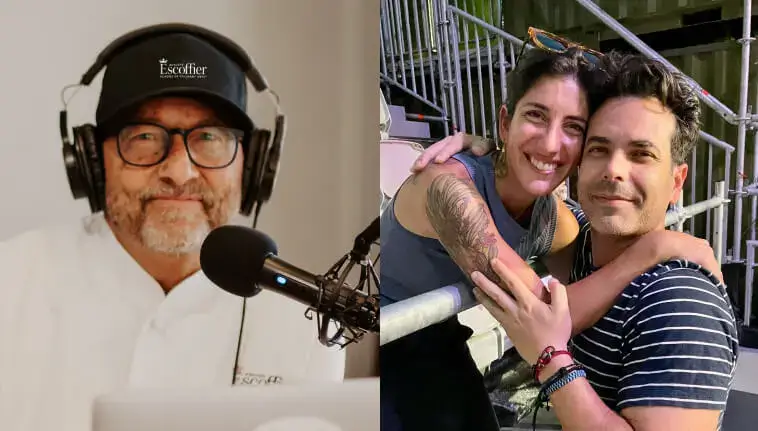
In today’s episode, we sit down with siblings Orel Zwiebel and Nani Edry, two creatives who took very different paths into the world of food.
Orel shares how her background in wellness, yoga, and mindfulness eventually led her to Escoffier and the creation of Zest & Gather, a concept centered around intentional food experiences and community. Nani reflects on his unconventional journey from shaping surfboards and working in tech to building Nani’s Dough and expanding his culinary ventures in New York City.
Together, they talk about creativity, risk-taking, hospitality, and why the most memorable food experiences go far beyond what’s on the plate.
Watch the podcast episode:
Don't Miss The Next Podcast Episode!
Get the latest episode of The Ultimate Dish delivered right to your inbox every week.
Email Address:
Jump to a Section
- FULL TRANSCRIPT
- What's in your Background?
- Growing Up Together
- Food, Then and Now
- Nani's Unconventional Path
- Woven into Wellness
- Systems in the Kitchen
- Taking the Leap to Culinary School
- Risk, Fear, and Excitement
- Food Network and Nani
- Secret Sauce to Success
- Reverse Engineering Flavor
- Exciting Food Experiences
- Making People Feel Seen
- Nani and Orel's Ultimate Dishes
- Enter Matt Zwiebel
Episode Notes and Resources
TRANSCRIPT
Kirk Bachmann: Hello everyone, my name is Kirk Bachmann, and welcome back to The Ultimate Dish. Today we’re joined by a very special duo — siblings Orel Zwiebel and Nani Edry.
Orel is a culinary creative and personal chef who designs food experiences rooted in intention, ease, and joy. Her background spans public communication, wellness education, and design, and she brings a thoughtful, intuitive approach to food that connects deeply to the mind-body experience.
Her journey into wellness began in 2003 with an Intro to Yoga class at the University of South Florida, which sparked a lasting connection between food, movement, and mindfulness. Over time, she became certified in yoga, Reiki, sound healing, and yoga nidra, and even developed and led a wellness curriculum for a high school focused on physical, mental, and emotional well-being.
Most recently, Orel graduated from Escoffier and is now building her next venture, Zest and Gather, which blends her culinary training with her wellness philosophy to create intentional food experiences.
Her brother, Nani Edry, took a very different but equally fascinating path into food. Before stepping into the culinary world, he shaped – literally – surfboards, lived in Hawaii, and worked in Silicon Valley’s fast-paced tech scene.
What started as a weekend baking obsession quickly evolved into Nani’s Dough, a doughnut company that has grown from shared kitchens into its own shop, earning national attention and even landing on the Food Network.
Along the way, Nani has worked alongside top chefs, developed a sharp instinct for flavor and technique, and is now building a restaurant group and expanding his culinary ventures as well.
Orel, Nani — welcome to The Ultimate Dish. I’ve got to tell you, I’m so excited. I’m exhausted from the intro. How are you guys doing? Different parts of the country, right? Nani, you’re in Florida.
Nani Edry: No, I’m actually in New York City.
Kirk Bachmann: You’re in New York City.
Nani Edry: Which is the same. It’s like the subway away from Florida.
Kirk Bachmann: It’s the same, just a little younger. And Orel, you’re just down the road, right?
Orel Zwiebel: Down the road, Lafayette, Colorado. It actually decided to snow today, which, I’m like, really?
Kirk Bachmann: Isn’t it crazy? I can’t even believe it. We have three baseball games this week.
Orel Zwiebel: Oh, wow.
Kirk Bachmann: Well, I should say we don’t have three baseball games this week because there’s going to be eight inches of snow. Well.
Nani Edry: That’s crazy.
Orel Zwiebel: That is crazy.
What’s in your Background?
Kirk Bachmann: We have a little bit of a script. I’m going to kind of move away from the script a little bit, as you can imagine. I have to talk a little bit about two different parts of the country. We mentioned the plants behind you, Nani, early. The artistry behind you, I need you to tell me about the painting behind you. Then, Orel, I need to understand the album, and I need to understand the photo or the picture or the painting next to the album. You go first, Nani.
Nani Edry: So, I found this basically on the side of the road in Hell’s Kitchen on a garbage day.
Kirk Bachmann: This is not edited. We don’t know if he’s telling the truth or not, audience. We’re just going to roll with it.
Nani Edry: Genuinely. I’m usually not one to go through garbage in New York, but when you live here long enough, it’s just what you do. Yeah. I found this. I guess someone was moving out and they didn’t want to deal with it. It might be an IKEA piece. I don’t know, but I liked it. I took it, and I used rubbing alcohol all over it. Found a place for it.
Kirk Bachmann: I love it. I mean, I’m just looking at it from a distance, but are those boats?
Orel Zwiebel: I know, I see it.
Nani Edry: No, it’s just accents. It’s just a bunch of smudge alcohol. It has a flow to it, but it’s literally just chunks of paint on a canvas.
Kirk Bachmann: I love it. Tell us about the plant over your shoulder.
Nani Edry: The plant is a plumeria. They’re in Hawaii, Florida, tropical places. If you just cut off a branch, stick it in the ground, it will grow again.
Kirk Bachmann: It grows. Like rhubarb. Yeah.
Nani Edry: Exactly. This one is from Hawaii. During the winter months, it stays indoors. Then, in the summer, it gets a little hot here in New York in the northeast, but in the summer it will flower for a few weeks when you leave it outside.
Kirk Bachmann: I love it.
Nani Edry: Yeah, then come October, it’s got to come inside again.
Kirk Bachmann: I love it. I love it.
Nani Edry: Yeah, it gives me a little bit of the island vibes.
Kirk Bachmann: Yeah, I’m getting the island vibe, especially with snow coming down all around me. And Orel.
Orel, tell us about that album. Is it Phish?
Orel Zwiebel: No. So, Matt and I got married in 2009. We had a couple wedding songs, but one of our wedding songs was “Signed, Sealed, Delivered” by Stevie Wonder. A few years ago, he got me this beautiful piece of artwork, and it has all the lyrics around it.
Kirk Bachmann: Oh, no way!
Orel Zwiebel: Yeah. We just figured it would be a nice addition to our wall of art. This one is some show we saw back in 2003, and I just loved the artwork. My daughter plays a lot of music, so there’s a piano here. She has a whole deejay setup. She’s cooking at all times. Yeah. We’re definitely a music family. We have a lot of different album covers.
Kirk Bachmann: I love that. Our guests are going to figure out really, really quickly that we’ve met. Our kids go to school together and all of that. I don’t know that I’ve ever asked Matt. How many grooves are there in a 33 LP?
Orel Zwiebel: Yeah, that’s a question for him.
Kirk Bachmann: I’m going to give you the answer, though. I love this. It’s so silly. I absolutely love it. Just one.
Orel Zwiebel: Oh! One groove. Oh, I get it.
Nani Edry: Yeah, that took me a second.
Orel Zwiebel: I was like, yeah.
Nani Edry: I didn’t know we were doing dad jokes today. I would have had my whole set ready.
Kirk Bachmann: Oh my God!
Orel Zwiebel: We do have a drum kit on the other side. I could do the little “ba-dum-bum-tsh” when we get the joke.
Growing Up Together
Kirk Bachmann: What was it like? I’m going to start with Nani. What was it like growing up with Orel? Because I feel like we’re about to get two different versions, very different versions of the same story.
Nani Edry: Yeah, let’s see. Let’s see. Orel is my older sister. I always call her my older-younger sister. There was a point in time when I couldn’t do push-ups as a three-year-old or something. She would crank out ten, fifteen push-ups.
Kirk Bachmann: I see that. I see that.
Nani Edry: It used to bother me so bad [sic]. Since she used to ace me and tease me. She would beat me up, basically, until about five. Then I grew teeth, and it was all over from there.
Kirk Bachmann: We’re going to take our show on the road as a comedy act. I absolutely love it.
Nani Edry: No, it was great. Orel was the first born, so she was disciplined, and she knew how to save money. I would take her money and go buy Subway meatball subs with it. Remember?
Orel Zwiebel: We actually used to practice wrapping. We would be Subway artists. We would fake making a sub.
Nani Edry: By the way, I hope we’re not plugging that company right now.
Orel Zwiebel: No support there.
Kirk Bachmann: Let’s not do that. Let’s not do that.
Orel Zwiebel: No, let’s not do that.
Nani Edry: No, it was great growing up with her. She was definitely the tough one. She was the mom of the group. She was annoying. That’s just what siblings are.
Kirk Bachmann: That’s honest. Honest. Okay, Orel. Your turn.
Orel Zwiebel: Yeah. I feel like Nani has always had this confidence about him. He was very sure of himself. He would walk into the room and kind of own the place. He was always very…I guess being sure of yourself is such a great skill to have because you really care less about what other people think. You stick to who you are. I do remember him always wanting to pick a certain seat at the table, and that was his seat. So just to mess with him a little bit, I would sit in that seat just to see if he would say anything. He totally did.
Food, Then and Now
Kirk Bachmann: That sounds like confidence to me, too. Confidence is a really great trait, especially in our industry. Speaking of which, was food a part of your relationship growing up, or did that come later?
Orel Zwiebel: In our household, food was always center of attention. Most of our gatherings were surrounded with food. But I feel like Nani and I didn’t really get into making food together until way later.
Nani Edry: I look back at it, though, and I’m going to drag Mom into this podcast now.
Kirk Bachmann: Oh, I love. I love mom, by the way. Love mom.
Nani Edry: We would do pizza night. Mom would always make pizza from scratch, or spaghetti sauces. Everything from scratch. It was horrible at times, don’t get me wrong.
Kirk Bachmann: Made with love.
Nani Edry: But that would pave the way. It paved the way. She didn’t have Google at the time. She had a little of this, a little of that, you mix it up and Voila! We got pizza. That kind of paved the way.
Orel Zwiebel: Our parents were definitely in the kitchen a lot making food from scratch. It was definitely part of our upbringing.
Nani Edry: I do remember, I was more culinary savvy with Mom than you were because I remember I used to wear snorkeling goggles to help her cut onions. Don’t do that, because it ends up going into the mask.
Kirk Bachmann: You’re trapped.
Nani Edry: You basically spray yourself. Oh my God. I remember that.
Kirk Bachmann: Do you have a brand of snorkeling mask you want to throw out?
Nani Edry: Yeah, I’m going to do it. It’s called Nani’s Dive Gear.
Kirk Bachmann: Let me ask you a question about that, and I’m going to poke at both of you. I want to ask it early enough. Who’s the better cook today?
Nani Edry: Hands down. Right here. See, it’s not confidence, Kirk. I’m convinced.
Kirk Bachmann: Let Orel throw it in. Is she going to cave? Are you going to cave?
Orel Zwiebel: We come from two different worlds. He’s definitely a top-notch pastry chef. I feel like, for me, I’ve been cooking for so long that I feel like I’m the better cook. We’ll let him have this.
Kirk Bachmann: He doesn’t even know what hummus is. Does he even know?
Orel Zwiebel: I’ll send him photos of a bread that I made, and he’s like, “Yeah, you over-proofed that.” He just throws it down. But, okay, I feel like it’s teaching me. Where did I go wrong here? It’s kind of nice.
Kirk Bachmann: If you guys did a pop-up together. Came together in Boulder or wherever, and you did a pop-up, what would that look like?
Nani Edry: It would look like either glorious success or the end of our friendship. It would be pretty blockbuster. I think we would kill it. We’ve actually been talking about it. I go to different states and I partner up with bakeries, and I do pop-ups. I bring my kind of crowd there. I’m almost like Celine Dion if she would be at Caesar’s Palace.
Kirk Bachmann: You’ve got Vegas on the mind after seeing Phish there.
Nani Edry: I still have vertigo from that show.
I think Orel and I would actually do some really epic stuff as long as she knows she’s second in command.
Nani Edry: We’ll do some cool stuff.
Kirk Bachmann: Do you believe that it would be a success, Orel?
Orel Zwiebel: I think so because it’s a long time coming. We’ve been talking about it for so long that I’m like, “We’ve got to do this.” It’s something that is definitely in the works.
Nani’s Unconventional Path
Kirk Bachmann: I love it. I want to be a part of it. We’ll get to your social media, Nani, in a bit. The doughnut with the bacon on it. Hiding nothing. Let’s do a doughnut and just lay the bacon on top.
Nani Edry: And not sprinkle it. Big chunks of bacon.
Kirk Bachmann: Just put the bacon right on top. Your path, Nani, into food is anything but traditional. Hawaii. The surfboards. Tech. Want to hear more about that. Then the doughnuts. What was the turning point where baking went, as you said, a hobby to something much, much bigger? You have a ton of followers on social media, by the way, which is not easy to do.
Nani Edry: Not paid. All organic.
Kirk Bachmann: All organic. Just tremendous. So give yourself a pitch. I love it. What was the turning point for you? I’m going to layer that question a little differently for Orel, but what was the turning point for you?
Nani Edry: I was in tech. I was in a good place at the right time. I started a tech company. We got funded, and I became this CEO that was raising money and losing sleep. No fulfilling relationships. I was just chasing the shiny objects in life. I needed to really decompress, so I started baking. I never baked a day in my life. If I wanted dough sweeter, I’d add more sugar. I didn’t know what salt did. I didn’t know the difference [between] cake flour, all-purpose flour. I just kind of winged it. Then, I started learning through repetition.
To fast forward, I started dialing it in. It became like jujitsu or whatever hobby you pick on the weekends. I became obsessed with it. Then I started having friends that were tasting it, and they were like, “You are really on to something here.” In my mind, I’m just having fun. It was coming from a loving, free-spirited place essentially.
Then I walked by Williams-Sonoma in the mall. Is that another plug? Sorry.
Kirk Bachmann: God almighty! Such brilliance. We’re going to have to talk. I’m waiting for the Escoffier plug. Here we go.
Nani Edry: I walked by them in the mall, and I saw there was someone doing a demo. I walked in and I asked him, “What’s going on here?”
“Oh, we have featured pastry chefs every weekend come and do a pop-up.”
I throw on a French accent. “’Allo, I am pastry chef, Nani.” I BS’d my way into saying, “Hey, I’m this big-time doughnut-making pastry chef.”
They go, “Cool, we’d love to have you here next Saturday.”
I basically spent the next seven days perfecting my recipe. I just showed up – because that’s half of life; it’s just showing up. It’s not how good you are. I blew people away. I gave samples. That next Monday, I ended up having fifteen orders in my inbox of offices and people being like, “I need those doughnuts. Two dozen. A dozen.”
I said, “Yes.” I’m a yes guy. Yes, let’s do it. That was the catapult to start it all from there. That’s where it started validating. I outgrew my home kitchen. I got a shared kitchen. I outgrew that. They actually kicked me out. “You’re frying way too many doughnuts in the commissary.” Then I found a bakery that I partnered up with. It scaled itself, went from one to two, two to four, four to eight. It just blew up. Any competition that was in the area got blown out because they were waiting to open up their shop, and overnight, I was like, “Hey, our grand opening is Monday.”
Kirk Bachmann: What I love about that story is anyone who has gone to the brand store knows that when you’re doing a demo, you’re front and center. You’re not in the back. You walk in, and there it is. There is the doughnut. Very serendipitous, by the way. I love the fact that you were a CEO. Did that work to your advantage from a strategic perspective, or did you just wing this?
Nani Edry: A hundred percent. I used to tell people, “I’m a tech company that happens to sell doughnuts.”
Kirk Bachmann: Listen, that’s not that terribly different from the way we view what we do. We’re an innovative tech company that happens to help people learn how to cook. That’s fair.
Nani Edry: A hundred percent. You don’t have to go to school. You don’t have to go to business school to be a CEO-type. You’ve just got to be scrappy and show up. The people that get told, “No” and go, “Okay. I won’t come back.” You’re not going to make it in life. If you want that thing, go out there. Get it. I think a lot of people, whether it’s business or tech, when they start a company, they worry about the design. They worry about the logo. They worry about the font on the website. No. You need to go get your first client. You need to get out there, roll the sleeves up, and say, “Who wants to take me on?” That’ll travel anywhere.
Woven into Wellness
Kirk Bachmann: You know this. The best leads in business are the free ones, the referrals. One person tells the next.
Orel, your path is, I would say, layered in a similar way, but just different. What pulled you from wellness and education into the culinary world?
Orel Zwiebel: I feel like it was always woven into that world of wellness because I like to look at everything from a holistic point of view. The food that we feed ourselves you want to be nourishing. You want to feel good in our bodies. I felt that was always part of my wellness journey.
Then, I would say right around 2023, ‘24, I felt a little – not stuck – but I wanted a little bit more. More to hang onto. I just was really interested in expanding what I’m doing. How can I take this and level up? I felt really inspired. We’ve been to many Escoffier events, and every time I went, I felt like I was longing for something.
“Oh, I wish I could have gone to culinary school.” Then when I saw the online program, I was like, “Ooh. I think this is achievable. I can do this.” With being a mom, you don’t have a lot of time. You want to do something that inspires you but also be with your family and do all the things that you love with your kids.
I felt like that was always part of my life, I just never punched forward. I always kind of stayed back.
Kirk Bachmann: You see that, Nani. That was older sister crushing the brand prop right there. Okay.
Nani Edry: I see that.
Kirk Bachmann: Take notice. Take notice. Just to take that a little further. I’d just love to know how your background in wellness perhaps influences – I think I know the answer to this, but I want you to tell the crowd – how does that influence the way you think about food every day and how you want people to experience your food every day?
Orel Zwiebel: I think food is so personal. When you eat a good meal and you feel good afterwards, that’s kind of the goal. Every now and then you can have something junky and still enjoy it after, but there’s just this empowerment to be able to create your own food and be able to create these delicious meals that are nutritious, but also flavorful. I feel like inspiration has always been food. It’s always been – and I’m not trying to pun anything here – but on the back burner for me. Always been there. It’s kind of part of my cloth. I just felt like it was the missing piece to what I was already doing. Even though I was doing it on a smaller scale, I think I said this earlier: I wanted to level up. I wanted to be a little bit more disciplined. I felt like after Covid and the pandemic, people were just kind of flailing about. It feels like this really anchored me. I just feel like it’s always been my anchor.
Kirk Bachmann: So many great quotes that our students and my mom and others that will listen to the show will really, really appreciate.
Nani Edry: I do want to intersect with part of us watching Mom make stuff. Orel’s more holistic approach. When I started this, my number one thing was [to] never sell out. I could easily have gone doughnut mixes and pre-made toppings, but I think the integrity of the ingredients – because you are feeding people stuff – I think it’s important to stand behind quality products and intentionality in what you’re feeding people. I think too many companies and pastry shops and all that are after profit rather than legacy. Commit to the craftsmanship. I hope any of the listeners who are out there and are inspired by the culinary, you can still be successful and making a living with good quality food and something that you stand behind.
Systems in the Kitchen
Kirk Bachmann: Really, really important word that you mentioned there. Craft. The craft, which wraps around respect and discipline to some degree.
I’m curious, Nani, coming back to your background as a CEO in the tech space, when you think about the restaurant industry, manufacturing, producing great products, do you believe some of the influences in the tech world, around systems, let’s say, and organization helped. Even though you did it organically and you did it because it felt good, did some of this inherent skill find its way through? Even if it’s menu development.
Nani Edry: Yeah. At first, it was a little abstract because I tend to be abstract. Most artists are. The kitchen will teach you discipline really quick. The term you’re saying is mise en place.
Kirk Bachmann: How about that, Orel! Look at that.
Nani Edry: That’s systems and protocols. It debilitated me and helped me at the same time, being self-taught. You take either the long-short way or the short-long way. You’re going to have to pay your dues and learn the craft, which is what we’re talking about. I think systems and protocols, mise en place are a big part of that.
Kirk Bachmann: Such great advice. Great advice. But, you both operate in a very different sort of creative space within food. One rooted in wellness and intention; the other maybe in indulgence and craft. Where do you challenge each other? This is a tough one. Where do you challenge each other the most, and where do you actually make each other better? I would never ask my sister this question, but I’m asking you guys.
Orel Zwiebel: I feel like our whole family is pretty creative. When people talk about creativity, and someone says, “Oh, I’m not creative at all,” I’m like, “But you are. You just need to unlock that.” I feel like our whole lives, we’ve been around this creative mindset, and I feel like that’s what’s pushing me forward. If I’m not creating, mostly food, then I feel a little dead inside. I need to re-spark that. Being creative has helped me get through situations and think outside of the box, and not be very linear, just be a little bit more free-flowing in how I approach things.
Kirk Bachmann: Juxtaposed against you, Nani.
Nani Edry: Orel and I spoke yesterday. We were talking. I’ve given Orel recipes along the way. And she comes back to me, and she’s like, “The bread came out weird.”
I’m like, “Did you follow the recipe?”
She’s like, “Yeah, but added some rice flour. I did it my way.”
I’m like, “Bro!” With that being said, I understand the flexibility of doing that with oregano or salt and pepper in a sauce, but don’t do that with my sourdough recipe.
Listen, I encourage Orel to stick to the script on certain things. It’s kind of like music. Here are the notes and chords. Stick to it so you don’t mess up the drummer. You can stay in that arena. I’ve heard, “Recipes confine you; ratios set you free.” Once you understand the things that are happening in a recipe, then you can open it up and see what direction you want to take it in. I challenge Orel with that a little bit in her journey, but there’s nothing wrong with a little bit of this and a little bit of that until you have a customer who wants it the same way they had it last time. Then you have a problem.
Kirk Bachmann: That section right there is going to go in front of students as soon as I can possibly [do it.] What we’re talking about here sometimes is, you’re both artists, but you, Nani, baking. Formulas. It’s very much a science as well. Really great advice.
Nani Edry: I will say this because it is chemistry and it is a formula: becoming a doughnut maker made me a bread maker, made me a better doughnut maker, better pastry chef, made me a phenomenal savory cook, chef. Whatever you want to call it. It’s like running a marathon in a wheelchair versus doing it with your legs; it just becomes easier once you’re that confined and then you can open it up.
Kirk Bachmann: Do you feel the same, Orel?
Orel Zwiebel: Yeah. We put a lot of restrictions on ourselves when we are cooking or we’re doing something creative. We’ve got to get out of our heads and – it sounds cheesy – but into our hearts. How does this make us feel? How can we expand versus retract? Having that being a little more open to being flexible with how you’re approaching certain things. I agree with that.
Taking the Leap to Culinary School
Kirk Bachmann: Our producers are going to love the tag lines. Maybe not so much the branding on it, but they’re going to love the analogies and the metaphors.
Orel, if we could just focus on you for just a second. You recently graduated from Escoffier, with high honors, by the way. In our holistic, wellness, and nutritious program. No surprise. You also completed your externship where you led cooking classes and baking classes. First and foremost, congratulations to you. For our listeners, students, new students, future students, can you remind us again – you touched on it just briefly – of what prompted you, what helped you get over the hump and enroll in Escoffier? I know you and I talked about it a lot in the early stages. What really stood out for you in your specific program?
Orel Zwiebel: Yes, so I think I mentioned this earlier. I felt a little stuck. I was making a move. As one of my friends told me, teaching high school, it’s a tough crowd, and I still have two teenagers myself. For me, I felt burnt out. You know when you feel this urge to make a move, so I did. I reached out. I think I filled something out online just showing interest in the program. I believe it was the following Monday, I got a phone call from one of the reps at Escoffier, and we were on the phone for like an hour just talking about the options. What it would look like for the next sixteen months to two years. It didn’t leave my head for a while. I talked to my husband about it.
He was like, “Oh my gosh. You should totally jump in and just do it.”
I think I was holding myself back for probably close to three years. I felt like, “Oh, I’m comfortable here, but what’s my next move?” I always had this burning desire to do something more. I think we went to an event over in Boulder, and just watching all the chefs and all the students, I felt inspired. I felt moved. I thought, “What am I doing here? I’m just literally wasting time.” That’s what made me jump on the wagon.
Of course, when I went through the whole process, it’s like this excitement but a little bit of fear. “Oh, what have I done?!” I just remember this quote that my yoga teacher told me one time. She said, “Fear is just excitement without the breath.” So I just took a moment. “I got this. It’s going to be fun, enjoyable.” And I’ve had an amazing time. The whole experience was great, and when people ask me, “Wait, you did it online?”
I’m like, “Yeah. It’s even more challenging.” Because stopping to take photos of every dish, every process of the dish really teaches you about what’s going on and the whole entire process, from the mise en place to the final product, whatever is on the plate. I felt like that was so clutch for me. That order, that discipline, the structure. I don’t know.
Kirk Bachmann: That’s well said. The funny thing is that you didn’t even tell me about it until later, until you had started or enrolled. It’s funny when I know that you and Matt and other friends in our group come to a lot of the events that we do. Now I think back on [how] you were thinking the entire time while Matt was socializing and eating the entire time. But you guys always show. I absolutely appreciate that.
Were there some surprises and/or challenges that you’re open to talking about?
Orel Zwiebel: For the program?
Kirk Bachmann: Yeah. Getting used to making even being an online student.
Orel Zwiebel: Absolutely. I’m a pretty organized person. I felt like I’ve always been. What challenged me the most was being timely. Not deciding to do my assignment when it’s dinner time. Or trying to do it a little bit earlier and then have it ready so when everybody’s home. “I’ve got this amazing meal for you guys.”
I just felt like the challenges were more internal. How can I structure my week? I was very planned. The Monday assignment’s due on Tuesday. I want to get everything in before the weekend so I can enjoy my weekend. There’s a lot of that, that discipline when it comes to time.
Kirk Bachmann: That’s really great advice. I was going to ask: I believe you’re still leading some fusion-style workshops where you bring wellness and food together. I’m curious; was there anything you’ve been able to integrate into your workshops since you were in culinary school?
Orel Zwiebel: I feel like it was a couple Octobers ago. My friend, Naomi, has this incredible ranch in Lafayette, and we talked about doing some food event. We didn’t know what, but I was like, “What if we did this amazing restorative yoga class in the beginning, and then fed everybody, and gave them these amazing beverages.” We did no alcohol.
Again, back to that holistic view of things, when you show up to take a yoga class, you go to a yoga class, and then you’re out. I wanted to almost create this retreat vibe. You’re coming in to take a yoga class, but you’re getting so much more. That was amazing for me. I want to do more of those. Of course, that day, it was cold and rainy, kind of like this. These are challenges. Weather plays a huge part in some of these events. We’d like to do more, hopefully this summer. I’ll keep you posted and let you know what’s going on.
Kirk Bachmann: I remember that event. I lived vicariously through it on social media. Yeah. I think Diana and John were with you for that particular event, if it’s the same one I’m thinking about.
Orel Zwiebel: Yeah. Maybe Diana.
Risk, Fear, and Excitement
Kirk Bachmann: Diana. Yeah. Nani’s over there kind of chilling out, but I’m going to come back to you. From an entrepreneurship business, “what’s next” perspective.
I’m going to make you blush. You sent a [really amazing] statement over before we put this show together. You said, “I count Nani’s Dough as one of my proudest achievements, outgrowing commissary kitchens and shared baking spaces to eventually getting my own shop and earning a spot on the Food Network, which brought me to New York City. Since then I’ve worked alongside some of the best chefs in the world, across cultures and cuisines, constantly collecting influences and pushing my craft” – there’s that word again – “forward. I learned more than recipes at this point. I learned how to reverse engineer things. I taste it and understood what a chef was trying to do with one bite of a product. I became a dough boy. Now I’m building a restaurant group and a collection of food ventures that makes me lose sleep at night because ‘it’s time to make the doughnuts’ all while holding on to the thing that started it all: the pure joy of making exceptional food and making people smile.”
Absolutely beautiful. You went from shared kitchens to your own shop to national exposure. Like I said earlier, you have quite a following on social media. I have to ask these questions for our students about how you got to this point. What were some of the biggest risks that you took on early? Then we’ll talk about the Food Network in just a minute.
Risk pushes people away from attempting things sometimes.
Nani Edry: Yeah. No, I agree. I think Orel said something like, “Fear is masked as…” What did you call it, Orel?
Orel Zwiebel: Fear is excitement without the breath.
Nani Edry: Whatever that means. It’s a Colorado saying. Orel would last three minutes in my kitchen.
Orel Zwiebel: We haven’t worked together that often.
Kirk Bachmann: I’m over here breathing, Nani. I’m breathing.
Nani Edry: Breathe with it. Yeah.
Fear is a good thing. Adversity is a tool. You can either use it and let it cripple you, or you can accept the challenge, and greatness will come out of it, hopefully. Yeah, there is fear with everything we do. But it’s just how much do you really want to do this thing? How bad do you really want your own shop? How bad do you need people to taste this product that you believe in? If the fear is going to cripple you, then you might need to go back to the drawing board and perfect your product so you’re more confident in knowing you can take on that battle. If that’s any help to anybody out there. Practice makes perfect.
Fear is a real thing, and it’s there to check you. I’m not going to go surf 100-foot waves because it’s fearful and I’ll probably drown.
I guess what I’m saying is, hone in the craft, practice, practice, get better.
We put out product sometimes and go, “This is really good,” but deep down inside, you know it’s not great. It’s not perfect. It doesn’t have to be perfect, but it has to be standout, especially in today’s world, especially living in New York City. If you’re just okay, you’re not going to make it.
Kirk Bachmann: Seek perfection; achieve excellence.
Nani Edry: Absolutely.
Kirk Bachmann: One of the two. One of the two.
Completely off script, but are you a rad surfer?
Nani Edry: A one-upon-a-timer is what I’m called.
Kirk Bachmann: Okay.
Nani Edry: Actually there’s a news article I’ll send you guys. A news reporter interviewed me in Florida after a twenty-foot swell in a hurricane. They were like, “What possessed you in the right mind to go out there?” Nowadays, if it’s three-foot, I’m afraid of breaking my neck. Do you need me to wear a diaper for the rest of my life? I’m a once-upon-a-timer, but I still get out there. I was just in Hawaii in January.
Kirk Bachmann: That’s great.
Nani Edry: I got humbled. You go back to the kiddie pool. You realize you’re not that 18-year-old self anymore.
Kirk Bachmann: Yeah. I haven’t skied double black diamonds in many, many, many moons, and I’m perfectly fine with that. Where’s the blues?
Nani Edry: Exactly.
Food Network and Nani
Kirk Bachmann: Perfectly, perfectly fine.
How did the Food Network impact your business? Strong word.
Nani Edry: It’s been kind of the backbone for the last eight years.
Kirk Bachmann: Wow! Really? Wow.
Nani Edry: Like I said, we’ll go back to I was a tech company that happened to sell baked goods. I always kind of rode that wave. I understood that you have to use social media. You have to overlap media in general to promote yourself. I was able to always plug that in. I’m in touch with them. I’m in touch with the producers. They pitch to me new shows that I might be a fit for. I’ve written scripts for a show I think we should do. It’s kind of like I’m still on the pulse with that, and it’s great. If you do a pop-up scene on Food Network – I’m not going to call myself that, but – celebrity chef doing a pop-up.
It’s unfortunate; I’m not going to do TikTok dances on my page, but I will plug myself. That’s a big part of this industry. It’s self-promotion. It’s a very hard thing for us to do, to say, “Hey, I’m great. I’ll be here.” But I did notice my Instagram videos, when I’m in it and I’m taking a bit out of something versus me just showing it is two different audiences, two different responses.
Kirk Bachmann: I love how you embrace it. I embrace it.
Nani Edry: You have to.
Kirk Bachmann: It’s the same thing with Escoffier. People want to see what’s happening in the kitchens. What’s amazing to me is how quick it has to be.
Nani Edry: Yeah, nobody wants a minute-long video anymore. It’s like Milk Duds. You just want to ingest it and move on.
Kirk Bachmann: Orel, this guy’s good. I thought I met the kind when I met Matt. Matt can host a party. He can DJ a dance. I don’t know. You two together?
Orel Zwiebel: Those two went on a little detour when we were in New York and went to Katz’s Deli. Still, they were two little boys in a candy store. They were just having the best time.
Secret Sauce to Success
Kirk Bachmann: I just love it. I just love it.
What’s your secret sauce now, then, to success? Again, I won’t hold you to it.
Nani Edry: For me?
Kirk Bachmann: Yeah, for you.
Nani Edry: My secret sauce is A) your product needs to be so good that it’s undeniable.
Kirk Bachmann: That’s so honest. That’s just so honest. I love that.
Nani Edry: I actually wrote an article to the NYT – see, I didn’t fully plug it. I just gave the abbreviation.
Kirk Bachmann: Which people are googling right now. Yeah. What’s he talking about?
Nani Edry: Hey, that’s not a conflict of interest though. About how shops are opening up to cater to influencers, and influencers are plugging them, and they’re getting paid. People are saying, run, don’t crawl. You get there, and you stand in line for thirty minutes, an hour, and the product is just okay. I think my personal success moving forward is going to be hyper-good product. When people eat the cookie, when they eat the slice of pizza, whatever it is, they go, “I’m not sure, but that might be the best thing I had in the category.” What you do is you leave a memory for them to tell people about it and want to come back. That’s number one.
And then the second part is repeatability of that experience. It’s the number one thing that people are missing.
Orel Zwiebel: We talked about that yesterday. Being consistent is everything.
Nani Edry: Consistency is quality.
Reverse Engineering Flavor
Kirk Bachmann: That turns into referrals, and then all of a sudden the business is growing like crazy.
I want to talk a little bit about some of the hardest lessons, although I love the upbeat nature of our chat today.
Nani, you in particular talked about learning how to reverse engineer flavors. How did that skill develop? I’d love both you and Orel to take a shot at that, and then come back to you on what are your best-selling flavors?
Nani Edry: Yeah. The reverse engineering thing is I’m dialed in. I’ve been sending Orel pictures of these baguettes I’ve been making every day. I’m able to taste something and be like, “Wow. They went from levain heavy to instant yeast or something.” Or, “Oh, I can tell how they got that crispy crunch but gooey inside.” I can tell what they’re doing from an engineering standpoint, a product plus the chemistry. That’s from really understanding what the salt does. Really understanding what the sugar with salt [does] versus cane sugar versus demerara sugar versus vanilla extract versus Tahitian vanilla. I can take a bite of something, and I can pretty much – it’ s like John Mayer, if you heard his song. He’d be like, “Oh, they’re playing that in the C7 minor.” I can hear another two seconds of it, and I can just start playing. It’s kind of like that. It reverses where I used to just read a recipe, like tablature or chords.
I think that’s where good chefs go from good to great. A good chef, you give them a recipe, you go, “Follow it. Don’t do anything.” A great one can go and taste something and go, “I think we need to go fifty percent with this kind of butter and heavy cream to achieve that final crumb we desire.”
Kirk Bachmann: Just to be fair to Orel, too, if you come. Gretchen, my wife, cooks a lot, too. You’ll never have the same meal twice.
Orel Zwiebel: Same!
Kirk Bachmann: Because she’ll change the same thing up. Every time we have dinner, people are like, “Oh my God, this is so good.” I’m always like, “Enjoy it, because you’ll never get it again.”
Nani Edry: I used to have that with my doughnuts in the beginning. They were always good. They were sometimes great, and then they were sometimes magical. That’s great when you’re hosting a party, but it’s bad when you’re running a business.
I just want to plug this. I started with doughnuts, but I’m by all means NOT the doughnut guy. That was my villain story. That’s how it started.
Exciting Food Experiences
Kirk Bachmann: But it’s a great story for students, too. You start somewhere, right? Then you land somewhere else. You’re still going.
Orel, we’re going to talk about Zest and Gather, but hardest lessons as a business owner? What are you thinking about now? What keeps you up at night, in a good way?
Orel Zwiebel: We wear a lot of hats: building a website. I’m doing all the behind the scenes. I’m really looking forward to, first of all, this summer and playing in my garden. I feel like my tomatoes in August when I harvest all the little cherry tomatoes. These things excite me because I’m like, “Ooh, I’m going to make this dish.”
More recently – this is kind of off subject, but the same – we went to this mushroom inoculation workshop.
Kirk Bachmann: I saw that. Yeah.
Orel Zwiebel: Hopefully, if all goes well, we harvest in September. There is literally a log in our backyard which is covered with a tarp, and it’s just going to hang out until we start to see some life. Then it’s going to go into the ground. To me, I’m like, “Ooh! I’m going to do something with that.” So once I harvest that, I’m already planning a menu. That’s exciting to me. That’s what keeps me up at night.
Sometimes I get up in the middle of the night, and I just have this crazy thought. I don’t have a pen and paper, but I’m like, “Don’t forget this when you wake up. Don’t forget.” There’s a lot of that happening. My brain doesn’t turn off, so I’m always kind of moving forward and thinking of new ideas. How to create food experiences for people, but just making it approachable. Just having people have this fulfilling feeling when they leave whatever food experience we’re having. I want them to walk away feeling something different. Maybe feeling a connection to the food that they ate, or even the people at the table. A couple drinks, some great food, the next thing you know you have a few best friends at the table.
Nani Edry: Sorry. I do want to add to Orel things, to piggyback what I said. About the mushrooms and the log, and these beautiful Lion’s Mane or reishis or whatever you’re growing and you’re going to use. You might not be able to repeat that. That’s a good thing because, you know what? That could be the brand. We make seasonal dishes and it’s a revolving menu. We’ve harvested some of the best things. That just might be the shtick. That might be your thing, and it might go with your personality. I say this to future students and stuff: again, don’t be confined. You might end up being the person who goes with the seasons and that’s the type of things that you’re putting out there. Depending on your harvest, that might be what you put out. You’ve got to lean into that. That’s part of consistency in a brand.
Kirk Bachmann: That’s really, really well said. One thing that I just want to point out particularly for the listeners is the excitement for what you’re doing coming through so genuinely and so naturally. Whether you’re talking about different types of vanilla, and how excited, Orel, you are about what’s going to happen in the fall with this mycelium network you’re creating. That’s…
Orel Zwiebel: Very Boulder.
Kirk Bachmann: Yeah, so Boulder. But it gives me chills. I want to make a comment, too, about the seasonality. You’re never going to see asparagus in my home, in our home, in November on a plate. I know we can get it. I had a great session with Farmer Lee Jones last night. He’s right in the middle of white asparagus for like three weeks. That’s it. That’s it. It’s important for our students to always think about that. Think about what’s in season. It’s the most favorite question for any farmer, “What should I put on my menu?” “Let’s look at what’s in season. Let’s put that on the menu.”
Nani Edry: That’s also good. Like you said, you can easily get asparagus from one of the shops, or import it. But then you’re getting into mass production. You’re competing.
Kirk Bachmann: That’s what’s special about education. A lot of people don’t know. I’ll go into the kitchens here in Boulder and challenge the students to know if they have any idea where those carrots came from. Our chefs are responsible to let them know which farms we’re getting those carrots from. It just changes the rhetoric. It changes their understanding of what’s possible.
But, Orel, I don’t want to run out of time and not talk about Zest and Gather. This is so important, thinking about starting a business. First and foremost, what’s the vision behind that? It’s probably not fair to ask, but what kind of experience are you trying to create for your guests?
Orel Zwiebel: Going back to a holistic point of view, how is this going to make you feel, think? Are you going to be thinking about this meal in the next couple days, a month later? Be like, “I met somebody.” It’s really about connection. I know it sounds pretty cliché, but we’ve all been at a restaurant with friends and having drinks and then the next day, you feel like, “Wow, that was great. That was exactly what I needed. I just needed to hang out with friends, eat good food.” I feel like that’s what I’m looking forward to the most, just having that connection, creating that community.
We live in a pretty smallish town. I feel like Lafayette really loves that. They love the community vibe. Even the farmers’ market that just started up this last Sunday. I couldn’t believe [how] first of all, the vendors had amazing produce out. I was like, “It’s only May!” So I can’t imagine what’s to come.
I thought about something when Nani was talking about the one-off thing. I actually for a while, I ran this business called One-Off Designs, and I created one-of-a-kind pieces. I think that’s just who I am. I’m a very one-off kind of gal. You might come for one experience and not get it the next time, but it will still be this even playing field where you’re still getting the same [something]. Whatever you’re getting out of it will be the same throughout every event that I do.
Making People Feel Seen
Kirk Bachmann: I love that. Makes total sense. I’m going to change the question a little bit for Nani because it’s really good feedback. Nani, if someone was to experience your food or your brand – keeping with the theme today – for the very first time, what do you hope that they will remember and carry with them in that moment?
Nani Edry: I think the biggest thing I’ve picked up in the last three years or so is I want to make a memorable experience. The food part, I’ve got it dialed in. I can make an entremet. I can make a great beef Wellington. I can do the thing that’ll make you go, “Wow! That was amazing.” But I really want people to walk away and go, “I felt seen. I felt touched by this place. I felt a memory.” You see in a lot of the Michelin places where they know your name, they know your birthday, they give you a goody bag at the end. That’s the standard now. Now we have to go above that.
At the end of the day, food is good. We eat it. We like it. We enjoy it with people. But if a place makes you feel a certain way, I think that’s the most important part. For me, it’s just humans feeling connected, seen, heard. Obviously, the product will speak for itself.
Kirk Bachmann: I love that. I just got Will Guidara’s new [book]. He wrote Unreasonable Hospitality, and he just put out a…
Orel Zwiebel: I love that book so much.
Kirk Bachmann: It’s great, right? This is the [Unreasonable Hospitality] Field Guide that he just put together which kind of helps you pragmatically execute it for other people. I’m going to send it to both of you. I love it. That’s the whole theme. How can you make this experience memorable and just beautiful for the guests that you bring in.
Orel Zwiebel: I listened through [it as] an audiobook. Everything he was saying, I was like, “This was it!”
Kirk Bachmann: It’s hard to achieve that, but it’s a great goal to just make people feel seen.
Nani Edry: I was doing an artisanal cookie/doughnut company for a while, shipping out of New York. We were on Good Morning, New York, on the show and stuff. We started shipping them nationwide, and when people would order, I would find their name. I would look up their socials, and I would see what they liked. When they would get the box…I remember this one person. I put Rolling Stones stickers in there because they were Rolling Stones fans. People were blown away. They didn’t even care about the cookies at this point.
Kirk Bachmann: You thought about them.
Nani Edry: I went and researched, and I went really deep. It kind of could be creepy.
Kirk Bachmann: As long as the cookies are good, right? The cookies better be good.
Nani Edry: There’s a note in there. “How were the pork chops last night?” Because they posted it on Instagram.
Orel Zwiebel: That’s a little creepy.
Kirk Bachmann: Alright. That’s enough.
Nani Edry: No, but what I’m saying is, I took that little leap. That’s a test. That was a big test for the overall game plan.
Orel Zwiebel: There’s a level of thoughtfulness and caring.
Kirk Bachmann: People notice it. It’s unexpected, but let me tell you, people notice when it doesn’t happen. If they’re not taken care of.
Orel Zwiebel: Absolutely.
Nani and Orel’s Ultimate Dishes
Kirk Bachmann: You know, we just have a couple of minutes left. This has been so much fun. I wish we could just go on and on and on and on. The name of the show is The Ultimate Dish, so I can’t let you go until you both give me the ultimate dish. Could be a memory. Could be a specific item.
Orel Zwiebel: Mine’s more of a memory, nostalgia dish. Our Aunt Annie, who passed away a few years ago, she was actually my first chef instructor, I would say. She was always in the kitchen creating incredible dishes. My one takeaway, I still make it because it’s so comforting. She just makes a tomato sauce with lots of peppers and onions and garlic, lots of flavor, cooks it down. Then meatballs and then these peeled potatoes, but they get really soft to where, once you take a bite, you almost use your tongue to just mash them. The combination is just epic with a good piece of, maybe Nani’s, crusty bread. Dip it in there. It’s just very comforting. Kind of takes me back.
Kirk Bachmann: Is Matt over your shoulder? Is he close?
Orel Zwiebel: He’s upstairs. He’s like, “Maybe I’ll come in, maybe not.” I’ll call him.
Kirk Bachmann: Have him pop in and say hello.
Nani, what’s the ultimate dish in your world?
Nani Edry: I have so many, but I think one of my favorites is [what] Chef Michel once made. It was a puff pastry from scratch, and he braided it, but also put a mushroom duxelles with a ricotta creme fraiche and then prosciutto on it. That might be to this day one of the best bites I’ve ever had.
Kirk Bachmann: My goodness.
Nani Edry: Just a single bite.
Kirk Bachmann: Just a bite.
Nani Edry: It’s just the creaminess, the duxelles, the prosciutto saltiness.
Kirk Bachmann: A little salt. Yeah. Oh my gosh. That’s a beautiful memory.
My gosh was this fun! Orel!
Orel Zwiebel: I love it. I do want to give a shout out to Gretchen, your wife, who sabers a champagne bottle like no other. [inaudible [00:52:45]
Kirk Bachmann: She does tear it up with that big knife. It’s a little frightening. It’s a little frightening.
Nani Edry: On that note, I have to do a shout out to my girlfriend, Michelle, who sabers with a butter knife. Okay?
Kirk Bachmann: That’s a challenge, now! Now Gretchen’s going to be out there with a plastic knife.
Nani Edry: Right. But the real shout out to Michelle is that I get to bake and make stuff all day, and she is my guinea pig.
Kirk Bachmann: I love it. I love it.
Hey, Matty! What’s going on?
Nani Edry: What’s up bro? What’s up, what’s up?
Enter Matt Zwiebel:
Matt Zwiebel: From TV land.
Kirk Bachmann: We’ve had such an amazing chat. It’s just absolutely beautiful. Matt, you’ve got to share something about Orel’s skill in the kitchen, how much you appreciate [it].
Matt Zwiebel: I always say that I married her because I’m such a great chef. Obviously, it’s all me. I do all the work. She’s learned most of her skill set from me.
Nani Edry: Matt, blink twice if you’re in danger right now.
Matt Zwiebel: No. No, it’s incredible just to watch her do her thing. For me, I get to consume. I get to reap all the benefits, but to watch her is just amazing. She can take nothing and turn it into greatness. When you give her incredible ingredients, you’re just going to be floored. I’ve watched the journey. I’ve seen it all unfold. It’s such a joy to watch her do her thing. She loves being that person. She’s just so gifted and getting better everyday. I’m so excited to see the next step in her journey with Zest and Gather, then working with her brother, Nani, who’s also just a super talented guy. Anything he touches.
Orel Zwiebel: And handsome.
Matt Zwiebel: And handsome devil, international male. They’re a beautiful family. I’m just happy to be a part of it at any level.
Orel Zwiebel: Matt’s a unicorn.
Kirk Bachmann: Only Matt can just drop in with no prep, no script, and just rock out. But I am going to put you on the spot. For those who know Matty know that music is his life. Here we go. No forewarning, no script. Top three bands of all time. Go.
Orel Zwiebel: Ooh.
Matt Zwiebel: Oh, the Beatles are number one just because they’re the trailblazers. Led Zeppelin is the best rock band of all time. My personal joy is the band Phish. They helped raise me. I’ve been seeing them for over thirty years. I’ve seen 300-plus concerts. They are my everything when it comes to live music. I’m also a huge fan of Radiohead. That’s another passion, but hopefully one day they’ll be back.
Kirk Bachmann: I just love it. I love that Phish made the podium. I was a little worried initially.
Matt Zwiebel: You’ve got to give it up to the legends first, but yeah. But Phish from Vermont. That’s my thing.
Kirk Bachmann: I just love it.
Orel Zwiebel: He’s graduated with honors…
Matt Zwiebel: Yes, from Phish University. Yes. Drums are my thing. I was too busy on tour.
Kirk Bachmann: Oh my goodness. And the girls have seen them, right?
Orel Zwiebel: Many times.
Matt Zwiebel: The girls have seen them – I don’t know – forty times. I don’t know.
Kirk Bachmann: Forty! Oh my goodness.
Orel Zwiebel: Now they only get to go one out of three shows when they come to Colorado.
Nani Edry: I feel like I need to go walk around the city now to get rid of the Colorado energy.
Matt Zwiebel: Nnani just got back from Las Vegas. She just saw Phish at the Sphere.
Kirk Bachmann: He mentioned that. Yeah. He has vertigo. He has vertigo.
Nani Edry: I literally feel like I’ve been poisoned for three days.
Kirk Bachmann: Oh my God! Hey you guys, thank you. Thank you so much. What an amazing show! Absolutely adore you and love you.
Matt Zwiebel: I love you, too.
Orel Zwiebel: Yeah.
Kirk Bachmann: I’ll probably see you sooner than most people realize.
Matt Zwiebel: Don’t threaten us with a good time.
Kirk Bachmann: Yeah.
Thank you for listening to the Ultimate Dish podcast, brought to you by Auguste Escoffier School of Culinary Arts. Visit escoffier.edu/podcast to find any materials mentioned during the podcast, including notes, links and other resources. And if you can, please leave us a rating on Apple or Spotify, and subscribe to support our show. This helps us reach more aspiring individuals ready to take the next step toward their dream careers. Thanks for listening.