Alex Chen: What It Really Takes to Build One of Canada’s Best Restaurants
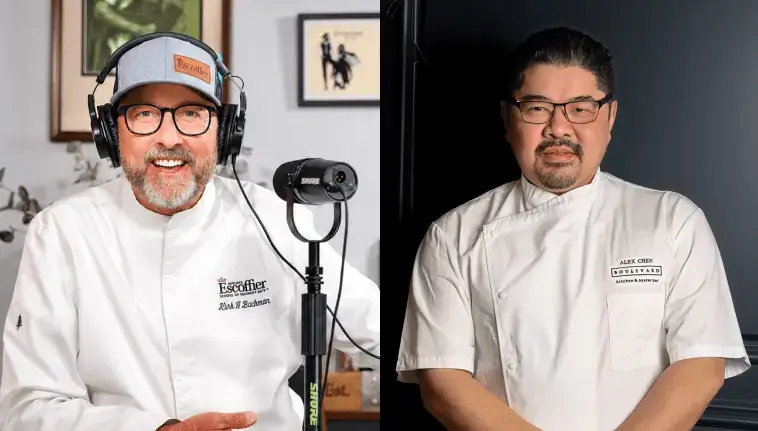
In today’s episode, we sit down with award-winning Chef Alex Chen, Culinary Director of Boulevard Kitchen & Oyster Bar in Vancouver, Chef-Partner at Wild Blue Restaurant + Bar in Whistler, and former Bocuse d’Or competitor who represented Canada on the world stage.
Chef Chen shares his journey from washing dishes and bussing tables as a teenager to working in some of North America’s most prestigious kitchens. He reflects on the influential mentors who guided him, his experiences at the Four Seasons and Beverly Hills Hotel, and the personal sacrifices involved in pursuing the Bocuse d’Or. He also takes us behind the scenes of opening Boulevard, recalling the slow nights that tested his determination and the decisions that helped the restaurant find its footing. Along the way, he discusses investing in young culinary talent, the responsibility that comes with leading a team, and why patience and curiosity are essential to a lasting career.
This conversation is about embracing challenges, paying forward the lessons of great mentors, and understanding that success in the kitchen is about more than what’s on the plate.
Watch the podcast episode:
Don't Miss The Next Podcast Episode!
Get the latest episode of The Ultimate Dish delivered right to your inbox every week.
Notes & Transcript
Jump to a Section
- FULL TRANSCRIPT
- Mentorship, Family & Cooking at Home
- From Dishwasher to Culinary School
- Mentors, Luxury Hotels & Learning the Craft
- Bocuse d'Or & Iron Chef: Competing on the World Stage
- Building Boulevard & Becoming Somebody's Chef
- PICAchef, Escoffier & Advice for Young Cooks
- The Ultimate Dish: A Perfectly Roasted Chicken
Episode Notes and Resources
TRANSCRIPT
Kirk Bachmann: Hello, everyone. My name is Kirk Bachmann, and welcome back to the Ultimate Dish. Today, I am absolutely honored to welcome one of Canada’s most accomplished and respected culinary leaders, and a friend, a chef I recently had the pleasure of spending lots of time with. Please welcome Chef Alex Chen. Alex is the culinary director of Boulevard Kitchen & Oyster Bar in beautiful Vancouver, Canada. That restaurant is consistently recognized among Canada’s finest dining destinations, with placement on Canada’s 100 Best Restaurants list and inclusion in the World’s 50 Best Discovery collection. In 2022, Alex expanded to the mountains as chef-partner of Wild Blue in Whistler, absolutely gorgeous, which has been named Best Whistler by Vancouver Magazine three years running and ranked among North America’s 50 Best Restaurants. But Alex’s story starts far from the fine-dining spotlight. Born in Malaysia, he immigrated to Vancouver with his family at just 13, and he got his first taste of this industry washing dishes and bussing tables. He fell in love with the rhythm of the professional kitchen, apprenticed under Canadian culinary pioneers such as Robert Sulatycky and Bruno Marti, and went on to spend even more time, more than a decade, honing classical technique in some of North America’s most demanding luxury hotel kitchens, including the iconic Beverly Hills Hotel and Polo Lounge and Four Seasons properties in Toronto and Chicago. His résumé is quite remarkable. He led Team Canada to a top 10 finish at the prestigious Bocuse d’Or in Lyon, won Gold Medal Plates championships, captured gold at the Canadian Culinary Championships, was named Vancouver Magazine’s Chef of the Year, and famously became the first challenger ever to beat an Iron Chef on Iron Chef Canada. Today, he’s also a familiar face as a judge on Top Chef Canada and Wall of Chefs, and there’s a special connection here. Alex is deeply tied to Vancouver’s culinary community and to the Pacific Institute of Culinary Arts, we call PICAchef, which recently became part of the Escoffier family. So beyond the accolades, Alex is known for his humility, you’ll see that soon, and his dedication to mentorship. And there he is. Welcome to the Ultimate Dish, Alex. How are you, buddy?
Alex Chen: Thank you. Thank you for having me, Chef. Good morning.
Kirk Bachmann: That was a lot. I probably need to take a little bit of a nap. What a career! What a career! How are you feeling?
Alex Chen: I’ve been blessed. I’ve been blessed. You know, sometimes is. I remember entering my career in 1998. That’s one way to cook. That’s all I want. That’s all I ever wanted to do is just cook. And here we are. You know, I think that there’s a lot of validation along the way, and it’s just been so blessed in so many ways: health, family, career, friendship, mentorship. Just, yeah, it’s a fulfilling career so far.
Mentorship, Family & Cooking at Home
Kirk Bachmann: Mentor, and I love that you say so far, because there’s a lot more to be written about this story, and we’re gonna dive right into mentorship because that’s become so obvious to me. One thing that’s not on the script that I want to share with our listeners, that I was very honored to be a part of, is your induction into the Disciples of Escoffier a few weeks ago with the great-grandson of Auguste Escoffier, Michel Escoffier, a very, very deserving honor. And you know, you can always tell when you look in someone’s eyes if whatever that accolade is really means something. And that night, I could really tell that you were touched, and you know, so congratulations on that. That’s something that’ll stay with you. It’s a very exclusive club, and I’m glad you’re in it. Let’s talk about something that’s really sort of moved me a little bit since I’ve met you, Alex. When you talk about mentoring young cooks, you’ve described your role as being the father figure, the coach, the big brother. So before we get into the whole journey, tell me where that instinct to pour yourself into your team, into your people, and I imagine your family, truly comes from.
Alex Chen: I’ve worked with some amazing chefs that just, you know, like they were visionary, and they were way ahead of my understanding in the industry. So they created an opportunity for me. They carried me under their wings, showed me the ways, and developed my career. And I’ve seen it. I’ve seen it since day one with Bruno Marti. They call him the godfather of modern French cuisine in Vancouver. You know how involved he is. He’s in his 80s, mid-80s, and if I call him, I just say, “Hey, Chef, do you mind coming down to taste some food that we are presenting for a competition?” He’ll be on his. If it’s in the summer, he’ll ride his motorcycle down, and then he’ll just, whether you like it or not, he’s gonna tell you the honest opinion on that. And usually, if he likes it, we usually win. So lots of great examples of that sort of mentorship are going on. I think mentorship is such a necessary thing, where you are expecting nothing in return, but you’re doing it wholeheartedly because you want. I want my students. I want my cooks. I want my sous chef. Once they leave, first and foremost, is they are sought after from our kitchen, because then you’d be like, oh, they came from that camp, they came from that restaurant. You know what, it opens doors, and I always tell it to the students and my cooks as well. Just like, make sure you carry that badge of honor. Make sure you represent yourself well. Make sure you also represent us well. You know, just the things that we carry ourselves with in the day-to-day kitchen. I say you have to give back. One day, when you are in my position, you have to train the next generation. That’s the only way this can be a sustainable thing, because it would be a shame if this is our last generation of cooks that really want to just cook, that want to embrace the art of culinary, and then no longer want to continue that journey. It has done wonders for me. It has allowed me to have friends around the world. Allows me to travel. Allows me to fulfill my dream. Check the box. Raise a family, be a fabric of this community, and be the landscape of chefs in North America. So I think that at a very early age, I knew that that was something that was super, super important to me.
Kirk Bachmann: I love that response, and it’s in keeping with my comment on your humility earlier, so thank you for that. And you know, in many ways, said another way, you’re taking your role and your responsibility to pay this forward, as one would expect you to do. I have a quick question about Chef Bruno. Can you remember the first time that you needed him or asked him to come to Boulevard and present a dish to him or something? What was that like? How intimidating was that?
Alex Chen: Oh, you know, Bruno, he’s literally the godfather. He’s, you know, he’s Swiss and old school, so you know he has given so much to the community, and he’s a really, really well-respected figure. Yeah, of course, cooking for your chefs is daunting, but you’re also excited to want to show him exactly. Yeah, you want to show him. You want to share with him that, Chef, thank you for what you have given me. Look at what I have done with my career, right? Yeah. So it’s coming from here, really, not like a big ego or something. Oh, look at what I can do! Just, it’s like, are you embracing this? You know, are you eating with your eyes? And then, where’s the taste? Where’s the balance? You know, is there, where’s the color? Do you understand how you’re going to communicate that with your judges or your clients? It’s just so many things. It is also a proud moment when he gives you a nod, when he just says, “That’s a great dish.”
Kirk Bachmann: I know you have children, as do I, and it kind of reminds me of that first time, or every time, that your children bring a report or a math test or an English test or something home, and they put it in front of you, and you know that you had a little something to do with it, right? Some through DNA, but also some through coaching and having to research how they do math today, right? And trying to help your children with that. On a little lighter note, you cooked at the Beverly Hills Hotel. You’ve beaten an Iron Chef in direct combat, you’ve celebrated two rooms or restaurants or establishments. But when you’re home in Vancouver with your wife Liz and your two teenagers, what are you cooking? Does the family get the fine-dining Alex, or do they get something composed? Completely different.
Alex Chen: I think at home cooking is a little bit more just simple food, but I think that they get the fine-dining ingredients.
Kirk Bachmann: Oh, good answer! Good answer.
Alex Chen: The fine-dining ingredients itself. But you know, like, it’s not like we eat caviar every single day, but you know, they’ve been eating caviar since they were little kids. My son’s been shaving truffles on his omelet since he was like five, and you know, it’s just, “Oh Dad, I’m so sick of wagyu, it’s too much. I don’t want it no more.” Wow, you know, tough life over here. Just like, oh, I couldn’t even pronounce foie gras until I was 22. So all the little things and stuff, but because we can’t really turn off. When you go home, when you sear a piece of scallop, when you roast a piece of fish, it is still you. You still want it to be crispy. You envision it in a kitchen. Well, how do I want to present that dry-aged chinook, skin-on salmon? You still want it to be like medium rare, but the skin to be crispy. So a lot of that technique is highlighted. And when I tend to go to the grocery stores, when I’m looking at ingredients, you know, like my wife, she’ll be cooking because it’s like day to day. She has so many things for the kids. She shops and she cooks for convenience. For me, Sundays, Mondays is a really important time for me because obviously I don’t really get to see them much for dinner. And Sunday usually is like, I cook. They know that Dad cooks, and he’ll fire up, you know, the Big Green Egg in the back. He’ll fire up the charcoal. He’ll, you know, I will do rotisserie chicken. I’ll do a roast. I’ll do braised osso buco with orzo, things of that nature, and it could go from there all the way to my Malaysian roots, my Hainanese chicken rice, and my noodle dishes, my soup dishes, and anything in between. It’s just whatever they feel like. It really is right now. It’s depending on if they are competing or not. If they’re competing, low sodium, you know, not so much unnecessary fats. You know, my son hates it when I’m dousing nice olive oil on like tomatoes. “Oh no, Dad, don’t put so much oil. Do you know how many calories are in each tablespoon?” So he’s all about that right now, because they are high-level wrestling, they compete. The season just started, so ours has always been okay. It’s complicated, but I think that is ingredients they’re familiar with.
Kirk Bachmann: What I love about that share is, even if it’s carrots, even if you’re serving broccoli or beautiful greens, there’s no reason why you wouldn’t try to source them from the most reputable supplier. Could be the farm, right? Yeah, and hand-picked by the chef.
Alex Chen: Of course, hand-picked by chef, and that’s the fine ingredients. That’s what it is. And peas, that’s the sweetest. Ethan loves watermelon. You know, he’s asking me. He’s like, “Hey, Dad, can you give me some watermelon?” I said, “Son, it’s December right now. You shouldn’t be eating. You should be eating seasonal, like seasonal ingredients.” I said, “Son, this is your last watermelon.” I said, “There’s no more watermelon for the season, so you know, we’re not going to see this until next June, July.” So yeah,
Kirk Bachmann: …and we won’t see asparagus until May, and then it’ll come, it’ll go, and we’ll move into something else.
Alex Chen: Oh, but they have it at Safeway. It’s like, “Son, it’s not seasonal. It’s not seasonal.”
From Dishwasher to Culinary School
Kirk Bachmann: This next part, I want to take our listeners back a little bit, and I always like to premise, when we talk about your past or any chef’s past, that it’s exciting to hear the stories because it lights people up. They get excited, right? And what it doesn’t always cover is the years and years of practice and long nights and long weeks and long days. So, I want to premise what we talk about next with acknowledging and recognizing the hard work that went into it. You’re sitting in your beautiful restaurant right now, but that’s the culmination of many, many, many years. That’s the lesson for students. So, I think the origin of your story, Chef, is probably one of the most important parts of your entire career, because you didn’t start at the top, right? You immigrated from Malaysia to Vancouver. You were very young, just a teenager, and your first experience in the industry was, like for many, doing dishes and bussing tables and probably whatever else the chef or chefs needed. Do you remember a time, a specific time, where you fell in love with the rhythm of the professional kitchen, that you knew this is where I want?
Alex Chen: Yeah, I think toward the end of my high school years, I was still doing part time at a, like a tourist attraction, sort of like a revolving restaurant. I remember, as a young cook, that I didn’t really know how to handle pressure, handle the tickets that are coming in. I’m still super. I get flustered. You know, there’s nothing worse than a flustered cook on the line. You just forget things, right?
Kirk Bachmann: Then everyone else becomes flustered, right?
Alex Chen: Because you’re the chaos, right? I was the chaos, and then something just changed. It was months and months of getting your butt kicked, you know, by the chef. It’s just like, and I just couldn’t get out of it. And then obviously something happened. I remember doing a Mother’s Day, a really, really busy Mother’s Day dinner. It was like something vomiting, like 800 covers that night, 800 covers. And the next day, obviously the leftover of the Mother’s Day then became lunch. It was like a 400-people lunch, and all of a sudden, from an 800 to a 400, all of a sudden, I was like, everything started clicking. I’m like, oh, okay, I got it.
Kirk Bachmann: I can do this. I can do this.
Alex Chen: I can do this. I can absorb this. I’m capable of doing this, and from that day on, it just got better and better and better every single year. The moment I figured out that rhythm, that you do not have to solve every single thing, every single order that comes your way, immediately. You just need to do it one ticket at a time, two tickets at a time, and do it really, really well. And from there, things, the matrix, just started to make sense. So from there, it’s just like, okay, now I actually enjoy this. I actually enjoy this chaos. I enjoy the long hours. I enjoy the creativity. I enjoy the teamwork, and then learning different crafts from opening up books and being able to see that and then try to replicate that. Yeah, that’s when I decided that I should go to culinary school, and yeah, that was 1998. That’s when I decided to go to cooking school. I wasn’t focused in high school, so my grades were terrible. It was terrible, but the moment I enrolled myself in Vancouver Community College, it was a college, it was like, including tuition and books, it was like 2,200 bucks, so it was super cheap, affordable. And then every single class, or every single month, you know, we would get a different class, and then the report card would become all A’s. I’m like, okay, something is different over here. This is not my high school report card anymore. So, yeah, I just, from there, I just fell in love with the whole entire thing. Just always seeking opportunity to be better. Always trying to connect with different chefs. Always trying to, yeah, competition. Competition is also another one too. Growing up, I hated to be in front of the crowds. I do not like to perform in front of the crowds, but something, the intuition in me, just really continued to push me to say, that’s uncomfortable, but you love competition, go for it, go for it. So I guess I love the feeling of winning.
Kirk Bachmann: It’s a good feeling, right?
Alex Chen: It is.
Mentors, Luxury Hotels & Learning the Craft
Kirk Bachmann: You know what I find very valuable for students who will listen to our chat is that you didn’t skip steps. You apprenticed under two culinary pioneers in Canada, maybe the best ever. You already talked about Bruno. Tell us about working with Robert and what both of those mentors instilled in you that you still carry today. Like, if they came to your restaurant tonight, would they be able to walk away and say, you know, that feels a little bit like me.
Alex Chen: I had an opportunity to hang out with my chef, Robert Sulatycky. Obviously, he’s the head coach for Team USA now in Napa for Bocuse d’Or.
Kirk Bachmann: Did I meet Robert the other? Didn’t I meet him? He was at the table next to us, right?
Alex Chen: Yeah, yeah, yeah. With him showed. It was Robert. And to be honest, 13 years now, going into the 12, 13 years going into Boulevard, this is actually the first time he’s actually sat down and ate at the restaurant. He hasn’t been back for a long time. To be able to hang out with him, we were at the cooks’ camp up in Pemberton, past Whistler. So it’s a big cooks’ camp, and I brought him with me, and then we were cooking together. It was a great moment. I remember in 1999, after he finished Bocuse d’Or in Lyon, France, he came back and he walked into the kitchen. It was Mother’s Day, 1999, and I just joined the Wedgewood Hotel. The Wedgewood Hotel is a Relais & Châteaux property now, and this is a small little boutique hotel. And from there, when I saw the chefs, just like when you see somebody, the way they move, the way they carry themselves, there’s a little aura. Then you know that they are somebody special, right? Somebody that commands respect. They know how to speak. They carry themselves well. You know, they always take the high road. They share stories with you, and they show you techniques, and then you cook with them day in and day out. And I remember, you know, at a very young age, we really wanted to get into culinary competition. Back then it was a lot more popular. And it could be 3 o’clock in the morning while we’re practicing, Chef will be there to taste our food, to give us the feedback, or jumping into a car, and then he’ll be like, “Okay, let’s go buy some new plates for your competition,” and that will be coming out of his own pocket, right? So, all of that, I think a lot of that captures who I am today, by showing up for the apprentice. When you handpick somebody, you can see the potential of that person learning and then hopefully winning. They don’t even understand that. They don’t even believe it.
Kirk Bachmann: The magnitude, magnitude of that moment. Yeah, right.
Alex Chen: They wouldn’t even remember. They don’t even know that they could actually win this competition. They’d just be like, I’ve never done a competition before. It’s already what Robert saw in me that I didn’t even know. I was too young. I was just a cook. I was just a greasy cook in the kitchen, but you know, my days started at, I was doing lunch service, 8 to 4:30. That’s your normal shift. But if I’m not in the kitchen by 6 a.m., I’m already late in my own..
Kirk Bachmann: In your own mind. Yeah, yeah.
Alex Chen: Yeah, the clock that is already set for myself, and I usually stay till 6:30, 7 o’clock. I remember Chef would be bringing a lot of fish from France, for making bouillabaisse. Different types of fish nobody wants to touch. They’re all small little fish that nobody has the time to pin bone. I’m down there in the basement. I’m doing it, and those are all the little moments that he saw. It’s the same thing. It’s all the little things that you see the cooks do. They do it not because they want to be seen. They do it because they purely love it, and they want to learn,
Kirk Bachmann: and they want to.
Alex Chen: And yeah, it is so magical. It is such a rare thing to find somebody that’s just like, I don’t want to be seen. I don’t want to be like, oh yeah, I’m doing this. I’m doing this for. They just do, and let the work show. You can tell, right? So yeah, I owe my career to my chef, Robert Sulatycky.
Kirk Bachmann: So then, Chef, you spent, you know, over a decade with some of the, let’s call it, most exciting and demanding luxury hotel kitchens in North America: Beverly Hills Hotel, Polo Lounge, Four Seasons Toronto. What did that classical, call it, high-pressure hotel training teach you that you don’t think you could have personally learned anywhere else?
Alex Chen: I think, you know, as I describe now, I have done two different sectors of the hospitality business. First, it was in a hotel, then it became a restaurant. So I would just say, in a hotel, you are jack of all trades, master of none. But then when you are in the restaurant, you are master of one. So I still think that jack of all trades is still better than master of one, because it allows me to wear many different hats. And luxury hotel, what does a luxury hotel mean? Luxury hotel means that there’s a lot of intuition involved. You know, it involves a lot of intuition. You understand a lot of the. There’s a lot of, like, pressure. You have to answer the call before the third phone ring. That’s just all the standard: five-star, five-diamond, Triple A this, and some of the best hotels in the world, the best hoteliers there, European-trained. You know that when you walk through the lobby and the whole entire property, you know you can lick off the floor because of how clean it is. So, how do they go through so much volume? So you can both handle luxury. So you need to marry the balance between having the luxury and then being able to do the volume. Therefore, you are profitable, and then you also need to be award-winning at the same time. So those two things usually run away from each other, award-winning and profitable. They usually run away from each other. I always loved the energy in hotels. You know, 500 people you work with, so many people: fine dining, all-day bistro, breakfast, banquet, room service, overnight cooks, and you learn from different characters. And you know, I was trained by some of the most well-respected immigrants. You know, I have a friend, Iqbal Khan. I remember I was 23 when I was walking through Four Seasons in Toronto. All he does is just yell at us all day. That’s all he does. He just yells and screams, and all of a sudden something clicked one day. I might have made him a breakfast or made him something, and all of a sudden he became my great mentor for teaching me everything about volume. And he’s still the only guy that is a staff cook, production for soups and stocks, and able to do a banquet by himself for 400 people. I’ve never seen anything like this before, and it’s not like he’s the fastest guy. He’s always just in the corner doing his thing: produce all the stocks, do breakfast for 200 people, do a banquet for 400 people, all by himself. I’m still, 30 years in the kitchen now, just looking back, like, you can’t find people like that anymore. It’s impossible. It’s just a guy like Khan. It’s just like, wow. You just learn. You learn from a guy like him. You learn from Spasi, who did 300 covers of breakfast by himself. And the way he would make eggs, he would just grab a bucket of eggs onto the flat top, and he just goes with his spatulas. And every single egg that comes out, 15 orders of eggs that come out for scrambles, they’re all soft and velvety. I’m like, how? How does that happen? So you need a lot of craftsmen like them. They’re just so focused, laser-focused on what they do. They’ve been doing it for a long time, and you just pick up little pieces. You look, you pick up, why is Spasi so good? Great repetition. Why is Khan so good? It’s organization, right? Yeah. Why is this person so good at making sauces? You’re starting to observe. You’re starting to learn. You’re starting to get close to them. Just like, you know, what is it that you do? Are you always gonna look ahead? You always think, gotta think about this. You gotta always think about that. That’s just so much craft, and so many sectors of, like, the world that they all come from. Eastern European, you know, the Caribbean, and the Europeans.
Alex Chen: As you learn from so many people, working in a hotel is just fascinating. I was 28 when I joined the Beverly Hills Hotel, and then I was exec sous, number two in the kitchen, with Robert as the chef, and I had 60 cooks, nine sous chefs, and 40 stewards. And I was 28. I just remember, but it wasn’t like I was overwhelmed. By the time I was 28, I’d done this for quite a long time. That’s my third sort of big kitchen, dealing with banquets, lots of different personalities, and I was actually the most at ease in my career, where I felt that I’d earned it. I’ve earned it. I know what I’m doing. I can connect with people. I know that I’m a decent cook. I’m a great organizer. I can communicate. I can lead. But it was all along that way, I felt that I wasn’t good enough. I felt that I was just lucky to have the opportunity to do this or to do that. And then, when I entered the Beverly Hills Hotel, it’s such a high-volume hotel. It’s a 200-room hotel doing $32, $35 million in food and beverage, and we were going for it. We were just doing it. It was fascinating. It was such a crazy time of my career. It was so busy. It’s almost unreal.
Kirk Bachmann: And this is such a,Chef, this is such an important message for students and, you know, individuals that are new to the craft, just getting started. You know, in many ways, greatness is built one rung at a time, right? And you lived that. For the students who sort of want to run before they walk, right? That student that wants the title before the experience or the training or the, you know, 800 covers. What would you say to them as a mentor to sort of prepare them for what’s next?
Alex Chen: I think in my career, as I often say to my sous chefs and to my cooks now, if we’re having a conversation about projects or something that they missed, it’s like, you know, I’m sitting in front of you knowing that I’ve made so many mistakes in my career, and it was such an important thing that I learned from all those mistakes. And because I’ve learned so much from those mistakes, they were part of my tools and my arsenal. Those sorts of things guide me now. It’s like, “Hey, Alex, you’ve been in this situation before. You failed last time. Watch out for this. The rest you know how to do, but remember about this one.” So, if you are going to run, you better learn how to stop. You better learn how to take a break. You better learn how to manage your energy. You better learn, you know, what kind of terrain is coming up. You know, what kind of shoes do I need? What kind of gear do I need? It’s all of that stuff. You can’t just go run a marathon, like, I’m just gonna go work really hard and run my first marathon without training. It’s like, well, you have to. There’s so much pre-work that needs to be done. Just like anything else, you can’t just go and build something great. I want to do this. I’m going to. It’s rare. It’s very, very rare. And a mistake is such an important part of the journey, where it preps you for the rest of your life, not just home, but work. It’s a guiding principle. Mistakes are so important that you need to learn that, but doing the same mistake twice, that’s not good. But making the mistakes, wholeheartedly learn from that. I think, you know, I’ve done a lot of competition in my career, and a couple of the really, really important ones, I actually didn’t do well. But those are the ones that really push you. You learn to be like, okay, what did I do wrong? How could I do it better? How do I practice better? You actually learn so much from that. And then after the one that you fail, you go to the next one that you actually learn from. You adjust everything. You have a new formula to go into the next competition, and then you actually win. It makes it so much more valuable. If you win all the time, then what’s so special about it, right? So you need to learn from your mistakes. I think that those are really important lessons.
Bocuse d’Or & Iron Chef: Competing on the World Stage
Kirk Bachmann: That’s great advice. Let’s talk a little bit more about the competition side, because that’s absolutely fascinating. You have thrived on the world’s biggest culinary stages, and in a way that very few chefs ever have the opportunity to. In 2013, you led Team Canada to a top 10 finish at the Bocuse d’Or in Lyon. So this is a competition named after Paul Bocuse, of course, and, you know, it occurs every two years, and it’s widely considered, let’s call it, one of the most grueling culinary competitions on Earth. Period. And what does that experience demand of a cook, of a chef, physically and mentally? You talked a little bit about the 3 a.m. cooking sessions, but I mean, you probably practiced for the actual competition for over a year.
Alex Chen: I remember I won the right to represent Canada, you know, for 2013. It was around the end of 2011. My son was two and a half months old, and my daughter was two and a half. I was in Los Angeles at the Beverly Hills Hotel, one of the most iconic American hotels. By then, obviously, the USA has their own U.S. team. And you know, actually, we have almost the same cup, Chef.
Kirk Bachmann: Yeah, we do.
Alex Chen: Okay, so yeah, So I had to make a decision, because I remember talking to Bruno. Bruno just said, “Boy, come home for a year. Time for you to come home for a year.” He said, “Come home for a year, because all your past mentors, the ones that have been to Bocuse d’Or, are on the West Coast.” If you go do fundraising, you know, you’re fundraising on Canadian soil. You can’t do it on U.S. soil. I can’t really go ask the Americans for money because they have their own team. So it doesn’t really make sense. So that’s when we made the decision, where I’m going to be working 12 hours a day at a luxury hotel that is going to be very demanding. Practicing is really demanding. R&D is very demanding. So I had to actually pack up. You know, I was enjoying my time. I was enjoying my career. I was enjoying, you know, the salary that the Beverly Hills Hotel paid. But then I had to pack up to come home. I came home. I remember, at like 36, living with my in-laws so that they could help take care of the kids. So that was one part of the career that I had to sacrifice, because it was no longer a job. It was more about legacy, that there’s something you want to leave behind. You know what? The moment that the kids were born, it was just a matter of, what is it that you want to leave behind for your family? What do you want to be known for? Dad used to cook for all the stars, all the biggest movie stars, biggest musicians, biggest property moguls. You know, I did that. I did that for six years. How many more years do I need to prove? And being able to do this, it’s been in Robert Sulatycky’s messaging since day one that he met me, and he’s like, “Chen, you need to do Bocuse d’Or one day.” So I was like, “Ah, nah, no, no, Chef, it’s too hard. I’ve seen how you guys work. It’s just crazy. It’s crazy.” And then all of a sudden, jump forward, you know, 10 years, and then seeing that, you know, the kids are here, and then asking that question, like, “Well, what do I want to leave behind?” That’s when everything just jumpstarts. That’s when you really, really become the hunter and the provider. You really think of, like, I no longer have the luxury of just saying I don’t want to do it because I’m shy. I don’t want to do that because it’s difficult. Those are such an important part of my career, coming home and then trying to find funding, which is almost impossible. Everybody’s asking for your firstborn. We don’t have a test kitchen. We don’t have a kitchen. But the moment you come home, then things slowly start falling into place. Friends will call. People will just show up. Friends will just be like, “Hey, Chef, I know that you are doing Bocuse d’Or. We have a space in the hotel back kitchen. We would like to donate that for you to practice.” Generosity, right? Everybody’s invested. And then a friend of mine, he had a location, Vancouver East Side, Ben Cote, that’s his name, and it was a dry storage, almost the same size cubicle as the Bocuse d’Or. So he moved everything. He’s like, “I’m gonna bring my dad. We’re gonna cut a marble slab. This is your table. This is gonna become your Bocuse d’Or kitchen.” And from there, by the time you get all your equipment, by the time you go into the R&D, you could be spending weeks on one garnish, and then all of a sudden you find that small little thing that you just fix. You’re like, “Oh, I got it.”
Alex Chen: Then there’s another 10 more problems that show up, and while you still have to be present as a father, as a husband, you still gotta go out there and ask for funding. But you learn a lot during that period of time, when it becomes necessary, when it becomes that you absolutely have to, or else you’re not really going to have the money to do this journey. You’re forced.
Kirk Bachmann: So, like I said earlier, there’s so much that goes on behind the scenes that people never see. Can you talk a little bit about Hugh Acheson? So this was new to me too. I knew you were on Iron Chef, but I didn’t realize you were the first to ever defeat him on stage. When was that?
Alex Chen: 2018.
Kirk Bachmann: 2018. Yeah. Wow.
Alex Chen: So 2018. He was one of the Iron Chefs, and then, you know, you don’t get to pick who you’re challenging. The studio picks it for you. And you know, like, Hugh Acheson, he’s such a wealth of knowledge. The guy has published so many cookbooks, and you know, he’s a very smart author, and then, you know, award-winning, James Beard Award-winning, so he has done well for himself in Atlanta, right, Atlanta, Georgia. Perhaps I love competition a little bit more, right? That’s just who I am. And people always just say, you know, like, “Chef, what is your secret?” There’s no secret. The secret is you practice until you puke, so to speak. Yeah. Yeah. So, you know, sometimes we practice twice a day. Sometimes it will be 6 o’clock in the morning, we’ll practice, and then we’ll do another session at 1:30 in the afternoon, so that we’ll be absolutely ready. I remember in 1998, back then it was a video cassette. It was old school. It was even pre-DVD. It was a cassette. It was one of my schoolmates. They came to me to say, “Hey, watch this.” It just says Iron Chef. I was like, “What is that?” So I went home, put it in there, and watched. I was like, “Holy crap!” The Japanese version of the Iron Chef, which is so ahead of everybody else. It’s so entertaining, but it’s so crazy. When they say truffles, it’s actually mountains and mountains of truffles. No wonder they went bankrupt. I think that one of truffles, or like they bring like astringent.
Kirk Bachmann: No expense.
Alex Chen: It’s just, it was insane. But that’s why it was one of the best shows on earth during that time for cooks. And I remember watching that. I was just like, wow, I want to do that one day. That’s always been in my dream. That’s like, I want to compete in Iron Chef one day. So there’s always been a dream. You know that there is a lot of entertainment because it’s on TV, but you also know that a lot of the chefs, like, you know, the Robuchons of the world, the, you know, like the Alain Chapels and all those guys, they show up. You know, okay, this is some serious. These are three stars. These are some of the best chefs in the world competing on that. That has to be legit. So, yeah, watching that just captured something. It unlocked something in me, like, I wanted to do that. So, yeah, is it as crazy, as grueling as the Bocuse d’Or? No, but it was something important to me…
Building Boulevard & Becoming Somebody’s Chef
Kirk Bachmann: …and in a different way, right? Cameras, lights, action, all of that. I’d love to talk a little bit about the restaurants you’ve built, right? Because, you know, opening Boulevard back in 2014 was definitely a milestone for you, and this is a completely different challenge, right? You’ve said that this was the very first time that you shepherded a restaurant from inception, the idea, through the construction, all the way to the opening day, and there you are, sitting in that restaurant right now as we talk, many, many years later. What did you learn about yourself, Chef, as a leader, as an entrepreneur, in taking on, you know, let’s call it that magnitude of responsibility for the very first time? And then you did it again with Wild Blue.
Alex Chen: So, you know, I think that the owners and investors saw something in me that I actually didn’t even really believe. Sometimes they saw something, and then when you open up, you know, I want to bring up a little bit about Roger Ma, which is my chef now that runs Boulevard. He was my partner in opening up Boulevard together. He had just finished working for Daniel in New York. I just came back from the Beverly Hills Hotel, and then we both came back. We knew each other, like, not well, but, you know, in passing. I just said, “Hey, since you’re home, it would be nice for us, you and I, to do something together. I have an owner that wants to do something pretty special.” I’ve always gone into hotels, a functioning hotel that is already running, making it more profitable, making it more functional, making it more efficient. So that’s what I was good at. But here it’s just like, from the first time meeting up with the owner, he’s just saying, “What do you see? What do you see that is lacking in Vancouver?” I said, “I’d like to do a restaurant,” which I’d never done before from the ground up. “Well, I want to do a seafood restaurant,” because I want to give something of what we saw, what we liked, through travel and through my time in the States and stuff. I want to bring a lot of that to this program. And in hindsight, now, you know, 12 years, 13 years after, we were still very young as restaurateurs. We didn’t know what we were doing. The concept was a little bit confusing. It was a lot of everything under the sun in the two pages of menus that we offered. Yeah, so I thought that we were not welcome in a sense, because nobody in Vancouver knew who we were. We were not part of the fabric. We were not contributing to anything yet. We were just the new kids on the block. We had the shiniest object. And the first year was okay. The second year, the business started to dip, and then by the third year, we knew that, like, you know, you’ve been to the restaurant before. You saw how big the restaurant is, you know. Some nights we’re doing 30 covers a night. We’re like, okay, this is not good, right? And at any given time, you know, I think that’s when the true character comes out. You ask yourself, “Hey, is it time for you to jump ship? Is it time for you to leave? Is it time for you to look at a different concept? Is it time for you to just say, ‘Hey, we’re going to turn this into a steakhouse,’ and then continue to do something else?” I remember looking back at all the cooks in the back, all the cooks that chose to come work with me at Boulevard. They’re all young. They’re all eager. They all want something. They all want this restaurant to be great. They all still believe in this project. So I always say that to the younger sous chefs: until you can feel the burden of the well-being of your cooks, can they pay rent? Can they eat well? Are they healthy? Can they afford some luxury in their life? If you don’t have that burden, you don’t have that mindset, you’re not somebody’s chef yet. When you can feel that, when the owners are just saying, “You’re doing 20 covers, you’re doing 30 covers tonight. You cannot afford these cooks. You have to send certain people home.” That’s just business. You have to. But every time you look at this person, and you say, “We’re going to send this person home,” you feel the pressure of them not being able to pay rent. So I think that from there, you really, really start growing as a chef. You become somebody’s big brother.
Alex Chen: You become somebody’s father figure. You become somebody’s mentor, and then you look back. You’re just like, if they’re not giving up, why would I give up? Yeah. Why would I give up? Right. Yeah. This is a gift. So from there, you really start digging deep. You look back, like, what am I good at? How can I turn this restaurant around? This is my responsibility. This is not Roger’s. This is not the GM’s. This is my responsibility. How do I connect with all the critics in this city? How do I connect with other people? How do I give them food that is different than anybody else out there? What am I doing wrong? So from there, you really dig. I just started saying, okay, we are not actually going to change concept. We are actually going to double down on what we said we were going to do. I love a lot of tableside stuff, from enjoying a lot of dinners in Europe, a lot of tableside, you know, salt bake, en croûte de sel, and then the Wellington dish, and then the coulibiac, different classic stuff that I can just bring to the table. And then during that time, a young sous chef, pastry sous chef, walked in. His name is Kenta, who you’ve met before. Yeah, I remember mentoring him. I just said, “Hey, Kenta, I don’t know how to show the world how talented you are, but I’ll figure out a way to make sure that I elevate you. But you gotta give me some time. I don’t know how to do that, but I’ll figure it out.” I just said, “Okay, I need you to start thinking about all the petits fours.” Because I remember going to Alain Ducasse at 22, 23, the whole chariot of, like, chocolate bonbons, petits fours. Yeah, yeah, yeah. And then I’m like, “I want you to do that. I want you to do varieties of, like, I want you to overwhelm people when you go to the table. I want you to do dessert. I want you to do this. I want you to do you.” So I planted something with Kenta, and I went back. I just said, “What am I good at besides being a chef? I love competition.” Okay, now I look at the whole entire kitchen. I’m like, this guy will be good at this competition. She will be great at that. I’ll be good at my competition. So we just started going out there. We just started joining all sorts of competitions from the local, from Apprentice of the Year, Chaîne des Rôtisseurs. You know, from there, you just started to, oh, Boulevard won one competition. “Ah, they must be lucky.” Second one, “Oh, they won again.” Say, “Oh, okay.” Third, fourth, fifth, sixth. Then you win them all, and then you’re starting to, like, “Okay, something is happening over there. What is going on?” Right? You can’t deny, you can’t just be like, after seven times, eight times of continuous winning, that is luck. That’s not luck, right? So, the owners never came to me and just said we shouldn’t be wasting those. They believed in it. They just said, “Go do what you do. Smash your budget. Make sure that we’re not losing money, but make sure that we make this into a great destination,” what it should be. So slowly, you look back at all those little failures, all those little times where you could almost taste the defeat that is going to come your way if you don’t do anything to fix it. Because if you do the same thing every single day, you’re going to get the same result. So we decided, that’s what we’re going to do. And from there, from making the decision of saying, no, not willing to give up, this is what we do, this is what we do well, from there, we became the fabric. There was no lesson to be learned if we were a success the moment we opened. Yeah, sure. I couldn’t be who I am today, because all those little experiences humble me, humble the team.
Kirk Bachmann: I love when you use the term fabric because, you know, I’ve been to the restaurant three times now, and I was able to visit Wild Blue. But the thing at Boulevard that really strikes, and the food is spectacular, the service is, you know, second to none, but the culture of teamwork and efficiency, and when that cart comes at the end of the dinner, the passion with which he explains all the bonbons and the marshmallows and everything, I mean, that doesn’t occur overnight. So you are to be congratulated. I love the humility.
Alex Chen: Thank you.
PICAchef, Escoffier & Advice for Young Cooks
Kirk Bachmann: It’s a spectacular experience. The first time I ever came to the restaurant was with Eve and Sylvia, and I hadn’t met you yet. And of course, they loved the restaurant. Of course, they took me to Boulevard, right? In the time that we have left, Chef, I can’t believe how quickly this hour has passed, but I would love to talk just a little bit about something very special that connects us directly. You have a deep, long-standing connection, as I said earlier, to the Vancouver culinary community and to the Pacific Institute of Culinary Arts, PICAchef, which recently became part of our family. That school has spent nearly three decades shaping the chefs, the cooks, the chefs who define the Vancouver food scene today. So, what has PICAchef meant to the community over the years, and what does it mean to you specifically to see institutions like PICAchef and Escoffier coming together as one?
Alex Chen: Yeah. For me, I came from cooking school. I came from cooking school. You open doors, and then it’s the connection you have with your teacher, with your culinary instructor. They have the connection to open doors for you. I think those are all really important steps for networking. You know, PICAchef has a very highly sought-after, great reputation as a cooking school that produces great-quality students. I love the facilities. I placed one of my sous chefs that was with me for many, many years, Leanne Cosby. She runs your banquet department.
Kirk Bachmann: She’s fabulous, fabulous. Yeah.
Alex Chen: Very passionate individual. And obviously, I met Sylvia and Yif at the school. They became friends, and then Yif has become one of my mentors for business. Yeah, so I’ve been going to that school more and more in the last few years, because there’s just so many meetings that happen over there. You know, planning menus, mentoring Leanne, cooking with, like, you know, different functions require different things. I remember her saying that the direction company for Michel to say, “Don’t cook French, cook West Coast,” right? So I would just be like, well, with that last name, I would imagine that he has eaten every single, you know, like every single meal your God can ever create for gastronomy. He’s probably so sick of it. I’m like, okay, show what we do in Vancouver. Show our terroir. Show our seasonality. I connect you with our tomato farmers, so you can get the tomatoes. You know, Dungeness crabs, show that. That’s some of the best, pound, four pound, that’s some of the best crab in the world. You know, do that. And talking to her about menu, different celebrations, different things for the two institutions that come together. You know, PICAchef is a great facility for teaching, because what does every single chef want? They want great-quality students. You know, you need to groom the next generation. You always need new cooks, and that’s what we are
Kirk Bachmann: Curious cooks, curious. Right?
Alex Chen: Yes, curious cooks with a great attitude, right? You know, a student, you know the student that came out of the cooking school, you know that they’re not going to be able to write a menu yet. You know that they’re not going to be able to do the things that they’re supposed to, because they’re students. They need mentorship, but it’s the filtering. It’s the mindset. It’s the expectation that’s been set, to say, hey, you know, you need to be humble. You need to be curious. You need to be hardworking. You need to be this. You need to be that. And then, as they enter, you already have, not a program, but a sort of a set mindset that you walk in with. Those are the students you want, like, okay, that’s what you want. You want to be able to work with students like that, and having that relationship, it’s great. It’s just like, we think that we’re cooks, we’re chefs that cook, but what is it that we’re doing? We’re actually leveraging relationships, just like with the farmers, just like with your forager that gives you the best pine mushrooms right now. My mushroom supplier that hand-picks baby chanterelles, it’s like, “Joe, they need to be this size. I need 300 of those.” He’ll go through 400 pounds of chanterelles. They will hand-pick it for you. You can’t buy those relationships. You can’t buy those relationships, so…
Kirk Bachmann: It comes together. I have to say, the meal for your Disciples induction, that simple tomato dish, followed by the sablefish, followed by that perfect apple dessert.
Alex Chen: Yes.
Kirk Bachmann: I was telling Leanne the other day, I just couldn’t even. I didn’t even have sablefish at your restaurant out of respect for Leanne, because it was so perfect. It was so, so good. That’s why I went with the lingcod. You know, Chef, for a young cook that’s listening and will listen to this chat, maybe washing dishes like you once were, dreaming of one day leading a kitchen or a hotel or a banquet, what’s the one piece of advice that you would leave with them today?
Alex Chen: I think that having a little bit of patience goes a long way. I think that picking the right mentors, picking the right mentors, having the patience to work with the mentors, allowing the mentor to show you things. But in order for the mentor to show you things, you need to have some time. You can’t just be like, every three months you’re gonna jump because I’ve seen it all. Yeah. Because we’re gonna make plenty of mistakes, and the mentors are supposed to be there to guide you. Sometimes the best mistake is actually the mistakes itself. You know, sometimes you work for great chefs and stuff that prevent you from making any mistakes. You’re actually not really learning. But sometimes you also look into the kitchen, and you work for some not-so-great chefs as well. You’re like, I’ve also learned from that. Like, I don’t want to be that person. I don’t want to repeat that, right? So I think that the curiosity, having the patience, picking the right mentor, and really believing in that, and also knowing that when that mentor is no longer the right mentor for you, you also need to know when is the time for you to say goodbye. And saying goodbye in a humble way, saying goodbye in a professional way, is also important, because it’s a legacy that you leave behind. Everybody calls each other, especially in a really good, great establishment. People always call each other for reference. They do. And I think that the patience, staying hungry, curious, and then the hard work, those are all good traits to have if you wanna survive and thrive in this kitchen. It’s not a sprint. It’s definitely a marathon. You have to pace yourself. You have to learn to manage your energy, manage your stress, your health. I think that, you know, I was guilty as such. You know, the energy drinks I used to drink when I was younger. Yeah, yeah. You know, just like, “Oh, Chef, I don’t feel well.” You know, just like another energy drink and another energy drink. Just like, keep going, I gotta keep going.
Kirk Bachmann: I gotta keep going.
Alex Chen: But like, yeah, I think that in order to cook well, you have to eat well as well.
The Ultimate Dish: A Perfectly Roasted Chicken
Kirk Bachmann: Really great advice, Chef. The name of our show is the Ultimate Dish, and I can’t let you go until you share with us and the audience: what is the ultimate dish?
Alex Chen: The ultimate dish for me will be a nice, perfectly roasted chicken. I just love the, I love the process, right? I love the process, the seasoning, you know, the tying. You know, cutting the mirepoix, getting the different herbs, and, you know, do I want some lemon? Do I want olive oil? Do I want chicken fat? Do I want garlic in there? Do I want butter, or do I want all of the above? You know, what temperature? How do you want to do it? Do you want to do it in the rotisserie? Are you doing it in the Big Green Egg? Are you doing it in the oven? Crispy? Do you care if the skin is crispy or not today? Or, you always just want it to be a super moist chicken, but it’s the basting. It’s basting. It’s the basting. It’s letting it rest. You know, cutting the string, taking everything off, going through the back, getting the oysters, getting the two oysters out, pop it in your mouth, and then
Kirk Bachmann: I’m getting chills. I’m getting chills. That brings back so many great memories, right?
Alex Chen: I know, It’s just…
Kirk Bachmann: it’s the simplest of techniques. You’ll be proud to hear that once our students understand the basics of a mirepoix and cooking some, you know, basic beans and rice, the first meal that they cook is a roasted chicken at Escoffier. Yeah, yeah. No one’s ever said that as their ultimate dish, but I absolutely love that. It’s all the principles of great foundational techniques, from the crispy skin to the perfectly cooked, you know, dark meat, the white meat. Yeah, it’s a great answer. Why am I not surprised?
Alex Chen: It’s humble chicken, but it’s so humble. Go wrong. Yeah, yeah. So much go. Yeah, just, I enjoy the process a lot.
Kirk Bachmann: Yeah, Chef. Thank you. It’s been so fun to get to know you over the last several months, and I’ll see you quite often as I travel up to beautiful Vancouver, and we’ve talked about getting you down to the school, maybe to Chicago to our studio. We’ll continue those conversations, but best of continued luck. Thank you for taking the time to be with us. We really appreciate you, and I appreciate our friendship.
Alex Chen: Yeah, thank you, thank you so much.
Kirk Bachmann: Thank you for listening to the Ultimate Dish podcast, brought to you by Auguste Escoffier School of Culinary Arts. Visit escoffier.edu/podcast to find any materials mentioned during the podcast, including notes, links, and other resources. And if you can, please leave us a rating on Apple or Spotify and subscribe to support our show. This helps us reach more aspiring individuals ready to take the next step toward their dream careers. Thanks for listening.