

Listen to This Article:
If you’ve ever scrolled through culinary school programs and felt a sudden wave of decision paralysis, you’re in good company. Plenty of prospective students put off enrolling because they think they need their dream job title figured out first.
In reality, culinary school can serve as a proving ground where coursework, hands-on lab time, and externships actively help you narrow down your interests.
Do You Need to Know What Job You Want Before Culinary School?
No. You do not need to have a specific career path or job title chosen before enrolling in culinary school.
Core curricula typically introduce foundational techniques across savory cooking, pastry arts, plant-based culinary practices, hospitality management, and entrepreneurship, allowing you to explore multiple areas of the industry before choosing a specific focus.
The food industry offers a wide range of career paths, from private chef and caterer to food stylist and recipe developer. Many students don’t know which one appeals to them most until they’re already in school or have a few years of professional experience after school.
Take Maria Bari as an example. She’d worked as a cake designer for years before enrolling in Escoffier’s online Baking & Pastry Arts program, but during the program, Maria says, “I found my passion for flavored pretzels. Very unexpected, and pleasantly surprised! Turns out, I love working with dough!”*
How Do You Choose a Culinary Program If You’re Undecided?
Choosing a program can be about finding your initial starting point. Auguste Escoffier School of Culinary Arts offers programs across six disciplines, each providing a versatile foundation that can take your career in many directions:
- Culinary Arts
- Baking & Pastry Arts
- Food Entrepreneurship
- Plant-Based Culinary Arts
- Holistic Nutrition & Wellness
- Hospitality & Restaurant Operations Management (HROM)
Along with fundamental training, each program includes specialized courses tailored to specific goals. For example, the Food Entrepreneurship programs include a course on Social Media Content Development, while the Online Diploma in Professional Pastry Arts includes two courses covering the Foundations of Bread.
Asking yourself a few basic questions can help you narrow down which program may fit you best.
Do You Want to Make the Food, Run the Operation, or Both?
What specific part of the industry excites you, and what kind of workday aligns with your lifestyle?
- Culinary Arts: Could be ideal if you thrive on creative flavor combinations, hands-on cooking, and the fast-paced energy of a lunch or dinner service.
- Baking & Pastry Arts: Could be great if you love precision and detail-oriented creation. Bakery roles often start early, but pastry chefs in restaurants may work evening service on the dessert station instead.
- Plant-Based Culinary Arts and Holistic Nutrition: A potential fit if you’re drawn to health-focused menus, specialized diets, or working with wellness-minded clients.
- Hospitality & Restaurant Operations Management (HROM): May work for you if you care about the guest experience, you’re good with numbers, and people have told you you’re a good leader or delegator.
- Food Entrepreneurship: Might be for you if you love coming up with new ideas, you’re self-motivated, willing to take calculated risks, and you’re excited by learning a little about a lot of topics (business management, hiring, finances, etc.).
Still torn between a couple of paths? Cross-program skills often overlap. If you want to bake and run a shop, you can compare Baking & Pastry with Food Entrepreneurship, or start with this career interests survey to see which curriculum might best match your immediate goals.
If you discover partway through school that a different path fits you better, credits that apply to your new program may carry over. You can talk with an advisor to learn how transferring between Escoffier programs could work for you.
Can a Culinary Externship Help You Choose a Career Path?
Every Escoffier program includes at least one required hands-on industry externship, where you work in a professional kitchen or other food business before you graduate. Because externship sites can range from your neighborhood BBQ joint to a resort in Cancun to a research station in Antarctica, they can provide a chance to try something you may never have done before.
That’s what happened for Stacey Jones. Stacey came to Escoffier for pastry and started her externship on the pastry station at Sway in Austin.
“With the confidence that they gave me, I decided to start learning all the other stations and going to the savory side,” she says, “which has helped move me up to lead line, which then helped me move up to leading and being the sous chef.”*
How Can Chef Instructors Show You What’s Possible in the Food Industry?
Chef Instructors come from many corners of the food world, so they can give you a close look at careers you might not have considered.
“You have mentors in a restaurant setting, but you won’t get the variety. At Escoffier, you’re exposed to 10+ executive chefs, and you’re surrounded by them every day,” Escoffier graduate Shane Witters Hicks says. “There’s a wealth of mentorship at your fingertips.”*
Classmates can widen your view, too. At Escoffier, you may learn alongside recent high school graduates as well as people on their second or third careers, each with their own insights.
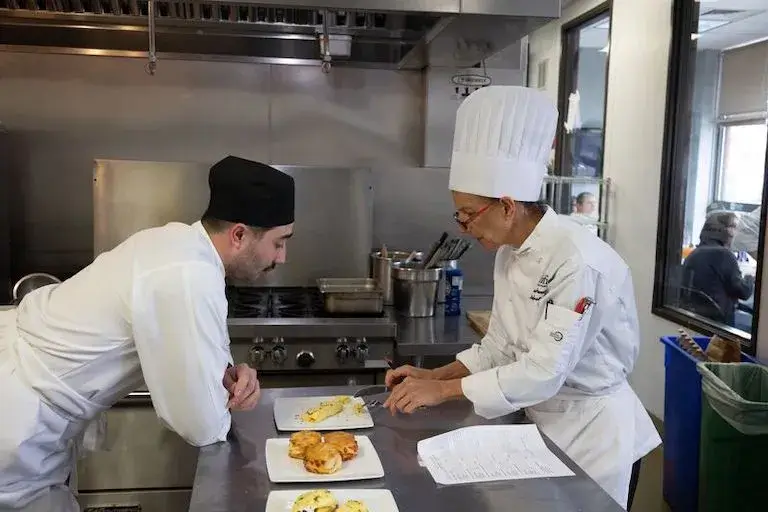
Culinary school can give you opportunities to talk to professionals in the field who can help you find your calling.
Can You Pivot to a Different Kind of Food Job After Graduating?
Yes, many culinary professionals change course throughout their careers.
For example, Escoffier grad Ellen Doerr enrolled in culinary school expecting a career in restaurant kitchens, and she did work in fine dining and ran her own personal chef business for years afterward. But at some point, Ellen was ready for something new, so she shifted gears entirely and got a job as a culinary food specialist in R&D. Looking back, she says, “I wish I had known when I was younger, all of the jobs that actually existed versus the ones that we think of existing.”
Ellen advises, “If you wait until you dot all the I’s and cross all the T’s, you’re never going to start. You just do it … You jump in, have one or two things figured out, (and) you figure the rest out along the way.”*
Not Sure Where to Start?
You don’t need to have your entire career mapped out before you choose a program. If you’re torn between a few paths or simply don’t know which one to explore first, take our quick career interests survey to discover which Escoffier options may align best with your goals.
You can also Contact Us directly to talk through your options and get answers to questions about starting your journey.
ENJOYED THIS ARTICLE? TRY THESE NEXT:
- Can You Go to Culinary School With No Prior Experience?
- How Much Education Might You Need to Become a Chef?
- What to Look for in a Culinary School Curriculum
FAQs
Culinary training can be useful beyond restaurant kitchens. Skills like recipe development, food costing, and nutrition knowledge can apply to roles in food media, product development, wellness, and business, among others.
Part-time kitchen jobs, short unpaid kitchen trials (often called stages), and job shadowing can give you a firsthand look at a role. Talking with people who already work in that field can also help you judge whether it fits your goals.
Culinary school exposes you to multiple disciplines through hands-on coursework, mentorship from experienced chef instructors, and real-world externships. These experiences let you test out different roles—from restaurant kitchens to research and development—to find the environment that best fits your goals.
In required hands-on industry externships, students work directly in professional environments, such as resorts, local restaurants, or specialized food businesses, before graduation. This real-world experience can give students hands-on clarity about different kitchen stations, workflows, and industry sectors before they commit to a long-term role.
A culinary degree can prepare you for a wide range of roles outside traditional restaurant kitchens, including food stylist, personal chef, catering director, or food entrepreneur, or business owner. Graduates can also pursue opportunities in corporate R&D, food media, and hospitality management.