
Listen to This Article:
There are plenty of food lovers who want to work in the culinary industry, but not necessarily on the front lines of a restaurant. If you don’t see yourself as a full-time chef for your whole career, pivoting to a chef consultant role could be an exciting alternative.
This flexible, interesting career can give chefs a chance to stay involved in food and cooking, while also maintaining a flexible schedule and working on a variety of projects.
If this is your first time hearing about the role, you likely have questions: What do they actually do? How do they find work? And could this be the right career for me? Let’s find out.
What Is a Chef Consultant?
A chef consultant works with food service businesses and food producers on a project basis. Because they’re constantly moving between different kitchens and operations, they bring a valuable outside perspective. They’ve seen firsthand what drives a culinary business to success, and what forces a restaurant to close its doors.
Auguste Escoffier School of Culinary Arts graduate Chris McAdams is a Chef Consultant and Certified Research Chef for Culinary Culture who captures the range of challenges a consultant could be called upon to help with.
“I’ve done everything from helping small mom-and-pop cafes get off the ground, kitchen designs, menu design, cross-utilization training, culinary training, and we’ve gone all the way up to product commercialization,” McAdams says. “For example, several products that are currently on the shelves in grocery stores and markets are ones that I’ve helped consult to get off the ground.”

Chef consulting blends culinary expertise with strategic analysis, research, and client communication.
Chef consulting work spans a wide range of industries and client types. Restaurants are the most obvious clients, but food manufacturers, hospitality groups, healthcare foodservice operations, and consumer packaged goods companies all hire chef consultants. Sometimes the arrangement is for a single project, and sometimes for longer-term support.
Chef Consultant: Job Overview
| Typical Clients |
|
| Core Focus | Aligning culinary strategy, including menu engineering, kitchen operations, and product development, with a client’s broader business objectives. |
| Work Schedule | Project-dependent, requiring a hybrid mix of:
|
| Employment Type |
|
Chef Consultant vs Restaurant Consultant: What’s the Difference?
The difference comes down to entry point. A restaurant consultant typically leads with business analysis — auditing financials, operations, branding, and marketing to diagnose what’s holding a concept back.
A chef consultant typically leads with culinary expertise, starting in the kitchen and working outward: refining the menu, improving back-of-house systems, and translating that kitchen-level work into measurable business results.
In practice, the two roles often overlap, and many clients find they need both perspectives before meaningful change takes hold.
A restaurant consultant who earns a client’s trust may find themselves weighing in on menu direction or kitchen staffing. A chef consultant brought in for a menu overhaul may end up in conversations about pricing strategy, technology tools, or concept development. Clients don’t always want two separate consultants when the person they already trust can help with both.
Chef Consultant vs. Restaurant Consultant
| Chef Consultant | Restaurant Consultant | |
| Primary Focus | Inside-out: Culinary craft, menu engineering, BOH operations, and translating kitchen efficiency into business growth. | Outside-in: Business operations, financials, marketing, staffing, and high-level concept strategy. |
| Core Background | Trained chefs with deep back-of-house and kitchen management experience. | Business, hospitality operations, or food & beverage (F&B) management. |
| Typical Projects | • Menu engineering & recipe testing • Kitchen line layout optimization • BOH staff training & SOP (standard operating procedure) drafting • Food cost and menu pricing analysis |
• Financial auditing & labor modeling
• Brand identity & marketing overhauls • POS & inventory tech stack migration • Franchise feasibility studies |
| Best For | Resolving food quality, kitchen efficiency, or culinary innovation challenges. | Resolving systemic revenue drops, operational friction, or brand stagnation. |
| Where the roles overlap | Both may work on operational efficiency, staff training, and business turnarounds. Many consulting engagements bring in both types at different stages. | |
What Does a Chef Consulting Project Look Like?
To understand what chef consulting demands, it can help to walk through what a project might look like, from start to finish.
Phase 1: Discovery — What Consultants Look for First
Before a chef consultant can recommend changes, they need to understand the operation as it currently exists.
This means on-site visits and observation during service, but also a methodical review of the paperwork, such as existing menus, food cost reports, purchasing records, and sales data. They may analyze customer reviews and conduct staff interviews to nail down issues, and they might eat at the restaurant multiple times before sharing their professional opinion.
Good discovery also means knowing what questions to ask, which can include:
- What does the owner want to preserve?
- What are they willing to change?
- What does the team think is broken that ownership hasn’t paid attention to?
The discovery phase ends with presenting a detailed strategic recommendation, any revisions to the budget, and an estimated timeline.
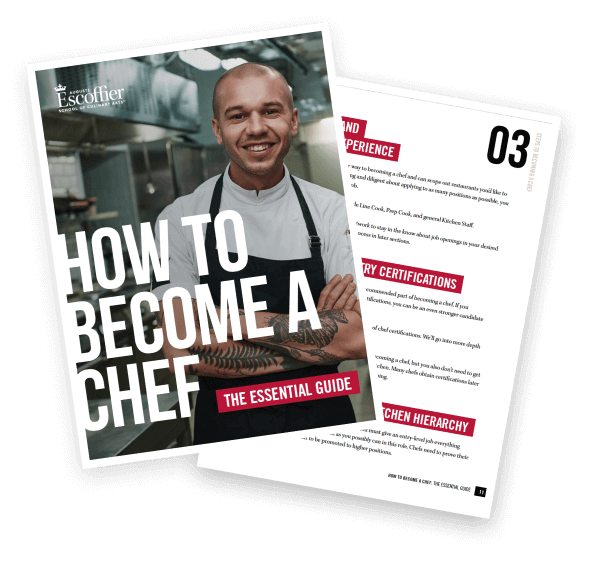
How to Become a Chef: Get the Career guide!
Have your sights set on wearing the chef’s hat? Discover the steps that may be required to start your culinary career and earn the title of ‘chef’.
Phase 2: Menu and Concept Development — Building the Strategy
With a clear picture of the operation, the consultant moves into developing recommendations, such as designing or refining menus, developing and standardizing recipes, and ensuring the food aligns with the concept’s identity and target customer.
This phase might also involve sourcing strategy, including identifying suppliers, evaluating ingredient quality and cost, and building purchasing relationships. For new concepts or rebrands, it might extend further upstream into decisions about cuisine type, price point, and overall food identity.
Menu Engineering: How Consultants Read a Menu
To analyze a menu effectively, consultants may use the classic Kasavana & Smith menu engineering matrix, which categorizes dishes into four distinct quadrants based on profitability and popularity.
| Menu Category | Consultant Strategy & Actions |
| Stars
High profit · High popularity ݀ |
Protect & Promote: Keep placement prominent; do not alter recipes or pricing without critical justification. |
| Workhorses
Low profit · High popularity |
Optimize Margins: Apply subtle price increases; reduce portion sizes slightly; or use lower-cost ingredient substitutions without sacrificing quality. |
| Puzzles
High profit · Low popularity |
Boost Visibility: Improve menu placement; rewrite descriptions to be more enticing; or run server sales incentives. |
| Dogs
Low profit · Low popularity |
Prune or Reposition: Typically remove from the menu entirely, unless they satisfy a necessary dietary restriction or deplete cross-utilized inventory. |
Depending on the client and the scope of the engagement, a chef consultant working through this phase might collaborate with or refer out to:
- Branding and graphic designers
- Web designers
- Social media specialists
- Procurement specialists
Not every client comes equally resourced. A well-capitalized restaurant group might already have dedicated HR, procurement, and marketing teams in place — the chef consultant slots into a defined role.
A first-time owner opening a neighborhood spot is a different story: a family member running the Instagram, the owner personally managing QuickBooks, and the chef consultant often serving as the most experienced outside voice in the room. Being ready to work across that entire range is part of the job.
Phase 3: Implementation — Putting the Plan into Practice
Implementation is where the strategy shifts into day-to-day practice.
During this phase, the focus usually turns to updating back-of-house infrastructure. This often involves configuring new POS systems, integrating inventory management software, and establishing standardized operational forms like daily walk checklists, food safety logs, and incident documentation protocols.
It is also the time to update food safety and HACCP procedures to reflect the revised menu and workflows. If line bottlenecks are an issue, this phase may include physical changes to the kitchen layout and station organization to eliminate wasted movement and accelerate service times.
Putting a new plan into action almost always brings unexpected challenges to the surface. A consultant might uncover a building code violation that requires an expensive repair, or find that a dish projected to be a high-margin top seller simply fails to connect with guests. Success in this phase relies on the ability to troubleshoot these operational realities on the fly without letting the project lose momentum.

Implementation often means evaluating kitchen layout, workflow, and equipment to identify where time and money are being lost.
Phase 4: Training and Execution — Making Changes Stick
This phase includes working directly with kitchen staff. Recipes need to be written so any cook can replicate them (i.e., using weighted measurements instead of a “handful of parmesan”), plating documented with photographs, prep steps timed and sequenced. Training also covers updated ordering protocols, revised station assignments, and new inventory procedures.
But how do you ensure everything keeps working after you leave? One approach is identifying anchor employees—team members who have a strong grasp of the fundamentals and the disposition to mentor others. Whether through informal guidance or a more structured “shadow-training” role for new hires, these staff members become the keepers of the standard.
It also helps to bring staff into the why, not just the how. A line cook who understands that proper vegetable prep saves 25 pounds of produce from the trash every week, for example, will likely keep that in mind more than someone who’s simply been told to cut a certain way.
Phase 5: Review and Optimization — Measuring What’s Working
In the final phase, the consultant reviews results against the goals established during discovery, assessing what’s working and what needs adjustment. Tools like Google Sheets and Excel can track key performance indicators (KPIs) like:
- Food cost percentage
- Average ticket time (from order to service)
- Average check size
- Inventory turnover
- Customer satisfaction ratings
- Health inspection scores
- Staff turnover rate
- Table occupancy percentage
Even a fully optimized business has work to do to avoid falling behind. Restaurants that chased trends—small-portioned meals for customers taking GLP-1 medications, beef tallow fries, low-carb keto options—can find those same menus feeling dated within a couple of years. AI-driven kitchen and operational tools keep evolving, too.
In some cases, the final phase never really ends: it becomes long-term monitoring of trends and KPIs to help the client keep pace.
A Chef Consulting Project: Phase by Phase
| Phase | Focus | Key Activities |
| Discovery | Understanding the operation | • Conducting on-site visits and service observations
• Auditing current recipes and purchasing data • Interviewing staff and assessing project scope |
| Menu and Concept Development | Building the strategy | • Engineering menus and standardizing recipes
• Costing ingredients and setting sourcing strategies • Aligning culinary changes with core concepts |
| Implementation | Executing the plan | • Configuring POS and inventory systems
• Drafting operational forms and HACCP updates • Redesigning kitchen stations and workflows |
| Training and Execution | Making it stick | • Leading staff training and recipe walkthroughs
• Documenting final kitchen procedures • Coaching leadership and onboarding new systems |
| Review and Optimization | Measuring and evolving | • Tracking operational KPIs
• Monitoring sales volume and margin trends • Providing ongoing strategic advisory |
How Do Chef Consultants Find Work?
Before they’ve built a portfolio, many chef consultants find their first clients through the relationships they’ve already built as a professional chef. They might reach out to a former employer who needs help with a new concept, a chef colleague whose restaurant is struggling with food costs, or a supplier contact who knows an owner looking for outside expertise.
The most common ways chef consultants find and build their client base:
- Referrals from past clients and colleagues
- Professional network and presence at industry events
- Relationships with complementary professionals, such as restaurant marketing agencies or commercial real estate brokers
- Online presence, including a professional website with case studies and client testimonials
The reality of the job is that finding clients, writing proposals, chasing follow-ups, and maintaining visibility in the market can be demanding, and this part of the job isn’t paid if you’re a freelance consultant. That’s a major reason why some consultants opt to join a firm.
Benefits of Being a Chef Consultant
A chef consultant is fundamentally a problem solver, someone who thrives on complex, often unfamiliar challenges and finds creative solutions where a kitchen team has gotten stuck.
A consultant’s job is rarely boring. Since they’re usually working on a specific project with a short-term client, each day can be different. This role also requires keeping on top of new culinary and product developments.
Another bonus: hours are often more consistent than the hours in a commercial kitchen. Consultants tend to work “office hours,” although there may be some late nights if you’re trying to meet a client deadline.
If you work as an independent consultant, you get to choose your projects and set your own hours. This also means you’re responsible for bringing in new business, which may lead to an inconsistent income while you get established.

The consulting side of culinary work often involves moving between the kitchen and the desk.
An additional option is to work as an employee for a consultant group. This comes with office support and a steady paycheck, but you may have less freedom in choosing your own clients and projects.
Challenges of Chef Consulting
The flexibility and variety that make chef consulting appealing come with real tradeoffs, particularly for independent consultants. Income can be inconsistent, especially in the early years of building a practice.
Independent consultants are also responsible for their own benefits, retirement planning, and the administrative work of running a business.
In an interview with Food Fanatics Magazine, chef consultant Kathy Casey advised that independent consultants should “Be aware of the pros and cons.”
“Some people go out on their own and then say, ‘Holy crap! I have to write proposals and chase money.’” Casey said. “They have no office support. It becomes overwhelming. There’s a lot that goes into getting work.”
Furthermore, a consultant’s reputation rests on results, but not every outcome is fully within their control. Ownership decisions, staffing instability, underfunding, and plain bad timing can undermine even the most well-conceived recommendations. Knowing when a situation is fixable and being honest with a client when it isn’t can be a difficult skill to develop.
How Much Do Chef Consultants Make?
Because chef consulting is a relatively niche role, it doesn’t have a clean, dedicated entry in the Bureau of Labor Statistics database the way more common culinary positions do. Salary data from job posting platforms and compensation research sites gives a reasonable picture, though the numbers vary depending on methodology and data sources.
Salary.com, which draws on HR-reported compensation data, puts the average base salary for a chef consultant at $76,887, with most professionals falling between $68,914 and $85,383. ZipRecruiter, which aggregates active job postings, reports a higher average of $103,425, with a wider range reflecting the significant variation in experience, specialization, and market.
The gap between the two figures reflects how differently the role can look depending on the engagement, the client, and the consultant’s track record.
Chef Consultant Salary Snapshot
| Salary.com | ZipRecruiter | |
| Average/Median | $76,887 | $103,425 |
| 25th Percentile | $68,914 | $50,500 |
| 75th Percentile | $85,383 | $130,000 |
| 90th Percentile | $93,119 | $192,500 |
Sources: How Much Does a Chef Consultant Make in the United States?, Salary.com, Chef Consultant Salary, ZipRecruiter
How to Become a Chef Consultant
Clients hiring a chef consultant are paying for expertise they don’t have themselves, which means the consultant needs to walk in with something real to offer. That takes time, varied experience, and a strong grasp of business fundamentals.
Educate Yourself in Culinary Arts and Restaurant Operations
Consultants should have a firm grasp of the industry if they’re going to help experienced culinarians to create new products or solve procedural issues. An education in proper sanitation, classical cooking techniques, and restaurant operations can help start the future consultant on the right path.
Consultants may also need expertise in managing food costs, improving inventory procedures, and money-saving techniques. In the culinary industry, where margins are slim, it’s highly likely that some of your clients will be looking for help with cutting costs. To get a good start, look for a culinary school with a business-focused curriculum that includes coursework in entrepreneurship, cost analysis, portion sizing, and accounting.
“Knowing how to manage food costs might not be sexy, but you need to know how to do that, says André Natera, an award-winning chef and culinary consultant with over 27 years of experience.
A degree or diploma can also make the right impression on potential clients. If they’re going to spend thousands of dollars on your services, it may give them peace of mind to know that you have the credentials to support your offerings.

Get the Essential Restaurant Management 101 Guide
This guide covers the essentials of restaurant management, from effective team-building and food safety practices to smart financial strategies and compelling marketing.
Gain Practical Experience Working in a Restaurant
A chef consultant will ideally have experience as… well, a chef. A culinary education can provide some of that foundational skillset, but you may also need the hands-on experience to become a valued consultant. The more comprehensive your industry knowledge, the more helpful you’ll be.
A great consultant understands not just the back of house, but the whole restaurant or culinary ecosystem. Hone your skills in both the kitchen and the front of house, and learn all you can about the business side of the industry. It may take a few years and several jobs before you feel confident in your ability to be a valued consultant.
Natera’s advice: “Work in a kitchen where you’re not the best. Work in kitchens that are hard. Surround yourself with cooks that are much better than you.”
The breadth of experience that comes from deliberately seeking out challenging environments can help create an exceptional chef, and in turn, an exceptional chef consultant.
As you’re getting started, you may want to look for a job or externship assisting a current chef consultant. This can let you “test out” the field to see if it’s for you before you commit to this career. All Escoffier graduates are required to complete a hands-on industry externship as part of their programs, and this would be a great time to learn more about the life of a consultant.
Building a Consultant-Worthy Résumé
The experience you accumulate before you ever take on a consulting client can become part of your pitch. A résumé that includes time under a James Beard-nominated or Michelin-starred chef, or at a restaurant on a best-of list, signals that you’ve operated at a level where standards are uncompromising.
“If there’s a restaurant that’s on the world’s 50 best, they’re mostly likely not hiring the cook that’s working at the diner,” Natera says. “However, the cook that’s at the world’s 50 best restaurant can easily get a job at a diner. Working at better restaurants creates much more opportunity for you […] That’s where you want to be.”
Seeking out the most demanding, highest-caliber environments available to you can open up options that might not otherwise be available.
Continue Developing Your Business and Leadership Skills
As a solo consultant, you’ll need to keep developing skills that go beyond the kitchen. Communication is among the most important, as consulting involves working directly with clients, often under pressure, and delivering difficult feedback clearly and constructively.
For a consultant advising a restaurant owner, business skills are even more important.
“Having a business degree is a huge part of who I am today. You need to understand business principles to be a chef, more so to have a restaurant,” says Chef Jesse Ito, co-owner of Royal Sushi and Izakaya.

Chef consultants need to be as comfortable reading a P&L statement as they are developing a menu.
If a client hires a chef consultant to help overhaul their staff training program or find efficiencies in the kitchen workflow, they’re probably going to anticipate that the consultant will be as organized, if not more, than they already are. Disorder and disarray can convey a lack of organization and potentially diminish clients’ trust, so organization is also vital.
And being an independent consultant means you’ll not only have to manage your client load but also deal with all the elements of running your own business – think marketing, bookkeeping, scheduling, and invoicing, to name a few. Depending on the size of your operation, you may eventually opt to hire someone else to help you with this.
Build Your Personal and Professional Network
Part of working as a consultant is finding clients. And your network of chefs and culinary professionals could be the first place to look.
In culinary school, students are surrounded by like-minded food lovers, from their fellow students to their Chef Instructors. This can form the foundation of your culinary network, which could eventually grow to include coworkers, employers, and future culinary students.
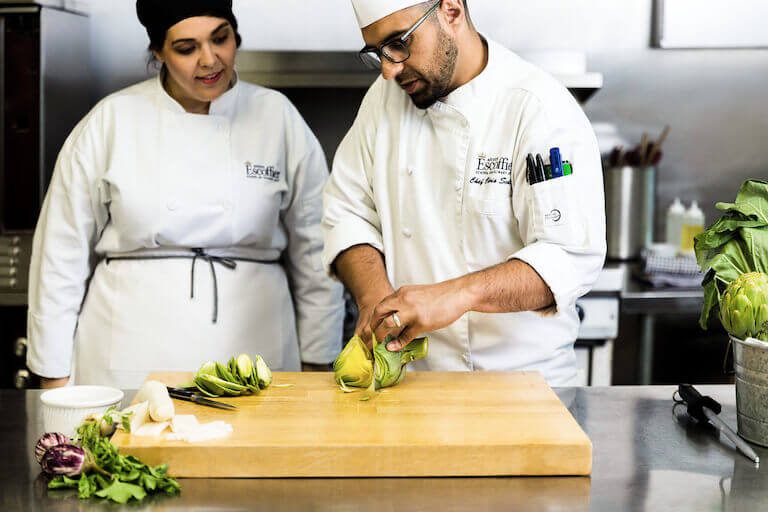
Building connections with experienced culinary professionals, including Chef Instructors, can be one of the most valuable parts of a culinary education.
Escoffier graduates can also have access to the Auguste Escoffier Alumni Association, where they can keep in touch with classmates and other graduates. This network could be a valuable resource for finding your first resume-building clients as a chef consultant.
Start Your Path to Chef Consulting
A chef consultant is an exciting career to consider. If you love the culinary industry but want a more predictable schedule and a wider variety of day-to-day projects, consulting could offer a compelling alternative to long nights behind the line.
That said, consulting is not an entry-level path. The most effective consultants come in with a deep culinary foundation, real industry experience, and a professional network they’ve built over years. Clients are paying for expertise, and that expertise has to be earned first.
Whether your goal is to consult on menus, organize back-of-house logistics, or specialize in a niche market, Escoffier offers programs that may align with your ambitions. Contact us and we can help you figure out which direction fits where you want to go.
TO LEARN MORE ABOUT CULINARY AND PASTRY CAREERS, TRY THESE ARTICLES NEXT:
- 14 Culinary Careers Outside of the Kitchen
- Culinary Careers for Introverts vs. Extroverts
- The Highest Paying Culinary Jobs and Positions
This article was originally published on March 9, 2021, and has since been updated.
FAQs
Chef consultants work with food service businesses and food producers on a project basis, helping them improve operations, develop menus, train staff, cut costs, or launch new products.
Unlike traditional restaurant chefs, consultants move between clients and projects rather than working in a single kitchen, bringing outside expertise and a fresh perspective to help businesses solve specific culinary or operational challenges.
Chef consultants may build their careers on a foundation of formal culinary education combined with several years of hands-on restaurant experience. A strong grasp of both kitchen operations and business principles—including cost control, inventory management, and food safety—is often essential. Consultants may also need strong communication skills and an established industry network to attract and retain clients.
While not required, formal culinary training can be important for this career, particularly for consultants working in research and development or product commercialization. Clients paying for consulting services often want confidence that their consultant has the credentials to back up their recommendations. A culinary degree that includes business-focused coursework can provide both the technical foundation and the professional credibility the role demands.
Restaurant chefs work within a single establishment, managing daily kitchen operations and leading a team through service. Chef consultants work independently across multiple clients and projects, focusing on problem-solving, improvement, and development rather than day-to-day cooking. Consultants may have more schedule flexibility and variety in their work, though building a client base requires strong networking and business development skills.
For experienced culinary professionals who enjoy variety, problem-solving, and working independently, consulting can be a rewarding career path. It can offer more predictable hours than restaurant work and the opportunity to tackle diverse challenges across different types of food businesses. The tradeoff is that independent consultants must manage their own business development, marketing, and finances—and building a steady client roster may take time.