
Listen to This Article:
You know you want a career in food, but figuring out where to begin can often be the hardest part. Do you picture yourself creating savory dishes in a professional kitchen or perhaps crafting delicate pastries and artisan breads? Maybe you see yourself reinventing familiar favorites through a plant-based lens?
One of the most exciting things about the food industry is that there isn’t just one path to success. Culinary arts, baking and pastry, and plant-based cuisine can each offer distinct approaches, skill sets, and career opportunities. Understanding what sets them apart can help you narrow your options and discover where you feel most at home in the kitchen.
Culinary Arts vs. Baking & Pastry vs. Plant-Based: What’s the Difference?
While all three disciplines center around food, they each approach it a little differently. The culinary arts field offers a broad foundation in savory cooking and the overall dining experience. Baking and pastry emphasizes precision and scientific technique. Plant-based cuisine reimagines traditional cooking through an ingredient-focused lens that prioritizes vegetables, grains, legumes, and plant proteins.
Here’s a closer look at what sets each specialization apart.
Culinary Arts
Culinary arts can provide a broad creative foundation that extends beyond cooking individual dishes, preparing graduates for careers across restaurants, hotels, resorts, catering, and other hospitality settings.

The culinary field is vast, with opportunities spanning restaurants, hotels, catering, food media, product development, and countless other paths.
Baking & Pastry
Baking and pastry is often considered the more science-driven side of the kitchen.
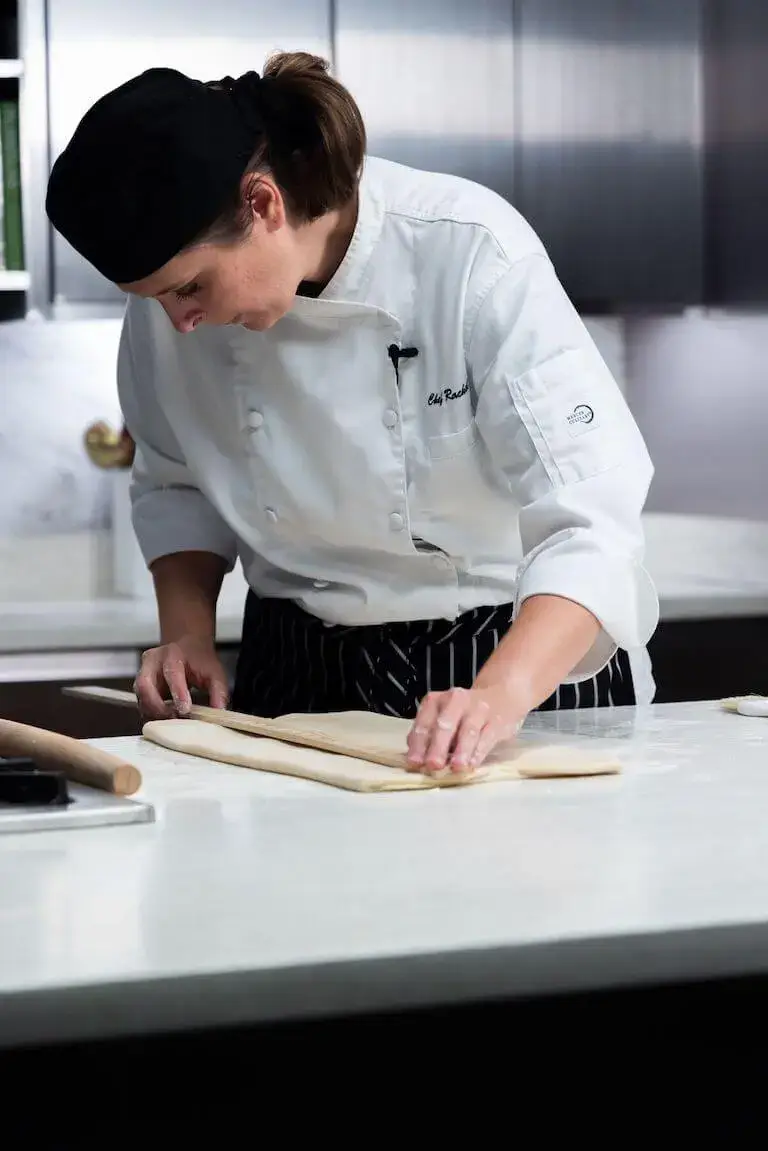
Baking and pastry often rewards patience and precision, where small adjustments can dramatically change the final product.
Unlike savory cooking, where there is often room for improvisation, pastry relies heavily on precision, as measurements, temperature, humidity, and even altitude can affect the final product.
Career paths may include baker, pastry chef, chocolatier, cake decorator, food stylist, or home bakery owner.

Get the Home-Based Bakery Guide
Ready to kickstart your flexible food venture from the comfort of home? Discover secrets to pricing, social media marketing, and more in this guide to launching your home-based bakery!
Plant-Based Cuisine
Plant-based cuisine applies classical culinary techniques to ingredients like vegetables, legumes, grains, nuts, seeds, and plant proteins, reimagining familiar dishes through an ingredient-focused lens.
Graduates may pursue careers as plant-based cooks, personal chefs, recipe developers, food truck owners, health coaches, or research chefs.

Plant-based cuisine goes beyond salads, using classical techniques to transform vegetables, grains, and legumes into memorable dishes.
No matter which specialization you choose, there is often significant overlap in foundational business and professional skills. Students may also build knowledge in areas like purchasing and cost control, menu development, foodservice management, and hands-on industry experience through an externship.
| Culinary Arts | Baking & Pastry | Plant-Based | |
| Technical Focus | Cooking methods, knife skills, mother sauces, global cuisines | Mixing methods, laminated doughs, bread, chocolate, cake decorating | Plant proteins, substitution methods, seasonal cooking, plant-based pastry |
| Career Environment | Restaurants, hotels, resorts, country clubs, catering | Bakeries, cafés, restaurants, dessert boutiques, resorts | Health-focused restaurants, spas, resorts, personal chef, CPG |
| Externship Setting | Restaurant, hotel, catering operation | Bakeshop, hotel pastry kitchen, café | Health-focused restaurant, wellness operation, resort |
| Example Employers From Previous Escoffier Students* | Restaurants, hotels, country clubs, catering companies | Nothing Bundt Cakes, JW Marriott, Disney, La Madeleine | Hyatt, Compass Group, Four Seasons, Sodexo |
Culinary Specializations Often Overlap
Remember that these categories aren’t always rigid. Many culinary professionals blend multiple specialties throughout their careers.
For example, a chef may combine pastry techniques with plant-based principles or incorporate more plant-forward dishes into traditional menus. A chef working in a savory kitchen without a dedicated pastry chef may also create simple desserts for service, sometimes referred to as a “cook’s dessert.” This could be a simpler dessert such as an olive oil cake or seasonal fruit crumble that can be executed without a dedicated pastry team.

Many culinary careers extend beyond the kitchen, with opportunities in recipe development, food media, consulting, and education.
Likewise, pastry chefs don’t work exclusively with sweets. They may incorporate savory elements into breads, pastries, or desserts, using ingredients like herbs, cheese, vegetables, or spices.
These disciplines often overlap in ways that allow chefs to continuously expand their skills throughout their careers.
How to Choose the Right Specialization for You
There’s no universally “best” culinary specialization. The right choice for you can often come down to how you like to work, create, and solve problems.
As a practical self-check, think about the recipes and projects you’ve naturally gravitated toward at home. Where did time disappear for you? Were you happiest perfecting a loaf of bread, experimenting with vegetable-forward dishes, or preparing a multi-course meal for friends and family? Those moments can offer valuable clues about which specialization may be the best fit.
Consider Culinary Arts if…
You enjoy variety and don’t want to limit yourself to one type of cuisine or role. A culinary arts education can provide a broad foundation that transfers across many kitchens, cuisines, and career paths.
For example, you may begin as a line cook building knife skills and learning the rhythm of service, then later decide to train in sushi, where precision knife work is central to the craft. Or maybe you want to explore Thai cuisine with its complex balance of sweet, sour, salty, spicy, and bitter flavors. Perhaps you’ll become fascinated by the French mother sauces and travel to France to deepen your understanding of classical techniques.
The culinary field is vast, so there’s always an opportunity to learn new things, travel to different places, or stage in different environments to pick up new insights and skills.
Not only is the field far and wide, so are the environments. You could cook in a local mom-and-pop restaurant, work your way up in a Michelin-starred kitchen, try your hand as a private chef, work on cruise ships, or go the entrepreneurial route and open a food truck.
Marc’s Path: From Architecture to the Kitchen
Marc Mole, an Escoffier Culinary Arts graduate, came to culinary school at 45 after a career in architecture. What drew Marc in was a desire for skills that felt transferable across countries and contexts.
While enrolled in Escoffier’s online program, Marc secured an apprenticeship at La Piquette, a French bistro in Washington, D.C., working through every station in the kitchen under the mentorship of Chef Francis Layrle. When the bistro’s pastry chef moved on, Marc stepped into the role and held it for two years, building confidence and deepening his technique in a working professional kitchen.
After relocating to the UK, Marc transitioned into running the kitchen at an alternative education school in Stockport that serves roughly 350 meals a day to students, many of whom are navigating difficult home circumstances. He manages the operation entirely on his own — meal planning, prep, cooking, ordering, and compliance with UK school food regulations — and tailors the menu to what his students want to eat.

Marc Mole, middle, enrolled in culinary school at 45. He was later inducted into the UK chapter of the Disciples Escoffier, a prestigious global culinary organization that recognized Marc’s outstanding dedication to mentorship, culinary tradition, and education.
Marc’s path illustrates something important about culinary arts: the skills can transfer. Restaurant kitchens, bistros, institutional settings, and everything in between all draw on the same core foundation of technique, organization, and the ability to feed people well under pressure. That range is part of what draws people to this specialization, and part of what keeps it open-ended as a career.
A culinary arts career could be a good choice if you thrive in collaborative, fast-paced environments and like balancing creativity with organization. Kitchens typically follow the brigade system, so you’ll most likely be working alongside a team. As you gain experience, you may also enjoy taking on leadership opportunities by managing prep schedules, mentoring junior cooks, or orchestrating service.
Consider Baking & Pastry if…
You appreciate precision and enjoy following a process from start to finish. You may find satisfaction in measuring ingredients, decorating cakes, refining techniques, and creating consistent results.
Baking and pastry often requires patience and a willingness to repeat a recipe multiple times, making small adjustments until you achieve the desired outcome. You might spend one day perfecting a laminated croissant dough, another tempering chocolate for bonbons, and another designing a multi-tiered wedding cake.
Unlike savory cooking, where chefs may rely on intuition and add “a little of this or a little of that,” baking is rooted in science, and the small variables really do matter. An extra half cup of flour, a longer fermentation time, or a slight temperature change can completely alter the final product. Adapting traditional recipes to be gluten-free can also open up a challenging but exciting opportunity for bakers.
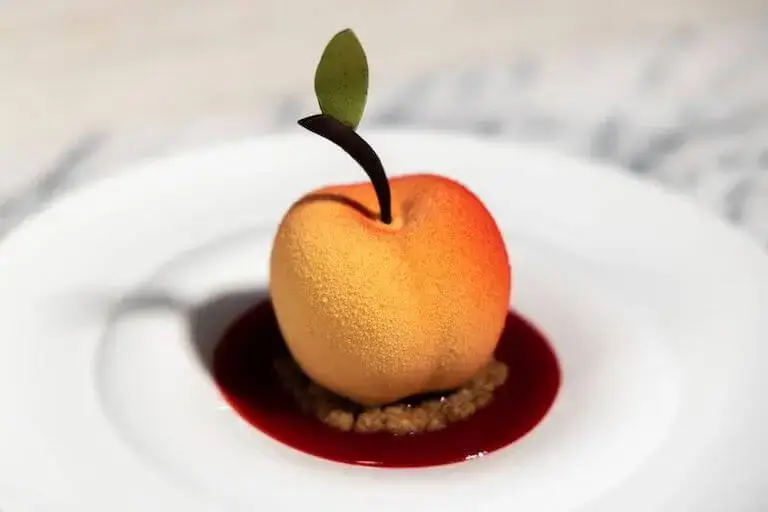
Baking and pastry goes beyond cakes and cookies. Students may explore plated desserts, classic preparations like Peach Melba, and contemporary presentation techniques.
If you enjoy combining artistry with technical precision, baking and pastry could be a rewarding path. You might find yourself working in local bakeries or confectionary shops, creating content on social media, decorating cakes for weddings or other big celebrations, or starting your own home bakery.

Consider Plant-Based Cuisine if…
You enjoy experimenting with ingredients and thinking creatively about how food can evolve. Plant-based cuisine often attracts people who are curious, adaptable, and excited by the challenge of reimagining familiar dishes.
You might explore how to create creamy sauces without dairy, build rich flavors from vegetables and spices, or transform ingredients like mushrooms, legumes, nuts, and grains into satisfying center-of-the-plate dishes. Plant-based culinarians can often become experts in substitutions, allergen-friendly cooking, and highlighting seasonal produce.

Plant-based cuisine can challenge students to think differently about ingredients, techniques, and flavor development.
Bree’s Path: From Photography to Plant-Based Cuisine
Bree Chumley, an Escoffier Plant-Based Culinary Arts graduate, came to the program after two decades as a professional photographer. Bree had been cooking plant-based since age 13 but had never considered pursuing it professionally until she came across Escoffier’s program. What drew her in was the combination of classical technique and a curriculum built entirely around plant-based cooking—no compromises required.
During the program, Bree began developing vegan cheeses as extra credit projects, eventually crafting versions of bleu cheese from tempeh and spirulina, black garlic cheddar, and savory “beluga caviar” made from black lentils.
Six months into culinary school, she entered a cooking competition at the Cleveland Garlic Festival with a plant-based bánh mì. The response was strong enough that people kept coming back for samples after the competition ended, and she ran out of supplies before the day was over. Shortly after, she sold out her vegan cheeses at a local pop-up within the first hour.

Bree Chumley studied Plant-Based Culinary Arts and went on to build a personal chef business in Ohio.
After graduation, Bree built a personal chef practice in Cleveland, Ohio, working with clients whose dietary restrictions require exactly the kind of substitution expertise and ingredient-focused thinking that plant-based training can develop. She has since expanded into handmade spice blends, crafting more than 150 varieties from dehydrated food scraps, and is developing an online shop to bring her zero-waste pantry work to a wider audience*.
Bree’s path is one example of where this specialization can lead. This education path may also appeal to those interested in wellness, sustainability, and global food traditions. Career opportunities can extend beyond restaurants to areas like recipe development, personal chef services, food trucks, health coaching, and culinary education.
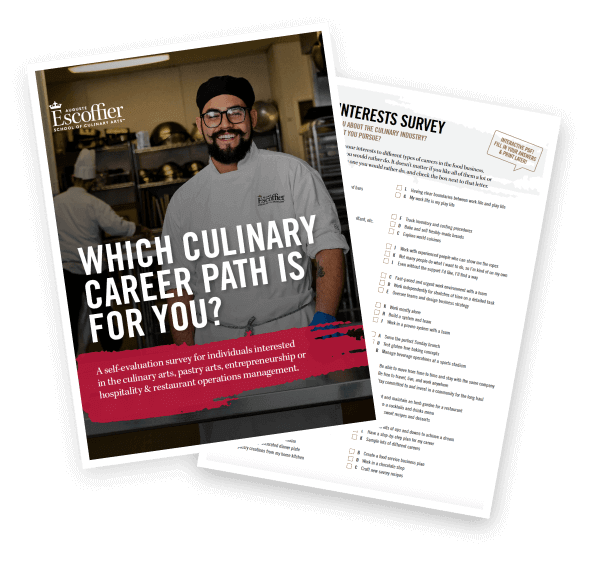
Take the Culinary Career Survey
We’ve compiled a checklist of all of the essential questions into one handy tool: career options, culinary interest surveys, educational opportunities, and more.
Matching Your Specialization to Your Career Goals
Choosing a specialization isn’t just about what you like to cook. You may also want to consider the type of career you want to build. Some culinary professionals pursue traditional roles in restaurants and hospitality settings, while others build businesses of their own or create careers that exist beyond the kitchen altogether.
Traditional Careers
Many graduates begin in traditional culinary settings, but each specialization may naturally open different doors.
Students in culinary arts often pursue roles in restaurants, hotels, resorts, country clubs, catering companies, corporate dining programs, and other hospitality environments. Their broad training can make it easier to move between industry segments throughout a career.
Baking and pastry graduates may work in restaurants, bakeries, hotels, retail bakeries, dessert boutiques, chocolate shops, or large-scale food production environments.
Plant-based graduates can pursue careers in restaurants as well, but may also find opportunities with wellness-focused employers, health resorts, spas, retreat centers, and organizations emphasizing sustainability and nutrition.
Across all specializations, opportunities also exist in institutional dining, leisure and recreation settings, food manufacturing, and retail food operations.
These “traditional” careers can help give new graduates a strong foundation. You’ll often be working as part of a team, which can be an excellent opportunity to learn new tips, skills, and techniques from your superiors and peers.
Alternative Careers
Not every culinary career takes place behind a restaurant line. Some professionals may prefer flexibility or enjoy the freelance lifestyle, eventually transitioning into careers of food media, test kitchens, consulting, recipe development, or even culinary instruction.
Specialization can still play an important role here, but often in different ways than it does in a traditional kitchen. A baking and pastry professional may become a cookbook author or cake stylist. A culinary arts graduate may work as a food writer, recipe tester, or culinary producer. A plant-based specialist may build a career around wellness content, sustainability initiatives, or allergen-friendly recipe development.
All of these careers may lend themselves to content creation, too, if that’s a direction that excites you.
Entrepreneurial Careers
Many culinary professionals eventually decide to build something of their own.
Culinary arts graduates may open restaurants, launch food trucks, operate ghost kitchens, or start catering businesses.
Baking and pastry graduates may build home bakery businesses, retail bakeries, dessert boutiques, chocolate shops, or online pastry businesses.
Plant-based professionals may launch plant-based restaurants, personal chef services, packaged food brands, recipe development businesses, or food blogs.
As you think about your future, consider not only what you enjoy making, but also how you want your career to look day to day. The answer may help narrow your specialization just as much as your culinary interests do.
What Could Your Career Look Like?
| Career Type | Culinary Arts | Baking & Pastry | Plant-Based |
| Professional Careers | Restaurants, hotels, resorts, catering, country clubs | Bakeries, hotels, dessert programs, chocolate shops | Restaurants, wellness resorts, spas, institutional dining |
| Alternative Careers | Food media, test kitchens, culinary instruction | Food styling, cookbook writing, cake design | Wellness content, recipe development, sustainability |
| Entrepreneurial Careers | Restaurant, food truck, ghost kitchen, catering | Bakery, dessert boutique, online pastry business | Plant-based restaurant, personal chef, packaged goods |
How to Test Each Path Before You Commit
Choosing a specialization doesn’t have to happen overnight. In fact, one of the best ways to determine what suits you can be to try aspects of each discipline before enrolling in a program or committing to a career path.
Cook at home with the specialization in mind. Challenge yourself to cook like a culinary student for a week. If you’re interested in baking and pastry, measure ingredients carefully, follow recipes precisely, and notice whether you enjoy the technical process.
Curious about plant-based cuisine? Build meals around seasonal produce and challenge yourself to create satisfying dishes using vegetables, grains, legumes, and plant proteins.
Exploring culinary arts? Practice knife skills, prepare a multi-course meal, or try cooking dishes from cuisines you’re unfamiliar with.
Spend time in the environment you’re considering. If possible, stage, shadow, or work part-time in a kitchen that aligns with your interests. Spending even a few hours in a bakery, restaurant, catering kitchen, or plant-based establishment can give you a realistic picture of the day-to-day work involved.
Pay attention to your natural interests. Explore the culinary interest survey above and notice where your interests tend to cluster. Are you consistently drawn to creativity and variety? Do you enjoy detail-oriented work and technical precision? Or are you energized by ingredients, wellness, and reimagining traditional foods?
Audit your food media habits. The content you gravitate toward may reveal more than you realize. Are you watching videos about knife techniques and restaurant service? Saving tutorials on sourdough and laminated pastry? Or following creators who focus on seasonal produce, wellness, and plant-forward cooking?
Another Decision to Consider: Online or On Campus?
Once you’ve narrowed down your specialization, you may also want to think about how you prefer to learn: online or on-campus.
Online programs can offer greater flexibility if you’re balancing work, family responsibilities, or simply don’t want to relocate while earning your education.
On-campus programs can provide a more traditional learning experience, allowing you to work alongside Chef Instructors and classmates in person each day.
Keep in mind that program availability may vary by location and format, so it’s worth exploring which options are available for the specialization you’re interested in.
Prefer to do a little more reading on your own first? The Escoffier blog is a wealth of information, offering deep dives into culinary career options, culinary education, and student experience stories.
Even if your interests evolve over time, there may also be opportunities to explore other disciplines, so don’t be afraid to ask questions as you navigate the decision-making process.
Finding the Right Fit for Your Culinary Future
Exploring these specialties is about more than choosing what you want to cook. It’s about discovering how you like to create, solve problems, and connect with others through food. By understanding what makes culinary arts, baking and pastry, and plant-based cuisine unique, you can find a path that aligns with your interests, strengths, and long-term career goals.
Remember that choosing a specialization isn’t about locking yourself into one path forever. Many culinary experts continue to explore new techniques, cuisines, and disciplines throughout their careers, allowing their interests to evolve over time.
Whether you see yourself leading a restaurant kitchen, decorating intricate pastries, or reimagining familiar dishes through a plant-based lens, taking the first step is often the hardest part. If you’re ready to explore your options, contact our Admissions team to find out more about available programs, curriculum, and educational pathways as you begin building your culinary future.