
Listen to This Article:
Culinary school can be a great place to develop technical skills and build connections that could help you take your career to the next level. But what does it actually take to get in?
At Auguste Escoffier School of Culinary Arts, admission is non-competitive. If you meet the basic requirements, you can enroll in the program of your choice. There’s no entrance exam, no essay defending why you deserve a spot, no anxious waiting to see if you’ve been selected.
That said, you can make the process easier by getting informed. Enrolling in culinary school represents a significant commitment to your future, and there are important decisions to make about which program fits your goals, how you’ll finance your education, and what the enrollment process involves. Understanding these elements ahead of time can set you up for a smoother experience.
Meeting the Basic Requirements
Whether you can enroll at Escoffier depends on meeting a few basic requirements. The specifics vary slightly between campuses, but the essentials remain consistent.
For Boulder Campus students (including online programs):
- Must be a minimum of 16 years of age
- Application for Admission
- AESCA Enrollment Agreement (inclusive of written permission of parent or guardian if under 18)
- Proof of high school graduation or equivalent (must be obtained through one of the following):
- Standard high school diploma or transcript
- High school equivalency exam: GED, HSED, HiSet, or TASC or documentation demonstrating that the student has passed a state-authorized examination that the state recognizes as the equivalent of a high school diploma
- Official college transcript from a completed Associate or higher degree program from an accredited institution
- 60 completed college semester credits or 90 completed college quarter credits from one accredited institution, or
- State recognized homeschool documentation as required by local and or state agencies, not limited to the following: notification to the required agency, academic transcripts, and proof of graduation
- For U.S. veterans, DD-214 which indicates high school equivalency
- Admissions interview
- FERPA Release Form
For Austin Campus students:
- Application for Admission
- AESCA Enrollment Agreement (inclusive of written permission of parent or guardian if under 18)
- Proof of high school completion or equivalent:
- High school diploma
- High school equivalency exam: GED, HiSet, or TASC
- State-approved homeschool certificate of completion
- Official college transcript from a completed associate or higher degree program**
- For U.S. veterans, DD-214 which reflects high school equivalency
- Admissions interview
- Tour of facility
- Record of previous education & training (CSC-010)
- Receipt of Enrollment Policies (CSC-005)
- Information Release Form (FERPA)
Gathering any required paperwork—like proof of graduation—ahead of time can save you effort during the application process and help things move more smoothly.

**Degree must be in a program that fully matriculates into a bachelors level program
Choosing Your Program
Once you’ve confirmed you meet the requirements, the next step involves determining which program aligns with your interests, career aspirations, and personal timeline. This is where your culinary education journey becomes uniquely yours.
The choice you make here matters. Different programs may emphasize different skills, prepare you for different career paths, and require different time commitments. There’s no one “right” choice—only the choice that may be right for you depending on where you want to go in the culinary and hospitality industry.
Selecting an Academic Discipline
Escoffier offers programs across six different disciplines, each designed to help you develop skills and explore techniques that could support your particular goals. Some students know immediately which discipline calls to them. Others may take more time to research and reflect before making their choice.
If you’re uncertain which path to take, consider what draws you to the culinary world in the first place. Are you fascinated by the science of baking, where precision and chemistry create something magical? Do you dream of opening your own restaurant or food truck? Are you passionate about helping others develop healthier eating habits? Or does the idea of managing a bustling hotel or catering operation energize you? Your answers to these questions can point you toward the discipline that fits.
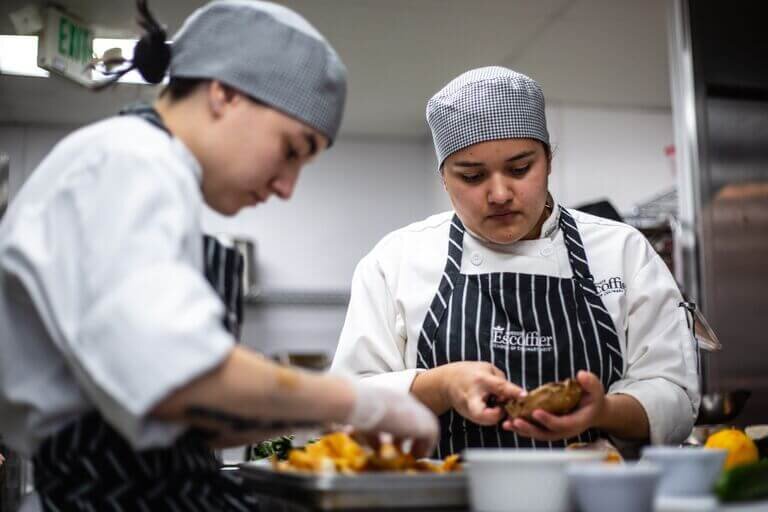
Reflecting on your professional goals can help you determine which Escoffier program feels right for you.
Here’s an overview of each discipline Escoffier offers:
- Culinary Arts – Explore traditional and contemporary cooking techniques, from foundational knife skills to advanced preparation methods, with business principles woven throughout.
- Baking and Pastry Arts – Focus on breads, doughs, cookies, cakes, and confiserie while developing the precision and creativity essential to pastry work.
- Food Entrepreneurship – Combine culinary fundamentals with business coursework in marketing, management, and operations to prepare for owning your own food venture.
- Plant-Based Culinary Arts – Discover the versatility of non-animal ingredients through cooking and baking while building a foundation in foodservice management and entrepreneurship.
- Holistic Nutrition & Wellness – Blend nutritional science with culinary applications to prepare for careers helping others develop healthier relationships with food.
- Hospitality & Restaurant Operations Management – Build skills in leadership, service, cost control, and human resources to oversee successful foodservice and hospitality establishments.
Each of these programs culminates in a hands-on industry externship, giving you the opportunity to apply what you’ve practiced in a real professional setting. For some students, this externship becomes their entry point into the industry. For others who already work in food service, it may deepen their understanding of how professional kitchens operate at a higher level.
On Campus, or Online?
Another key consideration is whether you’ll study online or at one of Escoffier’s campuses.
- Online programs can offer flexibility if you don’t want to relocate or have family and work commitments to balance with your education.
- On-campus programs provide a traditional in-person educational experience where you can work alongside instructors and fellow students daily.
Keep in mind that not all programs are available at both campuses. Check out our program directory to see your options for your program of choice!
Associate Degree or Diploma: Which Could Be Right for You?
Beyond selecting your discipline, you’ll also need to decide whether to pursue an associate degree or a diploma. Both credentials can help prepare you for a career in the culinary industry, but they differ in scope, timeline, and what they emphasize.
Escoffier offers both options for most disciplines, so your choice comes down to your personal goals and preferences.
- Diploma programs are typically shorter—usually completed in about 30-60 weeks depending on the program and your pace. They focus primarily on culinary or industry-specific skills, getting you into the kitchen and building hands-on competencies quickly. If you’re eager to start working in the industry as soon as possible, or if you already have a degree in another field and are looking to complement your existing skills with culinary training, a diploma program might be the right fit.
- Associate degree programs take longer to complete—typically around 60-84 weeks—and include additional coursework alongside your core culinary curriculum. These programs often incorporate a focus on business-oriented classes, covering topics like cost control, marketing, and management. An associate degree can provide a broader educational foundation that some students find valuable for long-term career growth, particularly if they’re interested in eventually moving into management or even ownership roles.
Both paths can lead to meaningful careers in food. What matters most is not which credential you choose, but what you plan to do with the skills and knowledge you gain.
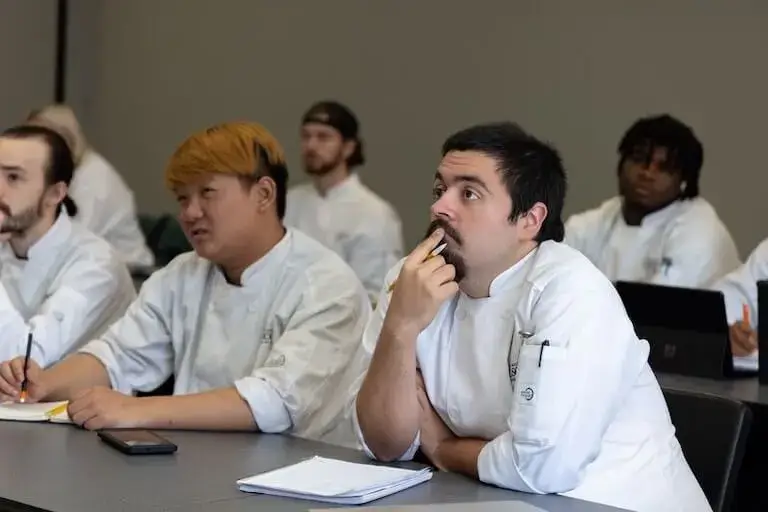
Escoffier programs combine training in the theoretical principles and hands-on skills that could help you take your career to the next level.
If you’re unsure which route makes more sense for your situation, Escoffier’s admissions team can help you think through the options. They are available to discuss the curriculum for each credential, explore how the different programs align with different career paths, and help you weigh the pros and cons based on your specific circumstances and goals.
Weighing Your Options
Unsure which program could be right for you? Take some time to reflect on your personal interests, career goals, and lifestyle.
- Think about what excites you most about food
- Imagine where you see yourself in five or ten years
- Consider your current life circumstances – how much time you can realistically commit to your education?
These reflections can help guide you toward the program that makes the most sense for your situation.
Developing Your Financial Plan
After you’ve determined which discipline, location, and credential interest you, the next question often becomes: how will you finance your education?
Without a plan, the cost of postsecondary education might seem daunting—particularly if you’re not sure where to start or what resources might be available to you.
The good news is that a variety of options may be available to help make culinary school more accessible. These can include scholarships, grants, and loans, in addition to your own savings, income from work, or assistance from family. Students often use a combination of these resources to cover their costs.
Financing your education requires planning, but you don’t have to navigate it alone. Escoffier’s financial aid office works with students to explore available options and create a plan that fits their circumstances.
Scholarships and Grants
You may want to start by looking into scholarships and grants—these don’t need to be repaid, making them some of the most valuable forms of financial aid.
Escoffier offers institutional scholarships, and numerous external organizations provide scholarships specifically for culinary students. Industry associations, community foundations, and even some food companies offer awards for aspiring culinarians.
Take the time to research your options; even a few smaller scholarships can add up, reducing what you may need to spend or borrow.

Take the time to research your financial options – grants and scholarships could help lower the cost of your education.
Student Loans
Federal financial aid is available for those who apply and qualify.* This can include grants like the Federal Pell Grant, as well as federal student loans.
The application process begins with the Free Application for Federal Student Aid (FAFSA®), which you can complete online. Escoffier’s financial aid team can guide you through this process, answer questions, and help you understand what types of aid you may be eligible to receive.
*International students are not eligible for Title IX funding.
Other Considerations
Some students also choose to work part-time during their studies to help cover living expenses. This can be more feasible for those enrolled in online programs, which may offer more scheduling flexibility than traditional on-campus programs.
While working and studying simultaneously requires careful time management, many students successfully balance both.
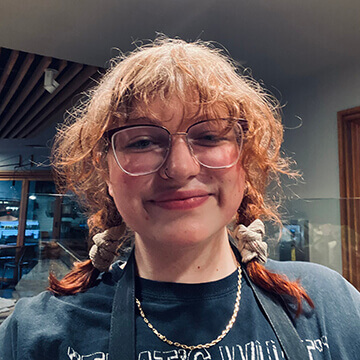
The key is to start early, explore all available resources, and ask questions when you need clarity.
Create a realistic budget that accounts for both tuition and living expenses. Research all your options for funding. And don’t let financial uncertainty keep you from pursuing the education that could help you reach your goals. With proper planning and the right support, culinary school can be within reach.*
*Consider your situation and resources to determine what is affordable for you.
Completing the Process
Once you’ve reviewed your options and feel ready to move forward, the application process itself is straightforward. With the preparation you’ve already done—researching programs, gathering documentation, and thinking through your financial plan—the final steps can go more smoothly than you might expect.
You’ve already done the hard work of deciding that culinary school is right for you and determining which program fits your goals. Now it’s just a matter of completing the process and making it official.
Step 1: Submit your application
Fill out the online application form. There’s no application fee, and the form itself shouldn’t take long to complete. You’ll provide basic information about yourself, your educational background, and the program you’re interested in.
Step 2: Provide required documentation
Submit your proof of high school graduation or equivalent, along with any other documentation required for your campus of choice. Having these materials ready in advance—gathered during your planning process—can speed things up significantly. If you’re missing any documents or not sure what you need, the admissions team can help you figure out what’s required and where to get it.
Step 3: Work with Financial Aid to submit your FAFSA
Escoffier suggests that all students complete the FAFSA®. This is the free government form that determines your eligibility for federal grants and loans. Escoffier’s financial aid team can guide you through this process, answer your questions, and help you understand your options. The FAFSA can seem intimidating if you’ve never filled one out before, but the financial aid office is there specifically to help students navigate it.

Escoffier’s Financial Aid office can help you explore your options and get ready to submit your FAFSA®
Once you’ve completed these steps and been accepted, you’ll go through an orientation process designed to help you get ready to start your program. You can find out more about what to expect, how the curriculum works, what resources are available to you as a student, and how to set yourself up for a successful experience.
At this point, the “hard” part of getting in is behind you. Now comes the exciting part: preparing for your life as a culinary student and beginning the journey toward developing the skills and knowledge that could serve you throughout your career in the food industry.
Getting In Is Just the Beginning
Escoffier’s application process is designed to be straightforward. And when you come into it prepared—knowing what program you want, understanding the requirements, and having a financial plan—getting in doesn’t have to feel difficult.
Of course, admission is just the beginning. Once you’re enrolled, the real work starts: developing your skills, exploring techniques, and building the foundation that could serve you throughout your career. It’s a challenge that can open doors and create opportunities you hadn’t imagined.
Questions about the application process? Admissions is here to help. Reach out anytime—they’re ready to support you as you take this step toward your culinary future!
FAQs
Admission requirements vary by school, but most culinary programs require proof of high school graduation or equivalent (such as a GED or college transcript), a completed application, and an admissions interview. At Escoffier, students must be at least 16 years old and provide documentation of high school completion or equivalent. There’s no application fee, entrance exam, or essay required. If the student is under 18 years old, they must provide written permission from a parent or legal guardian.
No, most culinary schools don’t require prior cooking experience for admission. Programs are designed to teach students from the ground up, starting with foundational skills and progressing to advanced techniques. Whether you’re coming from another career or just starting out, culinary programs can help you develop the skills needed for the industry.
Many culinary schools do not require entrance exams for admission. Escoffier has no entrance exam—admission is non-competitive and based on meeting basic requirements like proof of high school graduation and completing an admissions interview. This makes the application process straightforward and accessible for students ready to commit to their culinary education.
Culinary school admissions can range from highly competitive at some institutions to non-competitive at others. Schools with non-competitive admissions accept students who meet basic requirements without comparing applicants or limiting enrollment spots. This approach focuses on a student’s readiness and commitment rather than competing against other applicants.
Most people who meet basic educational requirements can enroll in culinary school. Typical requirements include being at least 16 years old and having a high school diploma, GED, or equivalent documentation. Some schools may have additional prerequisites, so it’s important to check specific requirements for the program you’re interested in.
Many culinary schools don’t have minimum GPA requirements for admission. Instead, they focus on whether applicants meet basic educational qualifications and demonstrate readiness to commit to culinary training. Schools with non-competitive admissions evaluate students based on completing requirements rather than academic performance metrics like GPA.