

Listen to This Article:
Have you ever wondered what really happens behind the kitchen doors of your favorite restaurant?
The dining room may feel calm, but step into the kitchen and it is a different world. Tickets are printing nonstop, pans are hitting burners, someone calls out, “Two salmon, one risotto!” The pace is fast, the standards are high, and every detail matters. In a bakery, the behind-the-scenes reality might mean arriving before sunrise to scale flour, temper chocolate, or pipe rows of perfectly even buttercream before the first customer walks in.
For a high school student considering a career in food, shadowing a chef offers a rare look at this world firsthand. Before committing to culinary school or your first job, you can spend a day observing the service, the prep, and the unique rhythm of a professional kitchen to see whether it’s the right fit for you.
Here is how you can find a chef to shadow, reach out professionally, and make the most of the experience.
Step 1: Clarify Your Goals Before Reaching Out
The world of food is a vast one, and not every kitchen operates the same way. A fine dining restaurant runs very differently from a busy neighborhood spot. A hotel kitchen has different rhythms than a catering company, and a small mom and pop bakery feels nothing like a high end patisserie. The hours, expectations, and pace can all shift depending on the environment.
Before you start emailing chefs, take a moment to get clear on what interests you.
Are there certain cuisines you’re drawn to, whether that is Italian, Mexican, French pastry, or something else entirely? Are you curious about a particular lifestyle, such as working dinner service late into the evening or starting before sunrise as a baker? Are there techniques you want to see up close, like breaking down a fish, building sauces, laminating dough, or mirror-glazing a cake?
It also helps to think about the personality and values of the place you are reaching out to. Some kitchens focus on farm to table sourcing. Others highlight a specific culture or culinary tradition. Some restaurants are known for developing young cooks who go on to build strong careers of their own in Michelin-starred restaurants.
When you take the time to define what interests you, your outreach becomes more intentional. Chefs are far more likely to respond to a student who has done their homework and can clearly explain why they want to observe that specific kitchen.

Clarifying the type of kitchen you want to observe, from plated desserts to fast paced service, helps you choose the right chef to shadow.
Step 2: Identify Potential Kitchens and Chefs
If you’re still in high school, you probably don’t have a culinary network yet, which is completely normal. That doesn’t mean shadowing opportunities are out of reach. It just means you need to look in the right places.
Start by looking at restaurants and bakeries in your own community, especially independent spots that take pride in their craft and have a strong local reputation. Smaller operations are often more open to allowing a motivated student to observe for a few hours, particularly if you can clearly explain why you are interested in their work.
Sometimes, that outreach can be as simple as a thoughtful message online. For Escoffier graduate Rodney Smith, the path to his first experience started with a DM.
“Through Instagram, I reached out to a lot of great chefs in Atlanta, and he [Demetrius Brown of Heritage Supper Clubs] was the one that hit me back,” Chef Rodney said. “I didn’t want to get paid, I just wanted to see if it was something I wanted to try to pursue.”
That one message led to hands-on experience and ultimately helped shape Chef Rodney’s decision to enroll in culinary school*.
You may also have more connections than you realize. Teachers, guidance counselors, family friends, parents, or even a current manager if you work part time in food service can help make introductions. Some communities offer youth workforce programs or culinary initiatives that partner with local businesses, and attending open houses or workshops at culinary schools can also help you begin meeting chefs and building relationships early.
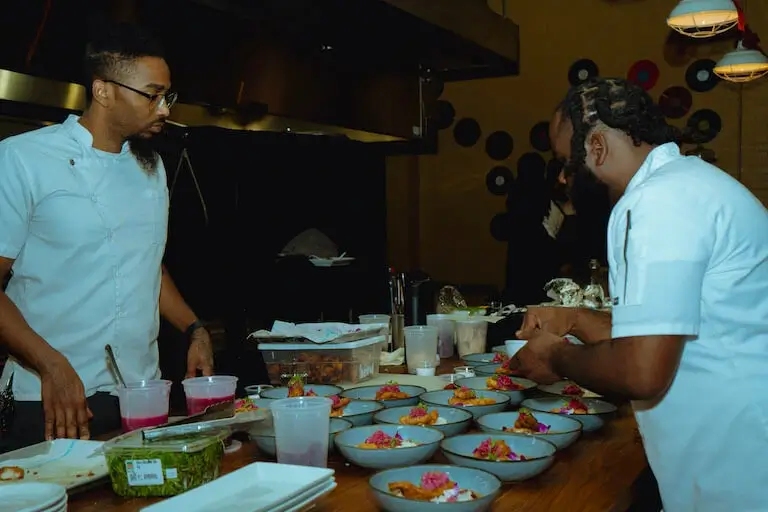
Chef Rodney Smith got a head start in his career and formed valuable connections by asking chefs for a chance to watch them work. Now Chef Rodney, right, regularly works alongside some of those same chefs, including Demetrius Brown of Heritage Supper Clubs, left.
Step 3: Reach Out Professionally
Once you have identified a restaurant or bakery, the next step is reaching out in a way that shows maturity and respect for their time.
In most cases, email is the best first option, or even a DM via a social media platform. It allows the chef or manager to read your request when they are not in the middle of service. Avoid calling during lunch or dinner hours, when kitchens are busiest. If you choose to stop by in person, go between typical service times, dress neatly, and ask politely if there is a better time to send an email or speak further.
Keep your message short and focused. Introduce yourself, including your grade level and school. Briefly explain that you are exploring a culinary career and would value the opportunity to shadow for a few hours. Be specific about why you are interested in that particular restaurant. Mention something about their menu, style, or reputation that genuinely stands out to you.
It also helps to suggest a limited time frame. For example, you might ask to observe for half a day on a weekend or during a school break. Make it clear that you are flexible and willing to work around their schedule.
A simple subject line such as “High School Student Interested in Shadowing Opportunity” is clear and professional. Avoid slang, emojis, or overly casual language.
Above all, remember that you are asking for their time. Respect, clarity, and preparation can make you stand out far more than a long or overly detailed message.
What to Expect During a Shadowing Experience
Before you walk into a professional kitchen, it helps to understand what a shadowing opportunity really looks like.
You will most likely spend much of your time observing rather than actually cooking. Shadowing is about learning how the kitchen operates, how chefs communicate, how prep is organized, and how service flows from start to finish. You are there to watch, listen, and absorb.
Expect the pace to be faster than you’re used to. Kitchens run on timing and coordination. During service, conversations are brief and direct. There may not be long explanations in the moment, especially when orders are coming in quickly. That doesn’t mean people are unfriendly, it simply means they’re focused.
You may also notice repetition. Peeling cases of potatoes, chopping herbs, portioning proteins, piping the same dessert over and over. Professional cooking requires consistency, and consistency often comes from doing the same task many times.
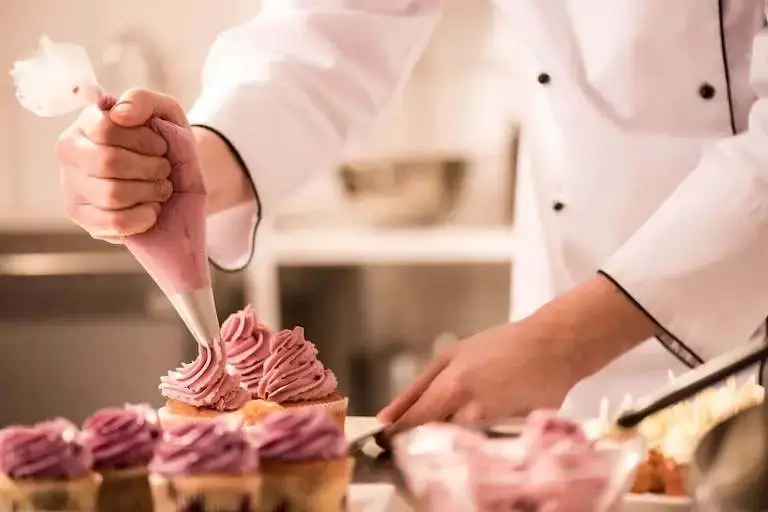
During a shadowing experience, a student might observe a pastry chef piping buttercream and refining finishing techniques.
Most importantly, understand that this experience is about exposure. You’re there to see the reality of the job, including the pressure, the teamwork, and the physical demands. Long hours on your feet, hot equipment, and constant movement are part of the environment. And if you’re lucky, you might catch the “hospitality bug.”
Chef Instructor Cesar Herrera says it best: “Once you start [working in a professional kitchen], it becomes a part of you. You need the adrenaline rush. It’s a different feeling to be behind the line, working as a team and making things happen.”
Shadowing vs. Staging: What’s the Difference?
You may have heard the term stage (pronounced stahj) used in the culinary world. While it sounds similar, it is not the same as shadowing.
Shadowing is typically observational. As a high school student, you are there to watch, ask thoughtful questions, and understand how a professional kitchen operates. It’s usually short term and focused on exploration.
Staging, by contrast, is closer to a working interview. Culinary students or professional cooks often stage to demonstrate their skills in a kitchen environment. A stage may involve prepping, cooking, or assisting on a station under supervision. Professional chefs also use stages as opportunities to sharpen specific skills or gain experience in a particular style of cuisine.
If you are still exploring whether a culinary career is right for you, shadowing is usually the appropriate first step.
How to Behave in a Professional Kitchen
Once you have your foot in the door, how you carry yourself matters just as much as what you observe.
- Start with appearance. Wear clean, modest clothing and closed toe, non-slip shoes. Tie back long hair and avoid excessive jewelry. Even if you are only observing, you should look prepared to step into a working environment. It is completely appropriate to ask the chef ahead of time what they would like you to wear so you arrive prepared.
- Arrive early. Five to ten minutes ahead of time shows reliability and respect. Chefs consistently emphasize that attitude and punctuality matter just as much as skill. As Escoffier Manager of Content Development Luke Shaffer puts it, “When I was hiring new line cooks, I would say, ‘I can teach you how to cook. I can’t teach you how to show up early and be excited to be here.’”
In your initial communication, you can also ask which entrance you should use. Many kitchen staff enter through a side or back door that is not obvious to guests, and showing up at the correct location prevents confusion.
- Once you are in the kitchen, stay alert. Stand where you are directed and avoid blocking walkways or work stations. Kitchens can be tight spaces, and awareness matters for safety. Keep your phone put away unless you are given permission to take a photo or write something down.
- Ask questions, but be thoughtful about timing. Service is not the moment for long conversations. If the kitchen is busy, wait until there is a pause to ask about a technique or process you noticed.
- Be humble. Remember you are there to learn, not to prove yourself. Even experienced chefs talk about the importance of staying open to feedback. As Chef Instructor Pietro Vitelli explains, “You have to be very open and very humble to take in criticism and information from others…Sometimes it’s not easy. But I’m not the goal. Who’s the goal? It’s the plate, and it’s the guest.”
Chef Rodney echoes that mindset. “Be humble enough to learn so you can be a better person for tomorrow,” he advises. “It’s important to stay humble and open because your way isn’t the only way. Learning from others is part of becoming a better chef.”
- Above all, show appreciation. A good attitude, willingness to learn, and respect for the team can leave a stronger impression than any technical skill at this stage.
What to Bring
Even if you love cooking at home and feel excited about stepping into a professional kitchen, remember that shadowing is about observing and learning. You do not need to arrive with a knife roll or specialty tools.
In most cases, a small notebook and pen are more than enough. Jot down techniques you notice, new vocabulary, or questions you want to ask later. Writing things down can show that you’re engaged and taking the experience seriously.
Bring a water bottle if you’ll be there for several hours. Kitchens can be warm and physically demanding environments, even when you are only observing.
If you have a simple resume, you can bring a copy with you. It doesn’t need to be extensive. Listing your school, extracurricular activities, part time jobs, volunteer work, or any food related experience is enough at this stage. Only offer it if the conversation naturally turns toward future opportunities.
Keep everything else minimal. Avoid large bags or unnecessary items that could get in the way. The goal is to appear thoughtful and prepared, not overloaded.
How to Follow Up and Leave a Strong Impression
So you spent the day in the kitchen and loved it. Now what?
The experience doesn’t end when you walk out the door. If you’re excited about the prospect of a future culinary career, what you do next can shape whether that one day becomes a lasting connection.
Start by sending a thank you email within 24 to 48 hours. Keep it sincere and concise. Thank the chef for their time and generosity, and mention something specific you observed or learned. Maybe you were impressed by how the team communicated during service, or you were surprised by how much prep went into one dish. Referencing a specific detail can show that you were paying attention.

Following up with professionalism and gratitude can turn a one-day shadowing experience into a lasting connection within the culinary industry.
If appropriate, you can connect on LinkedIn or another professional platform, especially if the chef suggests staying in touch. Keep your message professional and brief.
As you move forward, whether that means applying to culinary school, taking food related classes, or getting your first restaurant job, consider sending a short update months later. Let them know how their guidance influenced your next step. This can keep the connection alive without being intrusive.
Shadowing can sometimes lead to future opportunities, such as a part time job, internship, or externship down the line. Even if it doesn’t, you’re building a professional reputation. Being thoughtful, respectful, and proactive early on can set you apart.
Also consider requesting shadows in different environments—like a high-volume catering kitchen, a pastry shop, or a corporate dining facility—to get a full scope of the career paths available.
One day in a kitchen can open more doors than you expect, especially if you handle the follow up well.
Turning One Day Into Long-Term Opportunity
Shadowing can give you an honest look at what a culinary career really requires, from long hours and teamwork to repetition and attention to detail. It can replace assumptions with experience and help you decide whether the rhythm of a professional kitchen feels right for you.
Just as importantly, it can allow you to begin building a professional reputation early by showing that you are thoughtful, prepared, and serious about learning.
Ready to turn your passion into a career? Contact us to find out more about how culinary school can help you build on your experience and reach your professional goals.
DID YOU FIND THIS ARTICLE HELPFUL? YOU MIGHT ENJOY THESE, TOO.
- 6 Ways to Afford Culinary School if You’re a High School Student
- FAFSA® for Culinary School: The Essential Guide
- Is Culinary School Expensive?
FAQs
To shadow a chef, start by identifying local restaurants or bakeries that match your interests. Reach out professionally by email, introduce yourself, explain that you are a high school student exploring a culinary career, and ask whether you may observe for a few hours. Be flexible with scheduling, arrive prepared, and follow up with a thank-you message afterward.
Yes, many chefs may be open to allowing motivated high school students to observe their kitchens, especially for short periods of time. Independent restaurants and bakeries may be more flexible than large corporate chains. It helps to be respectful, clear about your goals, and willing to work around their schedule.
Wear clean, modest clothing and closed toe, non-slip shoes. Tie back long hair and avoid excessive jewelry. It is appropriate to ask the chef ahead of time if there’s a specific dress expectation. Even if you are only observing, you should look prepared to be in a professional kitchen.
Shadowing is typically unpaid because it is observational and short term. You’re there to learn about the profession rather than to fill a working role. If you later move into a part time job or internship, that may be paid.
Shadowing experiences can range from a few hours to a full day. Because kitchens are busy environments, most chefs prefer shorter, clearly defined time frames for student visitors.
Shadowing is observational and focused on exploration, especially for high school students. Staging is more like a working interview and is typically done by culinary students or professional cooks to demonstrate skill.