

Listen to This Article:
For Asia Geeslin, food has always been tied to family. Growing up in an African American and Vietnamese household, she remembers the sounds and smells of her grandmother’s kitchen, from celebratory dishes to the everyday meals that helped shape her sense of home.
But Asia’s path to culinary school first took her in other directions. She served five years in the United States Marine Corps, worked in cybersecurity, explored fashion styling, and found purpose in youth empowerment work before enrolling at Auguste Escoffier School of Culinary Arts.
Now, those experiences are coming together in the kitchen. Asia is bringing the discipline she learned in the military, the creativity she has always carried, and the food traditions of her family into a future that reaches beyond cooking alone.
A Childhood Shaped by Two Food Cultures
Asia’s earliest food memories come from her grandmother’s kitchen. It’s Vietnamese New Year and grandma is sitting on the kitchen floor, newspaper spread out, cleaver in hand and cutting board nearby, preparing thit kho, a celebratory braised pork belly dish.
“She’s just going at it chopping up these meats and everything,” Asia says. “It was always loud, but you knew that once those sounds died down, it was time to eat. It was incredible.”
Food, she adds, “was there all the time in abundance, these incredible smells, flavors, sounds.”
Today, Asia brings her maternal Vietnamese and paternal African American heritage together through her own cooking.
She took chicken and waffles, a familiar comfort dish with deep ties to African American food culture, and incorporated Vietnamese flavors. The result: fried chicken coated in sticky fish sauce with a pandan waffle inspired by a Vietnamese dessert.
The dish, Asia says, feels like home.
“It’s my two cultures coming together,” she says. “It’s my dad becoming acclimated to the Vietnamese palate and learning to appreciate it. It’s looking at all of my siblings across the dining table and knowing that this is where we converge.”
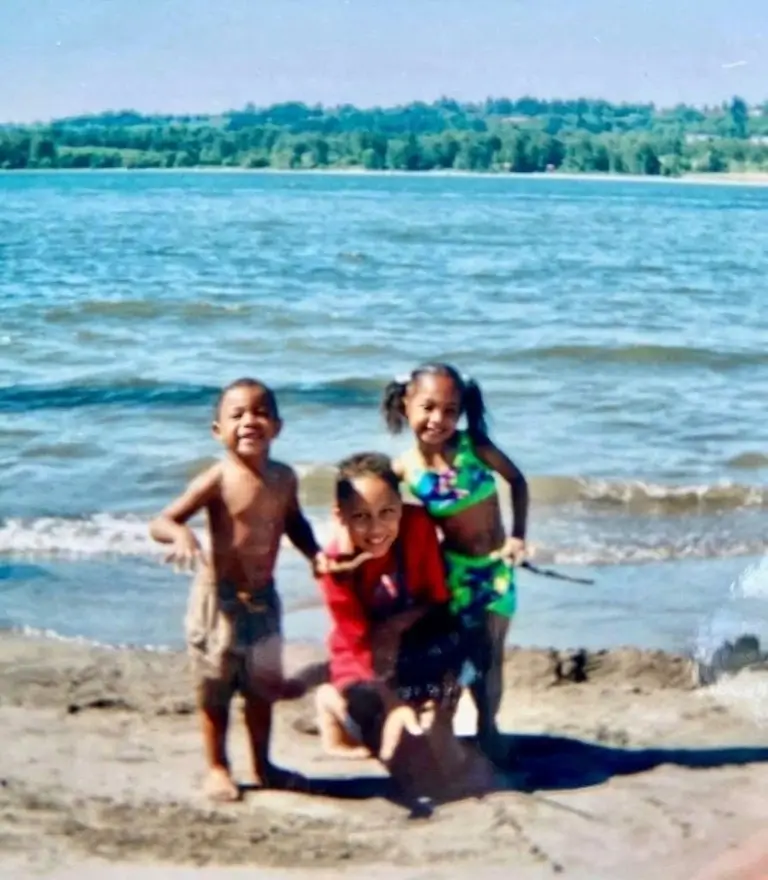
Growing up, family and food were always deeply intertwined for Asia (pictured right with her younger brother Tiger and older brother Justin), creating the foundation for her culinary path today.
The Dream That Started Early
Despite being surrounded by food, aromas, and family memories, Asia says it never occurred to her at first that cooking could become a career.
“I wanted to cook my entire life,” she says. “I didn’t know early on that it was a possibility for me.”
That started to shift when she was around sixteen or seventeen. Representatives from different schools came to her high school to talk about career paths, and Asia remembers hearing about Auguste Escoffier School of Culinary Arts. For the first time, the idea of culinary school felt tangible.
She could picture it.
“I would see things about Escoffier, or about having a culinary experience and just feel internally, ‘I could do that. I can see myself doing that,’” she says. “That realization only ever came alongside the thought of Escoffier. There’s not another school that I thought about going to.”
For Asia, that early pull toward Escoffier was connected to something bigger than cooking. She was drawn to places where she could push herself, grow, and work toward a high standard.
“The high standard of excellence was always really important to me,” she says. “I trust my gut. I think I always have since I was really young.”
That instinct would stay with her, even as her path moved in a very different direction first. Before culinary school became part of her daily life, Asia would spend five years in the United States Marine Corps, where discipline, communication, and attention to detail became part of her training.
Asia Geeslin talks about high standards and betting on herself.
Take the Culinary Career Survey
We’ve compiled a checklist of all of the essential questions into one handy tool: career options, culinary interest surveys, educational opportunities, and more.
What the Marine Corps Taught Her About the Kitchen
During her service, Asia worked as a Cyber Intelligence Analyst.
“My job was to do a lot of research,” she explains. “It could have been adversarial research, it could have been pre-deployment research, anything I could do to build a package of information to present to my higher-ranking officials.”
It was a very different kind of work from cooking, but it shaped a way of thinking that she still carries into the kitchen. For Asia, one of the biggest lessons was the value of clear, accurate communication.
“The first thing that I will say is that good intel is everything,” she says. “In the Marine Corps, good intel saves lives. In the kitchen, good intel gets us to the W.”
The stakes may be different of course, but intense focus is still important in a professional kitchen. Cooks must communicate quickly and clearly while paying close attention to timing, instructions, ingredients, and the needs of the team around them. Those parallels showed Asia just how naturally the skills she developed in the Marine Corps could transfer to the kitchen.
“The kitchen needs leadership, she says, and “veterans can lead. The kitchens need clarity. Veterans can clear up a mess like nobody’s business.”
That attention to detail has also become part of how Asia defines excellence. In both military and culinary environments, small things can shape the outcome. A missed detail, a delayed message, or a lack of communication can change the result.
“At the end of the day, your win or your loss comes down to what details you missed,” she says.
Learning How to Be Human Again
Leaving the Marine Corps was not a simple pivot for Asia. After five years in a highly structured environment, the transition back into civilian life asked something different of her.
“Transitioning out of the military was tough. Tough!” she says. “No matter how good you had it in the military, transitioning out is a whole different beast. It is very much learning how to be human again.”
For Asia, that meant learning how to make room for parts of herself that had always been there, but did not always have space to lead. She had written poetry growing up. She had always loved to cook. Fashion had always interested her, too. After the military, those creative instincts started to come forward again.
“When you’re in the military, your whole life is decided for you,” she says. “You just do what you’re told.”
Back in civilian life, there was more freedom, but also less built-in clarity. Asia found herself asking what came next, and Culture Jam, an arts-based youth program in Oregon, helped shape the answer.
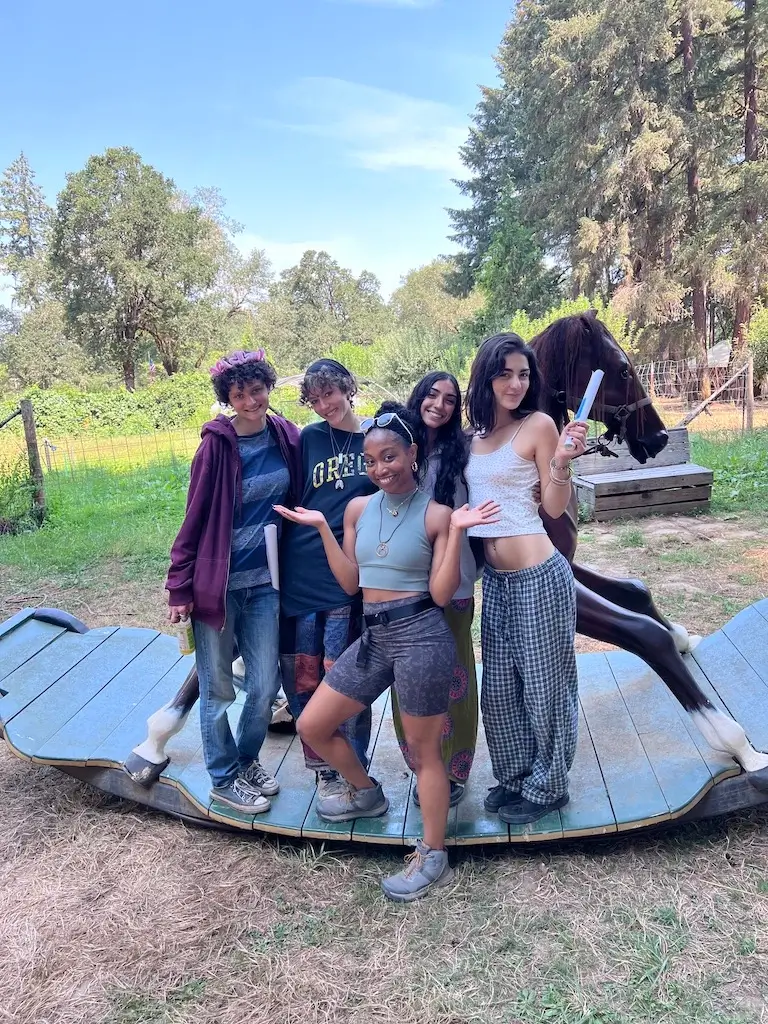
Asia (with co-counselor Wren and campers Juniper, Evelyn, and Selma) shares a fun final-day moment at Culture Jam. The transformative experience helped her embrace her identity as an artist and community leader.
At Culture Jam, Asia worked with young people through different art forms, helping create a curriculum that invited them into creative mediums they may not have experienced before.
“We bring all of our different art mediums to this camp. We create this on-the-fly curriculum of how we can bring these children into these sometimes unknown forms of art that they’ve not experienced before, kind of teach them the basics, and then let them run with it. From start to the end of camp, these children transform.”
That experience stayed with her. It helped Asia understand that she was not only drawn to food, fashion, or poetry as separate interests. She was drawn to creative spaces where people could explore who they are and what they might become.
“I think that’s when I decided, ‘Okay. Being an artist is really for me.’”
Bringing Her Creativity, Skills, and Ancestry Into the Kitchen
After the Marine Corps, cybersecurity, youth work, and her current work as a fashion stylist, Asia’s path eventually brought her back to the dream that had been there all along: cooking.
By the time she enrolled at Escoffier, Asia wasn’t coming to the kitchen empty-handed. She was bringing years of discipline, a growing sense of herself as an artist, and the food memories that had shaped her since childhood. Culinary school gave her a place to begin putting those pieces together.
One moment that stands out happened in a class, when students were making banh mi. Instead of following the recipe exactly, Asia decided to make a version that felt closer to the sandwiches she knew from her own life: the kind her grandmother had made for her, or the kind she would find at small Vietnamese restaurants in Portland.
“It wasn’t according to our recipe, but it felt right in the moment,” Asia recalls.
The experience caught her off guard. What could have been a simple class assignment became something much more personal.
“I was a bit taken emotionally by that experience because it was the first time I could bring my ancestry and my people into the kitchen with me.”
That moment helped Asia see that culinary training did not require her to set her own story aside. Her memories, experiences, family traditions, and cultural background could be part of the work. They could shape the way she interpreted a recipe, approached a dish, and understood her place in the kitchen.
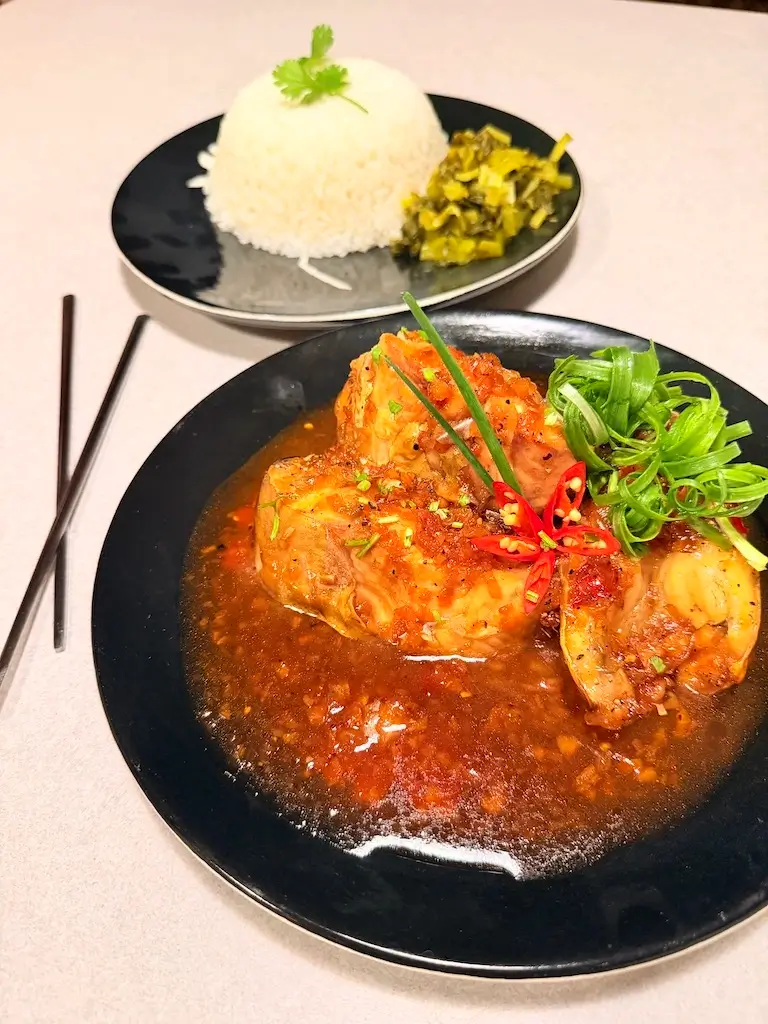
Recreating Vietnamese dishes like Ca Kho allows Asia to bring her family traditions, heritage, and personal story directly into her culinary training.
Building a Future Around Food and Youth Empowerment
Ask Asia about her future after completing her culinary education, and she is full of ideas and excitement.
Her dream is to build a youth empowerment program with a strong focus on the culinary arts. She imagines a summer camp where young people can explore different forms of art, but where food becomes one of the main ways they learn about themselves and each other.
“I am so excited about talking about this,” she says. “When I tell you that Culture Jam changed my life, it really did. It made me believe in what it is I could bring to youth.”
Asia Geeslin talks to chef Kristen Kish about her dream job of opening a youth empowerment camp with a culinary focus.
For Asia, the culinary element matters because food can open conversations that might otherwise feel difficult. A dish can carry family history, culture, memory, and identity.
“I think that food is such a conversation between different cultures,” she says. “It’s a sacred place, and it’s common ground between opposing opinions.”
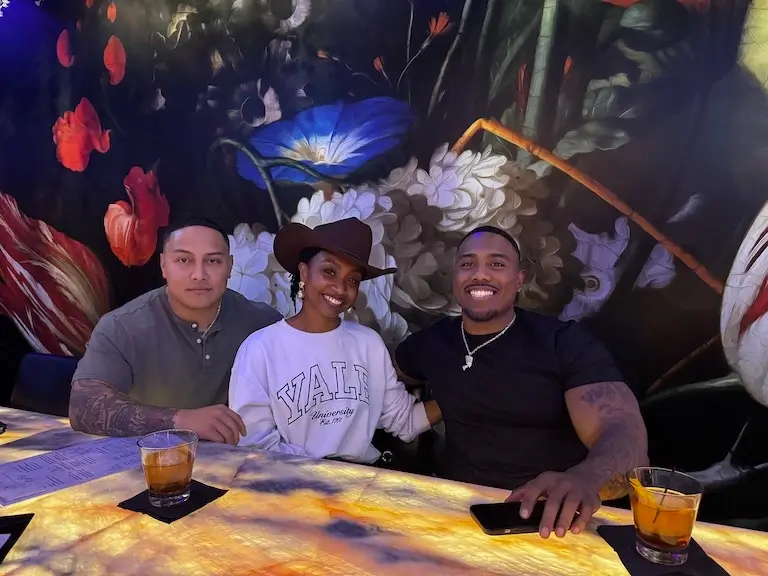
For Asia (center, seated between her brothers Justin and Tiger), food serves as a sacred common ground that brings family together across cultures and builds meaningful connections.
That common ground feels especially important when she thinks about young people. Food, she believes, can offer a neutral and safe space for hard conversations, especially for students who are still figuring out who they are and what their futures might look like.
Asia knows what it means for food to hold more than flavor. From her grandmother’s thit kho, to her own fish sauce chicken, pandan waffle, and the banh mi meatballs she made in class all carry pieces of who she is. In her future program, she wants young people to have the chance to explore their own stories in a similar way.
“Where are you from? What did you grow up eating?” she says. “Okay, cool. Let’s make this for everybody and let’s talk about it.”
Betting on Herself
Asia’s path has moved through family kitchens, military service, cybersecurity, fashion, youth work, and now culinary school. Though distinct, these chapters have built on one another, strengthening her discipline, creativity, leadership, connection to her cultural roots, and sense of what she wants to create.
Through it all, she has learned to trust the pull toward the next right thing.
“As hard as it is, because it is always easier said than done,” Asia says, “any opportunity I have to bet on myself, I take it.”
Her story is a reminder that you are always building skills, even before you know exactly where they will lead. The discipline, creativity, memories, and life experience you carry with you can all become part of what you bring to the kitchen.
Ready to start shaping your own culinary future? Contact us to explore Escoffier’s culinary programs and find the path that fits where you want to go next.