

 As far as fruits and veggies go, summer often feels like a time of unlimited bounty. Home gardeners often find they can’t give away their tomato harvests fast enough. Furthermore, the amount of available fresh fruit is attested to by the number of ramshackle vendor stands that pop up along country roads across the continental U.S. And now, thanks to science, fruit fans have a whole new category of produce to gorge themselves on.
Enter the stone fruit
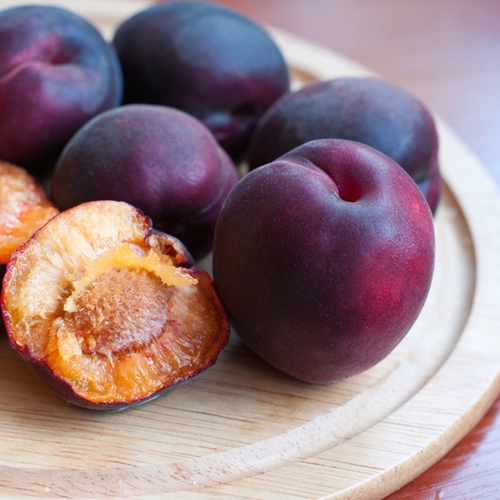
Stone fruits, so-named because of the size of their center seed pits, really come into their own in the summer. If you thought peaches, plums, apricots and nectarines were delicious on their own, get ready for the latest fruit trend: the hybrid stone fruit. With such inventive and intriguing names as pluot, aprium and plumcot, these new fruits are becoming more and more common in grocery store produce aisles.
Not just any fruits
Nearly all of these new hybrid stone fruits are made by crossing plums and apricots. By extension, nearly all of their names are created by combining the words “plum” and “apricot.” However, despite the shared lineage of these new fruits, they each have a distinctive flavor thanks to the degree to which they are more one or the other. Ergo, an even 50/50 split of apricot and plum DNA results in a plumcot, while a pluot is more plum and an aprium/apriplum is more apricot.
Father of invention
The vast majority of these hybrid fruit species were created by a California company known as Zaiger Genetics. That company holds a number of plant patents for the various inventive crosses it has developed over the years. Floyd Zaiger, the namesake of the company, first worked with Fred Anderson to learn the secrets of combining fruit-bearing plants. Anderson is in the history books himself for his transformative work perfecting the nectarine and popularizing it for American palates.
As it turns out, the collaboration of botanists and biologists on adjusting the qualities of stone fruits is a tradition that spans back generations in America. It all started with Luther Burbank’s invention of the Burbank potato in the early 20th century. You may be more familiar with Burbank’s work than you think, as a natural genetic variant of his original creation is the potato that McDonald’s uses to make its fries.
So next time you are in the grocery store, take a walk on the wild side with a hybrid fruit.