


Listen to This Article:
When Jill Skokan, co-founder of Black Cat Bistro, talks about Boulder County’s approach to local food, she grounds it in practicality.
“It’s not so much a philosophy for us as a foundation,” Skokan told Atlas Obscura. “If you talk to the older generations of farmers in Boulder County, there were no grocery stores. They grew or raised their food, preserved it, and traded with neighbors.”
In Boulder, what reads as aspirational farm-to-table marketing in other cities functions as basic practice. It is woven into how restaurants operate and how chefs learn their craft. This “land-first” DNA was forged by the specific, often harsh, demands of the Front Range landscape.
For culinary school students at Escoffier’s Boulder campus, the curriculum can include an opportunity to meet the ranchers and walk the rows of the farms supplying their kitchens. In doing so, they are stepping into a cycle of regional self-reliance that dates back centuries.
The Survival Roots of Boulder’s DNA
Before farm-to-table became a movement in the 1970s, it was simply a survival mandate in the shadow of the Rockies. For centuries, Indigenous peoples like the Ute, Arapahoe, and Cheyenne moved with the land’s seasonal pulse, centering their diets on wild game and foraged plants, supplemented by the “Three Sisters”—corn, beans, and squash—that define Western high-desert agriculture.
When settlers arrived in Boulder County in the 1800s, the geography gave them little choice but to do the same. The semi-arid climate and short growing seasons dictated the menu: if it couldn’t survive a late June frost or an early October snow, it didn’t make it to the plate.
This “land-first” philosophy became baked into Boulder’s DNA and still defines much of Colorado cuisine today.
Why Boulder’s Local Food Culture Endured
Eating what grows nearby isn’t unique to Boulder, but what makes Boulder County different is that this practice didn’t fade when industrial food systems arrived.
Colorado ranks 30th nationally in access to locally produced food, but Boulder County developed an unusual concentration of support systems. The city’s agricultural lands include working farms on its outskirts, small-scale gardens distributed throughout the city, and Community Supported Agriculture programs connecting producers directly with consumers.
At places like Ollin Farms, county funding purchased moveable fencing systems that let sheep rotate through fields, fertilizing soil between crop cycles. Boulder County Public Health operates a produce coupon program connecting low-income families with local farms.
These support systems have helped sustain the agricultural infrastructure that local chefs rely on today.
A Regional Cuisine That’s Still Being Written
The broader Colorado culinary scene creates context for what’s happening in Boulder. Across the state, chefs approach their regional identity without rigid definitions, largely because nobody’s quite figured out what Colorado cuisine is yet. Some describe it as still emerging, or not yet fully defined. That lack of fixed boundaries can create space for anyone still learning their craft.
What Geography Teaches
Food writer Mark Antonation explains the cuisine through its geography.
“Colorado cuisine is defined by our short growing season, sunny days, cool nights and small but distinct growing regions,” Antonation said in local news outlet Westword. “We eat what grows well here in the summer and what can be stored or preserved to make hearty meals in the winter.”
The state’s dramatic elevation changes create microclimates where farmers can grow unusual varieties. Palisade peaches carry such regional distinction that one customer at a Larimer County farmers market declared them “the best in the world” after buying from the same grower for 30 years.
Olathe corn, Pueblo chiles, and Rocky Ford melons all earn menu mentions by name. What Chefs Want, a Colorado food distribution company, works with more than 30 produce growers across the state, many of whom specialize in these regional varieties.
These constraints push creativity. Menus adapt to what thrives seasonally instead of forcing ingredients that don’t belong.
How the Next Generation Interprets Colorado Cuisine
Young chefs like Mackenzie Nicholson of Beano’s Cabin balance local ingredients with broader expectations, adapt to seasonal availability, and develop their own interpretations. Nicholson’s menus feature elk, duck, and trout alongside greenhouse vegetables and local honey.
The undefined nature of Colorado cuisine leaves plenty of room to contribute something that doesn’t just replicate established traditions.
How the Farm-Restaurant Relationship Works
The relationship between Boulder’s restaurants and local farms goes beyond placing orders through distributors.
Many chefs spend summer mornings walking through greenhouses with farmers, tasting varieties and discussing recipe possibilities together. Some farmers ask restaurants what they should grow, with chefs telling them to plant whatever supports the farm’s viability. Menus adapt to what’s thriving rather than forcing predetermined concepts onto the land.
Colorado State University’s Produce Network further supports local infrastructure, connecting beginning produce growers with buyers through events like Farm2LocalBiz, where 88% of producer attendees reported making meaningful connections with food businesses.
In Boulder, students have a chance to see how the entire food system connects. At Escoffier, that can mean the opportunity to visit farms, ranches, and artisan producers through the Farm to Table® Experience—harvesting ingredients, understanding growing cycles, and building relationships with the people who grow the food.
Students can see first-hand why menus shift when weather wrecks a crop, observe which farmers grow which varieties of crops, and build connections between the plated dish and the producers who grew the ingredients.
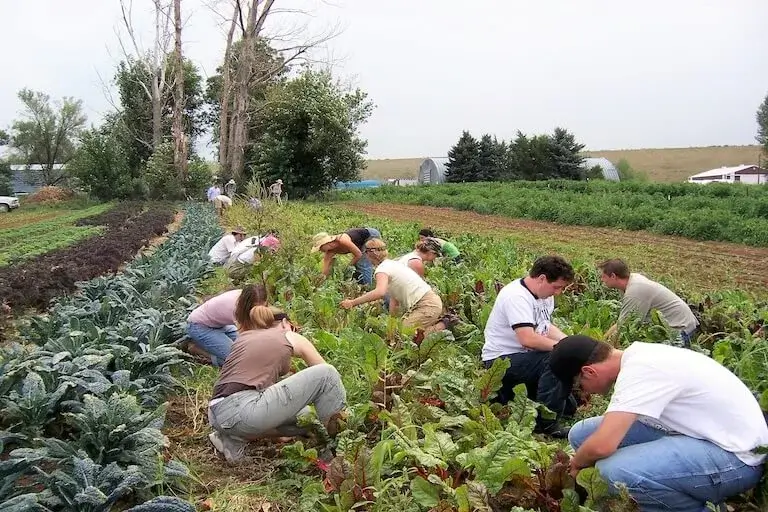
Escoffier students can learn directly from farmers and ranchers who supply Boulder’s restaurants.
The Collaborative Culture That Shapes Careers
The farm-to-table network is just one part of Boulder’s food ecosystem. The broader restaurant community regularly collaborates, shares equipment, and actively mentors emerging talent, operating more openly than in cities where kitchens guard their knowledge.
Food writer John Lehndorff has covered Colorado dining since the late 1970s. When he describes what makes the state distinctive, he talks about the people more than the food.
“Because most people in Colorado are from someplace else . . . It breeds a different kind of spirit of entrepreneurial activity, and in our case, collaboration,” Lehndorff told Escoffier Boulder campus president Kirk Bachmann on an episode of The Ultimate Dish podcast.
Lehndorff added, “Chefs are always jumping in together to aid in various benefits. Breweries team up to co-brew beers and lend each other equipment. I think that’s been a really distinguishing characteristic. That and the fact that we live in an incredibly beautiful place that everybody wants to visit.”
Colorado’s Restaurant Landscape by the Data:
- 313,000 employees in restaurant and foodservice jobs (state’s largest private employer)
- $70,130 mean annual wage for chefs and head cooks
- 5th nationally in restaurants per capita
- 80% of restaurant owners started in entry-level positions
- $1.87 generated in broader economy for every dollar spent at a Colorado restaurant
- 14% population growth between 2010 and 2020
Learning from the Established Restaurants
Boulder establishments regularly bring in culinary students for training and mentorship. Brasserie Ten Ten has welcomed students for hands-on experience over the years, and Bachmann notes that Frasca Food and Wine “hire[s] Escoffier grads.”
After Connor Fowler graduated from Escoffier in 2021 and completed an externship in Florence, Italy, he joined Frasca Food and Wine. Fowler progressed through positions over the following months, working alongside Master Sommelier Bobby Stuckey. At 22, he passed the Certified Sommelier exam on his first attempt. The following year, he was working the night Frasca earned its Michelin star.
Boulder’s collaborative culture can mean emerging chefs have the chance to find mentorship opportunities. The community tends to seek people willing to contribute and learn, creating pathways that complement professional connections rather than requiring them as prerequisites.
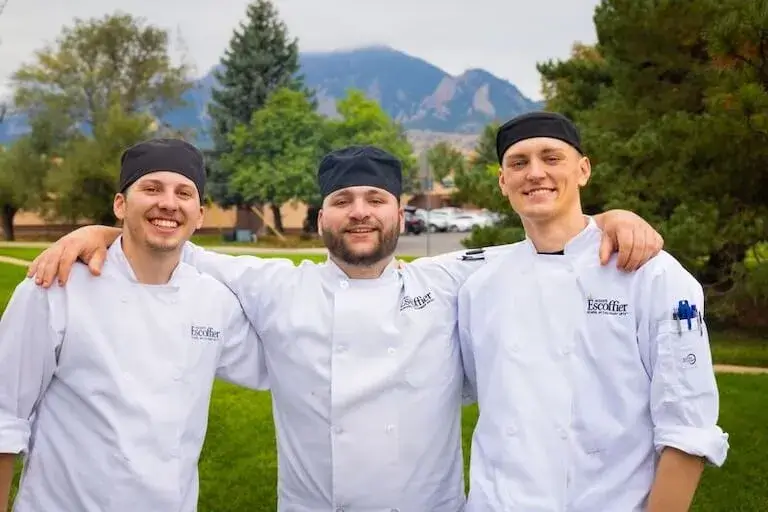
Boulder’s collaborative restaurant community regularly welcomes culinary students for training and mentorship.
When Recognition Came to Colorado
Outside of Boulder, the broader Colorado food scene has been building momentum too. In early 2023, that momentum converged in the meeting rooms at Visit Denver, where tourism officials from across the state gathered with an ambitious proposal. The pitch: each organization would pay between $70,000 and $100,000 a year for three years to bring the Michelin Guide to Colorado.
The reasoning was straightforward. Michelin recognition serves as shorthand for culinary credibility, and for a state still fighting its “cowtown” reputation, the investment could reposition Colorado in the national food conversation.
The gamble paid off. The investment funded Michelin’s inspection process across the state. As of February 2026, Colorado has earned 53 Michelin distinctions: eight One-Stars, four Green Stars for sustainability, 10 Bib Gourmands, and 30 Recommended.
Boulder claimed a surprising share for a city its size. Frasca Food and Wine earned a Star. Blackbelly Market and Bramble & Hare, Jill Skokan’s second restaurant, received Green Stars. Basta and Cozobi Fonda Fina earned Bib Gourmands.
Exploring Boulder’s Culinary Landscape
Boulder’s food scene plays out in a surprisingly compact area. Pearl Street Mall runs through downtown Boulder as a pedestrian-friendly commercial center where students can study different approaches to the craft within a few blocks.
That walkable stretch gives students an up-close look at how Boulder cooks and eats, revealing a food culture shaped by sustainability, craft, and diverse culinary roots.
Fine Dining and Sustainability
Frasca Food and Wine serves Friuli-Venezia Giulia cuisine with a Michelin Star. Walk a block down, and you’ll find Blackbelly Market with its Green Star for whole-animal butchery and sustainable sourcing. Basta sits next door to Dry Storage, a stone-milling operation that grinds Colorado grain into flour for same-day pizza dough.
The restaurant-mill partnership shows the local food system in miniature—grain grown in Colorado, milled in Boulder, baked into crust a few feet away.
Indigenous and Global Influences
In Denver, Tocabe American Indian Eatery represents Indigenous foodways that predate Colorado’s farm-to-table movement by centuries.
Co-founder Ben Jacobs, a member of the Osage Nation, sources ingredients from Native producers across the country and creates accessible Native cuisine.
“We wanted to create something that wasn’t just always for a community event,” Jacobs told a local NPR outlet. “We wanted to create that for our people, for our community, but also as a way to share identity and culture and who we are and where we’re going.”
The Boulder Dushanbe Teahouse came to the city as a gift from Boulder’s sister city in Tajikistan. It serves traditional Tajik dishes alongside menu items influenced by cuisines from around the world. Between Indigenous foodways and international partnerships, Colorado’s culinary scene welcomes cooking traditions from a wide range of cultures.
Beverage and Artisan Production
About 15 breweries operate in and around Boulder, giving students a chance to learn about beverage programs and fermentation processes. Within a walkable area, students can experience Michelin-level fine dining, whole-animal butchery, grain milling, Indigenous cuisine, international cooking, and craft brewing.
This concentration of different culinary approaches within a walkable area gives students unusual access to diverse learning opportunities.
Why Boulder for Culinary Education
Beyond Boulder, Colorado’s broader food scene continues to gain national attention. Denver ranked 12th 180 U.S. cities in WalletHub’s “Best Foodie Cities in America” report (2025), and two Colorado restaurants appeared on the New York Times 2025 list of the 50 best in the country.
For culinary students, Boulder offers a unique setting where local sourcing, sustainability, and creativity come together in real, working kitchens. Students can build classical skills while working with ingredients sourced from nearby farms and producers they can visit firsthand.
Students interested in exploring Boulder’s culinary landscape can find more about programs at Escoffier’s Boulder campus. Contact us to discuss whether studying in Boulder could be a good fit for your goals.