

Listen to This Article:
At first glance, a professional cook and a chef may seem similar. They both wear chef’s coats, work in a kitchen, and prepare food. But the day-to-day responsibilities of these two are vastly different. One is a skilled tradesperson, while the other leads and directs the kitchen staff and often creates a vision for the restaurant.
Each role calls for culinary expertise and good communication, but they each hold a distinct place within the brigade de cuisine, or kitchen hierarchy—with the executive chef or head chef placed squarely at the top.
Discover the important distinctions between these two kitchen roles and the skills necessary for success in each. Keep reading to explore the main differences between a professional cook and chef.
Cooks and Chefs Have Different Jobs in the Kitchen
The primary difference between a cook and a chef is their level of responsibility. A cook completes the tasks assigned to them in order to deliver a chef’s recipe. They should have the basic skills needed to execute the menu, including simple tasks like chopping or mixing, but they may also need more advanced technical skills for complex, multipart recipes.
On the other hand, a chef is a manager, the person who is ultimately responsible for the food that comes out of the kitchen. They often have more culinary education and experience in the kitchen, whether acquired via a formal culinary school or by working in the industry for many years (or both). There is no degree or certification that automatically advances a cook to become a chef. Instead, there’s a multi-faceted combination of education, experience, and leadership abilities.
Underneath the umbrella term of “cook” or “chef” are specialized roles—an executive chef is the leader of the kitchen and oversees the menu and overall direction of the restaurant’s culinary program, for example, while a pastry chef creates the desserts and may run a small team of pastry cooks. For cooks, a line cook has a different job than a prep cook.
Chef vs. Cook
| Aspect | Cook | Chef |
| Primary Role | Prepares and cooks food within a professional kitchen setting. | Directs kitchen operations and maintains accountability for every plate served. |
| Responsibilities | Executes recipes and manages station prep; focuses on technical consistency. | Supervises staff, develops menus, manages food costs, and may create original recipes; balances culinary and managerial duties. |
| Kitchen Position | Essential to daily operations; works at specific stations (prep, line, fry, grill). | Leadership role; may run entire kitchen (executive chef) or manage a section (pastry chef, sous chef). |
| Decision-Making | Follows instructions and recipes provided by the chef. | Makes strategic decisions about menu, staff, operations, and kitchen direction. |
| Focus | Technical execution and speed throughout the shift. | Supervising, managing, mentoring, and jumping in to cook when needed. |
| Median Annual Wage | $35,760* | $60,990* |
| Career Stage | Ranges from entry-level to highly skilled technical professional. | Typically achieved through significant experience and proven leadership capability. |
*U.S. Bureau of Labor Statistics, 2024 (most recent data available) for Cooks and Chefs . Earnings may vary based on experience, location, and establishment type.
What Is a Professional Cook’s Role?
Professional cooks are skilled technicians who prepare and make food. Most of their work is hands-on, transforming ingredients from their whole states into finished dishes.
There are many different types of cooks, each with varying responsibilities. A prep cook does preliminary work like peeling and chopping vegetables, pre-portioning cuts of protein, and concocting sauces or dressings. A line cook’s job description, on the other hand, includes cooking, plating, and completing dishes for service. In short, line cooks do the bulk of the cooking in a kitchen.
Professional cooks are also sometimes defined by their work stations. A fry cook runs the fryer for a steady supply of hot, fresh french fries and other crispy snacks. A grill cook is in charge of grilled items like burgers, chicken, steaks, and some vegetables. Line cooks are typically assigned to one station but need to be adaptable and ready to jump into another one.
Regardless of their specific role, cooks of all stripes need to have basic food safety knowledge and training, knife skills, an understanding of kitchen equipment, and an ability to carry out quality control.
While many cooks do have the goal of becoming a chef, or the “boss” of the kitchen, others prefer the life of the cook. A cook must perform to a high standard on each shift, but they are not responsible for the overall success of the kitchen or food service establishment. Some find that this means a lower stress level and better work-life balance. Plus, cooks get to do more hands-on professional cooking. If your culinary dreams involve cooking all day, every day, then a career as a cook may be right for you.

A pastry chef is a specialized role within the kitchen.
Professional Chef’s Role: What to Know
A professional chef is a trained, experienced culinarian who has worked in a professional kitchen setting and who usually occupies a more managerial role, either running a single-person department or leading a team of cooks. They should have culinary expertise and also be skillful problem-solvers under pressure—being able to assess situations and create solutions quickly is imperative.
Take the Culinary Career Survey
We’ve compiled a checklist of all of the essential questions into one handy tool: career options, culinary interest surveys, educational opportunities, and more.
A chef often spends a great deal of their time supervising and managing the rest of the crew rather than cooking. They must be able to jump into any position when needed and mentor other team members. But they may also get to create their own recipes and menus, influencing the restaurant’s reputation and helping shape its concepts. Therefore, while they have greater responsibility than cooks, they also receive more credit when a kitchen performs well.
Professional chefs usually start out as cooks and earn the title of chef later in their careers. There are more than 25 types of chefs within the brigade de cuisine. In addition to the aforementioned executive chef and pastry chef positions, other roles can include a chef de cuisine who manages the day-to-day operations, a sous chef who serves as the second in command, a pantry chef, sauce chef, and more.

A professional chef needs culinary as well as managerial expertise.
The Skills Professional Cooks Need
A professional cook’s skill level can vary quite a bit, from entry-level to the most expert cooks at high-end restaurants. Cooks should know basic cooking functions, like baking, roasting, steaming, broiling, and poaching, and when each is appropriate. They should also know the different kinds of cuts, so that when the chef asks them to chiffonade some basil or julienne a carrot, the cook will know what is being asked of them.
Professional cooks should know additional foundational skills, like how to make an emulsion, which knives to use for which tasks, and the basics of seasoning.
Additional skills can vary based on the cook’s position. A line cook must know how to identify “done-ness” in a cut of meat, for example. And a prep cook should be skilled at rapid chopping and pay close attention to labeling and dating their work.
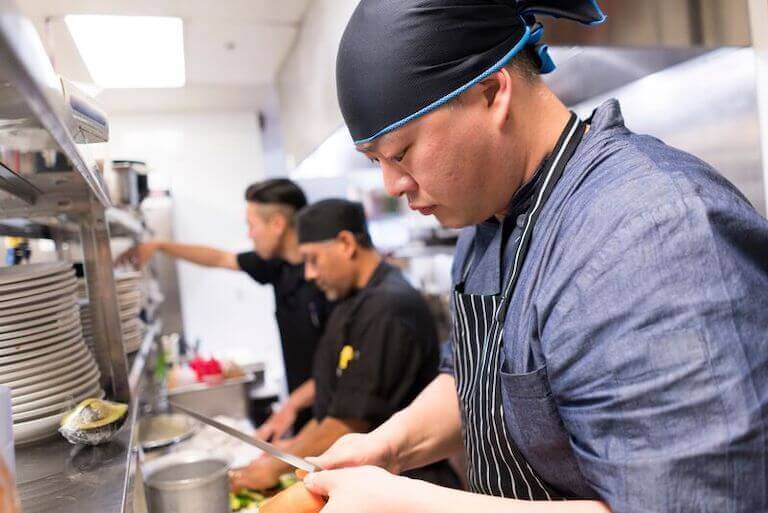
Line cooks do the bulk of the cooking in a professional kitchen.
When students attend culinary school at Auguste Escoffier School of Culinary Arts, they may graduate with many of these skills in their toolbox. During their hands-on industry externship, which is required in order to graduate, students can work in an operational kitchen where they can practice their skills in a commercial environment. With this type of preparation, they can become ready for their first professional job, where they can then continue to build on their skills and discover new techniques.
Skills Professional Chefs Need
Professional chefs must have extensive proficiency. They should have expertise in every skill that they expect their cooks to employ so that they can provide precise instruction and guidance. They may also be specialists in a single type of cuisine (like French or Japanese) or a certain cooking style (like barbecue or plant-based cooking).
The responsibilities of a chef go far beyond the food. They should also be skilled in menu planning, as they may oversee everything from appetizers to desserts. They may also be required to create dishes that are both delicious and profitable, keeping labor and food costs in check. They need to be strong leaders, inspiring their employees and keeping them motivated to put out excellent food, day after day.
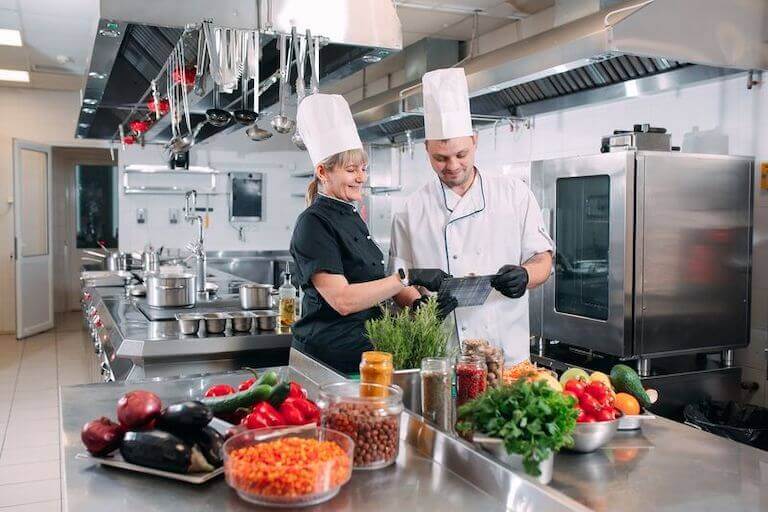
Chefs may be responsible for menu planning and inventory in addition to other jobs within a kitchen.
Some chefs are also independent business owners. For example, private chefs and personal chefs often run their own small businesses. Some chefs are also owners of restaurants and catering companies, so they must manage the business as well as the food.
It can take several years to earn the title of chef. Although culinary students do not graduate as chefs, a credential, like a degree or diploma, or a culinary certification from an industry association, can help demonstrate to future employers that the recipient obtained an advanced level of proficiency.

How Do You Move from Cook to Chef?
The progression from cook to chef usually happens over time as culinary professionals build both technical skills and leadership abilities. While every kitchen operates a little differently, many cooks move through a path that looks something like this:
A Typical Path from Cook to Chef
| Career Stage | What You’re Building | What May Help You Advance |
| Prep cook or line cook | Knife skills, station work, timing, consistency, and recipe execution. | Showing reliability, speed, organization, and willingness to learn. |
| Senior cook or lead line cook | Increased station ownership, peer mentorship, and maintaining service momentum. | Taking initiative and anticipating the needs of the entire line. |
| Sous chef | Daily kitchen leadership, inventory, scheduling, communication, and team coordination. | Demonstrating that you can support both the chef and the full kitchen team. |
| Chef de cuisine or executive chef | Strategic menu development, financial oversight, and overall kitchen direction. | Building culinary judgment, leadership skills, and business knowledge. |
For some culinary professionals, a first line cook role can become the turning point that helps them see a longer-term future in the kitchen.
There’s no single timeline that fits everyone. Some cooks move up quickly, while others take longer or choose to stay in roles they enjoy. Formal culinary education can help students build a strong technical foundation while also introducing them to the business and leadership skills that often become more important at the chef level.
How Can Cooks Show They’re Ready for Chef-Level Responsibility?
Moving from cook to chef is not just about doing your current job well. It also requires learning how to think beyond your own station and understanding how the entire kitchen works together.
For a cook, that might mean paying closer attention to how timing at one station affects the rest of the line, how prep shortages slow down service, or how communication between front-of-house and back-of-house teams influences the guest experience. This kind of bigger-picture thinking can help a cook move from simply executing tasks to helping the kitchen operate more smoothly.
Cooks who want to grow toward chef roles can also start learning the business side of food. Depending on the kitchen, chefs may help manage food costs, inventory, purchasing, labor, vendor relationships, menu pricing, and waste reduction. Even asking questions about why ingredients are portioned a certain way, how waste affects profit, or how menu changes affect ordering can help build a more chef-like perspective.
How to Become a Chef: Get the Career guide!
Have your sights set on wearing the chef’s hat? Discover the steps that may be required to start your culinary career and earn the title of ‘chef’.
Leadership can start before a title changes, too. A cook can practice leadership by staying calm during a rush, helping a newer team member learn a task, communicating clearly when something is running low, or taking responsibility when a mistake happens. These habits show reliability, maturity, and awareness of the team.
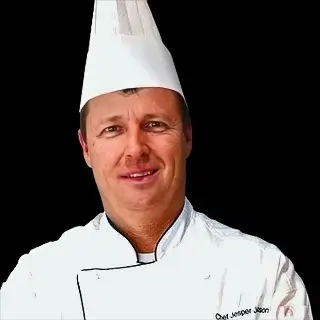
“We always say in this profession that you need to grow into the position that you aspire to have,” says Escoffier Chef Instructor Jesper Jonsson. “So if you want to become a sous chef, as a lead line cook, you need to begin doing sous chef jobs already.”*
Building range across different stations, techniques, and service styles can also help, especially because chefs often need to understand the work they are asking other people to do. Cross-training on prep, garde manger, sauté, grill, pastry, or banquets may help cooks become more adaptable and better prepared to lead.
What Do Cooks and Chefs Get Paid?
Culinary salaries vary widely based on your role, experience, and the type of kitchen.
While the U.S. Bureau of Labor Statistics notes a median wage of $35,760 for cooks, this generally represents a starting point role with upward mobility. As you transition into leadership, chefs and head cooks command a median salary of $60,990, with executive chefs and private owners earning significantly more.
Some executive chefs, private chefs, or chef-owners may earn more, depending on their location, clientele, business model, and level of experience.
The gap between these two figures represents your growth potential, a trajectory that can be dramatically accelerated by specialized skills, geographic location, and formal culinary training.
Should You Pursue a Cook or Chef Career Path?
Both cooks and chefs can build fulfilling culinary careers, but the day-to-day work and long-term responsibilities can look different. If you’re trying to decide which direction fits you best, it may help to think about the type of work you enjoy, the level of responsibility you want, and whether you’re interested in eventually leading a kitchen team.
Which Culinary Career Path Might Fit You?
| You might enjoy working as a cook if… | You might want to work toward chef roles if… |
| You thrive on technical execution and the tactile nature of station work. | You want to lead a team and shape the menu. |
| You find satisfaction in the “flow state” and high-speed rhythm of active service. | You’re interested in the “business of food,” including food costs and inventory strategy. |
| You prefer the focus of a specialized role and the fulfillment of completing assigned tasks. | You want more creative and operational responsibility. |
| You want to build a foundation of technical excellence before choosing a specialty. | You’re willing to take on higher pressure and leadership expectations. |
For some culinary professionals, the cook stage is not something to rush through. Escoffier Austin Culinary Arts graduate Shai Fernandez, Sous Chef at Sheraton Hotels & Resorts, says, “I want to keep growing my technique, being the strongest cook I can. It’s early in my career. I want to enjoy focusing on my culinary skills at the moment, learning from good managers before I jump into leadership myself.”
One path is not necessarily better than the other. Some culinary professionals enjoy the hands-on craft, speed, and focus of cook roles and choose to keep building their skills in that direction. Others feel drawn toward leadership, creativity, and the business side of the kitchen and decide to work toward chef-level positions.
The key is to understand what motivates you. If you love the technical side of cooking, a cook role can give you space to sharpen those skills. If you’re excited by the idea of planning menus, guiding a team, solving problems during service, and helping shape the guest experience, then the chef path may be a strong long-term goal.
Whether Cook or Chef, Start Your Career with Culinary School
Whether your goal is to be the person who cooks the food each day or the chef who oversees a kitchen, culinary school can be a great place to start or advance your career.
At Escoffier, Culinary Arts associate degree students can begin their culinary education with cooking fundamentals and then move on to explore menus, leadership, communications, foodservice math and accounting, and entrepreneurship.
Contact our Admissions Department to explore more about degrees and diplomas from Escoffier and how they could help you achieve your goals.
TO DISCOVER MORE ABOUT A CAREER AS A CHEF OR COOK, TRY THESE ARTICLES NEXT:
- How You Could Get Hired at Top Restaurants: What Executive Chefs Want
- Executive Chef vs Head Chef: What Is the Difference?
- 13 Great Careers in the Food Industry
**This article originally ran on Sept. 14, 2022, and has since been updated.
FAQs
The primary distinction between a cook and a chef is responsibility. Cooks are skilled technicians who execute recipes and prepare food under direction, while chefs are more like managers—responsible for the kitchen’s overall performance, menu development, staff leadership, and food quality.
While both roles require culinary skill, becoming a chef typically involves years of experience, demonstrated leadership, and often formal culinary training on top of hands-on kitchen work.
Yes—professional chefs often start their careers as cooks and work their way up through the kitchen hierarchy. There’s no single credential that automatically makes someone a chef; the title is earned through a combination of culinary skill, experience, and leadership ability. Formal culinary education can potentially help this progression by providing a broader foundation than on-the-job learning alone may offer.
Professional cooks typically need solid foundational skills including knife techniques, food safety knowledge, familiarity with cooking methods like roasting, steaming, and braising, and the ability to execute recipes consistently under pressure.
Additional skills vary by station—for example, line cooks must judge doneness in proteins, while prep cooks need speed, precision, and careful attention to labeling and dating their work.
There are no formal licensing requirements, but chefs are generally expected to have extensive kitchen experience, strong culinary technique, and demonstrated leadership ability. Employers may also look for candidates with formal culinary credentials, since a degree or diploma can signal a higher level of preparation and professionalism.
Professional kitchens typically follow a structured system called the brigade de cuisine, developed by Auguste Escoffier. At the top sits the executive chef, followed by the sous chef, then various station chefs and specialty roles like pastry chef or sauce chef. Below them are line cooks, prep cooks, and support staff. This hierarchy defines responsibility, communication flow, and career progression within the kitchen.
Depending on the person, a career as a cook can be deeply rewarding, offering hands-on work with food every day without the managerial pressures that come with a chef role. Cooks who prefer executing at a high level over managing others may find job satisfaction and work-life balance in these positions. The role can also serve as a strong foundation for those who eventually want to advance into chef-level responsibilities.