

Listen to This Article:
You’ve spent years cooking for friends and family. You’ve binged cooking shows or kitchen-centric comedy-dramas, stayed up late testing recipes, maybe even imagined what it would be like to run your own kitchen someday. The passion’s real. But getting paid to cook? That’s where the dream meets reality.
Many professional kitchens are looking for people who can handle knife work under pressure, break down a whole case of produce without slowing down service, and keep a kitchen moving when orders are flying in. They also want chefs who know how to cost a menu, track inventory, and step up when the team needs leadership.
That’s where formal training can come in. A degree in Culinary Arts could help you build the technical skills, business knowledge, and real-world experience that can help you walk into a professional kitchen ready to contribute from day one.
So what does that training actually look like, and how does it prepare you for a culinary career? Let’s break it down.
Why Choose an Associate Degree in Culinary Arts?
An associate degree in Culinary Arts is designed for people who plan to manage teams, open restaurants, or step into leadership roles where understanding the business matters as much as knowing how to cook.
Students at Escoffier can gain practical skills and experience in diploma and degree programs alike, but the scope of each option differs. Culinary diploma programs focus on hands-on skills and kitchen classes, while Associate degree programs expand upon those skills to also cover the business and operational skills involved in running a food business.
In general, diplomas may be earned over a shorter period of time and cover a specific set of skills, while associate degree programs at Escoffier typically take longer and go more in-depth on topics, teaching both the practical and theoretical skills involved in a given subject.
That extra training could help you move into management or ownership roles faster, especially if you’re serious about building a long-term career in food.
Both tracks include at least one hands-on industry externship and access to Career Services.
Diploma vs. Associate Degree: What’s the Difference?
Not sure which program fits your goals? Here’s how Escoffier structures these options.
| Culinary Arts & Operations Diploma | Associate of Occupational Studies Degree | |
| Timeline | 30 weeks (on-campus) or 60 weeks (online) | 60 weeks (on campus), 84 weeks (online) |
| Primary Focus | Hands-on culinary techniques and essential kitchen skills. | Culinary training paired with business, communication, and nutrition. |
| Coursework | Concentrated culinary training without general education classes. | Can include industry-specific courses like Foodservice Math, Accounting, and Technical Writing for the Hospitality Industry. |
| Best For | Students wanting to enter the workforce quickly or those needing flexible online hours. | Those aiming for management, business ownership, or future leadership roles. |
Inside the Culinary Arts Curriculum
From knife skills to regional cuisines, the culinary curriculum is designed to build a strong, practical foundation for long-term career growth.
Foundational Cooking Techniques
Students may start by developing core techniques used in a professional kitchen. That can mean food safety and sanitation basics, knife skills, mise en place, plus the fundamental methods for making stocks, soups, grains, and legumes. You can also explore plating and flavor profiles.
In Culinary Foundations I and II, students can practice moist-heat, dry-heat, and combination cooking methods. You can also explore the classic mother sauces.
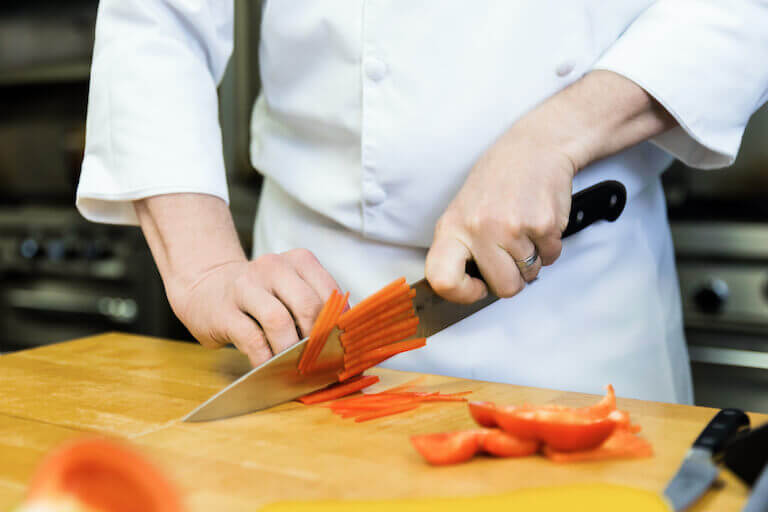
Students can start by exploring essential knife skills, mise en place, and culinary foundations that apply across a variety of cuisines.
Global and Regional Cuisine Exploration
Escoffier’s associate degree curriculum can include courses on American Regional and Western European cuisines. Students have the opportunity to dig into the history and cultural roots of signature dishes while they practice classical and contemporary techniques in the kitchen.
Baking and Cold Kitchen Skills
In courses like Doughs & Leaveners and Culinary Garde Manger, students can gain experience in two important areas outside of hot-line cooking. The baking side can cover savory doughs, yeast-raised products, flatbreads, and other techniques you’d find in a bakeshop. On the cold kitchen side, you can work with salads, dressings, pâtés, terrines, cold hors d’oeuvres, and buffet presentations. Students can also study how ingredients function and the presentation standards that apply to cold and baked foods.
Nutrition, Science, and the Farm to Table® Experience
Students can also explore the relationship between nutrition science and the origins of our food. The Science of Nutrition course can examine the physiological role of nutrients, the impact of diet on long-term wellness, and modern dietary standards.
In the Farm to Table® Experience, the focus shifts to agricultural methods and global food sustainability. Depending on your program format, this is brought to life through different hands-on applications:
- On-Campus (Boulder): Direct visits to local farms and producers to see these systems in action.
- Online: Interactive, experiential learning conducted through specialized workshops.
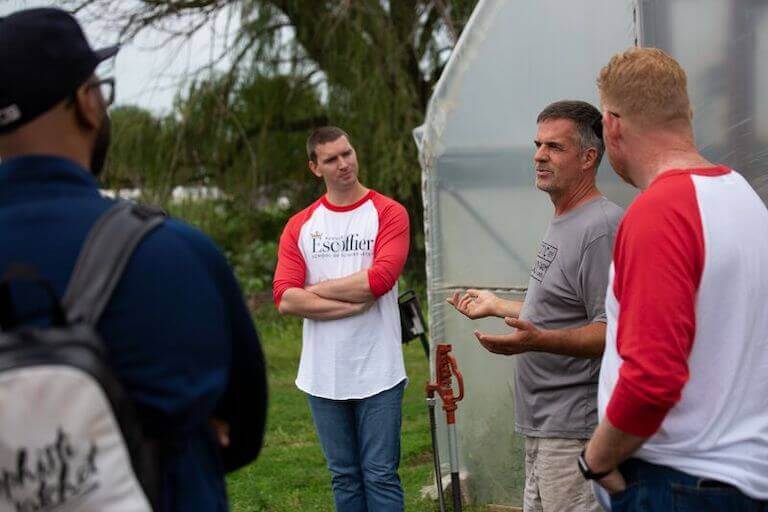
Escoffier’s Farm to Table® Experience can help students understand ingredient sourcing, sustainability, and food systems.
Build Leadership and Business Acumen
The associate degree can include business and communication courses that can help prepare students for leadership in kitchens and foodservice operations. You can have the opportunity to explore what goes into running a profitable, well-managed business, and develop the communication skills that matter in nearly any culinary career.
Culinary Entrepreneurship and Restaurant Operations
Students can study the structure of foodservice businesses, from daily operations to long-term planning. In Culinary Entrepreneurship, students can have the opportunity to develop a full business plan for a food venture, addressing funding, legal considerations, marketing, and management strategy.
The Restaurant Operations course can cover menu planning, pricing, and design. You can also gain insight into staff training, scheduling, and the foundational structures of professional kitchen operations. Together, these courses can offer a practical framework for managing or launching your own food business.
Technical and Professional Communication
In a fast-paced kitchen environment, clear and efficient communication is essential. Through Business and Professional Communication and Technical Writing for the Hospitality Industry, you can develop the skills to interact professionally with team members, leadership, and guests. You may practice delivering kitchen demonstrations, drafting service documents or proposals, and tailoring your tone to suit different audiences.
Math, Cost Control, and Financial Fundamentals
Understanding the financial side of foodservice can help you make more informed decisions. Courses in Foodservice Math & Accounting and Purchasing and Cost Control allow you to examine critical areas like inventory management, recipe costing, and labor analysis. You may also build a foundation in portion control and vendor relations, gaining the tools necessary to oversee profit margins and professional budgeting.
Build Your Skills with Industry-Experienced Chef Instructors
Escoffier employs more than 100 professional Chef Instructors who bring real kitchen experience to their teaching. These instructors have worked in various roles across the industry, from executive chef positions to restaurant ownership.
Among this faculty:
- 75 have worked as Executive Chefs
- 52 are current or former business owners
- 14 have worked in Michelin Star restaurants
- 16 are published authors
- 10 Disciples d’Escoffer/Les Dames de’Escoffier
Practice in the Real World with Culinary Externships
Associate degree students at Escoffier complete two hands-on industry externships in a real, professional kitchen. This experience can provide the opportunity to integrate your coursework with the practical realities of the industry. You can use this time to strengthen your skills, grow your professional network, and identify the culinary path that most inspires you.
While it’s up to you to secure your own approved externship, students can work with the Career Services team to explore opportunities, develop a resume and portfolio, and hone their interviewing skills.
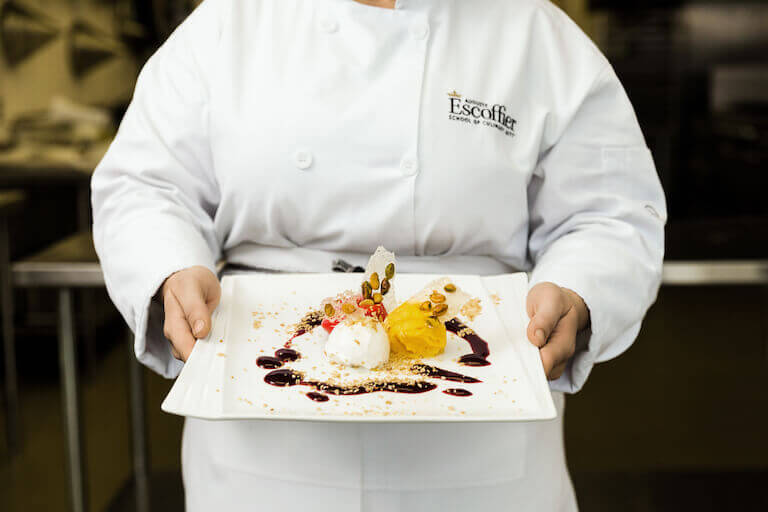
Culinary externships let students apply their learning in real kitchens, from dessert plating to service execution.
Where Students Train
Escoffier externs have worked in all kinds of professional kitchens. Some have trained at fine-dining restaurants like La Marmotte in Telluride or Pujol in Mexico City, luxury resorts like Moon Palace in Cancun, historic estates like the Biltmore in Asheville, or even unique locations like the McMurdo Station in Antarctica.
Students have also externed on cruise ships, at catering companies, private clubs, farm-to-table kitchens, wilderness lodges, hunting clubs, National Parks, golf resorts, and more across the country. These externships can be tailored to the student’s interests, location, and availability. And in some cases, they’ve wound up as stepping stones to full-time employment.

Structure and Flexibility to Fit Your Life
Here are a few reasons students may choose our online program:
- 60-week associate degree programs available online and at the Boulder, CO campus
- Hybrid learning: you do self-paced coursework online, then complete a required hands-on externship
- You can customize your schedule around work, family, and whatever else you’ve got going on
Whether you study in person or online, you’re following a structured curriculum that’s meant to build real skills in technique, business know-how, and career readiness. You don’t have to put your life on pause.
Academic Support and Financial Flexibility
Throughout your journey from enrollment to graduation, you can access academic support and guidance for your financial questions.
Online students are assigned Success Coaches who can check in with you regularly and can help with time management, staying accountable, and working through problems when they come up. On-campus students can work with Student Success Managers who may help them navigate their programs and any challenges that come up along the way.
Instructors are often accessible outside of class for questions, feedback, or mentoring.
“(The) online program is top tier and the staff work tirelessly to support students because our success is theirs too,”* Graduate Shamaya Williams Coats said about the support from Chef Instructors
Career Services staff can help with resumes, interview prep, job leads, and the practical tools you may need to land a job, and their support can be available both while you’re in the program and after you graduate.
Affordability and Financial Aid Options
Tuition for the associate degree varies based on which campus you choose and whether you attend online or in-person. Consult the most recent Escoffier catalog for the full breakdown on tuition and fees.
Financial aid is available to those who apply and qualify. There are also scholarships and interest-free payment plans that may be available to you.
Students may be eligible for:
- Federal student aid, including loans and grants through the FAFSA
- Scholarships and grants from outside organizations or the school
- Payment plans with fixed monthly installments
- Veteran and military benefits, including GI Bill® eligibility for qualified individuals†
Staff in the Financial Aid office can help you sort through available options and how you can apply for assistance that fits your situation.
† GI Bill® is a registered trademark of the U.S. Department of Veterans Affairs (VA).
5 Possible Career Paths After Graduation
The culinary industry offers a diverse range of paths, from high-energy kitchen leadership to strategic business management. Below is an overview of common roles and the typical compensation you can expect.
| Role | Average Annual Salary | Key Focus |
| Food Service Manager | $65,310 | Operations, Budgeting, & Hiring |
| Chef or Head Cook | $60,990 | Staff Management & Menu Planning |
| Supervisor (First-Line) | $38,520 | Shift Coordination & Safety |
| Specialized Cook | $35,760 | Technical Execution & Preparation |
| Food Stylist | $36,910 | Visual Presentation & Media |
Sources: Federal Bureau of Labor Statistics: Food Service Managers; Chefs and Head Cooks; First-Line Supervisors of Food Preparation and Serving Workers; Cooks; Zippia, Food Stylists
1. Food Service Manager
You may oversee daily operations for restaurants, hotels, or catering companies. This role involves scheduling, budgeting, and ensuring high standards of customer service. Professionals often advance through supervisory roles like assistant manager or kitchen manager.
An associate degree, particularly one focused on management, can provide an advantage when you seek leadership positions. It can be especially beneficial if you are transitioning from back-of-house cooking into a management-focused career.
2. Chef or Head Cook
In this leadership role, you can oversee the entirety of kitchen operations. This can involve managing staff, planning menus, and maintaining consistent food quality. While many start in prep positions, a degree may accelerate your path to a sous chef or head chef role, especially when you apply leadership skills and externship experience.
While not required, a culinary degree can substitute for years of experience when applying for higher roles, and it can provide foundational knowledge in kitchen management, safety, and technique.
3. First-Line Supervisor of Food Prep & Serving Workers
You can directly oversee kitchen or service staff, managing shift schedules and ensuring daily preparation happens safely and on time. These positions often lead into higher management roles.
An associate degree in culinary arts can help you step into this role sooner. Employers, particularly in corporate settings or hospitality chains, often look for the combination of formal training and leadership ability.
4. Cook (Line, Prep, or Specialized)
These positions can be foundational for a long-term culinary career and can lead to sous chef or lead cook. You can use these roles to hone standardized recipes and high-volume service. Compensation varies significantly based on the setting—such as fine dining, resorts, or cruise ships.
Having a degree may help you advance faster, especially when you combine your education with externship experience and exposure to various professional cooking techniques.
5. Food Stylist
If you have a creative eye, you may use your skills to prepare food for photography, television, or product packaging. Success in this field depends on understanding plating, color theory, and the physical properties of ingredients.
Through the curriculum, you can become proficient in knife work and flavor balancing. These fundamentals are essential when you are tasked with ensuring food looks as appealing as it tastes for a professional portfolio.
Is Culinary School the Next Step Toward Your Future?
If you are ready to build a career with long-term versatility, a culinary arts degree can provide the framework you need. Through this curriculum, you can collaborate with industry-experienced Chef Instructors to refine your technique and develop the professional confidence to lead in high-pressure environments.
And you can gain a deeper understanding of the business strategies that drive the hospitality industry.
Enroll today or contact us to find the program that best aligns with your culinary path.
STILL CURIOUS? TRY THESE ARTICLES NEXT:
- How Long Does it Take to Get an Online Culinary Arts Degree?
- Why Older Students Should Consider Culinary School
- Culinary School Pros and Cons: How to Decide If It’s For You
This article was originally published on September 11, 2017, and has since been updated.