

Listen to This Article:
Stepping into a professional kitchen or other culinary business for the first time can feel a world apart from practicing in class. Culinary school can offer you the fundamentals of technique, terminology, and culinary business principles along with the confidence to tackle new skills, but the real transformation often happens when you put those lessons to work in an actual industry setting.
That’s why every program at Auguste Escoffier School of Culinary Arts includes one or two hands-on industry externships. More than a graduation requirement, they’re structured opportunities to apply what you’ve learned, experience the pace and expectations of professional environments, foster industry connections, and begin developing the readiness that employers value.
Externships could also help you clarify your career direction and gain confidence in your skills while building your network. And because nearly two-thirds of employers now use skills-based hiring practices that emphasize demonstrated abilities and competencies, an externship can give you concrete experience to discuss in job interviews.
Here’s how Escoffier’s externship program works to connect classroom learning with professional kitchen experience and may help prepare you for a culinary career.
What Is the Escoffier Externship Program?
At Escoffier, every student, whether studying online or on campus, completes one or two externships before graduating. Here’s what makes these externships different:
- Real-world application: You work in a real life operational restaurant or related business, applying classroom skills in professional settings
- Program-specific focus: Requirements match your concentration—whether that’s culinary arts, pastry, plant-based programs, or one of our other programs
- Flexible scheduling: You work with your externship location to establish the schedule
- Online integration: The “fully online with hands-on industry externship” model lets you keep doing coursework, if applicable to your program, while getting practical experience
Externship vs. Internship: What’s the Difference?
Externship: Shorter in length, built into Escoffier’s programs, and focused on applying classroom skills in a professional kitchen, bakery, or food business.
Internship: Typically longer, may be optional or independent from school, and often emphasizes broader on-the-job training.
No matter the path, externships can give students the chance to put their classroom learning into practice while exploring the professional side of the culinary world.
Growing Industry Demand
The timing is excellent for culinary students looking for externships. The restaurant industry is growing significantly, with a projected 15.9 million jobs, $1.5 trillion in sales, and 200,000 net new jobs. For chefs and head cooks, employment is projected to grow by 7% from 2024 to 2034, and the median wage was $60,990, as of August 2025 Bureau of Labor Statistics figures.
This expansion could create more opportunities for students to find externships that complement their career goals. Whether you’re aiming for prestigious international kitchens or want to build experience closer to home, Escoffier’s externship program can provide you with structure and support.
How the Externship Process Can Help Build Professional Preparedness
The Career Services team can help students sort through options and connect with resources that can point them in the right direction. The support can include assistance with résumé writing and interview prep, and they can suggest potential sites that fit your interests. In the Professional Externship Course, students also explore how they can develop a professional network.
Students are responsible for securing approved sites, which mirrors a real job search. Some students may choose to stay local and build ties in their own community, while others might aim for bigger settings like hotels, resorts, or even international kitchens.

Externship placements can expose students to professional kitchen environments where they practice techniques and learn industry standards.
Types of Externship Opportunities
Although you secure your own externship, you might be able to tap into Escoffier’s partnerships with national and international businesses, which can connect students with opportunities at established operations around the world. These opportunities can reflect different career interests and areas of study:
- Fine dining restaurants — From local upscale places to internationally recognized venues
- Hotels and resorts — Large operations with multiple dining outlets and banquet services
- Specialty establishments — Bakeries, cafes, food trucks, and niche restaurants
- Corporate dining — Hospitals, schools, and business cafeterias
- Catering companies — Event-based food service operations
- Leisure segment — Theme parks, sports venues, golf/tennis clubs
- International placements — Opportunities abroad
Geographic flexibility can be valuable for online students. You can complete externships in your local area or, with proper planning, travel to experience different culinary scenes.
What Students Can Experience in Professional Kitchens During Externships
It can feel like a big step when you first enter a professional kitchen or foodservice establishment for an externship. The pace is different. The stakes may feel higher. You’re producing food for paying guests who will actually eat it instead of practicing techniques for a grade.
But Escoffier students arrive with a foundation of skills they’ve already practiced.
“I think the biggest thing for Escoffier students is that they’ve built the confidence in us and all of our skills, and so we can walk into a restaurant feeling comfortable in the kitchen and with our knife skills,” says Stacey Jones, reflecting on how her culinary education prepared her for professional kitchen work.
*Information may not reflect every student’s experience. Results and outcomes may be based on several factors, such as geographical region or previous experience.
That confidence becomes essential when you step into the fast-paced, demanding world of commercial kitchens. But confidence is just the start. Escoffier externships can expose students to an incredible variety of experiences, from high-pressure fine dining to unique educational opportunities that can shape entire career paths.
High-Stakes, High-Reward Environments
Some externships place students in environments where there’s little room for hesitation. The pace may feel relentless, the standards are high, and you’re expected to perform at a level that matches the kitchen’s reputation. These high-stakes positions can compress months of learning into weeks, pushing students to develop speed, precision, and composure under pressure.
Parker Wilks-Bryant’s experience at Puyol in Mexico City reflects this kind of intensity. Pujol is ranked the best restaurant in North America by San Pellegrino and operates at an elite level, with demands that many students may not encounter until years into their careers, if at all.
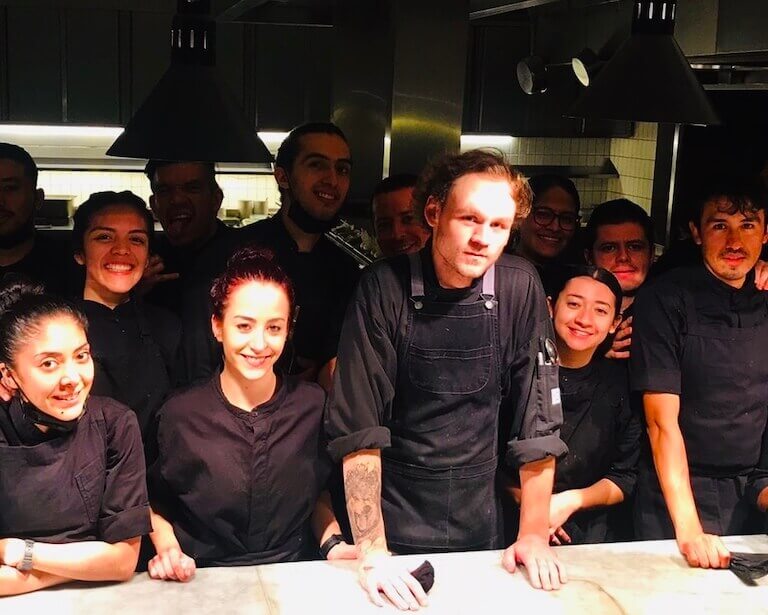
Escoffier extern Parker Wilks-Bryant celebrates his final day with the team at Puyol, were he gained experience in one of North America’s most prestigious kitchens.
“The externship was insane,” Parker said. “… There were cameras in our faces all the time, like Vice and Netflix, were filming while I was there… feeding big names on a weekly basis.”*
*Information may not reflect every student’s experience. Results and outcomes may be based on several factors, such as geographical region or previous experience.
For Parker, the externship was about more than just cooking. It was about learning to maintain focus and quality while cameras rolled, while critics watched, and while the pressure never let up. Experiencing those kinds of conditions early can help prepare students for the realities of working in top-tier establishments.
Unexpected Opportunities That Can Build Versatility
In professional kitchens, versatility matters. Chefs who can step into different roles, adapt to changing needs, and take on responsibilities beyond their job description often find more opportunities coming their way. Externships can introduce students to this reality early, sometimes in surprising ways.
Bree Chumley’s externship at Tartine, a French bistro, took an unexpected turn when the restaurant asked her to teach vegan cheese-making classes. It wasn’t part of Bree’s original externship plan, but it became one of the most valuable parts of her experience.
“Every other week, I taught a class on how to make cheese,” she said. “The classes were 30 people each time… All three of my classes sold out.”*
*Information may not reflect every student’s experience. Results and outcomes may be based on several factors, such as geographical region or previous experience.
Bree’s experience helped her discover interests and strengths she didn’t know she had, introducing her to cheese making, teaching, and managing a classroom setting. These are the types of skills that can be beneficial for employers. The ability to work front-of-house, back-of-house, educate guests about food, or lead special events can help you stand out among other applicants.
Her story also shows how the externship experience can help students discover new career paths they may not have otherwise considered.
Recognition and Achievement
Externships can create opportunities for students to showcase their skills in ways that can help them after graduation. Oscar Beltran’s experience at Moon Palace Resorts in Cancun is a good example. During his externship, Oscar competed in a taco al pastor competition against the resort’s established chefs.
“I beat four chefs at the hotel,” he said. “My recipe has the potential to become a hotel recipe.”*
*Information may not reflect every student’s experience. Results and outcomes may be based on several factors, such as geographical region or previous experience.
Experiences like that can give students something to highlight during job interviews. Being able to say, “I developed a recipe that competed against seasoned professionals and won,” highlights initiative, creativity under pressure, and the ability to contribute at a professional level.
Achievements like Beltran’s can also become portfolio pieces. A recipe that made it into consideration for a hotel menu, a competition placement, or recognition from industry professionals can all help students stand out when applying for positions after graduation. These specific accomplishments can give interviewers something to ask about and help turn a standard resume into a memorable one.
Professional Development Beyond Cooking
While you’ll likely sharpen your knife skills and develop your techniques, externships can also teach you the people skills that can help make or break culinary careers. Reshmanth Gummadi learned this firsthand during his time at a Michelin-star-nominated restaurant.
“The life lessons that I’ve gained in communication, marketing, and professional growth have been invaluable,” he said. “This externship is helping me get ready for the real world by using the techniques I learned in school and working closely with experienced chefs.”*
Former Escoffier extern Reshmanth Gummadi shares his day-to-day experience at Lilac Tiger in Chicago and how his externship helped develop both culinary and professional skills.
*Information may not reflect every student’s experience. Results and outcomes may be based on several factors, such as geographical region or previous experience.
Confidence and Multi-Station Skill Growth
Another advantage of externships is the chance to work across multiple stations and discover where your strengths lie. The ability to move between roles can make you more adaptable in a professional kitchen and may open up more opportunities for advancement.
Stacey Jones’s experience shows how that can play out. She came to Escoffier for pastry and started her externship at Sway in Austin, working the pastry station. But once she was in the kitchen, Stacey realized she wanted to explore more.
“With the confidence that they gave me, I decided to start learning all the other stations and going to the savory side,” she said, “which has helped move me up to lead line, which then helped me move up to leading and being the sous chef, and now being second-in-command.”*
*Information may not reflect every student’s experience. Results and outcomes may be based on several factors, such as geographical region or previous experience.
Stacey Jones demonstrates how Escoffier’s training prepared her for professional success, leading from her externship at Sway to her current role as sous chef.
Her story illustrates how externships can help give you permission to explore. You might start with one career path in mind and discover a different direction that you enjoy more. That kind of clarity early on can save years of trial and error later.
What Employers Value in Escoffier Externs
Externships can allow students to apply their training in real kitchens while giving employers a chance to evaluate potential hires in action. What employers look for during these externships offers insight into what they value—and why Escoffier students can stand out in restaurant environments.
Understanding these priorities can help students make the most of their externships and focus on the qualities employers value while they’re on-site.
Strong Work Ethic and Positive Attitudes
When employers talk about what makes a successful extern, technical skills rarely top the list. Instead, they focus on qualities that are harder to teach: showing up ready to work, staying positive when things get hectic, and being genuinely willing to learn.
As Chef Maggie DeMarco, former Chef de Cuisine & Externship Program Manager at La Marmotte, puts it: “We learned that prior restaurant experience, while valuable, is not a key deciding factor in a student’s success in our kitchen. The common denominators amongst the most successful externs have been the willingness to learn and the drive to work hard, day in and day out.”*
A strong work ethic and positive attitude can be crucial qualities for success in restaurant environments. Long hours and high-pressure situations are common. Josh Hasho, Omni Hotels & Resorts Executive Chef, has seen this pattern in the Escoffier students he’s hired.
“I’ve hired Escoffier students in the past because I’ve noticed a different work ethic that they possess that some other culinary students don’t,” Hasho notes. “It was very consistent—hard-working and positive attitudes.”
*Information may not reflect every student’s experience. Results and outcomes may be based on several factors, such as geographical region or previous experience.
Consistency matters in professional kitchens. Team members count on each other to keep each station running smoothly. Employers want to know they are hiring chefs who will be able to deliver even during the dinner rush.
Strong Foundational Culinary Skills
Professional kitchens come with their own set of standards and expectations. From safety practices to sanitation standards, having a solid starting point can make it easier for students to step in, follow along, and continue learning as they go.
“Employers contact Escoffier because they understand that when they interview our students, they are going to meet with skilled workers who have an understanding of terminology, sanitation, and safety guidelines,” explains Patricia Beckwith, Vice President of Career Services at Escoffier.
She adds that employers also appreciate students’ “desire to build upon the foundations they received through Escoffier with a career in the culinary industry.”
With the fundamentals already in place, externships can allow students to focus on the details: how a specific kitchen operates, its standards, and its day-to-day systems.
Partnership Benefits for Establishments
Some employers go beyond hosting individual externs and develop ongoing partnerships with Escoffier. These relationships can benefit both sides: employers get access to trained students for externship positions, and in some cases, their existing staff can take advantage of educational opportunities through the partnership.
“Escoffier provides a real-world, flexible learning environment allowing for relevant, hands-on training in our hotels in addition to their online educational component,” said David Harker, Corporate Executive Chef at Omni Hotels & Resorts. “Escoffier students, alumni, and Omni associates all benefit from this professional partnership.”*
*Information may not reflect every student’s experience. Results and outcomes may be based on several factors, such as geographical region or previous experience.
For students, these established partnerships can mean more externship options and smoother search processes. For employers, they create a consistent pipeline of trained candidates who understand professional kitchen standards.
Tips to Make the Most of Your Externship
An externship is what you make of it. Students who approach the experience with intention and curiosity tend to get more out of it than those who simply show up and go through the motions. Here are some ways to maximize your time in a professional kitchen.
Set Goals
Before you start your externship, think about what you want to accomplish.
- Do you want to explore a specialization that could shape your career path?
- Learn how a particular type of kitchen operates?
- Get comfortable working at a faster pace?
Having clear goals can help you focus your efforts and make the most of the time you have.
Ask Questions and Seek Feedback
Externships can give you direct access to experienced chefs and kitchen staff. Take advantage of that. Ask about techniques you don’t understand, why certain methods are used, or how they handle specific challenges.
When your supervisor offers feedback, listen closely. It’s an opportunity to improve while you have that support and guidance.
Observe Your Surroundings
Pay attention to more than just your own station. Watch how other stations coordinate during service, how the team communicates under pressure, and what keeps things running smoothly when the kitchen gets busy.
It can help you pick up on workflow patterns, timing strategies, and the unspoken rules that make a kitchen function efficiently. These observations may help you understand what professional kitchens expect and how to adapt to different environments.
Build Professional Relationships
The people you work alongside during your externship can become valuable contacts as you move forward in your career.
Take time to connect with everyone in the kitchen, not just the chefs. Line cooks, prep staff, and dishwashers all have knowledge and experience to share.
Being someone who’s easy to work with and genuinely interested in others can leave a positive impression that lasts beyond your externship.
Thinking About an International Externship?
If you’re planning to take your externship abroad, a little preparation can make a big difference. Researching the culture, brushing up on language basics, and understanding visa requirements can help you feel ready. It also helps to think through the practical details—like travel and budgeting—so once you arrive, you can focus on the experience itself.
Your Culinary Externship: The Bridge to Your Career
An externship is more than a graduation requirement. It’s a chance to experience what professional kitchen or foodservice work actually feels like and practice the skills you’ve been developing in school.
The restaurant industry continues to grow, and hands-on experience can be valuable as you pursue your career goals. Your externship can help bridge the gap between classroom learning and professional practice, giving you a clearer sense of what’s possible as you apply your training in real kitchens.
Interested in finding out more about culinary education at Escoffier? Contact us today to explore our programs and how externships could fit into your educational path.