
Listen to This Article:
The first time you follow a recipe and it turns out great, it feels like a win. But cooking and baking become truly exciting when you start to understand why each step works.
That’s where technique comes into play. Fundamental techniques reveal the reasoning behind the process, like the knowledge that helps you achieve a proper sear that builds flavor, create an airy lift in a sponge cake, or balance ingredients so your dish tastes intentional rather than lucky.
If you are new to cooking, these 25 techniques are an ideal place to begin. Read on to find out how you can transform your cooking from following instructions to making informed decisions.
Foundation Skills Before You Even Cook
The foundation of great cooking starts well before the heat turns on. These skills can help you stay organized, move efficiently, and build real confidence at your station.
1. Mise en Place
Mise en place sets the tone for your entire cooking experience. It means having your ingredients prepped, your tools organized, and your workstation ready before you ever turn on a burner or heat the oven. It may look like hyper-organization at first, but every step has purpose.
Both culinary and pastry chefs rely on this practice in different ways. In a savory kitchen, good prep supports speed and flow so you can move smoothly from sautéing your mirepoix to deglazing a pan.
In the pastry kitchen, mise en place creates precision. Ingredients are scaled and labeled in advance, butter is prepared at the right temperature for the method, and you avoid getting halfway through a recipe only to discover you are out of egg whites.
Proper mise en place keeps your work efficient, consistent, and calm, no matter your specialty.
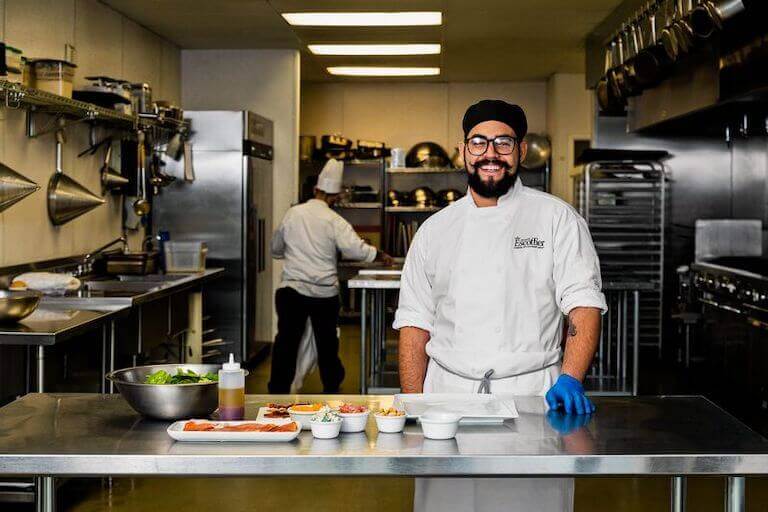
Mise en place helps cooks stay organized and confident, with ingredients prepped and ready before cooking begins.
2. Knife Skills
Knife work shapes the way ingredients cook and taste. Uniform cuts help vegetables soften and cook at the same rate, give proteins a clean sear, and create visual appeal on the plate.
Key Cuts:
These cuts are often taught early in culinary training because they influence everything from doneness to plating.
- Dice: small, medium, or large
- Brunoise: fine, uniform cubes
- Julienne: thin matchstick strips
- Chiffonade: ribbon-like herbs or greens
- Batonnet: a very fine, wispy slice often used for scallions or long herbs
Once the mechanics of knife work and fabrication become second nature, cooks gain the freedom to experiment with flavor, create cleaner cuts, and move more efficiently at their station.
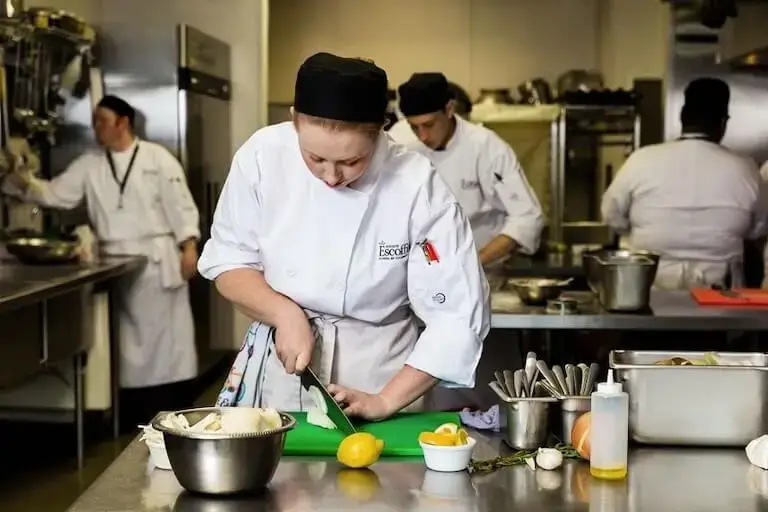
Practicing knife cuts helps ingredients cook evenly and keeps your mise en place organized.
Escoffier graduate Mason Snyder, known as “the Cowboy Chef,” learned the value of repetition firsthand. His early culinary training taught him that technique becomes powerful only after you’ve repeated it enough times to feel it in your hands, not just your head.
“It wasn’t until I had the technique down to a point where it was second nature – I did the thing a thousand times – that I really could understand what I was doing when I was playing with flavors to make that thing happen,” he said. “I was really appreciative of that training. I still go back to it even today.”*
Fabrication Basics (AKA Breaking Down Proteins)
Fabrication is an extension of knife skills, applying control and accuracy to larger, more complex ingredients. Learning to break down a chicken, portion a fish, or trim larger cuts of meat builds confidence in the kitchen and helps reduce waste. These skills take time to develop, and even experienced chefs continue refining them. Jacques Pépin’s effortless chicken breakdowns show what repetition and sound technique can achieve. With consistent practice, fabrication becomes one of the most rewarding applications of knife work.
3. Heat Control
Every technique depends on understanding how heat moves. Learning the difference between low, medium, and high heat teaches you when to coax ingredients gently and when to build bold flavor. This foundation becomes even more important once you move into dry heat, moist heat, and combination cooking methods we’ll cover later in this article.
How Heat Travels:
- Conductive heat: direct contact, like a pan searing a steak
- Convective heat: surrounding warmth, like a gentle oven roast or a simmering pot
Precision matters across specialties here, too. In pastry, tempering chocolate requires exact temperatures to maintain shine and snap. In savory cooking, knowing when to sweat aromatics instead of brown them determines whether a dish tastes delicate or deeply caramelized.
4. Seasoning Fundamentals
Seasoning is the balance of elements that gives food character and identity.
- Salt: Enhances flavor and changes texture, especially in proteins and bread doughs.
- Acidity: Brightens dishes, balances richness, and sharpens flavor in both savory and pastry work.
- Fat: Carries flavor, adds richness, and softens harsh edges. Plant-based chefs often rely on nuts, seeds, and oils to create the same effect.
- Sweetness: Important not only for pastry but also for balancing sauces or glazes in savory dishes
- Umami: Adds savory depth and roundness. It appears in ingredients like mushrooms, tomatoes, aged cheeses, soy sauce, miso, and slow-cooked stocks. Plant-based kitchens rely on umami-rich elements to create complexity without animal-based products.
Layering these elements thoughtfully builds depth in any dish, whether you are braising vegetables, finishing a vinaigrette, adjusting a dough, or balancing a dessert.
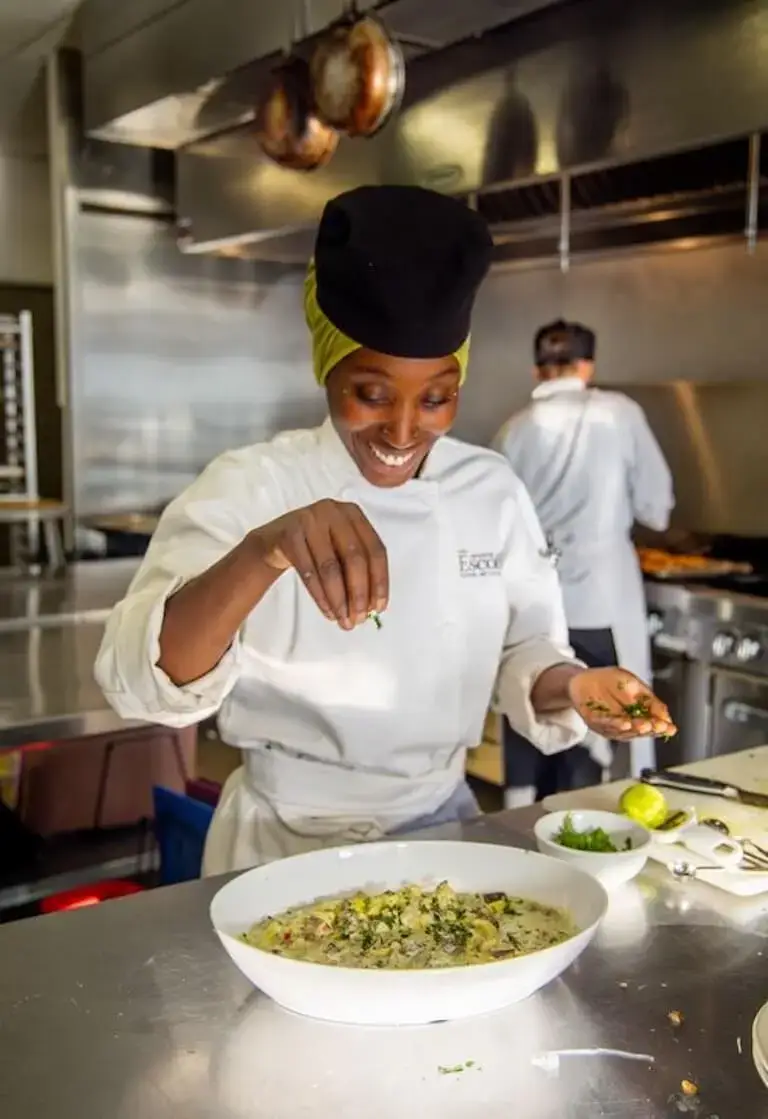
Seasoning is layered throughout cooking building balance and depth one step at a time.
These early skills—mise en place, knife work, and understanding heat and sesaoning—become the habits that support everything else you learn in the kitchen.
Escoffier graduate Shai Fernandez described how building those fundamentals shaped his own path. After years of home cooking, he realized that learning in a professional environment helped him develop the structure and technique he needed.
“I think Escoffier was definitely a good decision for me; I wanted to chase a passion but also get the best habits I could,” Shai said. “Escoffier really kindled that passion. I knew I was getting good habits and techniques instilled there.”*
Heat in Action: A Snapshot of Cooking Methods
| How It Cooks | Techniques Included | Best For | |
| Dry Heat | Uses hot air, direct heat, or high-temperature surfaces with little to no added liquid | – Searing – Roasting – Baking – Grilling – Broiling – Sautéing – Stir-Frying – Pan-Frying / Deep-Frying |
Crisp textures, caramelization, browning, concentrated flavor |
| Moist Heat | Uses water, broth, or steam to cook food gently at lower temperatures | – Poaching – Simmering – Boiling – Steaming |
Tender, delicate textures; soups, grains, vegetables, gentle proteins |
| Combination Heat | Braises and stews start with dry heat to build flavor, followed by slow cooking in liquid; sous vide starts in liquid, then is browned later | – Braising – Stewing – Sous Vide |
Tough cuts, root vegetables, plant-based braises, thickened sauces, deeply flavored dishes |
Dry Heat Cooking Techniques
With the fundamentals in place, you can start exploring how different cooking methods transform ingredients. Dry heat techniques use hot air, high heat, or direct contact with a hot surface to cook food without adding water-based liquid. Because there is little to no moisture involved, ingredients brown, crisp, and caramelize more easily.
This category includes familiar techniques like searing, roasting, baking, grilling, and sautéing. Although oil is technically a liquid, pan-frying and deep frying are classified as dry heat methods because no water is used to cook the food. For culinary students and new cooks, dry heat methods are often the first step toward understanding how heat builds flavor and texture.
5. Searing
Searing creates a flavorful crust through the Maillard reaction, a chemical change that happens when proteins and sugars meet high heat. A good sear adds depth to meats, vegetables, tofu, tempeh, and many plant-based proteins.
To get that rich, caramelized surface, the pan must be hot and the ingredient dry. Once the crust forms, you can finish cooking in the oven, in a sauce, or right in the pan. Searing becomes the foundation for pan sauces, braises, and countless savory dishes.
6. Roasting
Roasting surrounds food with dry, even heat, helping it brown on the outside while staying tender within. It is one of the most versatile techniques in the kitchen.
High-Heat Roasting
Perfect for developing crisp edges and caramelization. Vegetables, chicken thighs, and root vegetables shine here.
Low-and-Slow Roasting
Ideal for larger cuts of meat, whole winter squash, or anything that benefits from a gentle, extended cook to break down fibers.
Roasting also plays a role in pastry. Fruits like pears, apples, and stone fruit become sweeter and more concentrated with heat, while roasted nuts add depth to cookies, cakes, and confections.
7. Baking
Baking uses steady, indirect heat to cook food all the way through. The oven surrounds ingredients with dry air, creating structure, lift, and even browning. While baking is central to pastry, it also plays an important role in savory cooking with items like baked pasta, gratins, and savory breads.
Baking is one of the most precise dry-heat methods. Temperature, time, ingredient prep, and even airflow all influence the final product.
8. Grilling + Broiling
Grilling uses intense heat from below, while broiling applies that same intensity from above. Both techniques create char, smokiness, and beautiful caramelization.
Vegetables and plant-based proteins do especially well with these methods because the high heat enhances natural sweetness and adds complexity. Even fruit can be grilled or broiled to create a tender, lightly caramelized finish.
Strong grill marks or a quick broil can elevate everything from kebabs to bruschetta toppings.
9. Sautéing
Sautéing cooks ingredients quickly in a small amount of fat over medium to medium-high heat. The goal is to develop light browning without overcooking.
Sweating vs Sautéing
- Sweating gently cooks aromatics like onions, celery, and carrots without browning, allowing them to release moisture and soften. This is the foundation for soups, stews, and sauces.
- Sautéing encourages light browning to build deeper flavor.
Controlling moisture is key here. Too much crowding leads to steaming instead of sautéing. Once aromatics cook properly, they create the flavor base of countless dishes, from pan sauces to braises.
10. Stir-Frying / Wok Hei
Stir-frying is a fast, high-heat method often done in a wok. Ingredients are cut small and cooked quickly to preserve color, texture, and nutritional value.
Achieving wok hei, the signature smoky aroma and flavor of well-executed stir-fry, comes from intense heat and constant movement. The technique highlights vegetables beautifully and works well with tofu, tempeh, and other plant-based proteins.
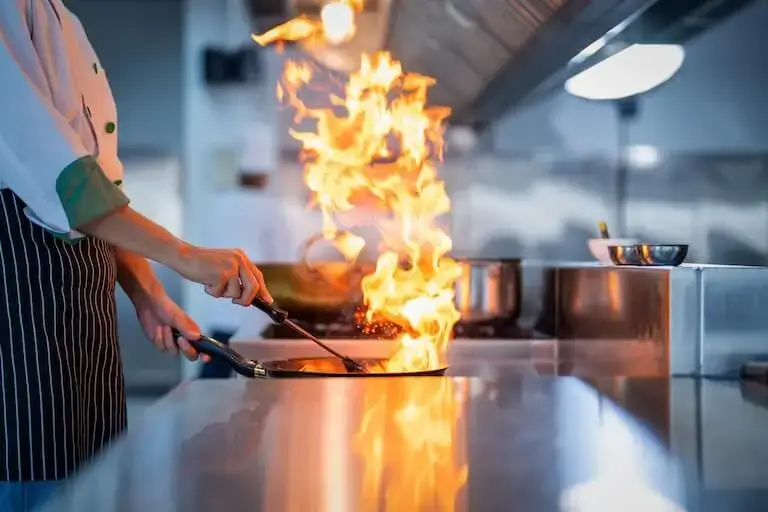
Dry heat methods such as stir-frying build bold, aromatic flavor through high, direct heat.
11. Pan-Frying & Deep-Frying
Both methods cook food in hot oil, but with different levels of submersion.
Shallow vs Deep Frying
- Shallow frying uses enough oil to come halfway up the food. Great for cutlets, pancakes, crab cakes, and fritters.
- Deep frying submerges the ingredient in oil, which creates an even, crisp exterior and tender interior. Temperature control is essential for proper browning without greasiness
For these methods, food is typically battered or breaded first. Battered items are dipped into a liquid mixture before frying, while breaded items are coated in flour, egg, and crumbs.
Moist Heat Cooking Techniques
Moist heat methods rely on water, broth, or steam to cook food gently and evenly. Because these techniques often use lower temperatures than dry heat, they help ingredients stay tender, hydrated, and delicate in flavor. Moist heat is essential for soups, grains, custards, vegetables, gentle proteins, and many plant-based foundations.
12. Poaching
Poaching cooks food in a gently heated liquid, usually between 160 and 180°F. The goal is tenderness without agitation, which makes it ideal for delicate items.
Where Poaching Works Best:
- Eggs
- Fish and seafood
- Chicken breasts
- Fruit (pears, apples, stone fruit) for pastry preparations
Poaching liquids like court bouillon (a French cooking term meaning “short broth”), aromatic milk, or infused syrups add subtle layers of flavor without overpowering the ingredient.
13. Simmering
Simmering uses steady, gentle bubbles to cook ingredients thoroughly without reaching a full boil. This method allows flavors to meld while preserving texture.
Common applications for simmering includes, soups, stocks and broths, beans and legumes, whole grains, and stews before thickening.
14. Boiling
Boiling relies on rolling, vigorous bubbles to cook food quickly. It reaches higher temperatures than simmering and is best for ingredients that can withstand movement and heat. Common applications for boiling include pasta, potatoes and blanching vegetables before sautéing or roasting.
Shocking (Ice Bath Technique)
Once boiled or blanched, transferring items to an ice bath stops the cooking process and helps vegetables maintain their color, texture, and nutrients. This is especially helpful for fresh, snappy greens like green beans, broccoli, or asparagus, which stay vibrant and crisp when shocked at the right moment.
15. Steaming
Steaming cooks food by surrounding it with hot vapor rather than submerging it in liquid. This preserves color, flavor, and nutrients while maintaining a delicate texture.
Great uses of steaming include dumplings, fish, leafy greens and vegetables, tamales, bao-style buns, or certain pastries like steamed puddings. Steaming is especially helpful in plant-based kitchens, where vegetables and tofu shine with minimal fat.
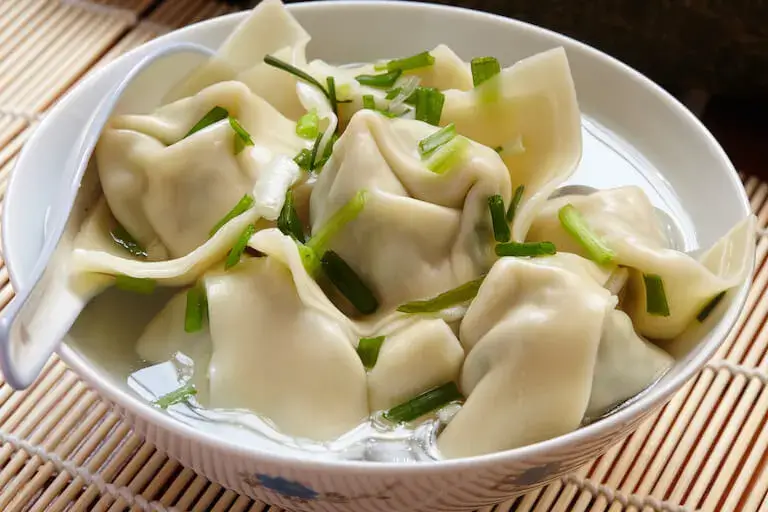
Moist heat techniques like steaming create tender textures and clean, delicate flavors.
Combination Cooking Techniques
Combination methods use both dry and moist heat, giving ingredients the best of both worlds. These techniques usually begin with high heat to build flavor, then transition to a gentler, liquid-based cook to create tenderness. They are essential for braises, stews, and any dish that benefits from both deep browning and slow, even cooking.
16. Braising
Braising begins with browning ingredients over high heat, followed by a slow cook in a small amount of liquid. This shift from dry to moist heat breaks down tough fibers while keeping everything flavorful and moist.
Where Braising Works Best:
- Tough cuts like brisket, short ribs, pork shoulder, or lamb shanks
- Hardy vegetables such as cabbage, carrots, fennel, and onions
- Plant-based braises using mushrooms, jackfruit, or root vegetables
The initial sear creates deep flavor, while the low, slow finish turns even the toughest ingredients tender. Aromatics, stock, wine, and herbs can all help build complexity.
17. Stewing
Like braising, stewing also starts with browning, but the ingredients are cut smaller and cooked fully submerged in liquid. This creates a thicker sauce and more uniform texture throughout the dish.
Common Stewing Applications:
- Beef or chicken stews
- Lentil, bean, and vegetable stews
- Curries and braised bean dishes
- Plant-based stews with chickpeas, sweet potatoes, or squash
As the mixture simmers, starches and connective tissues break down, naturally thickening the liquid into a rich sauce. Stews often benefit from a balance of acidity, sweetness, and aromatics to keep the flavors bright.
18. Sous Vide
Sous vide is a modern technique that cooks food in a vacuum-sealed bag submerged in a precisely controlled water bath. The temperature stays consistent from edge to center, which allows food to cook evenly without overcooking.
With the sous vide method, proteins stay exceptionally tender, vegetables retain color and structure, and plant-based items like tofu or vegetables can marinate and cook simultaneously.
This method offers a level of precision that is especially helpful for culinary students learning consistency and doneness. After sous vide cooking, a quick sear or finishing technique adds texture and visual appeal.
Sauce Techniques Every Chef Should Know
Sauces bring dishes together. They add balance, texture, moisture, and depth, turning simple ingredients into something layered and expressive. These techniques help you build flavor with intention, whether you are whisking a vinaigrette, finishing a pan sauce, or preparing a silky custard. They also support some of the most important fundamentals in classical cooking, including the five mother sauces, which form the backbone of countless variations used in both culinary and pastry kitchens.
19. Reductions
Reducing a liquid concentrates its flavor while thickening its texture. The process evaporates water and intensifies what remains, making sauces richer and more complex.
Where Reductions Shine:
- Pan sauces made from stock, wine, or aromatics
- Glazes for roasted vegetables or proteins
- Syrups and dessert sauces in pastry
- Plant-based sauces made from vegetable stock or fruit juices
A good reduction should taste balanced, not salty or bitter, so seasoning is best adjusted at the end. A common mistake in learning reductions is often salting too early. Remember that as the liquid reduces, the flavor, and consequently, the salt, intensifies which can result in an overly salty sauce.
20. Emulsification
Emulsification combines two ingredients that normally resist each other, such as oil and water. When done well, it creates a smooth, unified sauce that holds together.
Types of Emulsions
- Temporary emulsions like vinaigrette are whisked together and will eventually separate.
- Permanent emulsions such as mayonnaise, hollandaise, and aioli rely on emulsifiers like egg yolks to stay stable.
Plant-Based Variations
Ingredients like Dijon mustard, tahini, aquafaba, and nut butters can help create creamy, stable emulsions without eggs or dairy.
Understanding emulsification gives you the ability to build dressings, sauces, and even certain pastry components with confidence.
21. Thickening Methods
Thickening changes the body of a sauce, soup, stew, or custard, and different techniques create different results.
Cooks often rely on four main approaches: a roux made from flour and fat, a quick slurry whisked in at the end, gentle egg thickening for silky textures, and reduction-only methods that concentrate flavor without added starch.
Choosing the right technique is a core culinary skill, and each one offers its own benefits depending on the dish.
| Method | What It Is | Best Uses | Notes for Cooks |
| Roux | Flour cooked with fat (often butter) | Béchamel, velouté, gravies, gumbo | Darker roux adds flavor but loses thickening power; requires time to cook out raw flour taste |
| Slurry | Starch mixed with cold liquid and added at the end | Stir-fries, soups, sauces that need quick thickening | Cornstarch, potato starch, and arrowroot are common, gluten-free options; creates a glossy finish |
| Egg Thickening (Liaison) | Egg yolks or whole eggs gently heated into a liquid | Custards, crème anglaise, rich sauces | Requires careful temperature control to prevent curdling; creates a silky texture |
| Reduction-Only | Simmering to evaporate water and intensify flavors | Stocks, pan sauces, plant-based sauces | Adds depth without starch or dairy; best for clear or naturally thick liquids |
Pastry Techniques Every Cook Should Know
Pastry relies on careful temperature control, deliberate handling, and methods that build structure from the ground up. Even if you lean toward savory cooking, these techniques help you understand how ingredients behave under heat, how air and fat create texture, and how small adjustments can completely change a final result. They form the backbone of baking, desserts, and many dough-based preparations.
22. Creaming Method
The creaming method brings butter and sugar together until the mixture turns light, pale, and almost cloudlike. This step introduces tiny air pockets that give cakes, cookies, and quick breads their lift.
Temperature plays a major role here, too. Butter that is too cold won’t blend smoothly, while butter that is too soft loses its structure and can lead to dense or uneven results.
Learning to spot that perfectly creamed stage is one of the earliest signs that you are building real texture in your baked goods.
23. Laminated Dough Techniques
Laminated doughs, like croissants and puff pastry, rely on thin layers of dough and butter folded again and again to create lift and delicate flakiness. As the butter releases steam in the oven, those layers separate and expand.
Temperature is everything here, too. Warm hands or a warm kitchen can soften or melt the butter, causing the layers to blend together instead of staying distinct. Too much handling can overwork the gluten, while skipping resting times makes the dough tight and difficult to roll.
Laminating teaches patience and gives cooks a deeper understanding of how fat, steam, and structure work together to create those airy, flaky results.
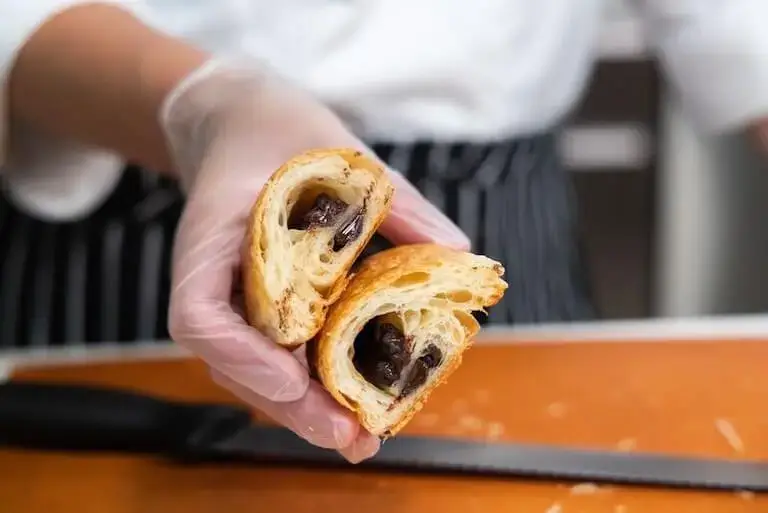
A look at the flaky interior of laminated dough, created by carefully layered butter and steam.
24. Sugar Stages
Working with sugar can be tricky for beginners, as sugar changes texture as it heats, and it’s crucial to learn how it moves from syrupy to caramelized to brittle. Each stage corresponds to a specific temperature range and outcome.
Common Sugar Stages:
- Soft Ball: used for fondant, fudge, and certain frostings
- Firm Ball: ideal for caramels and nougat
- Hard Crack: needed for brittles and spun sugar, like finishing a croquembouche.
Recognizing these stages can help pastry cooks build confections with accuracy and consistency.
25. Chocolate Techniques
Chocolate behaves differently from most ingredients because of its delicate cocoa butter crystals. Understanding how to control those crystals opens the door to smooth, shiny, perfectly snappable chocolate work.
Core Chocolate Skills
- Tempering: heating and cooling chocolate to stabilize its structure and create a glossy finish
- Enrobing: coating items with tempered chocolate for a clean, even shell
- Ganache Emulsions: mixing chocolate with cream or plant-based alternatives to create smooth fillings or glazes
These techniques appear in everything from truffles to tarts and are valuable skills for anyone working in pastry or confections.
Bring These Techniques to Life in Culinary School
Beyond these 25 techniques, the culinary world offers more to explore. Methods like fermentation, smoking, confit, curing, and advanced pastry work deepen your understanding even further. But with these fundamentals in your toolkit, you can build on the skills needed to gain confidence, cook with intention, and begin developing your own point of view in the kitchen.
If you’re excited to go deeper, culinary school can provide a focused, hands-on environment where experienced chefs guide you as you refine and expand your skills. Whether you envision yourself in a savory kitchen, bakery, plant-based restaurant, or carving out your own path entirely, a strong foundation in technique can open the door to a lifetime of creative possibility. Contact us today to find out more.