


Listen to This Article:
Lentine Alexis was 60 miles into a solo training ride on a subtropical Japanese island when she realized all of her packaged sports nutrition had fallen out of her jersey pocket. Depleted and desperate, she stumbled into a Family Mart convenience store with just enough yen for two onigiri.
The seasoned rice balls weren’t what her coach prescribed. But they were exactly what her body needed.
The experience sparked a quiet but lasting shift. In the years that followed, Lentine moved from life as a professional endurance athlete into work as a certified nutritionist and chef. Whole foods fueled her training better than the gels and powders she’d relied on for years, and that realization became the foundation of her consulting work today.
Lentine’s journey highlights an increasing trend in the health and wellness space: a growing demand for professionals who can bridge the gap between nutritional science and culinary skill. Nutrition programs often approach food through a scientific lens, while culinary programs are typically structured around technique and execution, reflecting distinct but complementary priorities.
At the intersection of both disciplines lie some of the most exciting, and in-demand, careers out there.
Why Health-Conscious Culinary Careers Are Growing
The global health and wellness foods market was worth an estimated $858.8 billion in 2023 and is expected to grow to nearly 1.6 trillion by 2030. Meanwhile, 52% of Americans say that the healthiness of food is very important to them,
The job market reflects this demand:
- Dieticians and nutritionists: projected 6% growth from 2024-2034 (according to BLS figures as of Aug. 2025)
- U.S. Health and wellness coaching: projected to grow from $7.47 billion in 2023 to $10.76 billion by 2029
- Chefs in accommodation, including wellness resorts and spas: projected 8.3% growth from 2024-2034
- Healthy takeout: expected to more than double from $24.16 billion in 2025 to $63.83 billion by 2035
More than 80% of consumers at least sometimes choose natural food products over competing products, creating opportunities across six distinct career paths, each requiring different combinations of culinary skill and nutrition knowledge.
Careers That Blend Food, Health, and Wellness
Health and Wellness Coach
Health coaches can’t diagnose conditions or prescribe meal plans like registered dietitians, who complete accredited bachelor’s degrees, internships, and must pass the Commission on Dietetic Registration (CDR) exam. Instead, coaches focus on behavior, helping people figure out why they keep reaching for sugar at 3 p.m. or why every diet they’ve tried has failed within six weeks.
Culinary training can give health coaches a distinct edge. A coach who can show clients how to build a balanced plate or use knife skills to make meal prep easier stands out from those who focus only on nutrition theory. Health coaches often encourage clients to take personal responsibility for their holistic health and well-being.
Julie Peláez co-founded The Conscious Cleanse more than a decade ago. When clients first come to her, they’re usually focused on weight loss or boosting energy. But the conversations quickly go deeper.
“Food is the on-ramp. Food is the gateway,” Julie says. “Clients come to see me because they want to lose weight, or because they’re fatigued, or they’re dealing with some chronic illness, or their hormones are out of balance. Then we end up having this deep philosophical, spiritual conversation. Body, mind, and spirit.”
Some coaches work one-on-one in weekly sessions or run intensive programs. Others build membership platforms with recipes and community support.
Key details:
- Median Income: $55,500 nationally as of November 1, 2025
- Best suited for: Those who value one-on-one client relationships and flexible scheduling
Private Chef for Specialized Diets
Private household cooks earn a median of $42,590 a year, according to the most recent BLS figures as of May 2023; note that this figure includes salary data for both private and personal chefs, so it likely skews higher for private chefs alone.
Those who work with specialized diets might cook daily or weekly for families managing Type 2 diabetes, athletes in training, busy executives, or households navigating multiple food allergies.
“Being a really great restaurant chef does not always translate to being a great private chef,” says Chef Brian Arruda, founder and CEO of Executive Chefs at Home. “I think that’s very important. Most people don’t realize that.”
Private chefs need not just technical expertise, but also adaptability, discretion, and the ability to build strong personal rapport within a client’s home environment. A private chef with nutrition training can explain how to time nutrients around training sessions or which cooking methods preserve the most vitamins and minerals.
Treating Every Client As An Athlete
Lentine works with Olympians, professional freeride skiers, stay at home parents, and everyone in between. “It actually doesn’t really matter whether you are a chef or an entrepreneur or a badass mom or a professional athlete,” she says. “We call this dharma. Your calling. Your work in the world deserves performance nutrition. I often have clients who are everyday athletes who say, ‘I’m not a professional athlete, so maybe I don’t need to do that.’ I’m like, ‘No, no, no, no, no!’ It doesn’t matter. Your body, your spirit, your mind are your vehicle to carry this out, so it matters.”
Beyond direct client work, practitioners can build subscription recipe platforms, partner with wellness brands on product development, or create educational content.
Key details:
- Median Income: $42,590 annual salary for private chefs overall in 2023, though those specialized professionals may earn more.
- Best suited for: Those who thrive in intimate client relationships and adapt well to irregular schedules

Private chefs often work for a single household, preparing meals in their clients’ homes.
Spa and Wellness Resort Chef
Spa chefs may source from local farms when produce hits its peak, design plates that make vegetables the main event, and train kitchen staff on techniques that enhance flavor without adding excess salt or sugar. You can blend classical culinary technique with nutrition science and an understanding of how food affects energy, digestion, and recovery.
Lentine spent time at Canyon Ranch, where she says the chef creates meals that balance nutrition with satisfaction. She describes eating tarragon cream fries after a hard training ride, something that felt indulgent but didn’t derail her overall approach to eating. Your goal in this job is to make guests feel like they’re treating themselves, not suffering through medicine disguised as food.
Key details:
- Median Income: Traveler accommodation chefs, including those working in resorts, earned $73,110 annually in 2024 (most recent BLS figures as of Aug. 2025)
- Best suited for: Those who enjoy hospitality environments and value stable employment
Corporate Wellness Program Chef and Educator
Many companies invest in employee wellness programs, creating demand for professionals who can teach cooking demos during lunch breaks, redesign cafeteria menus, and run nutrition challenges.
This role combines culinary work with program management. Some companies bring in corporate wellness chefs to teach practical skills. For example, chefs might offer classes showing how to prep five weeknight dinners in under two hours, how to build versatile sauces, or how to meal-plan on a budget. Other companies hire consultants to look at their cafeteria food and suggest changes that boost nutrition without sacrificing flavor.
You can also find opportunities beyond corporate campuses. Community health centers, hospital culinary medicine programs, cancer support groups, and nonprofit wellness organizations all need instructors. Someone working with low-income families might focus on stretching a grocery budget while maximizing nutrition. Someone teaching at a cancer center would emphasize foods that support treatment recovery and help manage side effects.
Building relationships with HR departments can turn single workshops into regular contracts across multiple company locations.
Key details:
- Median Income: Limited salary data available, though compensation may vary based on employment structure (independent consultant vs. corporate employee)
- Best suited for: Those comfortable with public speaking and managing multiple client relationships
Recipe Developer and Food Writer
Health-focused brands need recipe developers who can blend solid culinary technique with nutrition know-how. You might test recipes for product launches, write blog posts and social media content, develop full cookbooks, or weigh in on new product formulations.
Freelancers typically charge per recipe or take on project-based contracts. Others build their own audience through blogs, paid recipe subscriptions, or social platforms where brands eventually come calling. Recipe Club memberships, freelance brand work, and cookbook deals often complement each other.
When the pandemic shut down Lentine’s in-person athlete consulting, she launched her Recipe Club and started publishing one recipe weekly. Four years later, she has more than 800 members. Each recipe includes not just instructions but flavor philosophy and stories about why certain ingredients work together from an Ayurvedic perspective.
Key details:
- Median Income: $88,442 average annual salary according to Salary.com as of Dec. 1, 2025
- Best suited for: Those who enjoy recipe testing, food photography, and writing

Overhead view of baking ingredients on a wooden table, including a bowl of sugar crystals, a bowl of flour, a bowl of oil, metal measuring spoons, a whisk, and a lined notebook labeled “Recipe.”
Meal Prep and Delivery Services
Meal prep services batch-cook for a roster of clients and deliver pre-portioned meals once or twice a week. Running one requires organizational skills, food safety knowledge, access to a commercial kitchen, and the ability to scale recipes without sacrificing quality.
Basic meal prep tends to focus on convenience and hitting macro targets. Services run by chefs with nutrition training can go deeper, customizing based on specific health goals or dietary approaches. Some carve out focused niches rather than trying to serve everyone.
Many meal prep businesses start with five to ten clients operating under cottage food laws or temporary event permits, but scaling beyond that can require moving to a licensed commercial kitchen to comply with health department regulations. The key to scaling is building systems that free you from cooking every single meal yourself. This path involves more physical demands and less creative freedom than some other culinary careers, but can offer predictable income and measurable growth.
Key details:
- Median Income: Revenue varies significantly based on factors such as client volume, pricing model, and business structure
- Best suited for: Those who excel at logistics and systems building
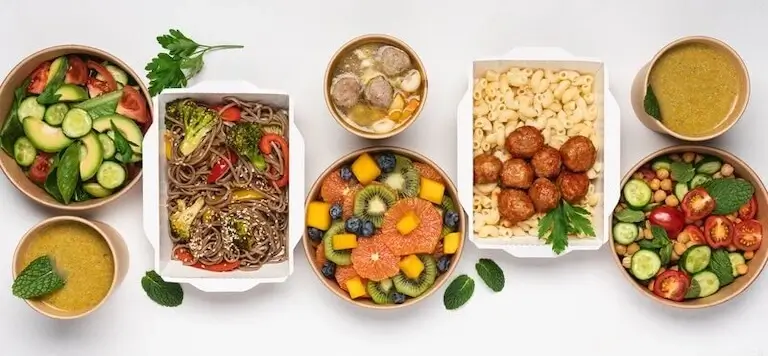
Meal prep services offer varied, nutritious options customized to client health goals.
The Education Needed for Culinary-Nutrition Roles
Nutrition students spend years learning to analyze nutrients and understand metabolism, but many graduate without learning how to properly sauté vegetables or layer flavors in a dish. Culinary students have the opportunity to practice techniques, but might not explore why olive oil and seed oils affect the body differently, or what fermentation does to gut health.
Escoffier’s Holistic Nutrition and Wellness program was developed to address this gap. The 60-week diploma or 84-week associate degree includes Culinary Foundations, Holistic Nutrition, Nutritional Cooking and Special Diets, Exploring Wellness Concepts, Coaching Techniques, Entrepreneurship, and required externships.
The curriculum starts with culinary fundamentals, providing students with the opportunity to develop menus that account for food sensitivities, work with functional ingredients, and translate nutrition science into meals people actually want to eat.
Preparing nutrient-dense food perfectly doesn’t help much if you can’t figure out why your client orders takeout at 9 p.m. three nights a week. That’s why the programs can include training in motivational interviewing, habit change theory, and the psychology behind eating decisions.
Your First Step Toward a New Career
People like Julie and Lentine didn’t wait for perfect circumstances or complete clarity about career paths. They started where they were, built skills incrementally, and created work aligned with their values.
“If you’re excited to start, then it’s not too late. That’s the sign,” says Bree Chumley, an Escoffier plant-based graduate who now works as a personal chef.
Lentine says people get paralyzed thinking they have to choose one lane. “We never know until we try. We never know if a lane is right for us until we’ve stepped into it, and knowing we can always step out. Something that I think is pertinent is that you can always change lanes.”
Whether you’re exploring a complete career change or adding credentials to existing culinary or nutrition work, Escoffier’s Holistic Nutrition & Wellness programs can offer structured pathways for either. Contact our admissions team to find out more.