

Listen to This Article:
Connor Fowler sat by the pool at a Florida resort, convinced he’d just failed his sommelier exam.
He was twenty-two years old, one year into working at Frasca Food & Wine. He’d been learning about wine every day—asking questions during service, tasting with intention, absorbing everything he could from working alongside a Master Sommelier. Now, after a long day of rigorous testing in November 2022, he was certain it hadn’t been enough.
He rehearsed his internal speech: “It’s a journey. It’s okay. I didn’t pass, and that’s okay. I’ll come back next time.”
But later when they were announcing the names of those who passed, they called his name. He had passed!
Today, Connor works as a sommelier at Tavernetta in Denver, a Michelin Bib Gourmand winner. Before that, he was at Frasca Food & Wine in Boulder. He was even on the floor the night the restaurant earned its Michelin star. Before that, he helped open Rootstalk in Breckenridge, which went on to win a James Beard Award.
Three award-winning restaurants before turning twenty-five—built not through luck or shortcuts, but through choices that accumulate when no one’s watching. “Those are all things that build up over time,” Connor says. “It’s just little things that add up in the long run.”
Finding What Clicked
Connor didn’t excel in traditional school. He showed up and got along with teachers, but the validation other students found in grades was never there for him. Then sophomore year of high school in Evergreen, Colorado, Connor started working at a local restaurant. He needed money for a trip, but what he found was something more valuable.
“I’m so ADD, and working at a place where there is just so much going on, everything kind of clicked,” he says.
The chaos of the restaurant environment brought clarity. There was immediate feedback when he worked hard and tangible results that he could see and feel. By junior year, he’d enrolled in Warren Tech’s culinary program, splitting his school day between high school classes and culinary classes. When representatives from Auguste Escoffier School of Culinary Arts presented to his class, two details caught Connor’s attention: living in Boulder and the opportunity to do an externship.
He applied for the Curtis Duffy Scholarship, got it, and enrolled at Escoffier’s Boulder campus right after high school graduation. “When I was eighteen, I had some ideas, but I more just wanted to learn and see what there was to see and go from there,” Connor says.
The Classroom Where Wine Became a Passion
Connor’s path toward wine began in the classroom at Escoffier, not in a vineyard or restaurant. In Business Communications class, students watched TED talks from industry leaders. One featured Bobby Stuckey, Master Sommelier and co-owner of Frasca Food & Wine. Connor had never heard of Frasca. But the talk introduced him to an entire profession he didn’t know existed.
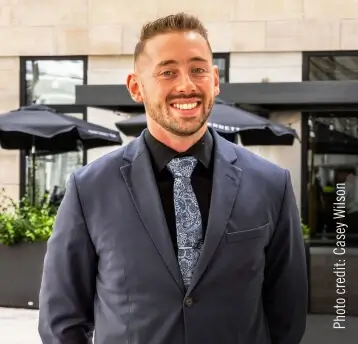
Then came Classical Cuisine class, now known as Western European Cuisine, where the chef instructor covered old-world European influence and regional wine.
“It was so foreign to me, but it was so cool because it talked about it regionally. It was very digestible bite-sized pieces,” Connor says. He started asking more questions, reading beyond the assignments, exploring a side of the culinary world he’d never encountered.
By the time externship selection came around, Connor had developed genuine curiosity about wine. He learned about the possibility of an international hands-on industry externship, and his father encouraged him to go.
“Travel. Make it work. Go travel. This is an opportunity that you get,” he recalls his dad saying. “Don’t do your externship down the street from where you already live. There will be plenty of time for that. Go travel. Go to Italy.”
So Connor chose to go to Florence, Italy.
The Externship That Sparked a Career
At nineteen, Connor worked full-time at a restaurant in Florence, but it was more than just a “semester abroad.” He paid rent, bought groceries, and felt like he lived there.
“I actually like to say that I did live out there for a semester,” Connor says. This wasn’t a vacation, it was real life in a foreign country, complete with language barriers and the challenge of building a routine in an unfamiliar place.
He noticed how simple the food was, using the freshest ingredients, minimal intervention, and pasta shapes he’d never seen before. But the wine culture is what transformed his curiosity into a passion and career.
He sat at restaurants asking sommeliers endless questions. What should I drink? Why does this pair with this dish? What makes this region’s wine different? They were generous with their knowledge and patient with his curiosity.
“That was the first time I’d ever really been exposed to that,” Connor says. “It was just invigorating. It was a side of this industry that I’d never actually heard of before.”
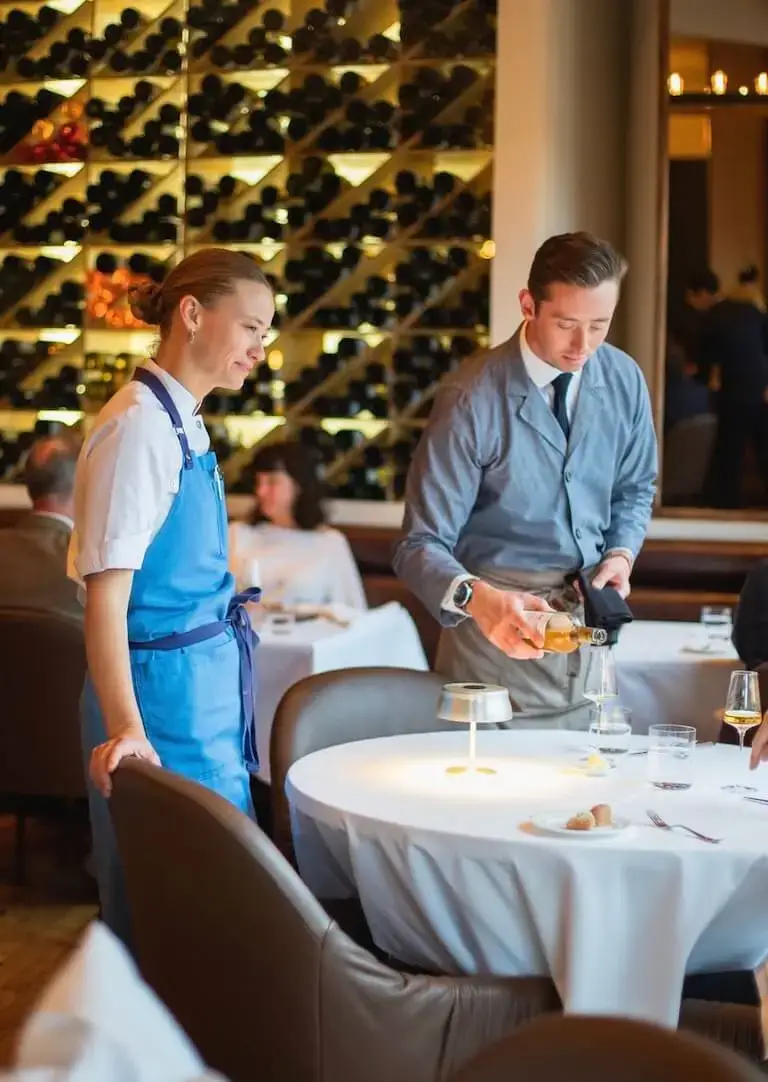
Connor working as a sommelier, a career path that began with curiosity sparked during his externship in Florence.
He also learned about earning respect through effort. His Italian wasn’t great, but he tried. He met people and made an effort to speak their language and understand their culture.
“The more you try and learn, the more you put yourself out there, the more respect you’ll receive in return,” Connor says.
By the time his externship ended, Connor knew he wanted to work with wine. The curiosity that had started in those Escoffier classrooms and kitchens had grown into a clear career direction. Then he returned to the United States, where the landscape was different.
“What can a nineteen-year-old do for wine in America? Very, very little,” he says. The legal drinking age meant he’d have to wait a couple of years before he could professionally work with the craft he’d fallen in love with. But that patience, and his willingness to keep learning even when he couldn’t immediately apply his knowledge, would become foundational to his entire approach.
Finding Structure in Difficult Times
Connor flew home in mid-December 2019, degree complete and excited about what came next.
However, less than a week later, his father died suddenly. Then a few months after that, COVID hit, shutting down the restaurant industry across the country.
The circumstances could have derailed everything. Many people in Connor’s situation might have drifted, taken time off, or even reconsidered their path entirely. Instead, Connor made intentional choices about how to move forward. He saw a therapist and stayed open with family and friends about his grief. He also stayed disciplined about his career goals to help work through his emotions.
“I think during a period of grief, I think it was so important to have something that I could hold onto,” Connor says.
Although he picked up a few different jobs to stay busy, he shares that the real impact was from “trying to do something to keep me consistent, whether it was trying to read something, trying to study something, or even just buying ingredients and practicing.”
He eventually got hired at a wine bar in Arvada, Colorado, and about a year after his father’s death, Connor joined Rootstalk’s opening team in Breckenridge. The kitchen team consisted of only four or five people in the beginning, and the days were long. But Connor was learning what it takes to build something from the ground up. Chef Matt Vawter brought his concept to life through relentless consistency, refining the menu as the team grew more comfortable.
“He took such a chance on that restaurant, and he also took a chance on me,” Connor says. The restaurant eventually won a James Beard Award in 2024, one of the culinary world’s highest honors.
Working for a Master Sommelier
In 2021, Connor began working at Frasca, the restaurant from that TED talk he’d watched years earlier at Escoffier. He walked in with a culinary degree and experience at what would become a James Beard winner. Frasca handed him a polishing cloth.
“I thought I was going in with a little bit more of an edge, having gone to culinary school and gone to Florence, worked at a wine bar, and worked at Rootstalk,” Connor shares. “But I still started at the bottom, learned the foundations, learned how this restaurant ticks. I think it’s so important.”
Everyone starts as a glass polisher at Frasca, regardless of their background, to ensure everyone learns how the restaurant operates. Connor polished glasses and ran food. One night, someone on the team called him out for not knowing something he should have known about the menu.
His choice at that moment mattered. “Do I just bury my head in the sand, or do I actually sit down and push and actually learn these things?” Connor remembers thinking.
He chose to learn. He progressed through positions over the following months. His favorite was working as expo, or expeditor, which he describes as “the perfect liaison between the front of house and back of house.” This role is responsible for keeping things running smoothly between the kitchen and servers, focusing on responsibilities like timing, pacing, and quality control.
Working at Frasca meant working alongside Bobby Stuckey, learning not just about wine but about the discipline and consistency required to operate at the highest level.
His daily discipline continued throughout as he studied to become a Certified Sommelier. After service, colleagues would head to the bar down the street. Connor went home to study. And instead of spending money at the bar, he chose to buy bottles of wine from producers he wanted to learn about.
By his one-year mark at Frasca, at the age of 22, Connor passed the Certified Sommelier exam on his first attempt. After his poolside moment of doubt turned into celebration, Connor climbed a fence at midnight to walk the beach. The beach was closed for the night, but he needed the moment. The next day would have been his father’s birthday.
“I ended up taking a walk along the beach and had a little conversation with my dad,” Connor says. “That was nice.”
Over the next year at Frasca, Connor continued deepening his wine knowledge. And the following September, Connor was working service the night Frasca earned its first Michelin star.
Once after moving on, Connor picked up a shift at Frasca, back-waiting for a server he’d once trained. It was a reminder that he still enjoys doing the foundational work, even as his career advances.
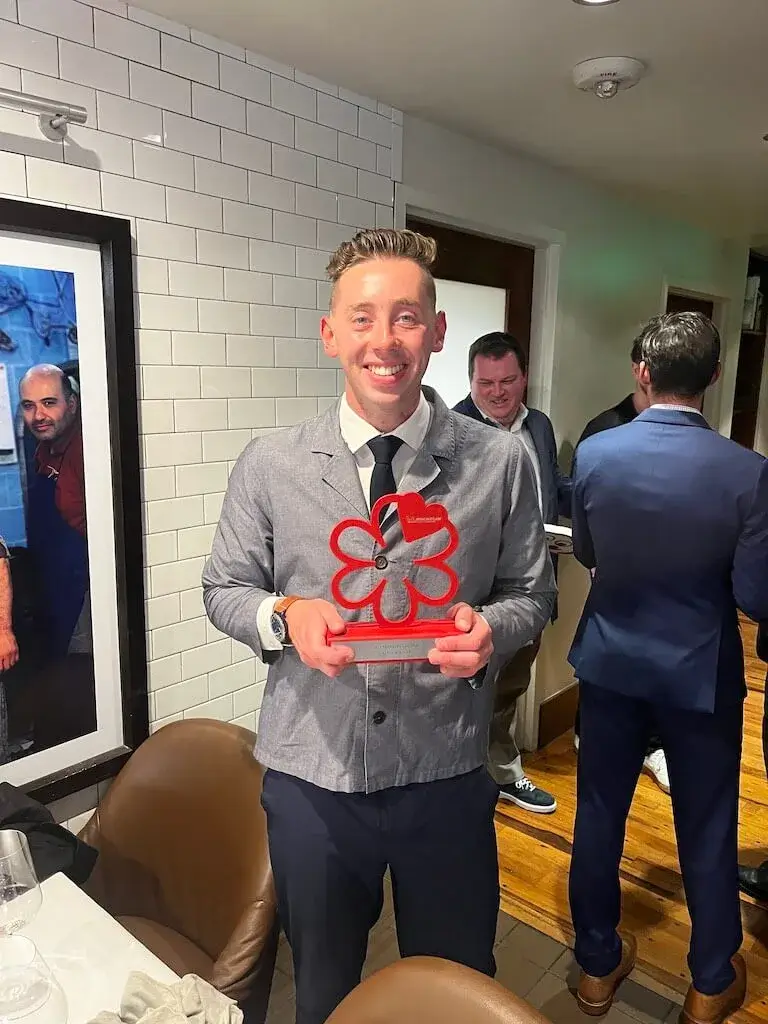
Connor was working at Frasca Food & Wine the night the restaurant earned its Michelin star in 2023, a milestone in his journey at award-winning establishments.
The One Percent Difference
Two years after becoming certified, Connor took the Advanced Sommelier exam. It’s a significantly harder three-section test including theory, tasting, and a practical portion that requires years of dedicated study and preparation. At twenty-four years old, he missed passing by one percent.
The day he got the results felt rough. Then Bobby Stuckey called.
“Dude. You’re twenty-four years old, taking Advanced for the first time and only coming (up) short by one percent? Put your ego aside. Be proud of that. Don’t be an ego maniac,” Stuckey told him.
The message helped shift his perspective immediately.
“It is so much about who you become during this time as opposed to what score you get,” Connor says.
Now Connor studies differently as he prepares to retake the Advanced exam. Working as a sommelier at Tavernetta, another restaurant in the Frasca Hospitality Group founded by Bobby Stuckey, Connor continues to apply the same philosophy his mentor has modeled throughout his career. It’s not about intensity or cramming before test day. Instead, it’s about discipline and consistency.
“An hour is just an hour a day,” Connor says, echoing Stuckey’s philosophy. Some days that hour comes easily. Other days it doesn’t. But the consistency builds over time, and that’s what creates lasting change.
Practically, that means making choices his peers don’t always make. Skipping the bar to go home and study. Getting solid sleep so the next day’s study session is actually productive. “What other noise can I cancel out to really focus on this?” Connor asks himself regularly.
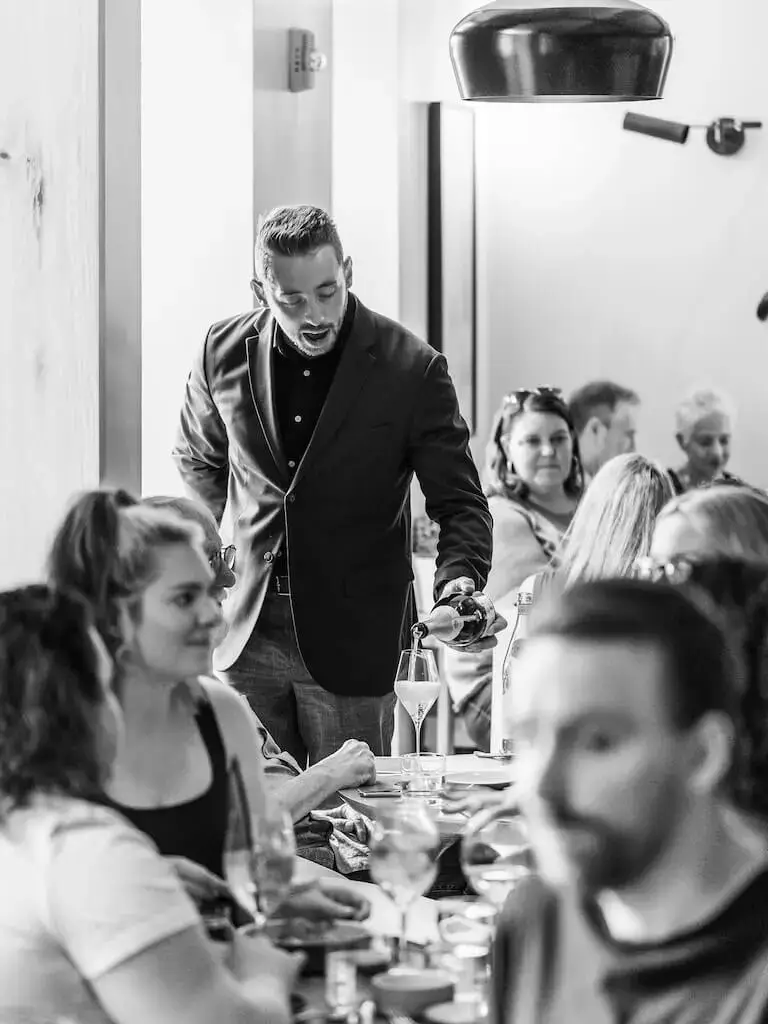
Connor’s approach to his career mirrors his study philosophy: consistent effort over time rather than last-minute intensity.
What It Takes to Reach Career Goals
Connor is six years out of culinary school and less than two years into working as a sommelier. While he feels there is still a long way to go in his career, his resume already tells the story that he’s willing to do what it takes to succeed at this level.
“You get out of this what you put into it,” Connor says. His advice for students considering culinary school or professionals looking to advance is straightforward: Take it seriously.
“Nothing happens overnight. It takes a little while to eventually come around, but the point of working in this industry, the point of going to culinary school, is not to have a fast track. It’s to learn as much as you can over a long time,” Connor says.
That also means taking care of your whole self, not just your professional development. Connor saw a therapist during his hardest period and continues to benefit from doing therapy every two weeks. He boxes and plays soccer to stay physically healthy. He stays open with friends and family about what he’s going through. The industry rewards people who can sustain the pace over years and decades, not just the ones who burn brightly for a few months before burning out.
Connor’s journey started with curiosity sparked in an Escoffier classroom and an externship in Florence that opened doors he didn’t know existed. Instructors exposed him to mentors like Bobby Stuckey and career paths he’d never imagined. That foundation, paired with his drive and determination, launched a career he’s still building one disciplined choice at a time.
If his story resonates with you, contact us to learn more about programs, externships, and scholarship opportunities.