

Listen to This Article:
Thinking about jumping into the culinary world? Whether you’re just out of high school or looking to make a major career change, the idea can be both exciting and a little overwhelming. Maybe you’re exploring what’s next, or you’re ready to trade your current path for something more creative and hands-on. You might even be working in food already and want to level up your career.
Whatever your situation, Auguste Escoffier School of Culinary Arts has designed our programs with real people and real-life circumstances in mind, with comprehensive support, various scheduling options (depending on program), and a student body that brings together people from all kinds of backgrounds.
The great thing about a culinary education is that it doesn’t care how old you are or where you worked before. While some careers require you to start planning in middle school and follow a rigid path for decades, cooking is different. What matters is that you’re passionate, willing to work hard, and ready to keep learning.
Curious to see how Escoffier’s programs could work for you? Let’s take a closer look.
High School Graduates: Building Your Foundation
If you’re fresh out of high school, the culinary world offers something you probably didn’t get much of in traditional classes: hands-on, creative work that you can see (and taste) the results of immediately. Sure, it can be an adjustment going from textbooks to knife skills, but many students find this shift refreshing after years of sitting in lectures.
Start Your Culinary Career with Strong Fundamentals
Escoffier’s programs for early-career students focus on building essential culinary skills while developing the professional habits that can serve you throughout your career. You can have the opportunity to explore cooking techniques, food safety protocols, and kitchen organization—the building blocks every culinary professional should develop.
But technical skills are only part of the equation. The culinary industry values strong communication, teamwork, and leadership abilities. Escoffier’s residential programs incorporate these soft skills naturally through group projects, kitchen rotations, and collaborative learning environments, while online students can explore them through guided discussions, instructor feedback, and practical assignments.
Guidance from Mentors Can Shape Your Culinary Path
One of the potentially valuable aspects of culinary education for young professionals is access to experienced Chef Instructors who can serve as mentors. These instructors bring years of industry experience and are committed to helping students navigate the technical aspects of cooking as well as the realities of building a culinary career.
This mentorship may also extend beyond the classroom. Instructors can help students identify their strengths, explore different culinary paths, and make connections within the industry. For someone just starting out, having this guidance could help support your early career development.
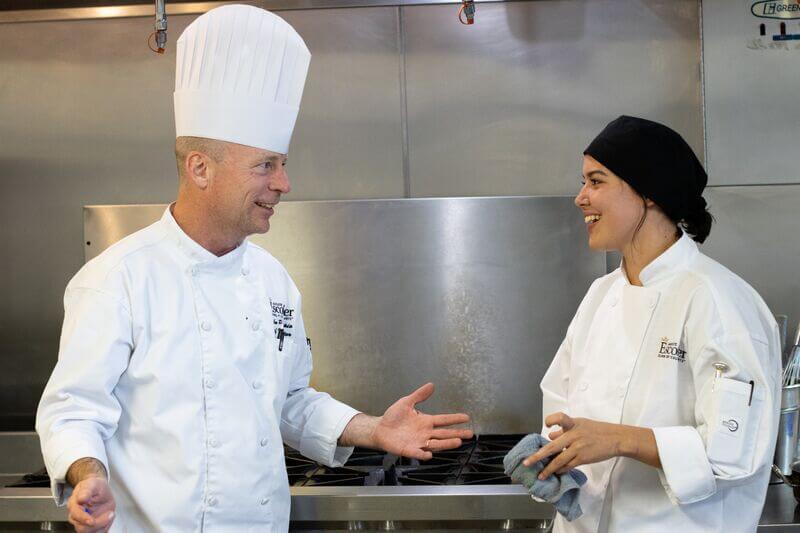
Experienced chef instructors can provide mentorship and hands-on guidance that may help students navigate both technical skills and career development.
Get Hands-On Training That Can Prepare You for the Workforce
Every Escoffier program includes hands-on industry externships that are required for graduation, giving students real kitchen experience before they finish school. If you’re a high school graduate without much time on the job, these externships can be incredibly valuable—they’re like a bridge between what you study in class and what you do in the industry. They even have the possibility of leading to full-time employment.
During your externship, you may have the chance to work side-by-side with experienced professionals, putting your classroom learning to the test in actual commercial kitchens.
Pro Tip: Making the Most of Your Externship
Treat your externship like an extended job interview. Ask questions, volunteer for additional tasks, and build relationships with kitchen staff – showing genuine interest and strong work ethic can potentially lead to job offers or valuable industry connections!
Fit Culinary School into Your Busy Life
Today’s high school graduates are often juggling a lot. You might have a job, family responsibilities, or other commitments that can make traditional classroom schedules tough to manage. That’s where Escoffier’s online programs shine, offering the flexibility to pursue culinary education while handling other real-life responsibilities. Students typically spend 15–23 hours per week**, depending on their program and personal pace, making it possible to work or manage other commitments while developing culinary skills.
The online format combined with hands-on industry externships aims to provide culinary training with a flexibility that can be especially helpful for young adults who need to support themselves financially while going to school.
**Hours per week recommended for academics and school-related activities, depending on the student’s learning style.
Career Changers: Transforming Life Experience into Culinary Success
Making a career change requires courage, especially when moving into a field as demanding as the culinary arts. However, career changers often bring valuable skills and perspectives that may accelerate their culinary education and enhance their professional prospects.
See How Your Past Experience Can Boost Your Culinary Career
Adults entering culinary school usually possess life skills that younger students are still developing. Discipline from military service, project management experience from corporate roles, customer service expertise from retail positions, or organizational skills from healthcare careers may all translate to kitchen environments.
Escoffier’s curriculum is designed to help career changers recognize and apply these transferable skills. Time management may become mise en place preparation. Teamwork experience could translate to kitchen collaboration. Leadership skills might evolve into managing kitchen stations or training new staff members.
The key is understanding how your previous experience can add value to your culinary journey rather than viewing it as irrelevant to your new path.
Key Insight: Your Skills Transfer More Than You Think
Don’t underestimate what you already bring to the table. Customer service experience may translate to front-of-house skills, project management can relate to menu planning and kitchen coordination, and budgeting expertise can apply directly to food cost control. Career changers could potentially advance faster in their new careers because they can immediately apply these professional skills!
Grow Your Culinary Skills Without Putting Life on Hold
Career changers can benefit from educational environments that respect their life experience while challenging them to grow in new directions. Escoffier’s online programs may be particularly well-suited for adult learners, offering the flexibility to practice culinary techniques at home while maintaining family and financial responsibilities.
The online format can allow career changers to move at their own pace (as long as they meet weekly deadlines), giving them the chance to spend more time on tougher topics and move faster through areas where their life experience gives them a boost.
Build Your Culinary Network Even if You’re New to the Field
One of the biggest challenges career changers often face is building professional connections in a new field. Escoffier can help in a few different ways: you can build relationships with Chef Instructors who still have connections throughout the industry, network with other students and alumni who are on similar journeys, and participate in a hands-on industry externship that could introduce you to potential employers and mentors.
Make Smart Financial Choices While Starting Fresh
Making a career change usually means making some financial sacrifices and doing careful planning. Financial aid is available for those who apply and qualify, and Escoffier encourages you to honestly assess your situation and resources to determine what you can realistically afford.
Because diploma programs may be shorter than traditional degree programs, they could be a great option for career changers who don’t want to spend too much time away from earning a paycheck.
Industry Professionals: Advancing Your Culinary Career
If you’re already working in the culinary field, you’re facing different challenges than someone who’s just starting out. You understand how kitchens work, you’ve got fundamental cooking skills down, and you’ve built some professional relationships. But moving up to leadership roles or specialized positions often requires additional credentials and more refined expertise.
Turn Industry Know-How into Leadership Opportunities
For industry professionals, culinary education is about strategically building upon what you’ve already established. Escoffier’s programs can cover leadership principles, entrepreneurship, menu design, hospitality management, food cost control, and sustainability practices.
These topics address the business and management side of culinary careers that many working professionals learn through trial and error (often the hard way). Getting formal education in these areas can speed up your move into supervisory or ownership roles.
Leverage Credentials to Compete for Advanced Opportunities
In today’s competitive culinary landscape, having the right credentials can help set you apart from other qualified candidates when you’re going for promotions or new opportunities. A degree or diploma from culinary school can strengthen your professional profile by showing your commitment to continuous learning and your understanding of industry standards.
This credibility can become especially valuable when you’re competing for positions against other experienced candidates or when you’re looking for opportunities outside your current network.
Keep Working While You Continue Your Culinary Education
If you’re already working in the industry, you probably can’t just step away from your job for months at a time to go back to school. Escoffier’s online programs can work well for working professionals because you can fit coursework around your existing schedule. Some students actually use their current jobs as their externship sites, which means they can immediately apply what they’re learning in class to their daily work.
This work-and-learn approach can create a really useful feedback loop—what you learn in class can make you better at your job, and your work experience gives you practical context for the theory you’re studying.
Grow Into Emerging Trends or Build Your Own Culinary Venture
A lot of experienced professionals want to develop expertise in specific areas—maybe plant-based cuisine, pastry arts, nutrition, or the business side of food. Escoffier offers specialized programs that can allow you to explore deeper into particular areas while keeping your current career on track.
This focused approach to continuing education can help you become more educated in emerging culinary trends or develop the skills you need to launch your own specialized venture.
Choosing Between Online and Campus Programs
The choice between online and traditional campus learning comes down to your life circumstances, how you learn best, and what you want to achieve in your career. Both formats can provide culinary education, but they may serve different needs.
The Value of Online Learning
Escoffier’s online programs offer maximum flexibility for working adults, parents, and students who have geographic or scheduling constraints. The online format includes hands-on industry externships and combines live and archive video class sessions, cooking demonstrations, reading assignments, cooking theory lessons, and hands-on cooking assignments led by experienced Chef Instructors.
You’ll connect with peers and instructors from all over the country, which creates diverse learning communities and can expand your professional network beyond your local area. This broader perspective can be especially valuable if you’re interested in culinary entrepreneurship or want to work in hospitality management.
The online format also lets you practice techniques repeatedly in your own kitchen, building muscle memory and confidence at your own pace.

Online culinary programs can offer the flexibility that career changers and working adults need to pursue their culinary education goals.
Traditional Campus Experience
Escoffier’s campus programs in Austin and Boulder provide immersive, hands-on learning experiences in cities with thriving food scenes. These locations give students the chance to collaborate daily and practice in professional kitchens, fostering camaraderie and offering immediate feedback from instructors.
Campus programs tend to appeal to students who do better in structured environments, prefer in-person guidance, or who want to be fully immersed in culinary culture. The physical presence of peers and instructors can create accountability and motivation that some students find essential for their success.
Program Options: Degrees vs. Diplomas
Understanding the difference between Escoffier’s degree and diploma options can help you choose the credential that best fits your career goals and timeline.
Diploma Programs: Focused and Efficient
Diploma programs are generally shorter and focused on culinary techniques and industry knowledge. They’re a good choice if you want quick entry-level preparation or specialized training in areas like baking and pastry arts.
Diploma programs might be ideal for career changers who want to transition quickly into culinary roles or industry professionals looking to add specific skills to their repertoire.
Associate Degree Programs: Comprehensive Business Foundation
Associate degree programs include additional coursework in business, writing, and management alongside core culinary training. These programs provide broader knowledge that can be valuable for leadership roles, entrepreneurship, or careers in hospitality management.
For high school graduates planning long-term culinary careers or professionals interested in restaurant ownership, the business component of degree programs can offer significant value.
Ask yourself: What’s your 5-year goal?Decision Framework: Choosing Your Path
Your Culinary Journey Starts Here!
The culinary arts can open doors to creativity, entrepreneurship, and work that makes a real difference in people’s daily lives. Whether you’re getting started, changing careers, or looking to grow professionally, Escoffier offers programs designed to help support your goals.
From launching first careers and making bold transitions to climbing the culinary ladder and beyond, your journey in the culinary arts can begin at any stage of life. The key is taking that first step and committing to the practice and continuous learning that define successful culinary professionals.
Interested in learning more? Check out these articles next!