

Listen to This Article:
With so many of the “founding fathers” of haute cuisine originating from France — like Auguste Escoffier — it’s no surprise that the lingo of the kitchen is in their native language.
But this means the terms we use in the culinary world can be a bit mystifying for non-French speakers. One such phrase is garde-manger (pronounced “gahr-mahn-zhay”). Is it a station? A title? What does it mean in the greater kitchen ecosystem and brigade de cuisine system?
We’re going to explain what a Garde-Manger is, and how you can get started in this culinary career.
What Is a Garde-Manger?
The literal translation of garde-manger is “keeper of the food.” Originally, this referred to an area of cold storage where food could be kept fresh. But it also evolved to include a kitchen position.
In a professional kitchen, “garde-manger” can mean three different things depending on context: a physical cold storage area, the station where cold food is prepared, or the chef who runs it. If you’ve spent time in kitchens, you may have heard it used interchangeably with “pantry chef” or “salad station.”
Garde-manger sits squarely in the middle of the kitchen brigade. It’s the chef in charge of cold food, like chilled soups, fruit, salads, pates, caviars, and some cold desserts. Responsibilities could also include smoked meats and cheeses, if the restaurant doesn’t have a dedicated charcuterie.
What Does a Garde-Manger Do?
The garde-manger station has an unusual place in the dining experience, as it’s often responsible for both the first and last food a guest touches. Cold appetizers and composed starters come from this station, and in many kitchens so do plated desserts, meaning the garde-manger shapes the opening and closing notes of the meal.
On any given day, the person in that role might be using tweezers to gently place microgreens on a cold soup, slicing razor-thin smoked salmon, segmenting citrus for a composed salad, emulsifying an aioli from scratch, or carving ice for a banquet display.
It’s fast, it’s technical, and for cooks who love the craft—the sharp knives, the tiny details, the artistry of cold work—it can be a genuinely satisfying place to land.
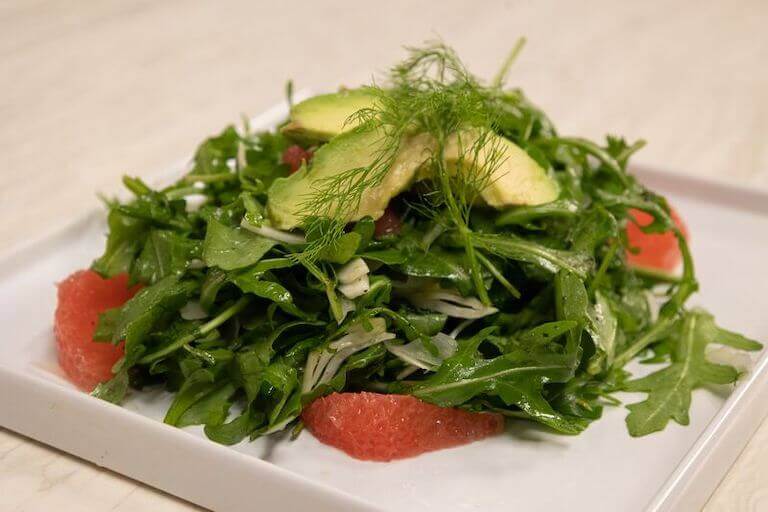
Composed salads are one of many preparations that fall under the garde-manger station.
The Classical Roots of the Role
The garde-manger has a longer history than almost any other kitchen position. Originally, the term referred to a cool storage room in medieval households where cured meats, cheeses, and preserved foods were kept. Over centuries, this physical space evolved into a specialized kitchen role, eventually finding its place in Auguste Escoffier’s brigade de cuisine as the station responsible for all cold food preparation.
These classical roots remain visible in fine dining today. Certified Master Chef Edward Leonard, who trained under the legendary Fritz Sonnenschmidt at the Culinary Institute of America, recalls how the station’s traditions shaped his career.
“You had chaud-froid hams, you had decorations,” Chef Leonard said. “You do truffle cocoa paintings. (It was) all that classical stuff that enabled me to do my artistic side, so it really appealed to me.”
The presentations have evolved, but the underlying demands haven’t. A strong garde-manger today still draws on that same tradition of precision, patience, and artistry.
Garde-Manger: At A Glance
| Common Titles | Garmo, Pantry Chef, Cold Station Chef |
| Reports To | Lead Line Chef, Sous Chef, or Chef de Cuisine |
| Common Settings | Fine dining restaurants, hotels, banquet facilities, country clubs |
| Key Tasks | Cold appetizers, salads, soups, charcuterie, garnishes, buffet presentations |
| Core Skills | Knife skills, mise en place, plating, multitasking, flavor profiling |
| Avg. Salary Range | $35,772* |
*Source: ZipRecruiter (March 2026)
Take the Culinary Career Survey
We’ve compiled a checklist of all of the essential questions into one handy tool: career options, culinary interest surveys, educational opportunities, and more.
More Than a Salad Station
In a busy chain kitchen, the garde-manger role might mean tossing greens, finishing plates with a dusting of parmesan, or topping brownies a-la-mode with chocolate syrup. In a fine dining kitchen, the job may be more involved, where a garde-manger might spend a morning making stocks for cold sauces, move into hand-forming terrines, and finish the afternoon slicing charcuterie and arranging elaborate spreads.
The position can demand a wider skill set than many other stations: knife work, pickling, plating, flavor balancing across both savory and sweet. Because cold food lacks heat that may mask technical errors, a broken vinaigrette or a garnish that wilts before the plate hits the table is immediately exposed. It’s a role that demands speed and precision simultaneously, which can require many months or years to refine.
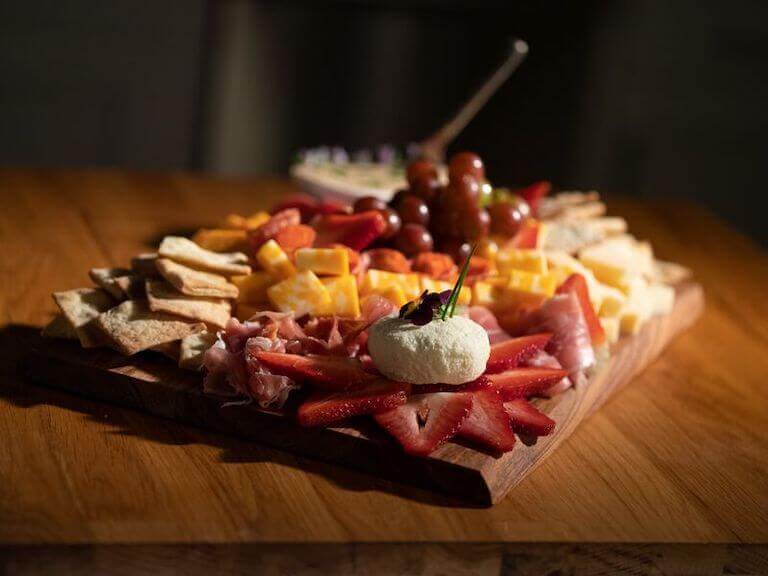
Charcuterie is among the more technically demanding aspects of garde-manger work, requiring knowledge of curing, seasoning, and presentation.
How to Start a Career as a Garde-Manger
The skill level required of the “keeper of the food” varies depending on the restaurant and service type. If you’re aiming for an upscale kitchen, you could start as a garde-manger elsewhere and aim for a lateral move. Or, you could try to land an entry level position at your dream restaurant, and work your way up the ranks.
A culinary school education can be a good place to start. Students at Auguste Escoffier School of Culinary Arts can study knife skills and flavor profiles as well as Charcuterie and garde-manger in various classes.
Escoffier’s Farm to Table® Experience explores the relationship between the kitchen and the food producers. For a career that may involve a great deal of fresh produce, this can be a vital piece of the puzzle.
Why the Garde-Manger is the Foundation of the Brigade System
In Escoffier’s brigade system, the garde-manger reports to the sous chef or chef de cuisine and sits alongside other station-level roles like grill and sauté. If you’re coming out of culinary school or have some prior kitchen experience, it’s often one of the first stations you’ll work.
The learning curve is real—you’ll likely need solid knife skills, impeccable mise en place, and the ability to plate consistently under pressure—but the fundamentals you build here can follow you to every station you work afterwards.
“I think really understanding and understanding the brigade, understanding kitchen culture, understanding setup, breakdown – things like that – are the best places to develop because I do believe that when you understand that, you really can cook anywhere,” says James Beard Award-winning restaurateur Kelly Whitaker.
Whitaker says it wasn’t the flashy stuff that made him an asset in the kitchen.
“A lot of the jobs that I got, or a stage or anything, wasn’t because I was a great cook or I had mastered some technique,” he says. “I would go in and I would make sure I was the person that could close the best and organize and think about my mise en place and be able to arrange that. This idea has carried me far.”
Typical Kitchen Career Path
| Career Level | Example Roles |
| Entry | Dishwasher, Kitchen Porter, Commis Cook |
| Station/Line Cook | Garde-Manger, Grill Cook, Sauté Cook |
| Lead/Senior Station Chef | Lead Line Cook, Chef de Partie |
| Kitchen Management | Sous Chef, Chef de Cuisine |
| Executive Level | Executive/Head Chef |
How Much Does a Garde-Manger Make?
Garde-manger salaries fall within the broader range of restaurant cooks, though compensation varies significantly depending on the type of kitchen, location, and experience level. According to the U.S. Bureau of Labor Statistics, restaurant cooks earned a median hourly wage of $17.71 in May 2024 (the latest data available), with the highest earners working in upscale hotels, fine dining restaurants, and major metropolitan areas.
ZipRecruiter data specific to garde-manger roles puts the national average at $39,917 per year as of early 2026, with most salaries falling between $33,500 and $44,000. Top earners can reach around $52,000 annually. Major culinary markets like San Francisco and Seattle tend to pay above the national average.
Garde-Manger Salary Range
| Percentile | Annual Salary* |
| 25th percentile | $33,500 |
| Average | $39,917 |
| 75th percentile | $44,000 |
| 90th percentile | $52,000 |
Source: ZipRecruiter (March, 2026)
Pursuing a Career in the Cold Kitchen
In many professional kitchens, the garde-manger serves as a vital stepping stone toward senior leadership within the brigade de cuisine. In others, it is an esteemed career path in its own right. Responsible for the first and last touchpoints of a meal, this station manages two of the most influential elements of the guest’s dining experience.
To explore the skills necessary to excel in this career, a degree or diploma from an online culinary school or pastry school could be the right place to start. Contact Escoffier’s admissions department to discover how a culinary education can support your progress toward your professional goals.
TO FIND OUT MORE ABOUT CULINARY AND PASTRY CAREERS, READ THESE ARTICLES NEXT:
- What Makes a Good Sous Chef?
- What It Takes to Be an Executive Chef
- 7 Cooking Shows That Can Help You Think Like a Professional Chef
This article was originally published on August 20, 2015, and has since been updated.
FAQs
A Garde-Manger chef is responsible for preparing cold food items including salads, chilled soups, pates, caviars, some cold desserts, and often smoked meats and cheeses. They make these items from scratch, which may include emulsifying dressings, creating spreads and pickles, preparing fermented foods, and crafting delicate garnishes.
The position often requires strong knife skills, understanding of mise en place, and the ability to multitask efficiently.
It depends on the restaurant. In casual dining establishments, Garde-Manger may be an entry-level salad station position. In fine dining restaurants, the role can require significant experience with complicated pates, intricate desserts, and hand-carved cold items. The skill level and experience expected varies based on the type of establishment and complexity of their cold food offerings.
Garde-Manger literally translates to “keeper of the food” in French. Originally, it referred to a cold storage area where food was kept fresh, but it evolved to describe a kitchen position. Modern restaurants may also use terms like “salad station” or “pantry chef” to describe this role, which focuses on preparing cold dishes and appetizers.
The Garde-Manger is responsible for cold dishes that are often appetizers and desserts—the very first and last food a guest experiences. This means they control two of the most crucial touchpoints in the dining experience, shaping the guest’s first and last impressions of the restaurant’s food. In some kitchens, it’s considered a highly esteemed career rather than just a stepping stone.
A Garde-Manger may be responsible for making and presenting cold desserts that do not require last-minute preparation, such as mousse, panna cotta, fruit terrine, or other simple, plated dishes. This differs from pastry chefs, who are usually responsible for making cakes, tarts, pastries, and other desserts involving baking, sugar work, and other related skills.
While requirements vary by establishment, culinary education can provide essential skills including knife techniques, food safety, charcuterie preparation, and flavor profiling. Students may study basics in culinary foundations courses and specialized Garde-Manger techniques in advanced coursework.
Understanding the relationship between kitchen and food producers, particularly for fresh produce, is also valuable for this position focused on cold preparations.