
Listen to This Article:
If you’re like many aspiring pastry chefs, your baking journey probably started at home. Maybe you’re pulling a perfect cake from the oven, watching pâte de fruit finally set, or feeling dough transform into true puff pastry. Those early successes can build your confidence and raise a bigger question: what more is possible?
But somewhere between home baking and professional pastry work, you might hit an invisible wall. When your custard breaks or your puff pastry comes out greasy, you’re left guessing why, stuck in a cycle of starting over from scratch.
The difference often comes down to knowledge. Learning why techniques work, and how to adjust them when they don’t, opens the door to professional pastry work. Education can provide the structure that helps you move beyond trial and error.
Why Education Matters in the Pastry Arts
For all of its beauty and creativity, pastry is one of the most precise segments of the culinary world.
A few too many grams of flour can turn tender cake into something dense. A raspberry gel on your tart either sets properly or it runs. The temperature of your butter determines whether puff pastry shatters into delicate layers or bakes into a greasy mess.
Small variations in measurements, ratios, temperature, or timing can completely change the outcome. Even your environment, elevation, and climate on any given day can affect your bakes. So while pastry is very much an art, it also relies heavily on science and repeatable technique.
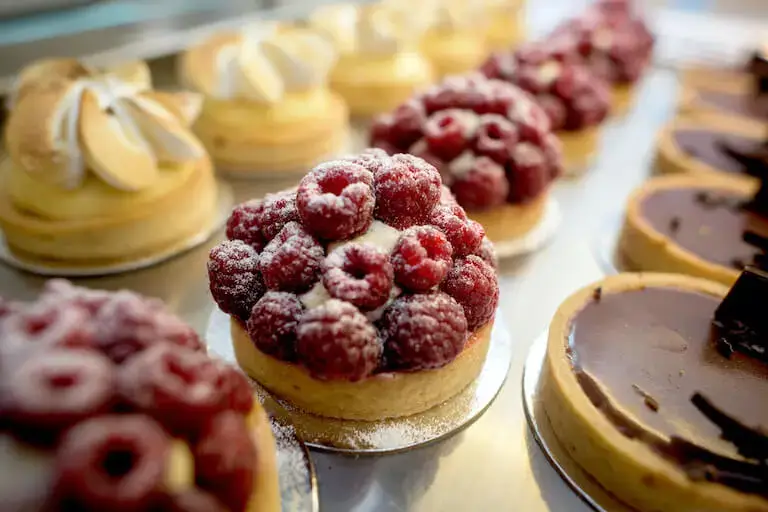
Professional pastry training emphasizes consistency and repetition, skills essential for producing high-quality desserts at scale.
As a home baker, you may follow recipes successfully without understanding why they work. But professional pastry chefs need to know what’s happening at every stage. That knowledge becomes critical when recipes fail, when you need to scale a dessert for two hundred guests, or when ingredient substitutions become necessary mid-service.
Formal education can also teach you to see patterns. This understanding can give you control over texture, structure, timing, and outcome. When something goes wrong in a professional kitchen, you can diagnose the problem and fix it rather than starting over from scratch.
Chef Marion Lancial discovered this gap firsthand.
Born in France, Chef Marion spent her childhood in her grandmother’s hotel kitchen, watching the team work with precision. She loved being in the kitchen, but her path into food wasn’t direct. After trying different careers and eventually moving to the United States, she found work in a fine dining restaurant in Washington, D.C.
When Chef Marion transitioned into the pastry section, everything clicked for her. That was, until the chef left and she found herself alone in the kitchen.
“I was alone in this pastry chef job and loads of things weren’t working and I couldn’t understand why,” she recalls. “It was extremely frustrating for me.”
Without the technical foundation to troubleshoot her recipes, she felt stuck. That’s when she knew she needed culinary school. Chef Marion’s Escoffier education gave her the ability to understand why things were failing and how to fix them in the moment, not just follow instructions.*

Types of Education Paths for Aspiring Pastry Chefs
There’s no single way to learn pastry. Some chefs build their foundation in baking and pastry school. Others learn by working their way up through restaurant and bakery kitchens. The best choice depends on how you learn, what kind of pastry work you want to do, and what resources you have access to.
Learning in Professional Kitchens
If you’re not sure yet whether pastry is for you, it can be a smart choice to first work in a professional kitchen and learn on the job. You might begin as a prep cook or bakery assistant, watching experienced pastry chefs work while handling foundational tasks. Over time, you might take on more complex responsibilities like mixing doughs, tempering chocolate, or plating desserts during service.
This path offers immediate immersion in professional kitchen culture and rhythm. You learn how speed and precision work together under real pressure. You see how pastry sections operate within larger kitchen operations. And perhaps most importantly, you can get an idea if this is the right career path for you.
A downside of learning on the job is that it happens around production demands. Sometimes a professional kitchen may simply be too busy for you to learn all the tools and tricks of the trade. The quality of your education also depends heavily on who’s willing to teach you and how much they know.
Diploma and Associate Degree Programs
Another option to consider is a formal pastry program, which can offer the most comprehensive education. You work through foundational techniques systematically, like honing proper mixing and folding skills before moving to more complex laminated doughs, or understanding custards before tackling complex plated desserts. The progression is deliberate, with time built in for repetition and refinement.
Diploma and associate degree programs typically include hands-on labs where you practice techniques again and again, along with hands-on industry externships that place you in real working kitchens. This combination can help you develop both the theoretical knowledge of why techniques work and the muscle memory required to execute them consistently under professional conditions.
Online vs Campus-Based Learning
Within formal pastry programs, you may have the option to study online or on-campus. At Auguste Escoffier School of Culinary Arts, both formats are designed to provide structured instruction, guided practice, and support from experienced Pastry Chef Instructors.
Online baking and pastry programs include live and archive video class sessions, recorded cooking demonstrations, reading assignments, cooking theory lessons, and hands-on cooking assignments. You can study ingredient behavior, recipe development, and pastry fundamentals, just like on-campus students, but on a flexible schedule.
This option can be well suited for working adults, those taking care of families, or those far from a campus. As you move through new bakes and techniques, you can receive personalized feedback from professional instructors to help refine your skills.

At Escoffier, online students can practice technique-focused training in their own kitchens.
Finding the Right Fit for Your Lifestyle
For some students, flexibility is what makes pastry education possible. Escoffier graduate Suhalia Gant came to pastry after a long career as a personal trainer, drawn to baking as a creative outlet that still felt grounded in service. With family responsibilities and an unpredictable schedule, she chose an online baking and pastry program that allowed her to study from home without sacrificing the formal training and professional feedback provided by Pastry Chef Instructors.
As she progressed through the program, Suhalia transformed her home kitchen into a dedicated learning space, applying the same discipline and consistency she once brought to fitness training. The online format gave her the theoretical foundation and technical guidance she needed, while still fitting into her daily life.
For those who learn better in person, campus programs can give you access to professional equipment and immediate guidance. Instructors can help you feel when dough reaches the right texture or recognize the exact moment a caramel reaches the correct color, feedback that can be especially valuable for hands-on learners.

What You May Study in Pastry School at Escoffier
While every program structures its curriculum a bit differently, most formal pastry programs, including Escoffier’s Baking & Pastry Arts degrees and diplomas, focus on building skills progressively, starting with fundamentals and moving toward more advanced applications
Foundational Techniques and Ingredient Science
You can start with the basics that underpin all pastry work. These basics include proper mixing methods, understanding how gluten develops, and controlling moisture in doughs and batters. You can explore why certain fats work better for lamination, how sugar affects texture and browning, and what happens to proteins at different temperatures. These principles apply whether you’re making a simple cookie or a complex entremet (a French dessert that will test your skills!).
Pastry school can teach you to work with core preparations like custards, meringues, and basic doughs before moving to more complex applications. Plus, you can have the time and space to practice techniques repeatedly until they become reliable, all with Pastry Chef Instructor guidance.
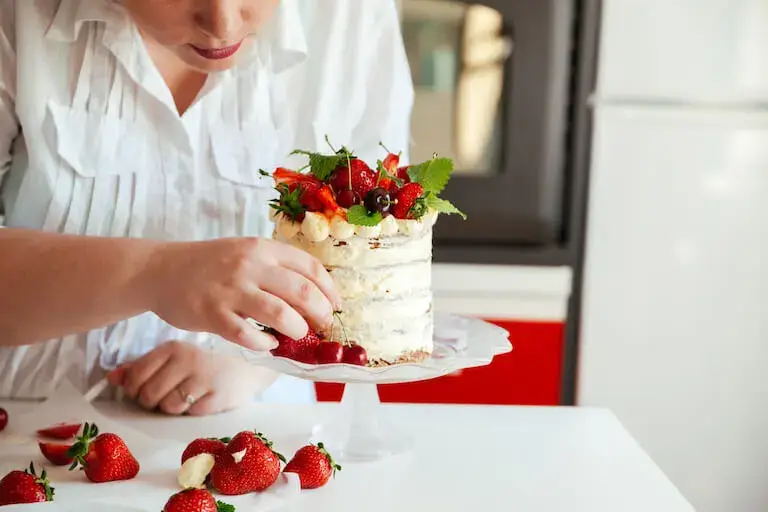
Foundational pastry techniques can lead to more complex applications.
For many chefs, understanding the internal logic of the craft is what makes pastry finally click. As Chef Marion puts it, “I like the technicality of it. I like the chemistry of all the ingredients.”
That foundation creates room for creativity rather than limiting it.
“If you want to be free in your art,” she says, “you have to start with the base, and you have to have a strong foundation.”
Breads and Fermentation
Bread classes can cover the science of fermentation and how to work with living dough. You can explore how to use starters and levains, calculate optimal temperatures for proofing, and work with various dough types, from simple sandwich breads to enriched brioche. Over time, you can develop the feel for properly fermented dough and understand how to adjust hydration, shaping, and baking for different results.
Advanced Pastry and Plated Desserts
As you progress through pastry school, you can eventually move into chocolate work, which includes tempering, molding, and creating decorations. You can explore sugar sculpting and confections, discovering how to work with caramel, nougat, and pulled sugar. Courses can also cover frozen desserts including ice cream bases, sorbets, and gelato, teaching you how texture and temperature affect the final product.
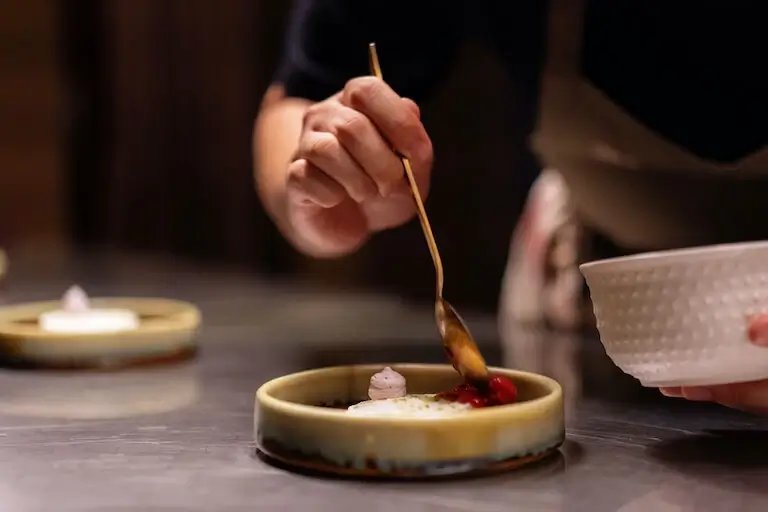
Advanced pastry techniques focus on balance, timing, and composition, where each component is placed with intention.
Other classes may focus on plated desserts where multiple components come together, combining textures, flavors, and temperatures into cohesive presentations. You can explore composition, how to balance sweetness and acidity, and how to plate for both visual appeal and the eating experience.
Cake Design and Decoration
Decorating courses can teach various approaches to finishing cakes, from basic icings and frostings to more complex piping techniques and fondant work. You can progress from simple borders and rosettes to intricate patterns and sculpted designs. The focus is on both technical skill and developing your own aesthetic approach.
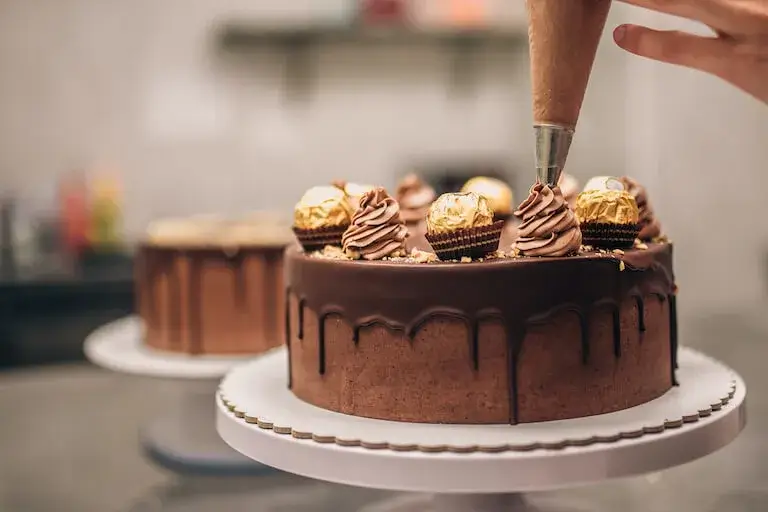
Cake decorating courses teach precision piping and professional finishing techniques.
Business and Professional Skills
Beyond hands-on technique, programs include practical business knowledge, like understanding costs and margins, making purchasing decisions, and building menus and other marketing materials. Some courses may cover business planning for those interested in opening their own bakeries or pastry operations, including topics like permitting, pricing strategies, and customer service.
Learning Beyond the Classroom
Escoffier’s baking and pastry programs include hands-on industry externships where you can work in actual bakeries, restaurants, or pastry operations.
These positions can let you apply classroom techniques in professional settings, like learning production schedules, working with commercial equipment, and understanding how pastry sections operate within larger kitchen operations. And because students get to select and organize their own placements, you can choose a place that focuses on specific skills you want to develop.
Continuing Education
Continuing education often becomes most valuable after time in the field. After completing her baking and pastry program and gaining professional experience, Suhalia sought additional training to refine her skills even further. She later studied pastry and chocolate at École Ducasse in Paris, using the program to build on techniques she had already developed.
Another option for learning new skills is to consider a stage (pronounced stahj) at another professional bakery.
A stage is a short-term placement in a kitchen whose work you may want to study. For example, you might stage at a chocolatier known for their bonbon work, a bakery specializing in laminated viennoiserie, or a restaurant pastry team whose plated desserts you admire.
Stages typically last a few days to several weeks and focus on learning specific techniques or experiencing different operational styles rather than permanent employment.
These kinds of opportunities reflect how many pastry chefs continue to grow over time. With a strong foundation in place, additional training can help deepen expertise, introduce new techniques, and support specialization as careers evolve.
The Next Step for Aspiring Pastry Chefs
There is no single path into professional pastry, but building a strong foundation can make every step easier. Formal education can help you understand the science behind techniques, practice them with intention, and develop skills you can rely on in real kitchens.
If you are ready to explore that next step, Escoffier’s Baking & Pastry Arts programs are designed to support working adults and growing pastry professionals. Contact us today to find out more about the available degree and diploma options, including online baking options, and let us help you decide which path fits your goals and schedule.
INTERESTED IN LEARNING MORE ABOUT BAKING AND PASTRY? READ THESE NEXT:
- Do You Need Pastry School to Be a Pastry Chef?
- How You Can Get A Job As A Pastry Chef
- What Do Pastry Chefs Do? A Behind-the-Scenes Look at the Role, Responsibilities, and Realities
FAQs
There’s no fixed timeline, but pastry chef is a senior role that often requires both formal training and kitchen experience. Pastry chefs may start in entry-level baking or pastry cook positions and advance over several years. A diploma or degree in baking and pastry arts can potentially help build up foundational skills and techniques more efficiently.
For those passionate about the precision and artistry of desserts and baked goods, a pastry chef career can be rewarding. The role combines technical skill, creativity, and leadership, and may even offer higher earning potential than baker positions. Like most culinary careers, advancement typically requires a combination of formal training, hands-on experience, and a willingness to continually refine your craft.
Bakers are often generalists who make a wide variety of sweet and savory baked goods like breads, cakes, pies, rolls, and more, typically following established recipes. Pastry chefs specialize in desserts and sweets, often creating their own recipes and menus, and may also work with non-baked items like custards, chocolates, and ice cream. Pastry chef is also typically a more senior, managerial role than baker.
Formal education isn’t required, but baking and pastry are scientific disciplines where foundational training can make a difference. A degree or diploma can help students understand baking science, develop experience with different doughs and techniques, and work at scale. For those aiming for pastry chef roles especially, culinary credentials can signal the expertise and professionalism that higher-end employers often expect.
Because pastry chefs carry more responsibility and typically hold managerial roles, they generally earn more than bakers. According to Salary.com, the average annual salary for a pastry chef is around $69,500. Actual compensation varies based on experience, education, type of establishment, and geographic location.