

Listen to This Article:
For generations, culinary education has been closely associated with professional teaching kitchens, chef demonstrations, and in-person practice. Today, online and blended programs have created additional pathways for students who need a more flexible way to prepare for a culinary career.
This flexibility can benefit working professionals, people with family responsibilities, students who live far from a culinary campus, and career changers looking to enter the food industry. But flexibility is only one part of effective online culinary education.
The more important question is how an online culinary program turns remote instruction into practical skills and career preparation. The answer depends on what happens beyond the screen, such as how students practice techniques, interact with instructors, gain professional experience, and prepare for a career.
Culinary Education Is Becoming More Flexible
Online learning can make culinary education more accessible without students having to put their work or other responsibilities on hold. Instead of attending class on campus, students can complete portions of their coursework from home and organize their study time around their schedules.
This flexibility can be especially useful for career changers, working professionals, and those who live far from a culinary campus. Online coursework can cover areas such as culinary theory, food safety, nutrition, business, and demonstrations, while practical assignments allow students to develop and apply techniques in a kitchen setting.
At Auguste Escoffier School of Culinary Arts, online coursework is paired with hands-on kitchen assignments and instructor feedback. Depending on the credential and program, our online programs range from 60 to 84 weeks, providing different timelines for students pursuing culinary education.
The online programs can create a clear connection between what students learn remotely and the practical skills they need to develop in a kitchen.
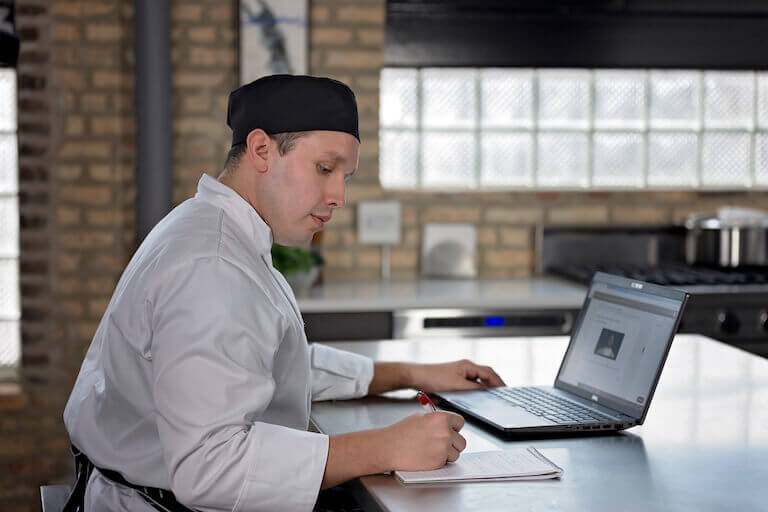
Online culinary education combines video instruction and coursework with independent kitchen practice to build essential cooking skills.
Hands-On Learning Still Has to Be Central
Cooking is a physical skill. Students need to practice techniques repeatedly, make adjustments, develop consistency, and learn how different ingredients and methods behave in practice.
For that reason, an effective online culinary program should include meaningful opportunities for hands-on learning. These can include:
- Cooking assignments
- Video demonstrations
- Technique assessments
- Instructor feedback
- Practice in a personal kitchen
- Documented culinary projects
- Professional externships
In an online setting, students can practice techniques in their own kitchens and submit their work for instructor review. At Auguste Escoffier School of Culinary Arts, for example, online coursework includes kitchen assignments that can allow students to apply techniques learned in class and receive feedback from Chef Instructors.
This creates a learning cycle that is important in culinary education: learn, practice, receive feedback, and improve.
The same principle applies to more advanced culinary concepts. Students may learn about food safety, menu planning, kitchen management, nutrition, or food costs online, but these concepts become more useful when they can be connected to practical culinary work.
Externships Bridge Education and Industry
Hands-on assignments can help students practice culinary techniques, but professional experience introduces them to the realities of working in the industry. Externships help connect these two stages by giving students opportunities to apply what they have learned in workplace settings.
Putting Skills Into Practice
An externship allows students to use culinary techniques and knowledge outside the learning environment. Tasks practiced in coursework become part of daily operations, helping students understand how technical skills are applied in real-world situations.
Some culinary programs incorporate externships as part of the curriculum. At Escoffier, for example, online students complete industry externships that complement their coursework. Escoffier’s externship-integrated approach to culinary education reflects a broader emphasis on combining instruction with practical experience.
Understanding Workplace Expectations
Success in a professional kitchen requires cooking skills, time management, teamwork, adherence to procedures, and the maintenance of quality and safety standards. An externship can expose students to these expectations in ways that classroom instruction alone cannot fully replicate.
Exploring Potential Career Paths
Externships can also help students gain a better understanding of the culinary industry and the variety of environments in which culinary professionals work. Depending on the position, students may gain experience in restaurants, hotels, catering operations, food production facilities, or other food-related businesses.
Career Support Should Extend Beyond Cooking Skills
Culinary careers require technical skills as well as the ability to present experience, communicate with employers, identify opportunities, and transition from education into a career.
Career support can address these areas through:
- Resume development
- Portfolio assistance
- Interview preparation
- Career planning
- Employer connections
- Job-search resources
- Networking opportunities
- Alumni support
Career Services at Escoffier provides resources such as career planning, resume and portfolio assistance, interview preparation, networking, and job-search support. Students and graduates can also use EConnect, a platform focused on culinary and hospitality employment opportunities.
These resources can complement an externship. While an externship can provide practical workplace experience, career support can help students explain what they learned and how their skills apply to potential roles.
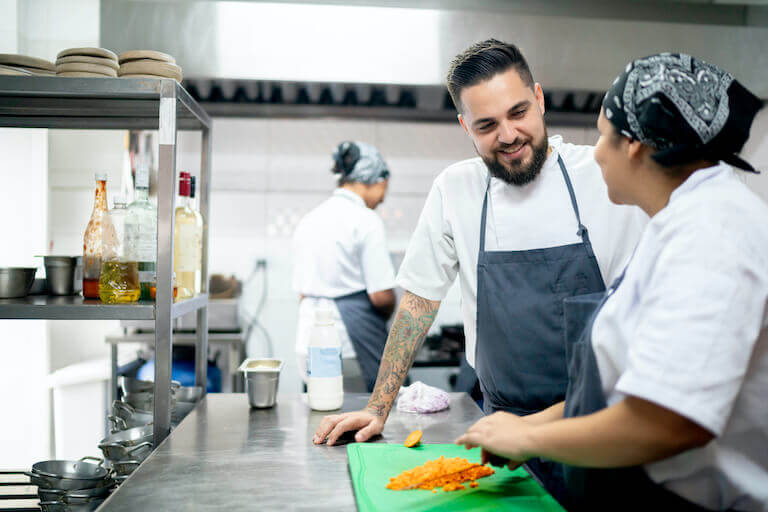
Pairing online coursework with hands-on, in-person guidance can allow culinary students to refine their techniques and build the workplace competencies needed for a successful career.
How Students Should Compare Online Culinary Programs
Students comparing online culinary programs should look beyond whether a school offers online classes. The more useful question is what the complete educational experience includes.
A practical comparison can begin with these factors:
| Factor | What to consider |
| Accreditation | Whether the institution and applicable program meet recognized accreditation standards |
| Curriculum | Whether coursework covers culinary techniques as well as relevant business and industry concepts |
| Hands-on training | How students practice techniques and demonstrate their skills |
| Externships | Whether students receive structured opportunities to gain professional experience |
| Instructors | The experience and qualifications of the chefs teaching the courses |
| Flexibility | Whether the format works with employment, family responsibilities, or other commitments |
| Cost | Total program expenses, including required tools, supplies, and other fees |
| Career support | Access to career coaching, employer connections, job resources, and alumni networks |
Comparing factors such as hands-on training, externships, flexibility, accreditation, cost, and career services can help students better understand the differences among the best online culinary schools and degree programs.
This type of comparison can help students evaluate the overall structure of a program rather than focusing on a single feature, such as tuition or scheduling.
Online Learning Doesn’t Mean Learning Alone
A successful online culinary experience combines course materials and a learning platform with opportunities to ask questions, receive feedback, practice skills, and gain an understanding of professional culinary work.
These forms of support can include:
- Instructor feedback: Chef instructors can review practical work and help students identify areas for improvement.
- Peer interaction: Discussions and shared activities can give students opportunities to exchange ideas and experiences.
- Practical guidance: Feedback on cooking assignments can help students improve technique, consistency, and execution.
- Workplace exposure: Externships can introduce students to professional kitchen routines, teamwork, and workplace expectations.
- Career guidance: Career services can provide assistance with resumes, interviews, job searches, and other employment-related tasks.
- Industry perspectives: Mentors and alumni can offer insight into different culinary roles and career paths.
These elements can be incorporated into online culinary programs in different ways. At Escoffier, for example, online coursework is paired with practical assignments and assessment, instructor interaction, and professional experience.
This matters because culinary knowledge develops through practice, observation, and feedback. A student can study a technique independently, but guidance from an experienced instructor can help identify mistakes and improve execution. An effective program should create opportunities for interaction, feedback, and professional exposure throughout the learning experience.
The Goal Is Career Readiness
An effective online culinary program should ultimately help students make the transition from education to professional practice.
That requires convenient coursework along with opportunities to develop culinary techniques, apply what they learn, receive feedback, gain professional kitchen experience, and prepare for career opportunities.
Career preparation should also help students understand the range of roles available beyond traditional restaurant kitchens. For example, Escoffier’s Career Services identifies 7 career segments and 53 subsegments, reflecting the variety of paths available across the culinary and hospitality industries.
The strongest model brings together:
Flexible education + hands-on practice + professional experience + career support + industry connections
These elements can help students connect their coursework with the realities of professional work. They also give students opportunities to build both technical skills and the broader workplace skills needed to pursue different career paths.
FAQs
It depends on the program. Students should check whether coursework covers commercial equipment, kitchen organization, and proper equipment use. Understanding these areas can make the transition from practicing at home to working in a professional kitchen easier.
Yes. Food safety can be taught through online coursework covering topics such as sanitation, food handling, storage, temperature control, and contamination prevention. Students should also have opportunities to apply these principles during practical assignments and workplace experiences.
Yes, many culinary programs include menu planning as part of their curriculum. Students may learn how to consider ingredients, preparation methods, nutrition, costs, dietary needs, and customer preferences when developing menus for different culinary settings.
Yes. Baking and pastry techniques can be practiced through structured assignments and video demonstrations. Students can learn about ingredients, measurements, mixing methods, baking processes, and presentation while completing practical work in their own kitchen.
The amount varies by program, course, and assignment. Students should consider both scheduled coursework and independent practice when planning their time. Practical skills often require repetition, so consistent practice can be important for developing accuracy and confidence.
Yes. Culinary education can introduce students to areas beyond restaurant cooking, including baking, catering, hospitality, food production, nutrition, and food entrepreneurship. Exploring these areas can help students better understand the range of roles available within the broader food industry.
No. Many culinary programs are designed for students who are beginning their formal culinary education. However, students should review admission requirements carefully, as prerequisites and expectations can differ across programs and credentials.