

Listen to This Article:
What do you see when you picture yourself in a restaurant management position—are you working with a chef to refine your menu based on the seasonal availability of ingredients? Negotiating with food and liquor distributors to secure high-quality product? Developing a robust business plan for the future of the restaurant?
Or perhaps you can see yourself doing all of the above, while leading your staff in delivering a great experience for your guests.
Interested in the big picture of restaurant success? From the dining room to the kitchen, food and beverage directors run the show. Let’s dive into what the daily grind can look like, the skills you may need to thrive, and how you can snag the job for yourself.
What Is a Food and Beverage Director?
Think of a Food and Beverage Director as the ‘big picture’ leader of the dining world. This is a senior-level role focused on high-level strategy rather than just daily shifts.
Because of that scope, they’re usually found where the operations are most complex—places like luxury hotels, large-scale venues, and restaurant groups with multiple locations.

Food and beverage directors manage food service operations at hotels, fine dining restaurants, and other businesses.
What Does a Food and Beverage Director Do?
F&B directors sit at the intersection of hospitality and business strategy. Because their influence touches almost every part of the operation, no two days are exactly alike. However, you can generally expect the role to center on three things: big-picture planning, rigorous budget management, and empowering the staff to deliver excellence.
At a Glance: Core Responsibilities of a Food and Beverage Director
When you’re browsing restaurant management roles, the lines can feel a bit blurry. You might wonder: how does an F&B director actually differ from an executive chef or a restaurant manager? It really comes down to where they sit on the organizational chart.
The F&B director position sits at the peak of the food service pyramid. While chefs and managers handle the daily heat of the kitchen and dining room, the director is looking further ahead. They work alongside other directors, such as a director of marketing or a director of sales, reporting to the C-suite or owners. They don’t just run the shifts; they steer the long-term stability and strategic direction of the entire brand.
As the department’s top-ranking leader, the F&B director carries accountability for the entire team’s performance. This requires a unique dual perspective: they must keep one eye on the long-term horizon while maintaining a sharp, nuanced understanding of daily operations. When things go sideways, they need the technical “know-how” to diagnose exactly why it happened and how to fix it.
Key Responsibility Areas of a Food and Beverage Director
| Key Focus Area | What It Involves | The Business Impact |
| Financial oversight | Managing budgets for food, beverage, and labor while keeping a close eye on margins | Helps secure long-term profitability and financial health for the entire operation |
| Menu and beverage strategy | Curating seasonal menus and wine lists that balance pricing with culinary trends | Ensures the brand stays relevant while meeting both guest expectations and cost targets |
| Vendor relationships | Negotiating high-level contracts and maintaining strong relationships with distributors | Supports consistent ingredient quality and tighter control over supply costs |
| Team leadership | Establishing training benchmarks and mentoring managers and department heads | Builds strong teams and consistent service across operations |
| Operational analysis | Reviewing performance data and identifying areas for improvement | Powers data-driven decisions and allows for proactive, rather than reactive, problem-solving |
| Events and promotions | Planning special events and seasonal initiatives | Boosts brand visibility, drives new revenue streams, and heightens guest loyalty |
Balancing Big-Picture Thinking with Daily Reality
Imagine a restaurant is missing its cost target for by-the-glass wine service. Is it because the bartenders haven’t been trained properly, the wine stoppers are inadequate, there isn’t enough demand for the wines on the menu, or some other reason?
A good food and beverage director should be able to understand their operation well enough that they can accurately diagnose the root cause of the issue and come up with an effective solution.
Escoffier graduate and former cruise line food and beverage director Victor Mancilla describes this level of leadership as becoming a “complete chef”—someone who understands not only cooking, but also service, bar operations, guest culture, and the financial realities behind every decision.
Mancilla’s experience on a single ship illustrates the sheer scale of the F&B director role: he coordinated 16 kitchens, 22 bars, and hundreds of team members. His challenge was to design menus for thousands of global guests each day, balancing culinary creativity with strict financial and labor constraints.

Food and beverage directors are usually accountable for the performance of everyone under them.
Food and Beverage Director Salary and Job Outlook
Because the F&B director operates at a high strategic level, compensation typically scales with the heavy responsibility of the role. Actual take-home pay can depend on where you work, the size of the organization, and the type of operation.
According to salary data from ZipRecruiter, food and beverage directors in the United States earn an average annual salary of around $95,700 (as of February 2026). Top earners in high-stakes environments, like luxury resorts or major metropolitan hubs, may see figures that climb significantly higher as they gain experience.
Although the U.S. Bureau of Labor Statistics (BLS) doesn’t track food and beverage directors as a standalone job title, it reports that food service managers—a broader category that includes many leadership roles— employment is projected to grow faster than average over the coming decade.
Key Steps to Becoming a Food and Beverage Director
As with many careers in the food industry, there is no one path to becoming a food and beverage director. However, as this is a high-level position, there are a number of qualifications, such as formal education and managerial experience, that an employer is likely to expect from you. Here are a few key steps that may help you land your dream food and beverage director job.
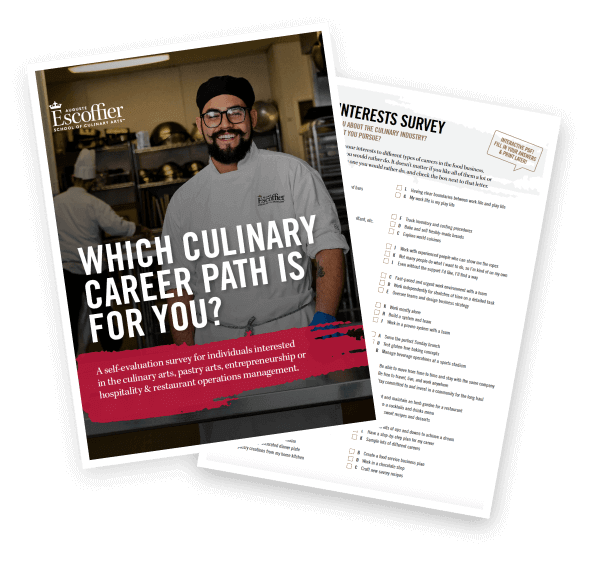
Take the Culinary Career Survey
We’ve compiled a checklist of all of the essential questions into one handy tool: career options, culinary interest surveys, educational opportunities, and more.
1. Acquire Frontline Food Industry Experience
In a role where your decisions ripple down to every single employee, it can be valuable to start by gaining hands-on, ground-level food industry experience.
This can be beneficial in a number of ways. This firsthand perspective can allow you to craft long-term strategies that actually work in practice, not just on paper. It can also give you more empathy for your employees, because you know what it’s like to be in their shoes.
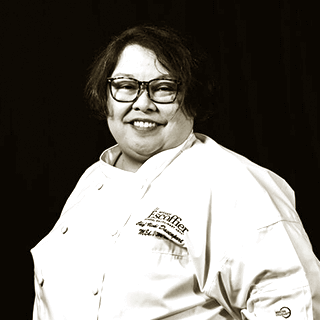
Whether you’re running plates in the front of the house or prepping on the line in the back, where you start matters less than what you take away from it. The goal is to get that hands-on knowledge now so it can serve as your secret weapon later when you’re making high-level calls.
2. Seek Formal Hospitality Training and Education
While frontline experience gives you perspective, formal education can provide the strategic engine. For a role as complex as an F&B director, you’ll likely need advanced business principles that are hard to pick up on the fly during a busy dinner shift.
A degree or certification in hospitality management can bridge that gap. By diving into coursework like food service math, menu design, accounting, and global cuisine—coupled with hands-on industry externships—you can develop skills that may prepare you to run a multi-million dollar business.
Plus, obtaining a degree or diploma from culinary school may help you stand out to prospective employers as a dedicated, ambitious candidate.

A culinary school education can help you acquire the skills necessary to become a food and beverage director.
Beyond the coursework itself, culinary school can also be a place where long-term career momentum begins to take shape. For some students, the value comes from how they choose to engage with the experience as a whole in addition to what they learn in the classroom.
Culinary school is also where your professional network can begin to take root. The real momentum often comes from how you engage with the community around you.
Escoffier graduate Christopher Puga made a point to get involved wherever he could, volunteering for events, building relationships with instructors, and looking for ways to stay visible and connected. He approached it as an opportunity to build trust, credibility, and professional relationships alongside his technical training.
“I wanted every chef there to know my name,” Puga said.
For him, education meant developing skills while also showing up consistently, saying yes to opportunities, and building relationships that could support his long-term goals.
That mindset helped shape his career path. By combining formal education with hands-on experience and intentional networking, Puga reached his goal of becoming a food and beverage director far earlier than he originally expected.
“The plan was to be a food and beverage director by the time I’m 45,” he said. “And I just took the fast track [and did it] by the time I was 28.”*
3. Learn the Ropes in Mid-Level Management Positions
While it’s possible to land a director role shortly after school, these positions are highly competitive. The reality is that while most restaurants need a manager, not every business needs a director. Because of this, the most effective strategy may be to target mid-level management first.
Working as a restaurant manager, catering manager, bar manager, room service manager, or in some other management position can give you real-world management experience—a great opportunity to develop your skills in the context of an operational establishment.
By proving you can handle the pressure of mid-level management, you can position yourself as the natural choice when a director-level vacancy opens up.
4. Never Stop Honing Your Skills
You’ve done it—you’ve landed a job as a food and beverage director. However, the work of a leader is never done. Because the hospitality landscape shifts so rapidly, success often belongs to those who can pivot.
Keep your skillset up-to-date by investing time in expanding your knowledge of cuisine, wine, and general food trends.
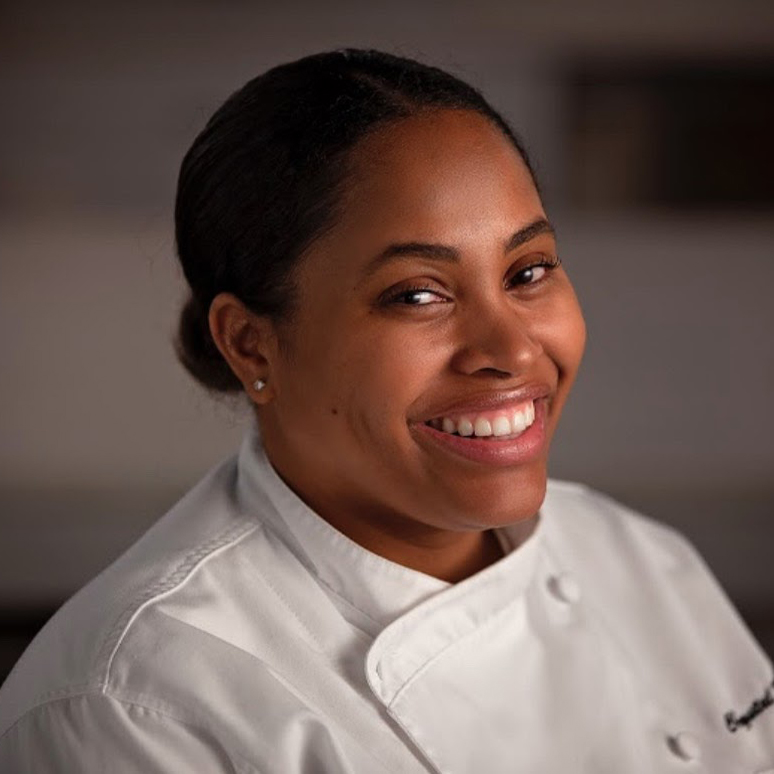
Consider adding industry certifications to your arsenal, including food safety, management, and human resources. These can allow you to stay up-to-date with industry best practices, while some, like the prestigious Certified Food and Beverage Executive certification, can help you stand out as a leader in your industry.
You should also stay on top of new technologies. Rapidly evolving tech tools have the potential to affect many aspects of your work, from the way you track and order inventory to the way you market your business and connect with customers. By keeping up with these developments, you may be able to discover resources that can help your business run more efficiently.

Do You Have the Qualities of a Great Food and Beverage Director?
A successful food and beverage director may possess the following attributes. Does this sound like you?
A Head for Business
As a food and beverage director, you may be responsible for making big-picture decisions that affect the direction of your business on a daily basis.
Are you excited about creating a complex, multi-year budget and making strategic decisions based on staffing levels, changing food costs, and seasonal sales fluctuations? Can you negotiate high-value contracts with liquor distributors? Would you be able to make changes to key personnel—like finding a new executive chef—if you determined it would be better for the business?
As the highest-ranking person in the food service department, all these decisions may flow from you. To thrive in this role, then, you should have strong business savvy and a passion for spreadsheets, contracts, and business plans.
While making these decisions can be exciting, they do come with a trade-off—such an intense focus on operations means you may not be able to spend as much time in the restaurant. If preparing food or interacting with customers are more important to you, there are other leadership positions that could allow you to make an important impact on your business while still working in a hands-on role, like working in the kitchen as an executive chef or in the dining room as a restaurant manager.
Empathy for Employees
Big ideas are great, but in a senior role, execution is everything. And in order for that to happen, having an understanding of what the work is actually like can be key.

Maintaining perspective on your staff members’ experience can help you make better policies.
While your responsibilities as a food and beverage director may keep you busy and away from the kitchen and dining room, it may be worth taking the time to show up and work alongside your managers and employees whenever your schedule allows.
This can not only help you build trust and respect with your staff and see the ground-level effects of your decisions, it can also help you stay connected with the day-to-day reality of working as a chef, bartender, host, or dishwasher. If you can recognize, understand, and connect with the experiences of staff in a variety of food service positions, you may have the makings of an effective, empathetic leader.
An Appreciation for Great Dining Experiences
If you’re spending your days measuring food and labor costs, planning events, and networking with suppliers, it might be easy to get lost in the business side of your job. But it’s important that you remember your core responsibility—creating a great experience for your customers that they’ll want to come back for again.

A food and beverage director’s decisions can sometimes seem abstract, but they all combine to create a great customer experience.
Don’t let the administrative weight of the role dull your hospitality instincts. From major strategy shifts to the decor changes that may affect your restaurant’s ambience, the customer’s experience should always be top of mind.
Ready to Take the Next Step in Your Management Career?
The food and beverage director is a complex role that typically requires both ground-level experience and specialized training. It encompasses strategic decision-making along with empathy for the experiences of your staff and customers—and for an individual with the right skill set, it can be the perfect career.
Pursuing a degree in Hospitality and Restaurant Operations Management can be a great way to obtain the business skills that are typically necessary to get hired for this position, while also demonstrating your commitment to the industry.
Financial aid, grants, and scholarships are available to those who apply and qualify, which can help bring the opportunity to get a culinary education—and pursue your dream job as a food and beverage director—that much closer to reality.
FAQs
A food and beverage director is responsible for making big-picture decisions about a business’s food service operations. Their duties may include building relationships with distributors, designing menus and wine lists, managing food and labor costs, setting training practices, planning events and promotions, and coordinating with other managers.
Food and beverage directors work at the senior management level, typically overseeing executive chefs, restaurant managers, and other food service staff while focusing on the long-term direction and stability of the business.
The key difference is seniority and scope of responsibility. A food and beverage director is at the top of the pyramid for food service operations, overseeing all other positions including executive chefs and restaurant managers.
While restaurant managers handle day-to-day operations and customer service, food and beverage directors focus on long-term strategic decisions, complex budgeting, high-value contracts, and the overall direction of the business. They work alongside other directors and are typically accountable for the performance of everyone in their department.
While not always required, formal hospitality training or a culinary education can be particularly important for food and beverage director positions. The role involves advanced business principles that may be difficult to develop purely through restaurant work. A degree in hospitality and restaurant operations management can help you acquire skills in operations training, menu design, foodservice math and accounting, and may help you stand out as a dedicated candidate to prospective employers.
There’s no set timeline, as this is a high-level position that typically requires both frontline experience and management experience. Most food and beverage directors start with ground-level food service positions, then work through mid-level management roles like restaurant manager, catering manager, or bar manager before advancing to the director level.
Formal culinary education and demonstrated leadership abilities can potentially help you stand out when applying for food and beverage director jobs, though this is not guaranteed.
Food and beverage directors are more likely to be found at businesses with large or complex operations rather than single small restaurants. Common employers include restaurants with multiple locations, hotel chains, fine dining establishments, and large event venues.
Not all food service businesses employ a food and beverage director—many smaller operations may instead have restaurant managers or executive chefs handling similar responsibilities at a smaller scale.
A successful food and beverage director often needs strong business acumen, including the ability to create complex budgets, negotiate contracts, and make strategic decisions. They should have empathy for employees and an understanding of ground-level operations to accurately diagnose issues and implement solutions.
An appreciation for great dining experiences and customer service is typically essential as well, along with the ability to stay current with food trends, technology, and industry best practices through continuous learning.
INTERESTED IN LEARNING MORE ABOUT OPPORTUNITIES IN THE HOSPITALITY INDUSTRY? CHECK OUT THESE ARTICLES NEXT!
- Restaurant Management 101: An Essential Guide
- What Is Hospitality & Restaurant Operations Management?
- 15 Careers in Hospitality Management You Can Pursue