
Listen to This Article:
Every week, someone with incredible culinary talent closes their food business. Their dishes were amazing. Customers loved the food. But loving the food wasn’t enough.
Meanwhile, other food entrepreneurs—some with less natural cooking talent—build thriving businesses that survive for decades. They understood that running a successful food business requires more than skills in the kitchen.
If you’re dreaming of opening your own restaurant, launching a food truck, starting a catering company, or building a bakery brand, you’re entering an industry with meaningful opportunity.
The National Restaurant Association reported that the U.S. restaurant industry includes more than 1 million locations and was projected to generate $1.5 trillion in sales in 2025. That level of activity reflects consistent consumer demand for prepared food and dining experiences, which can create space for new operators who approach the business with preparation and strategy.
Being prepared often separates those who make it from those who don’t. This guide breaks down what it can actually take to start and run a food business, including the skills you may need to develop, the challenges you may face, and how to help set yourself up for long-term success.
The Opportunity Is Real (And Better Than You’ve Heard)
You may have heard that 90% of restaurants fail in the first year, but that’s not true.
In reality, only about 26% of restaurants fail in their first year. Around 40% of restaurants remain open beyond the three-year mark. With the right strategy and preparation, sustained success is possible.
Mobile food services—most recognizable as food trucks and carts—have been one of the fastest-growing detailed industries since 2000. From 2000 to 2024, mobile food service employment experienced a 907% increase.
The industry is growing and success rates are better than the myths suggest, but capitalizing on that opportunity takes more than passion and culinary skill.
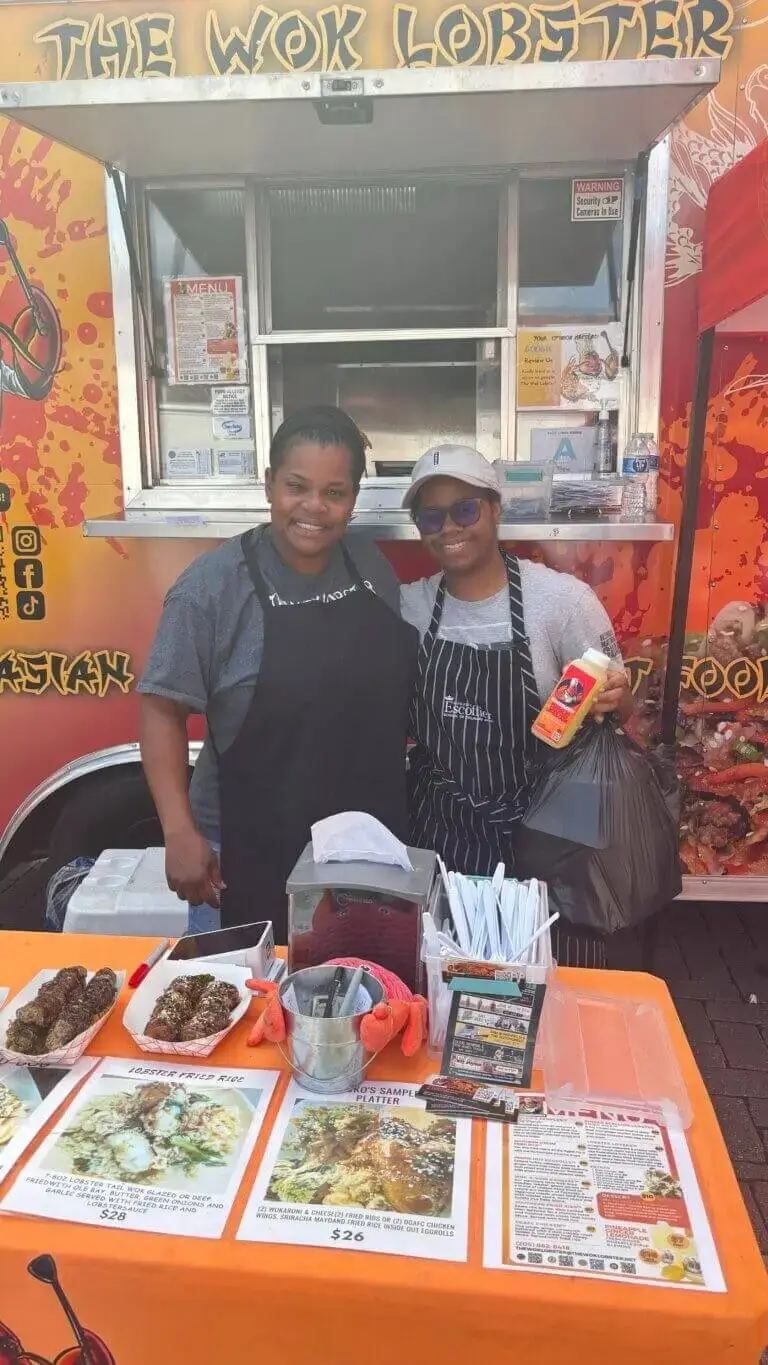
Escoffier Graduate Lakisha Powell serves up Southern Asian Fusion from her food truck business The Wok Lobster in Mauldin, South Carolina.
The Hard Truth: Why Talented Cooks Fail as Business Owners
Many aspiring entrepreneurs stumble when they assume that great food automatically equals a successful business. It doesn’t.
Chef Jesse Ito, co-owner of Royal Sushi & Izakaya in Philadelphia, learned this early. After starting as a dishwasher in his family’s restaurant and eventually taking over the sushi bar, he realized that cooking skills were just the beginning.
“You need to understand business principles to be a chef, more so to have a restaurant,” he shared on The Ultimate Dish podcast. “You need to understand marketing. You need to understand financials. Marketing is huge, and I didn’t know it at the time.”
Culinary talent is only one part of running a food business because ownership also calls for leadership, operational oversight, and ongoing problem-solving. The table below illustrates the range of responsibilities that may come with the role.
The Many Roles of a Food Entrepreneur
| The Role | The Reality (The “Not-So-Culinary” Work) |
| Chef | Developing recipes and overseeing food preparation. |
| Accountant | Tracking thin margins and calculating precise food costs. |
| Marketer | Capturing content and managing a digital social presence. |
| HR Manager | Navigating payroll, scheduling, and staff disputes. |
| Customer Service | De-escalating complaints and building brand loyalty. |
| Facilities Manager | Troubleshooting a broken freezer or oven in the middle of the night. |
This is where it can be easy to struggle. Some business owners can execute a flawless menu but can’t price it profitably. They create Instagram-worthy dishes but don’t know how to turn followers into customers. They understand flavor profiles but not profit margins.
The hard work is real. Long hours, financial stress, and constant problem-solving come with the territory. But when you’re armed with both culinary skills and business knowledge, the rewards can be just as real. It can help you see customers’ faces light up over your food, build a team that feels like family, and make a living doing what you love.
Developing These Business Skills Can Help
You don’t know what you don’t know — which is why identifying the gaps in your business knowledge is such an important first step. Here are the core competencies that can separate thriving food businesses from closed ones.
Financial Management Beyond Cooking
Your dining room is packed every night. You’re doing $15,000 in weekly sales. On paper, you’re killing it. But your supplier wants payment in 15 days, payroll is due Friday, and your big catering client won’t pay their $8,000 invoice for another 30 days. You have $3,000 in the bank.
Cash flow management can make or break a business. Food entrepreneurs need to be able to read profit-and-loss statements, manage cash flow and reserves, control labor costs, understand the break-even point, and track key performance indicators.
Menu Design as a Financial Tool
Your menu serves two critical functions: it’s your creative expression and your primary profit driver.
Chef Freida Nicole, owner of Freida’s Sweets and Meats Food Truck and an Escoffier graduate, had trouble with pricing before culinary school.
“I had started the business before I started Escoffier, but I had been struggling to figure out how to do the numbers,” she said. “My husband was helping me, but we just couldn’t put together how to price out a menu.”
Here’s an example: You create a braised short rib dish. Your food cost is $8 per plate. You price it at $24. That’s a 33% food cost, which seems reasonable. But you forgot to account for trim loss (another 15%), accompaniments that don’t get eaten, and occasional over-portioning. Your actual food cost is closer to 42%. At high volume, that 9% difference can cost you thousands in lost profit.

Effective menu design balances customer appeal with profitability through strategic layout, pricing, and item placement.
Research using eye-tracking technology has found a connection between where diners look on a menu, and how long they focus on certain items to what they ultimately choose to order. This suggests that menu layout and item placement may influence what they choose to order.
Marketing That Actually Fills Seats
You can’t excel if no one knows you exist. Jocelyn Delk Adams, who left her corporate job to launch Grandbaby Cakes, put it plainly in an appearance on The Ultimate Dish podcast: “Be very clear about what you want people to know you for, what your recipes are… focus in on that niche.”
Digital marketing has become non-negotiable. Active social media presence, compelling food photography, engagement with your community, email marketing, and collaboration with local influencers all contribute to visibility. But community relationships and word-of-mouth remain powerful too.
Cost Control in an Industry With Razor-Thin Margins
For food truck owners, bringing on just one to two full-time employees at $15–$20 per hour can add $62,000 or more annually in wages, insurance, and training costs. Every dollar counts. Some operators manage this through technology — voice ordering systems that run at 83–88% accuracy can cut labor needs by about 20%.
Getting good at cost control means tracking inventory, maintaining par levels, standardizing recipes and portions, training staff on waste reduction, and negotiating with vendors.
Leadership That Builds Teams
Replacing staff is expensive. Research from The Center for Hospitality Research at Cornell University identified the core costs of employee turnover — a figure that, adjusted for inflation, averages $9,585 per replacement. Turnover can also negatively impact your team morale and customer experience.
“As the owner and the leader, you have to be strong in knowing who you are and what you stand for,” said Chef Jesse Ito. “You have to create a culture that everyone is trying to lift each other up to be better.”
Your team directly impacts your service quality, customer experience, and profitability, so investing in your people is an investment in the long-term health of your business.
Food Safety and Quality Consistency
One bad experience can cost you a customer forever. A foodborne illness outbreak can destroy your reputation permanently. Food safety isn’t optional—it protects both your customers and your business.
“Every plate that goes out is our reputation,” says Donna Merten, entrepreneur and food systems strategist, “and it’s got to be exceptional because we are representing the farmers.”
Choosing Your Path: Types of Food Businesses
Now that you understand what it may take to run a business, you can make a more informed choice about which type of food business fits your goals.
Restaurants typically require higher startup costs ($175,000–$750,500+), significant staffing, and location dependency. They offer stability and opportunities for growth.
Food trucks offer lower startup costs ($50,000–$175,000) and flexibility to test markets. The mobility is an advantage, but you’ll face weather dependency and limited space.
Catering companies can start with lower investment if you have kitchen access. You can scale based on demand but must manage off-site logistics.
Bakeries and specialty concepts allow you to build strong brand loyalty around a specific niche.
Emerging models like ghost kitchens and pop-ups can offer lower risk for testing concepts.
Matching Your Business Type to Your Goals
Consider your budget, work-life balance, culinary strengths, and long-term vision. Starting small with a pop-up or food truck can help you test your concept before expanding.
4 Critical First Steps Before You Open
1. Validate Your Concept
Test before you invest heavily. Pop-ups, farmers markets, and small catering gigs can let you gauge customer response and refine offerings. You can discover what sells and what your true costs look like.
2. Understand Startup Costs and Create Reserves
Hidden costs can catch beginners off guard. Beyond equipment and inventory, you’ll need reserves for slow months, marketing, insurance, permits, professional services, and repairs. Build in a significant cushion, assuming things will cost more and take longer than planned.
3. Navigate Permits and Compliance
Food businesses face strict regulatory hurdles. You’ll need health permits, business licenses, food handler certifications, and insurance. Research your specific requirements early.
Compliance Checklist: Don’t Skip These Steps
-
- Contact your local health department.
- Register your business.
- Obtain an EIN.
- Secure insurance.
- Complete food safety certifications.
- Research zoning laws.
- Budget 10–15% of startup costs for permits and legal setup.
4. Create a Solid Business Plan
A business plan can serve as your roadmap and a tool for securing funding. It should cover your concept, market analysis, menu strategy, marketing approach, financial projections, and operational details. This forces you to think through every aspect before you’re financially committed.
The Mindset That Can Help Separate Success from Failure
Bet on Yourself
At some point, food entrepreneurship requires a leap of faith. You’ll need to bet on your skills and abilities, even when the outcome isn’t guaranteed.
The key is making your risk calculated, not reckless. Do your research, test your concept, and build financial reserves. Have a backup plan. Many successful entrepreneurs take the leap knowing that if things don’t work out, they can return to traditional employment. That safety net makes the risk more manageable.

Successful food entrepreneurs balance culinary passion with business savvy, managing everything from operations to marketing.
Turn Doubt Into Fuel
Nearly every successful entrepreneur has faced skeptics. People will tell you it won’t work, that you won’t make enough money, that your concept is wrong for the market.
Some skepticism might be valid and worth considering. But much of it reflects other people’s fears and limitations, not yours. Trust your vision while staying open to constructive feedback. Balance confidence with humility. Stay committed to your concept, but be willing to adjust based on what the market tells you.
It’s Never Too Late to Start
Food entrepreneurship isn’t just for culinary school graduates in their twenties. Career changers, industry veterans, and people pursuing mid-life dreams all find their way into this industry. Your previous experiences—even ones unrelated to food—can shape how you approach business ownership.
Whether you’re starting fresh out of school or making a career change at 45, what matters most is your preparation and commitment to learning the business side of food service.
How You Can Bridge the Gap: The Role of Education
Nobody starts with all of these skills fully developed. The critical part is honestly assessing what you know versus what you need to learn.
Formal culinary education can offer a structured way to close those gaps.
Escoffier’s Food Entrepreneurship degree covers the business side of running a food operation: menu design and management, purchasing and cost control, marketing and social media, business planning, foodservice management, and financial accounting.
“As an owner of a catering company, there are a lot of positions to be filled from customer intake, quotes, event planning, meal planning, purchasing, meal prep, serving, set up, and break down,” says Chef Instructor and owner of Creole Vegan LLC, Adele Ledet. “Hiring students and graduates with education and certification in culinary arts makes it easier to train staff and adds value to the quality of work received.”*
Culinary programs can compress years of trial-and-error into focused education, giving you the chance to build networks, develop business plans with professional guidance, and practice skills in real-world settings through externships — before your own money is on the line.
Your Next Step Toward Food Business Ownership
The entrepreneurial culinary journey can come with challenges, but that doesn’t make it the wrong path. Whether you want to open a restaurant, go into catering, or launch a product line, the same core business skills apply — and you don’t have to figure them out on your own. Culinary school can help you build both the culinary and business foundation you need to get started.
Your culinary dream can become a business that is both sustainable and rewarding. Contact us to explore how Escoffier can help you build the skills you need to turn your passion into a profitable food business.
WANT TO LEARN MORE ABOUT STARTING A FOOD BUSINESS? CHECK OUT THESE ARTICLES NEXT!
- Restaurant Franchising: A Brief Guide and Opportunities
- How to Start a Meal Prep Business
- How to Market a Personal Chef Business
FAQs
Food entrepreneurship covers more ground than many people may expect. Beyond restaurants and food trucks, other viable paths can include catering companies, ghost kitchens, pop-ups, bakeries, personal chef services, and food product brands. Each comes with its own startup costs, permits, and operational demands, so the right fit depends on your budget, goals, and how you want to spend your working life.
Culinary school isn’t a requirement, but it can help you develop skills that are harder to pick up on your own. Formal education can bridge the gap in areas where many entrepreneurs struggle, such as menu costing, marketing, and operations—turning years of expensive trial-and-error into structured learning.
Many food entrepreneurs begin this way. Pop-ups, catering events, farmers markets, and small product sales can help you test your concept and build a customer base while maintaining steady income. Setting realistic expectations and creating a clear financial plan can reduce the risk of burnout before your side venture has a chance to grow.
Many new entrepreneurs focus only on the food. Many new entrepreneurs focus only on the food. Although the culinary side may come naturally, pricing, cash flow, and marketing are often where businesses struggle. Building a strong foundation in those fundamentals early on can significantly improve your chances of long-term success.