
Listen to This Article:
Maybe your teen’s love for cooking started after watching a cartoon mouse make the perfect dish in Ratatouille. Or maybe their interest in the culinary arts is new, and you’re unsure whether it will last. Either way, there are plenty of career options in the industry, and your support can help your child explore their interests and find their next steps toward their career goals.
As a parent, it can be both exciting and a little nerve-wracking when your child is getting ready to transition to the next phase of life after high school. Each stage of parenting brings new challenges, and as your teen prepares to launch into adulthood and pursue a career, it often means a pivot in your role, too.
You may find yourself acting more as a consultant, offering guidance as they pursue their personal and professional goals. When a specific path sparks their interest, your support can provide the sounding board they need to explore the reality of the industry with confidence.
You don’t have to be a foodie to help your teen explore the culinary industry. If you’re unsure where to begin, we outline how you can support your teen’s next steps.
Familiarize Yourself with the Culinary World
A lot of culinary career journeys start exactly where your teen is right now, with a genuine passion for food and that early sense of wondering what’s actually possible. Escoffier graduate Christopher Puga, now a Food and Beverage Director, spent his childhood running around the house imitating Emeril Lagasse and eventually turned that passion into a career leading food and beverage operations.*
Your teen may not have that level of certainty yet, and that’s completely okay. The culinary industry is massive and growing, with more varied career opportunities than many people may realize.
The U.S. Department of Labor projects that 1 in 8 new jobs through 2033 will be in the leisure and hospitality sector, which includes food services and drinking places. In addition, the federal Bureau of Labor Statistics projects chef and head cook positions will grow 7% through 2034.
The culinary world reaches far beyond the restaurant kitchen. Your teen’s path could lead anywhere from hands-on kitchen roles to launching their own business or stepping into a corporate career.
Here’s a look at some common paths:
The Culinary Industry at a Glance
| Career | Brief Description | Possible Work Settings | Median Annual Salary |
| Cook | Prepares and executes dishes in a professional kitchen setting | Restaurants, cafes, catering companies, cafeterias | $35,760* |
| Baker | Creates breads, pastries, and baked goods | Bakeries, restaurants, hotels, grocery stores | $36,650* |
| Pastry Chef | Creates desserts, breads, and confections, including cakes, pastries, and chocolate work. Often works alongside executive chefs | Restaurants, hotels, resorts, pastry kitchens, specialty dessert shops, and fine dining establishments | $52,042 |
| Event / Catering Planner | Coordinates food-centered events and experiences | Event companies, hotels, resorts, self-employed | $59,440* |
| Chef / Head Cook | Leads kitchen operations, menu development, and culinary direction | Restaurants, hotels, resorts, private households | $60,990* |
| Food Service Manager | Oversees daily operations, staff, and business performance | Restaurants, hotels, corporate dining, institutions | $65,310* |
| Dietitian / Nutritionist | Develops nutrition plans and counsels clients on healthy eating | Hospitals, schools, corporate wellness, private practice | $73,850* |
| Food Scientist / R&D | Develops new food products, improves recipes at scale, researches food safety | Food manufacturers, government agencies, research labs | $78,770* |
Salaries can vary significantly depending on experience, specialization, and location. While every path is different, a culinary degree can often help graduates qualify for more diverse roles and provide a clearer track for advancement.
The culinary world also includes careers like food photography, food styling, and content creation. Income fluctuates based on experience and platform, but these roles can offer significant room for growth and discovery.
A culinary education often serves as the professional foundation for these creative paths—whether graduates are launching brand-new careers or deepening their existing expertise. For example:
- Amy Kimoto-Kahn, a food blogger and cookbook author who works with private-chef clients.
- Chef Rodney Smith, who combines Southern food, history, and storytelling in a 7?course pop-up dinner series in Atlanta rather than a single brick-and-mortar restaurant.
- Lisa Spychala, a longtime freelance food stylist and television producer who returned to school to deepen her culinary foundations, now styles dishes and designs sets for national food shows and advertising campaigns.
- Ellen Doerr, a culinary-trained personal chef and small business owner who parlayed her kitchen experience into a career in food science, helps develop and test new food products behind the scenes.*
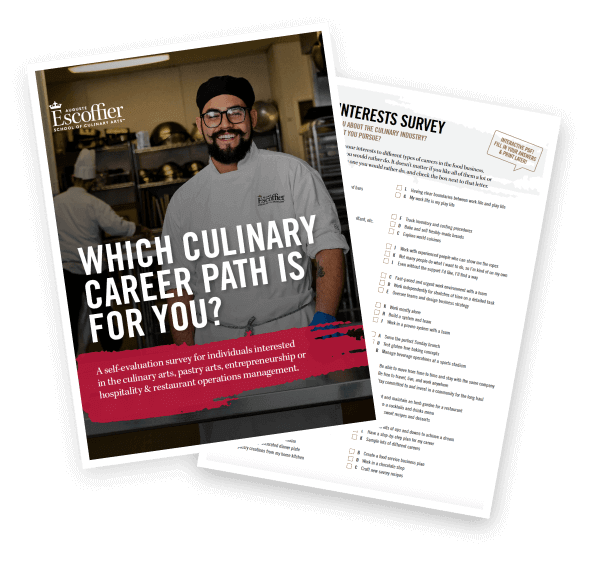
Take the Culinary Career Survey
We’ve compiled a checklist of all of the essential questions into one handy tool: career options, culinary interest surveys, educational opportunities, and more.
Finding a Niche in the Food Industry
A culinary career is often the starting point for a journey that spans much further than a single station or restaurant line.
Some culinary professionals choose a global path, gaining experience at international resorts, on cruise lines, or by staging at renowned restaurants abroad. Others find their calling closer to home, making a local impact through teaching, working with food access nonprofits, or bringing nutrition education to underserved communities.
Beyond the kitchen or the community center, a culinary background can open doors to creative collaborations like developing recipes for major brands, writing cookbooks, or consulting on new product lines. The digital and media landscapes can offer even more room to grow—whether that’s hosting a show, styling dishes for film and television, or building a dedicated audience as a food content creator.
Take Oscar Beltran, who enrolled at Escoffier’s Boulder campus at just 18 after realizing during his senior year of high school that cooking was his passion. By the time Beltran completed his externship, he had moved to Cancún and was working at a fine-dining resort restaurant. He even won an internal competition against seasoned hotel chefs before the age of 20. His story is just a powerful reminder of how a focused culinary education can sometimes jump-start a career much faster than many expect.*
It’s not necessary to have all the answers to help your teen explore the culinary arts; just ask questions to learn what they know, and learn together. This shared curiosity can keep you involved in the process and help you provide a sense of direction as they narrow down their path.
Oscar Beltran began his culinary education at Escoffier’s Boulder campus at 18 and completed his externship at a fine-dining resort in Cancún.
How Can Parents Support a Teen Interested in Culinary Arts?
One of the most helpful steps you can take as a parent is to create opportunities for your teen to experiment before committing to a specific path. Here are some practical ways to help them build experience and get a real feel for the culinary world.
Cook for Family and Friends
One of the wonderful things about culinary arts is that your teen can start building skills right now from your own kitchen.
Your teen can use the kitchen tools you already have, like knives, boards, bowls, and basic cookware. They can work on knife cuts and foundational techniques without special equipment. If their interest grows, consider buying a quality chef’s knife, kitchen scale, or specialty baking tools.
Let your teen step into the role of meal planning a few nights a week. This can help them explore new recipes, ingredients, budgeting, and prepping. They can test out new dishes and begin to see what type of food they enjoy making most.
Encourage them to test out new techniques and flavors. Have them document the process they use and the steps they take so they can incorporate the dishes they’re happy with into a culinary portfolio. The home kitchen is a great place for teens to experiment. It can provide a low-pressure environment where honest feedback from family and friends can help teens identify their strengths and refine their techniques.
Check Out Teaching Videos Online
Thanks to the internet, there are countless ways your teen can immerse themselves in new cooking skills from home. You can help them find YouTube channels where experienced chefs share kitchen tips and recipes. You can also ask your teen’s school to reach out to Escoffier and request complimentary education and career counseling tools. These resources include free teaching videos, recipe cards, handouts, and assessment tools.
Escoffier’s free teaching videos cover foundational culinary techniques like stocks, knife skills, and plating — a great starting point for teens who want to level up their skills at home.
Practice Kitchen Safety
As your teen starts spending more time at the stove, you can also help them build basic kitchen safety habits that could serve them well in any professional kitchen environment. A few simple, practical routines go a long way, like using a sharp knife and learning the claw grip instead of chopping with fingertips exposed, wiping up spills right away so no one slips, and keeping pot handles turned in so they don’t get knocked off the stove.
You can also talk to them about food safety. This can include everything from washing their hands after handling raw meat and using separate cutting boards for raw proteins and ready-to-eat foods to putting leftovers into the fridge promptly.
It’s also worth encouraging them to practice the kind of communication they’ll need in a real kitchen. Saying “behind,” “corner,” or “hot pan” as they move, and pausing to make eye contact before walking past someone with a knife or a hot tray — these are habits working chefs rely on every day.
Build Soft Skills that Employers Look For
And don’t forget about the soft skills you may have been working on with your teen for years. Skills like time management, reliability, creativity, and organization all play important roles in the kitchen — and your teen is likely already developing them.
Building skills at home is a great place to start, but getting your teen out into the culinary world can be just as helpful.

Help Teens Gain Experience in the Culinary Industry
Look for opportunities in your area for culinary camps and cooking classes. Learning directly from chefs can provide valuable hands-on experience and allow your teen to test their skills in a more formal kitchen setting.
Encourage them to consider getting a part-time job in a culinary setting. Your teen could work in a local restaurant, cafe, or for a catering company. Even entry-level roles like dishwashing or bussing tables can help them get firsthand experience in a culinary setting. This experience can help them identify their preferred work style and understand the diverse career paths within the industry. Plus, it can also allow them to start building their culinary network, which could be helpful when they’re ready for a full-time position.
Plan a visit to a culinary school. A campus visit can be a great way for your teen to experience the energy of a professional kitchen firsthand. They can ask questions, see what students are working on, and get a feel for whether it’s an environment they could see themselves in. Escoffier offers open houses at its Austin, Texas, and Boulder, Colorado campuses.
Your teen can also test their skills in youth culinary competitions. These types of competitions can give them experience cooking under pressure and receiving feedback from experienced Chef Instructors. The Young Escoffier Competition can be completed in person or virtually, and every participant receives a $500 scholarship toward an Escoffier program, with additional awards for top finishers.
Some competitions also connect to scholarship opportunities through student organizations like FCCLA, ProStart, and SkillsUSA.* It could be worth checking with your teen’s high school or school district to see if they are already affiliated with these organizations and can help facilitate an entry.
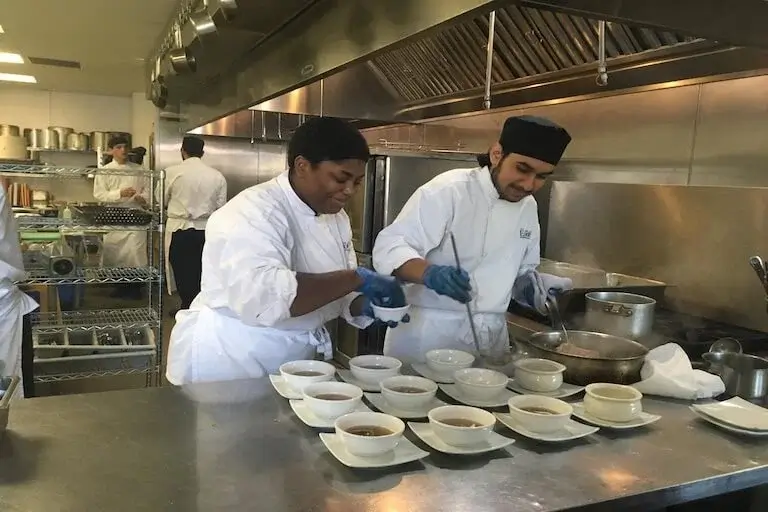
At the Young Escoffier Competition, high school culinary teams cook under pressure for a chance to win a portion of $30,000 in scholarships toward an Escoffier program.
Talk to Your Teen About More Than Just the Food
Even if you have no culinary experience yourself, one of the most helpful ways you can support your teen is by guiding them through the decision-making process to see if a culinary career is the right fit for them.
Ask them about the type of lifestyle they want, the schedule they’re comfortable with, and their long-term goals. It’s okay if they don’t have it all figured out right now, but having some idea of what they want from their future can help shape the conversations you have together.
Questions to Ask Your Teen About a Culinary Career
- What do you love making, and does the less glamorous prep work still feel worth it?
- What kind of work environment fits you, fast-paced and physical, or something more structured?
- How do you handle stress and working under pressure?
- Do you want to create, lead, own something, or focus on the craft itself?
- Do you get excited about the idea of running a business or managing a team, not just cooking?
- Can you picture doing this on a Friday night or holiday when everyone else is off?
These types of conversations can also help generate questions your teen can bring to their school career counselor or a culinary school admissions representative. While these check-ins may seem small, they can help your teen see the bigger picture and start thinking through what next steps make sense for them.
You can also encourage them to read about the culinary paths of others for inspiration and ideas. Hearing from people who have navigated similar decisions can help your teen see what’s possible and feel more confident about their own direction.
Help Them Evaluate The Options for Their Next Step
In their junior and senior year, students usually begin preparing for possible career paths. This is the typical time when school visits happen, and students start thinking seriously about what comes after graduation.
For students interested in culinary arts, a few key decisions can be worth thinking through together:
- Diploma vs. degree programs, if they’re considering a culinary education
- Culinary arts vs. pastry arts focus
- Dedicated culinary school vs. community college
Merisauh Gamble didn’t wait until after high school to start building her culinary foundation. While finishing high school, Gamble dual-enrolled at a local technical school to take culinary classes, discovering a passion for pastry that gave her both direction and a sense of purpose. She enrolled in Escoffier’s Baking and Pastry program after high school graduation and went on to pursue professional pastry roles, including opportunities abroad in Ireland.
Her path is a good reminder that junior and senior year isn’t too early to start taking concrete steps toward a culinary education.*

Mapping out a simple timeline can give your teen a structured way to track their research and stay on top of upcoming milestones. You might consider a schedule that includes time for researching programs, attending open houses, and gathering the necessary records for applications and financial aid.
This is a major leap toward their independence, but having you at their side can help them weigh their options and move forward with more confidence.
Encourage your teen to build a culinary portfolio with dish photos, competition results, and work experience. This can help give them something tangible to show for their effort when applying for schools and scholarships.
Free Resources to Help You Get Started
Click the link to check out Escoffier’s extensive culinary school resources, including guides, workbooks, and checklists!
Evaluate Culinary Programs Together
As you start looking at specific schools, it can help to move past “Does this sound good?” and into a more concrete set of questions you can work through together. Treating this like a shared research project can help your teen feel supported rather than pressured — and it can give you both a clearer picture of which programs are most serious about preparing students for real culinary careers.
Use the questions below as a starting point when you sit down to compare programs:
Quick Questions to Compare Culinary Programs
| What to Look At | Questions to Ask Together |
| Accreditation & approval | Is the school nationally or regionally accredited? How does that affect access to federal aid and scholarships? |
| Curriculum content | Does the program include core kitchen skills plus safety and sanitation, cost control, and basic restaurant or entrepreneurship coursework? How much time is actually spent in hands-on cooking versus lectures? |
| Externships & real-world experience | Are externships required? Who chooses the sites, and how are they vetted? How often does the school check in with students and employers during the placement? |
| Format & schedule | Will on-campus or online with hands-on work at home format fit best with my teen’s learning style, work, or family commitments? What does a typical week actually look like? |
| Student support | What help is available with tutoring, career services, and life challenges once students are enrolled? How easy is it to get in touch with someone when questions come up? |
| Cost & financial aid** | What is the full program cost, including tuition, fees, tools, and housing if needed? What types of aid do students typically receive, and what would monthly payments look like under common plans? Financial aid is available for those who qualify. |
The right program is out there. Taking the time to research it together is one of the best things you can do for your teen right now.
How Parents Can Set Their Teen Up for Culinary Success
You don’t need to have all the answers to support your teen’s interest in the culinary arts. As a parent, you can provide encouragement and help identify opportunities for discovery, whether that means turning them loose in the home kitchen or touring a culinary school together.
Whatever direction they ultimately choose, the early support you provide can pay off. You’re helping them build skills, develop confidence, and make a more informed decision about their future.
As you and your teen explore the culinary world together, Escoffier can be a resource along the way. Whether you’re just starting to research programs or ready to take a closer look, an admissions advisor can help you and your teen figure out if it could be a good fit.
Escoffier offers a range of culinary arts and baking and pastry programs, as well as Food Entrepreneurship, Plant-Based Culinary Arts, Holistic Nutrition & Wellness, and Hospitality & Restaurant Operations Management.
We also offer on campus and fully online options, and all programs include at least one hands-on industry externship. Contact us to find out more and get your questions answered.
WANT TO LEARN MORE ABOUT CULINARY SCHOOL? READ THESE ARTICLES NEXT!
- How Long Does It Take to Finish Culinary School?
- Is Culinary School Worth It in 2026?
- What to Know Before Enrolling in Culinary School
FAQs
The length can vary based on what program you’re in and the format it’s presented. At Escoffier, diplomas take between 30-60 weeks and associate degrees typically take 60-84 weeks.
The time commitment can be similar to having a part-time job. If you’re taking classes on-campus in Boulder, CO or Austin, TX, 25 hours per week are recommended for academics and school-related activities, depending on the student’s learning style. For our online programs, approximately 15-23 hours per week is spent on school-related activities depending on program, credential, and personal pace.
On-campus students typically split their time between classroom theory and intensive, hands-on kitchen sessions. This format can allow them to move from lectures and live demonstrations directly into hours of practice, all while receiving real-time feedback from Chef Instructors.
Online students may have more flexibility in their schedule. While there are live virtual lessons, they can fit coursework like readings, recorded demos, and at home cooking assignments around their schedule, as long as they meet scheduled deadlines.
Most culinary programs are designed for entry-level students. At Escoffier, applicants need to be at least 16 years old and have proof of completing high school or its equivalent. There are no SAT scores or cooking tests required to enroll.
Yes, while some students prefer attending school on-campus, there are others who prefer an online option. Escoffier offers online Culinary Arts and Baking and Pastry programs that include a hands-on industry externship to help them gain real world experience. These types of programs can be a good fit for teens who don’t want to relocate or who need a flexible schedule to fit in other commitments.