

Listen to This Article:
Meander through a farmer’s market or down the produce aisle of any grocery store, and fresh herbs often stand out as the brightest offerings. Small but mighty, they pack a punch of flavor while adding aroma, texture, and depth that dried herbs simply can’t replicate.
Yet many home cooks and chefs alike share the same frustration. Herbs look perfect when purchased, only to wilt within days, sometimes before you even get home. With a few simple methods, though, you can extend their life, reduce waste, and get more value from every bunch.

When herbs are fresh, they can offer brightness, aroma, balance, and a pop of color to any dish.
Why Fresh Herbs Wilt So Fast
Before you decide how to store fresh herbs, it helps to know what kind of herb you’re actually working with: delicate or hardy. Not all herbs behave the same once they leave the field or garden, and treating them all alike is one of the fastest ways to shorten their lifespan.
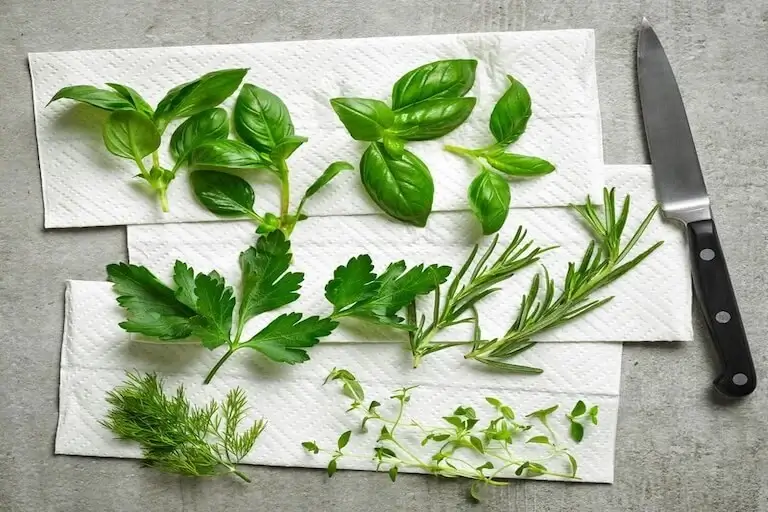
Knowing whether your herbs are delicate or hardy helps you choose the right way to store them.
Delicate Herbs
If an herb feels soft in your hand, it likely falls into the delicate category. These herbs have tender leaves, soft stems, and high moisture content, which means they bruise easily and wilt quickly if they dry out or get handled roughly. Common delicate herbs include basil, cilantro, parsley, dill, chives, chervil, and mint.
These herbs do best with gentle hydration and protection from cold air. Basil is a good example. Expose it to temperatures that are too cold and it can turn black almost overnight.
Hardy Herbs
Hardy herbs have tougher, woodier stems and lower moisture content. They’re more forgiving than delicate herbs, but they still have their limits. Too much moisture or too little airflow can cause their leaves to darken or even develop mold along the stems. Rosemary, thyme, oregano, sage, lavender, epazote, and curry leaves all fall into this category.
Knowing whether an herb is delicate or hardy gives you an important framework. It explains why some herbs collapse after a few days while others seem to hold on longer, and why one-size-fits-all storage rarely works.
A Simple Rule for Fresh Herbs
Delicate herbs typically require a little moisture and gentle handling to prevent wilting.
Hardy herbs prefer drier conditions and good airflow to extend their shelf life.
Four Methods for Storing Fresh Herbs
Once you know whether an herb is delicate or hardy, choosing how to store it becomes much simpler. The goal is always the same: slow moisture loss without trapping excess humidity, which can lead to sliminess and decay.
Before storing your herbs, resist the urge to wash them right away. Extra moisture speeds up spoilage. Instead, gently shake or brush off visible dirt, and wash only what you plan to use immediately.
The Paper Towel Method
This is one of the most reliable methods for both delicate and hardy herbs. You are aiming to keep herbs hydrated while still allowing some airflow.
Lightly dampen a paper towel, then wring it out well. Wrap it around the cut ends of the herbs and place them in a loose plastic bag. Do not seal the bag. This keeps enough moisture in while letting air circulate. Store in the refrigerator.
Delicate herbs like cilantro, parsley, dill, and chives tend to last longer this way, but hardy herbs such as rosemary, oregano, and thyme also benefit from this method.
The Bouquet Method
If you are short on time (or paper towels), the bouquet method works well. Treat your herbs like flowers: trim the stems and place them in one to two inches of water to keep them hydrated.
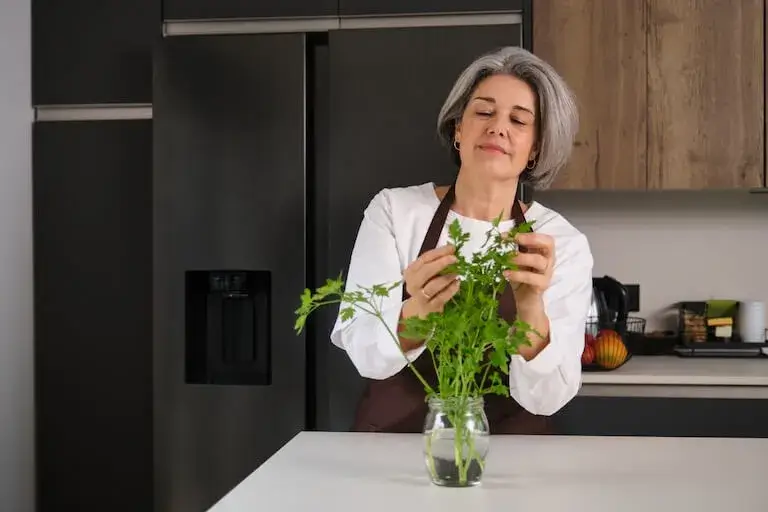
The bouquet method keeps herbs hydrated by treating them like cut flowers in water.
There is some debate about whether to cover the herbs loosely with a plastic bag. This is where your environment matters. In dry climates, a loose cover can help retain moisture. In more humid kitchens, leaving them uncovered often works better. It may take some experimenting, but that’s part of developing your kitchen instincts.
The Herb That Keeps Giving
The bouquet method works especially well for basil, keeping it fresh and lively when you’re ready to use it.
You will notice after a few days, though, that the stems will often develop roots. At that point, you can transfer them to a small pot or a sunny windowsill. When harvesting, avoid making a single cut. Instead, pinch the stems just above the nodes. This encourages continued, bushier growth, leaving you with a fresh bunch of basil on hand.
Keep in mind that basil should always be kept out of the refrigerator. An easy way to remember this is that basil pairs well with tomatoes, and tomatoes also prefer to stay out of the cold.
The Container Method
While this method is less ideal than the first two mentioned, it works well for herbs you’ve already washed or prepped. Layer clean, dry herbs in a plastic or glass container with a paper towel on the bottom. Seal it tight and refrigerate.
This method works well for meal prep situations when you want herbs cleaned and ready to grab. Just know they won’t last quite as long as herbs stored unwashed.
The Freezing Method (Long-Term Storage)
Freezing is one of the most effective ways to preserve herbs when you have more than you can reasonably use while they are fresh. Although frozen herbs lose their crisp texture, they retain much of their flavor, making them ideal for cooked dishes.
Ice Cube Method
This method works best for soft, leafy herbs like parsley, cilantro, basil, dill, and chives.
Chop the herbs and pack them into ice cube trays, then cover with olive oil or water. Once frozen solid, transfer the cubes to a freezer bag. These cubes can be dropped straight into soups, sauces, braises, or sautés where the herbs will melt seamlessly into the dish.
Flash Freezing Whole Herbs
Hardier herbs freeze especially well when left whole. Rosemary, thyme, sage, oregano, and bay leaf all hold up nicely thanks to their sturdier structure and resinous oils.
Lay whole leaves or sprigs in a single layer on a baking sheet and freeze until solid. Transfer them to freezer bags and store for later use. This method allows you to remove just a sprig or two at a time without thawing the entire batch.
Rosemary, in particular, is an excellent herb for this approach. Frozen sprigs can be added directly to roasting pans, soups, or braises and removed before serving.
Herb Butter, Pesto, and Oil
Another way to preserve herbs is to turn them into a finished ingredient before freezing. Freezing herbs this way shifts their role from garnish to flavor base.
Soft herbs like basil, parsley, and cilantro can be blended into pesto or mixed into softened butter, then portioned into small containers or ice cube trays. Once frozen, these additions make quick work of finishing pasta, vegetables, and grilled meats.
Quick Guide: How to Store Common Fresh Herbs
Delicate Herbs
Store in the refrigerator to maintain freshness, except for basil, which must stay at room temperature.
| Herb | Best Storage Method | Notes |
| Basil | Bouquet method in water | Store at room temperature. Cold causes blackening. Can root in water and be replanted. |
| Chervil | Paper towel method | Short shelf life; best used quickly. |
| Chives | Paper towel method | Bruises easily; freezing works well for cooked dishes. |
| Cilantro | Paper towel method or bouquet | Likes gentle moisture; check towel regularly so it stays damp, not wet. |
| Dill | Paper towel method | Very fragile; use sooner rather than later. Freezes well when chopped. |
| Mint | Paper towel method or bouquet | Hardy for a delicate herb, but still prefers moisture. Can root in water. |
| Parsley | Paper towel method or bouquet | Responds well to hydration and light airflow. |
Hardy Herbs
These herbs should be refrigerated and are excellent candidates for freezing.
| Herb | Best Storage Method | Notes |
| Bay Leaf (fresh) | Flash freezing whole | Freezes extremely well and lasts months. |
| Curry Leaves | Paper towel method or freezing | Sensitive to excess moisture; freeze for long-term storage. |
| Epazote | Paper towel method | Store with good air flow. |
| Lavender | Paper towel method | Keep very dry; moisture causes mold quickly. |
| Oregano | Paper towel method or flash freezing | Leaves darken if too wet; airflow matters. |
| Rosemary | Paper towel method or flash freezing | Excellent candidate for freezing whole sprigs. |
| Sage | Paper towel method or flash freezing | Holds flavor well when frozen whole. |
| Thyme | Paper towel method or flash freezing | Low moisture; avoid sealed containers when fresh. |
Salvaging Sad Herbs: When Fresh Just Isn’t Fresh Anymore
Even with the best storage methods, busy weeks happen and herbs sometimes slip past their peak. Leaves may droop, stems may soften, and the vibrant look you wanted for a garnish is gone. That doesn’t mean they are unusable though.
If herbs are slightly wilted but still smell fresh, they are often better suited for cooked dishes than raw applications. Chopped and added to soups, stocks, sauces, grain dishes, or fritters, they can still contribute plenty of flavor. Something like falafel, herbed meatballs, or a simmered tomato sauce is far more forgiving than using them on a crisp salad or as a finishing garnish.
When herbs lose their aroma or show signs of spoilage, it’s best to let them go. Composting returns them to the soil, where they can become part of the next growing season.
Getting the Most From Every Bunch
Fresh herbs have a way of making cooking feel more alive. More intentional, more flavorful, and more complex. They’re small investments that pay off in big ways, but only if you can keep them fresh long enough to use them.
By understanding whether an herb is delicate or hardy and choosing the right storage method, you can slow wilting, reduce waste, and cook more confidently throughout the week. And when you walk past your refrigerator and see bright green herbs still standing tall a week later—or pull an aromatic sprig of rosemary from the freezer in winter— you’re able to cook spontaneously and trust that the ingredients you need will be there whenever inspiration strikes.
Want to deepen your understanding of ingredients, techniques, and flavors that make great cooking possible? Explore Escoffier’s culinary arts programs and discover how foundational skills turn everyday cooking into a craft worth honing.
FAQs
First identify whether the herb is delicate or hardy. Delicate herbs last longer with gentle hydration and protection from cold air, while hardy herbs prefer airflow and minimal moisture. Using methods like the paper towel or bouquet approach helps slow wilting without trapping excess humidity.
Basil should not be refrigerated. Cold temperatures cause basil leaves to blacken and lose flavor. Store basil at room temperature using the bouquet method. Most other common herbs benefit from refrigeration when stored properly.
Common mistakes include washing herbs before storing them, sealing them in airtight bags, and treating all herbs the same. Excess moisture leads to spoilage, while lack of airflow causes sliminess and mold. Another frequent mistake is refrigerating basil.
Most fresh herbs do best in the refrigerator when stored with some moisture and airflow. Basil is the exception and should be kept at room temperature, away from direct sunlight and cold drafts.
Trim the stems and place basil in a small glass with one to two inches of water, like a bouquet. Keep it at room temperature and away from the refrigerator. Change the water every few days, and pinch stems above the nodes to encourage continued growth.