
Listen to This Article:
Your countdown clock to high school graduation is ticking, and you can’t wait for what comes next. Something about food has always clicked for you, and you come alive around it in a way you don’t anywhere else. A culinary career is starting to feel like the right direction, and you want to share that with your family, and you’re excited to start mapping out what that future could look like as a family.
That’s where this guide comes in. Most parents want to see their kid find work that’s meaningful and can financially support a good life. But if culinary careers aren’t on their radar, they may have many of the same questions that you have about job stability, earning potential, and whether culinary school is necessary. Those are fair questions, and they deserve real answers.
This guide is for both of you. Whether you’re a student trying to figure out how to start the conversation, or a parent trying to understand what your teen is excited about, you can find information here that could make that conversation easier — and more productive.
The culinary industry is bigger, more diverse, and more financially viable than many people realize. The goal here is to help your family explore it together, ask the right questions, and make informed decisions.
Start With a Conversation About Passion and Goals
During career conversations, as a parent, you may want to move right to the practical concerns like income potential and job stability. While these are important factors to look at when considering careers, it can help to start by talking about what your child is passionate about to get a clear understanding of why they’re excited about the culinary field.
Students, you can help your parents by explaining what draws you to cooking. Parents, you can help by asking open-ended questions that help your teen share their interests and long-term goals.
These early conversations work best when you’re both ready to listen to one another. Parents might learn some new things about their teen, and teens may learn some practical points they may want to pay attention to as they explore career options.
Remember, during this first conversation, you’re not trying to reach a final decision. Instead, the goal is to better understand the student’s interests and motivations around the culinary industry. The following tips can help keep the conversation positive and productive.
What Students Can Share About Their Interest in Cooking
Students, come to the conversation prepared to share what sparked your interest in cooking. Was it:
- Cooking for family or friends
- Experimenting with recipes
- Cooking classes in school
- Participating in a program like ProStart
- Baking for events or holidays
- Working part-time in a restaurant, café or bakery
Simply share what is getting you excited about the idea of a culinary career. Describe for your parent what you enjoy most when you’re working with food. Maybe it’s the chance to be creative and experiment with flavors, or working with your hands, or the teamwork involved in a kitchen environment.
There’s no right or wrong answer. It’s all personal for you, so don’t worry about trying to say the “right” thing.
This is also the time when you can share examples of ways you’re already investing in culinary skills. Maybe you regularly practice recipes to improve your skills or are taking a culinary elective at school. Or, you might be following chefs and culinary creators online to learn new techniques and see what the new trends are in the industry.
Letting your parent in on what makes you excited about a culinary career can help them start to get a big picture of what you envision your future to look like—and it may help you get clearer on what you want as well.
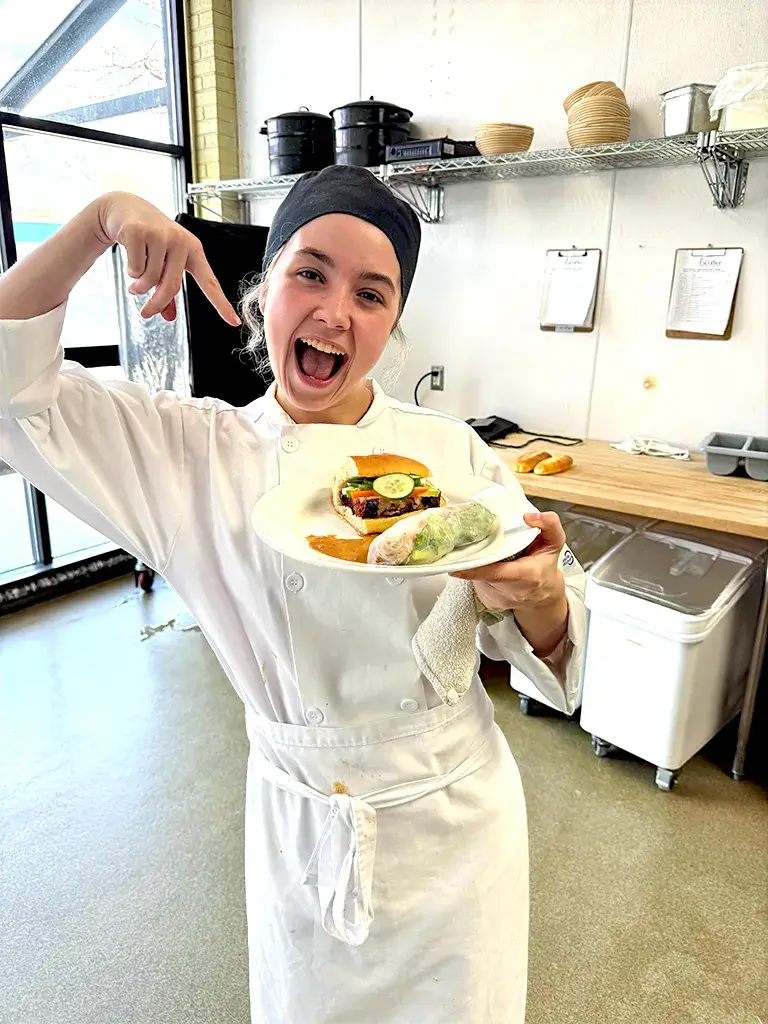
The excitement students feel when talking about their culinary interests often shows up in the kitchen as they develop their skills.
Questions to Explore Together
Parents, you may want to better understand whether your teen’s interest in cooking is something they’ll want to do as a career or something they enjoy as more of a hobby.
Asking open-ended questions can help them think through their motivations and begin exploring possible culinary career paths that may interest them long-term. Questions like “What do you enjoy most when you’re cooking?” or “What kind of environment do you imagine working in?” can help reveal what your teen is thinking.
Questions like these can help both of you start thinking about practical considerations like work environments, training options, and career goals. They can also help surface details that teens haven’t put into words before, even to themselves.
These early conversations are about exploring options and learning more together. Allow your teen to share their ideas and thoughts without feeling the need to defend them.
To help get the conversation started, here are some questions you can explore together.
Conversation Starter: Discovering Your Passion for Food
Before researching schools or career paths, take a few minutes to talk through these questions together.
- What first got you excited about working with food?
- What part of the process do you love most right now — the hands-on creating, the science of how ingredients work, the creative and visual side, or the way food brings people together?
- When you picture yourself working in food someday, what does that look like — a fast-moving kitchen, a creative studio, your own business, something else entirely?
- What experiences have made you think this could be more than just a hobby?
- What questions do both of you have about the different directions a culinary education can take you?
Learn About Today’s Culinary Industry (It’s Bigger Than You Think)
Many people picture culinary careers as limited to restaurant kitchens, but the food industry includes a wide range of roles across hospitality, media, product development, wellness, and entrepreneurship. If you’re a parent who’s mainly familiar with traditional restaurant work, or a student who’s just starting to explore what’s out there, understanding the full scope of the industry might open up possibilities you hadn’t considered.
Exploring culinary career paths can help you both gain a better understanding of what opportunities exist in the industry and which ones could align well with your strengths and specific interests.
Once you see the range of possibilities, it becomes easier to explore which types of culinary careers might be the right fit.
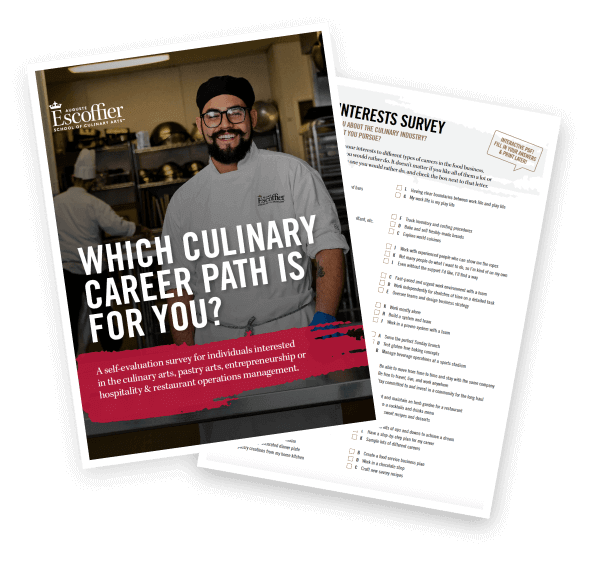
Take the Culinary Career Survey
We’ve compiled a checklist of all of the essential questions into one handy tool: career options, culinary interest surveys, educational opportunities, and more.
Exploring the Many Paths Within the Culinary Industry
Culinary professionals can work in traditional restaurant kitchens, but the industry offers vast opportunities beyond the service line.
The global food and beverages market is expected to grow from about 8.7 trillion dollars in 2025 to nearly 14.7 trillion dollars by 2034, and U.S. food and beverage manufacturing employs more than 2.1 million people across more than 58,000 firms.
Those numbers span a wide range of careers — from restaurant kitchens and hospitality to product development, food science, wellness, media, and entrepreneurship.
Below are some common examples of where culinary professionals may work.
Culinary Career Paths at a Glance
| Career Path | Work Environment | May Be a Good Fit If You… |
| Restaurants & Hotels | Kitchens, dining rooms, resorts, cruise lines | Love working on a team, thrive when things move fast, want to jump right into professional cooking |
| Bakeries & Pastry | Bakeries, hotels, independent studios | Get satisfaction from precise work, love the science behind baking, want to create cakes people remember |
| Test Kitchens & Product Development | Corporate offices, food labs, R&D facilities | Like experimenting and figuring out why things work, want more predictable hours, enjoy mixing food with business |
| Food Media & Content | Studios, home kitchens, varied locations | Are comfortable creating content online, want to build your own brand, like combining cooking with storytelling |
| Wellness & Nutrition | Wellness centers, corporate settings, private practice | Care about how food affects health, want to teach people about nutrition, like working one-on-one with clients |
| Catering & Food Trucks | Events, mobile locations, markets, festivals | Want to run your own business someday, like changing up your location, enjoy planning events and meeting new people |
Restaurants and hotels
Working in a restaurant kitchen can be one of the most direct paths from culinary training to a paycheck, with strong and consistent demand across the country. Roles in restaurants and hotels can range from line cook to executive chef, with opportunities in independent restaurants, hotel properties, resorts, and cruise lines.
According to the U.S. Bureau of Labor Statistics, employment of chefs and head cooks is projected to grow about 7% from 2024 to 2034, which is faster than the average for all occupations.
Bakeries and pastry shops
Work in a bakery or pastry shop can combine technical skill with creativity. This role can cover everything from artisan breads to wedding cakes and specialty desserts.
Work settings can include standalone bakeries, hotel pastry departments, restaurants, and independent studios. Through 2034, employment of bakers is projected to grow around 6%.
Corporate test kitchens and food product development
Culinary professionals working in corporate test kitchens can develop and test new recipes and products for food companies, restaurant groups, and packaged goods brands. These types of careers can tend to be stable, salaried roles that blend culinary expertise with food science and business.
The overall employment of agricultural and food scientists—a key group involved in developing and improving food products—is also projected to grow around 6% through 2034.
Food media and content creation
While you may first come across your favorite food content creator on TikTok, Instagram, or YouTube, many of these professionals got their start by building skills in restaurants, bakeries, or test kitchens. Food stylists, content creators, and culinary producers can use their skills to develop recipes, host videos, or style food for photos and film.
The income potential for these types of culinary careers has a large range. While there are professionals making full-time incomes doing this work, there are also many individuals in this space building portfolio careers where they work part-time in a professional kitchen while doing freelance content creation work on the side.
Wellness programs and nutrition-focused cooking
In the culinary world, wellness and nutrition professionals work where food and health come together. They may help create programs and menus for wellness centers, corporate clients, or private practices.
Jobs for dietitians and nutritionists are expected to grow about 6% through 2034, which points to steady, long?term demand for people who can connect food and health. This aligns with long-term consumer demand for health-focused food experiences.
Catering companies and food trucks
Many catering companies and food trucks were started by chefs or food service managers who decided they wanted to start their own business. This type of work can appeal to people who like planning events, serving crowds, and working in new locations regularly.
Catering services and running a food truck can be a first step to test ideas before choosing to open a full restaurant. Together, food trucks and catering represent multi-billion-dollar markets, giving entrepreneurial chefs room to build businesses that travel to their customers instead of waiting for guests to walk in.”
As you explore these different paths together, think about which types of culinary roles match interests, work style, and long-term goals.
Conversation Starter: Exploring Culinary Career Possibilities
Use these prompts after reviewing the career paths above.
- Which of these culinary careers sounds most interesting right now?
- What kind of work environment do you imagine enjoying the most?
- What lifestyle factors are important when thinking about a future career (schedule, location, travel, creativity)?
- What new types of culinary jobs did you learn about that you didn’t know existed?
- Which of these paths surprises you the most?
Explore What Culinary School Is Really Like
Now that you have a better sense of the career options that exist, the next questions are usually: what does culinary school look like, and is it the right move after high school?
Culinary programs can help their students develop professional kitchen skills, better understand food systems, and gain hands-on experience in real food businesses. While specific classes can vary from school to school, understanding how culinary programs work day-to-day can help both of you picture what this path might involve.
What Students Study in Culinary School
Culinary programs typically start with the foundations you’ll use every day in a professional kitchen. This can include learning about:
- Food safety and sanitation
- Knife skills and classic cuts
- Mise en place and kitchen organization
- Core cooking techniques
- Seasoning and flavor profiles
- Baking fundamentals
Skills like these become the base on which everything else builds.
Some programs include classes such as world cuisines and culinary traditions. These classes can include influences from global culinary techniques and flavors to help you understand more about how different cultures use food.
Some schools also include options for students to explore food sourcing through farm-to-table food programs and classes. This knowledge can be valuable for students, whether they end up working in fine dining or developing products for food companies.
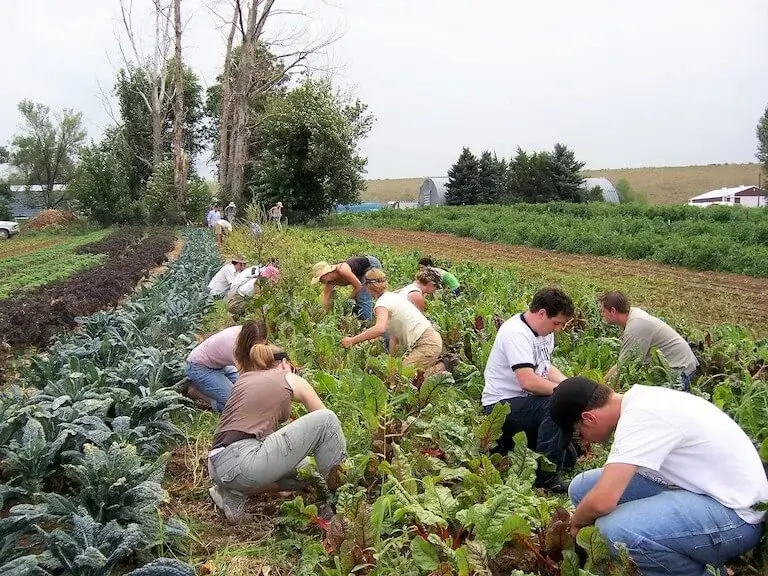
Programs may include farm-to-table education, where students explore how ingredients are sourced and how food production connects to the culinary industry.
In culinary school, you can also study business concepts for the culinary industry, like menu development, purchasing, and restaurant management. These business skills can help as you work your way up the kitchen brigade or if you choose to open your own food business in the future.
Hands-On Learning and Industry Experience
Culinary education is designed to be hands-on, so students have a chance to practice what they’re learning. They can watch demonstrations on techniques and then have the chance to apply them through regular cooking labs where they practice with ingredients, work with professional equipment (if studying on campus), and get feedback from instructors.
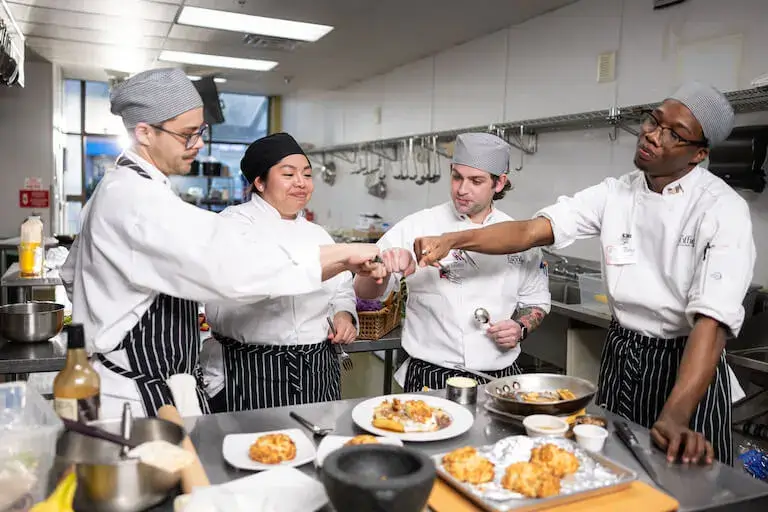
Professional training kitchens provide the space and equipment students need to develop culinary skills.
All programs at Escoffier include one or two hands-on industry externships. During an externship, students spend time working in professional food environments like restaurants, bakeries, resorts, or catering companies.
These experiences can allow students to apply classroom learning in working kitchens or foodservice businesses, along with helping them build professional resumes with real-world industry experience, while gaining exposure to different types of food businesses before graduating.
How Culinary Programs Are Delivered
Culinary schools often provide on-campus environments where students train in professional kitchens under the guidance of Chef Instructors. In this traditional model, you can work alongside peers in a fully equipped setting to develop foundational techniques.
Some schools offer online culinary programs that include live virtual classes, recorded demonstrations, and hands-on cooking assignments that students can complete from any kitchen. In these classes, Chef Instructors can also provide personalized feedback to students.
Both in-person and online program options typically emphasize hands-on practice and skill development.
In online culinary programs, students explore techniques through demonstrations and practice skills in their own kitchens with instructor feedback.
Types of Culinary Credentials at Escoffier
Because culinary schools offer various types of credentials, it’s important to differentiate between them to ensure you select the path that best supports your future ambitions.
Escoffier offers both diploma and degree programs.
The diploma programs are shorter and focus on building practical culinary skills in areas like baking and pastry, plant-based cuisine, food entrepreneurship, or holistic nutrition and wellness.
The degree programs continue the diploma programs to combine culinary training with additional coursework in subjects like foodservice math, nutrition, and restaurant operations. These skills can be helpful if you think you might want to run a kitchen, manage a restaurant, or open your own business someday.
Escoffier Diplomas vs. Associate Degrees
| Feature | Escoffier Diploma Programs | Escoffier Associate Degree Programs |
| Main focus | Core hands-on culinary or baking skills without additional general education requirements. | Culinary skills plus business, operations, writing, and nutrition coursework. |
| Typical length | Around 30–42 weeks on campus for some programs; most online diplomas are structured as 60-week programs. | Typically 60 weeks for many associate degrees, with certain specialized online programs extending to about 84 weeks. |
| Credits and hours | Generally about 44–59 quarter credits with one required hands-on industry externship. | About 90 quarter credits with two required hands-on industry externships for added experience and networking. |
| Best fit for | Students who want a faster, skills-focused path into entry-level culinary roles. | Students who want deeper training and broader preparation for leadership, management, or entrepreneurship over time. |
| Flexibility for next steps | Can stand alone or serve as a starting point that may apply toward an associate degree later, depending on credit transfer and program policies. | Often chosen by students who already know they want a more comprehensive education; graduates can still add external certifications like ACF as they gain experience. |
Many chefs also look to the American Culinary Federation (ACF) to give their resumes an extra boost. The ACF’s tiered certifications are based on actual time in the kitchen, education, and exam results, all of which can help employees stand out when they’re up for a new role.
Conversation Starter: Understanding Culinary Training
After learning how culinary programs work, talk through these questions together.
- What parts of culinary training sound most interesting or exciting?
- What skills would you be most excited to learn?
- What type of learning environment do you imagine enjoying the most?
- What questions do we still have about culinary school?
Compare Program Options Together
Ready to narrow it down? Now you can start evaluating individual schools and their program options to find the best match for your career path and personal situation.
Comparing programs side by side can help you see which one may work best for your financial situation, schedule, and career goals. Students might be more focused on which school and program sounds the most exciting for their future career, while parents may be more focused on the logistics like tuition and scheduling. Both perspectives matter.
Rather than trying to answer everything at once, it can help to review a few key factors together. The checklist below can guide your conversations as you research schools and narrow down your options.
Culinary School Comparison Checklist
As you research programs, use this quick checklist to compare your options side by side.
- Program timeline fits your goals
Does the length of the program work with your schedule and graduation plans? - Clear understanding of total cost
Do you know what tuition includes (tools, uniforms, supplies, or additional costs like housing, travel, and meals for on-campus students)? - Financial aid options explored
Have you asked about scholarships, grants, and federal financial aid eligibility? - Learning format fits your lifestyle
Does the program offer the right balance of on-campus instruction, online learning, or flexibility? - Hands-on experience included
Does the program include externships or other real-world kitchen experience? - Career support after graduation
Does the school offer career services, job connections, or alumni networking opportunities? (See the “Career Support” section below for what to look for.)
Tip: Write down notes for each school you research so you can compare programs side by side.
Program Length and Schedule
As you compare schools, you may want to learn how long a program typically lasts from the first class until graduation. The timeframe can impact everything from your budget to when you’re able to start working full-time in the culinary industry.
Questions you may want to consider together:
- How long will the program take to complete?
- How will the timeline fit with my other commitments?
- Does the program allow time to develop professional skills before entering the workforce?
These questions can help you find a program that gives you enough training to feel confident without extending the timeline longer than necessary.
Cost and Overall Value
Tuition is often one of the biggest considerations for families to think about when comparing programs. But the price tag alone doesn’t tell you the whole story.
To find the real value, weigh the cost against the value the program provides. Depending on which school and program you choose, you may need to pay for kitchen tools and uniforms, transportation or housing if attending on campus, and ingredients used during assignments.
These expenses can add up, so it’s better to plan for them now than be surprised by them later. Seeing the full picture can help you compare programs more accurately.
Questions you may want to discuss together include:
- What is the total program cost?
- What’s included in the cost (materials, equipment, or services)?
- How does this program compare with other culinary schools?
Getting clear answers to these questions can help you understand whether you’re comparing apples to apples.
Scholarships and Financial Aid**
It can be worth looking into the different ways you can get help paying for culinary school. These usually include loans, scholarships, and grants.
Scholarships and grants typically don’t need to be repaid, making them a great way to lower your tuition costs. These funding options can be offered by companies, culinary nonprofits, and employers. Some culinary schools even offer their own scholarship and grant opportunities.
While scholarships and grants are often thought of as “free money” because they don’t need to be paid back, loans do need to be repaid.
Federal financial aid may be available for those who apply and qualify. This aid is also a loan and needs to be repaid over time.
It’s important to understand the type of financial assistance you’re using and what that means long-term. For example, if you receive $10,000 in scholarships, that’s $10,000 you don’t have to pay back. But if you receive $10,000 in loans, you’ll need to repay it after graduation, typically with interest added.
Take the time to compare financial aid offers to understand what type of aid is being offered and what it means for your finances now and in the future.
Why Accreditation Matters
Your ability to qualify for federal financial aid and scholarship opportunities can be impacted by whether the school is accredited.
Accreditation means an independent organization has reviewed the school and found that it meets certain quality and accountability standards. Schools that are accredited can participate in federal financial aid programs, while schools that aren’t accredited typically cannot.
Only accredited schools can offer federal financial aid programs like Pell Grants and Direct Loans (these are called Title IV programs).
If you’re planning to use federal financial aid, you’ll want to make sure the school you’re considering participates in Title IV programs, and you’ll need to complete the FAFSA to access these funds.
Escoffier’s Accreditations
Escoffier is nationally accredited at both its Austin and Boulder campuses. The Boulder campus (including online programs) is accredited by the Accrediting Council for Continuing Education and Training (ACCET), and the Austin campus by the Commission of the Council on Occupational Education (COE).
These institutional accreditations help make the school eligible to participate in federal Title IV financial aid programs for those who apply and qualify.
Escoffier also offers its own scholarships and grants—such as need-based awards and scholarships for veterans and military-connected students. Competition-based scholarships are also available, which may be able to be combined with other aid.
Escoffier offers several ways for high school students to earn scholarships through competition. You can compete on-campus in Boulder or Austin in Young Escoffier High School Culinary Scholarship Competition, or show off your skills from home in seasonal virtual challenges like the Gingerbread Structure Spectacle and our Spooktacular Halloween Dish-Off.
In recent years, every participant in these events has earned at least a $500 scholarship toward an Escoffier education. The top high school competitors have received additional awards of $1,500 to $3,000 each.
Location and Learning Format
Whether you’re looking for an on-campus experience or the flexibility of online learning, there’s a format that fits. It’s worth weighing the pros and cons of each to see which one actually matches your lifestyle.
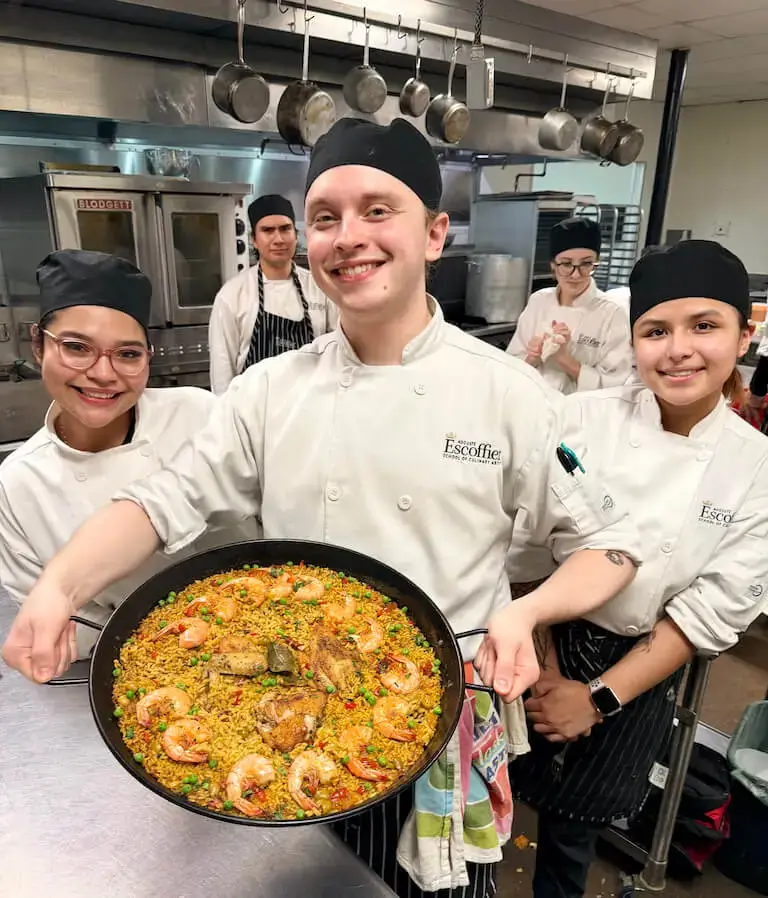
On-campus programs can provide opportunities to learn in professional kitchens with classmates and Chef Instructors.
Questions to discuss together: Would an on-campus kitchen environment be the best fit, or would an online program offer more flexibility for your schedule? If you’re considering on-campus attendance, what transportation or housing needs might arise? Is relocating for school something you’re open to, or do you need to stay close to home?
Understanding these logistics early can help you narrow down which programs are feasible for your family, not just appealing in theory.
Career Support, Externships, and Alumni Outcomes
Don’t forget to look at how a school supports its graduates. Having that extra help with job searches and industry connections can take a lot of the stress out of starting your new career.
Some culinary programs include externship opportunities, in which students spend time working in professional kitchens to gain real-world experience before graduation.
Hands-on industry externships are required in every program Escoffier offers, providing students with the opportunity to work in professional kitchens, bakeries, hotels, or other food businesses as part of their program requirements. These experiences can help students build their resumes and make industry connections.
Schools may also offer ongoing career services such as career advising, resume support, job boards, and alumni networking opportunities.
Escoffier students have access to career services support that can continue after graduation. Whether you need help preparing for interviews, connecting with employers, or want to tap into our alumni association for new opportunities, we’re committed to helping you stay active and successful in the culinary world.
Questions to consider asking as you compare programs: Does the school help students find externships, or are you entirely responsible for securing your own site? What kind of career support is available after graduation—not just at graduation, but months or even years later?
Conversation Starter: Evaluating Culinary Programs Together
Use these prompts while researching schools.
- Which of these factors feels most important when choosing a culinary program?
- What concerns do we still have about training, cost, or career preparation?
- What questions should we ask admissions representatives before making a decision?
- Do we plan to use federal financial aid, and have we completed the FAFSA if needed?
- Which scholarships or grants should we apply for first, based on our situation?
- What would help both of us feel confident about the program we choose?
Build a Realistic Plan That Works for Everyone
After exploring culinary careers and comparing programs, families can begin thinking about how a culinary path might fit into their real-life plans. This is where you transition from gathering info to discussing how the logistics of culinary training, like schedules and daily routines, will fit into your family’s current lifestyle.
At this stage, conversations often shift to focus on finances, schedules, and what the first few years of a culinary career could realistically look like. These aren’t the exciting conversations about passion and possibility, but they’re the ones that help turn a dream into actionable steps forward.
Consider the Best Starting Point for Your Goals
As you discuss the future, it can be helpful to acknowledge that there are different ways to enter the culinary world. Some chefs begin by working their way up from entry-level positions, like prep cook or dishwasher, gaining experience through years of on-the-job training.
While this “experience-first” route allows you to start earning immediately, many families find that the structured environment of a culinary school provides a more comprehensive foundation in less time. Choosing between a traditional education and a slower, experience-based climb is a part of the planning process, as it dictates what your daily life will look like for the next few years.
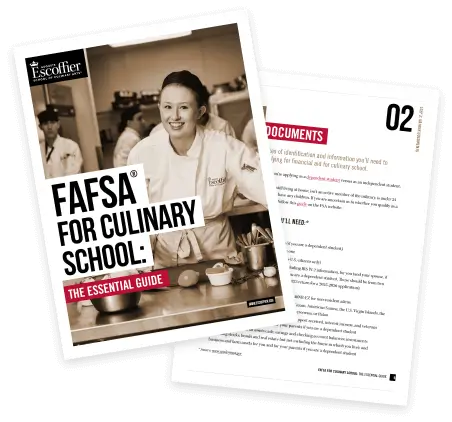
Get the Financial Aid Guide for Culinary School
The first step towards seeing if you qualify for financial aid for culinary school is completing the FAFSA®. Follow this essential guide and be on your way today!
Think Through Scheduling and Daily Commitments
Culinary programs can require a meaningful time commitment. Whether you’re studying in a professional kitchen lab or completing coursework online, it can require dedicated time and focus.
Discuss together how culinary training fits alongside current schedules, part-time jobs, transportation, or housing considerations. If you’re a student still in high school, think about what happens after graduation. Will you need to keep working while in school? How will you get to campus if it’s not close to home? If you’re planning to study online, do you have a workspace at home where you can practice cooking assignments?
Planning ahead can help ensure you have enough time to develop professional skills while maintaining balance in other areas of life.
Ways Students Can Show Commitment
Parents often feel more confident supporting their kids’ career interests when they can see consistent effort and curiosity. You don’t need to have your entire career mapped out to show your parents that you’re serious; demonstrating real interest and a willingness to learn can be a great way to start.
You can show your parent that you’re serious about culinary as a career option by taking culinary or hospitality classes in high school, getting an after-school job at a local restaurant, or volunteering to cook for your family.
Simple steps like keeping a recipe journal, documenting new techniques, and researching schools or financial aid options can go a long way toward showing your parent that this is more than a hobby.
Visit a Campus or Attend a Virtual Info Session Together
A school visit can help make your plans feel more tangible as you compare your options.
These visits, whether on a campus or attending a virtual information session, can allow both of you to better understand how classes work and what your schedule can look like as a culinary student. You can check out what tools are available in the kitchen classroom, meet instructors, and ask questions that have come up during your discussions.
Going to a session together means you get the same information at the same time. This can keep things simpler because you don’t have to catch each other up later.
See What a Professional Training Kitchen Looks Like
Walking through a campus kitchen or seeing a demonstration space can give you a real feel for where you’ll be honing your craft.
During a visit, you can explore the equipment, see the layouts, and better understand how the hands-on learning happens. You can get an immediate sense of the atmosphere—whether it feels spacious, organized, and like a place where you can truly thrive.
Talk With Instructors and Admissions Representatives
Meeting chef instructors and admissions staff is a great chance to go beyond the school’s website.
You can ask about what the curriculum covers, what the student workload looks like each week, if externships are provided, and how the school helps with job placement after graduation. You can also ask about what happens if a student is struggling and how the school is able to support them.
Speaking directly with staff members can also help you feel more connected with the school. You can get a feel for whether the instructors and staff feel approachable.
Hear more about what stood out to this Escoffier graduate about their school experience.
Explore Classes, Lessons, and Student Experiences
Checking out course descriptions and student work can help parents understand what culinary students learn during training and how culinary education can develop professional skills beyond just following recipes.
Virtual sessions are another way to round out your research, especially if the school is a bit of a drive. They often include recorded demos and Q&A, making it easier to gather the details you need to take that next step together.
Conversation Starter: Questions to Ask During a School Visit
Families may want to prepare a few questions before attending a campus tour or virtual info session.
- What skills will students develop during the program?
- What types of externships are available?
- How does the school support students after graduation?
- What does a typical week of training look like?
Hear From Culinary Students and Graduates
It takes a lot of effort to choose a school and organize your finances, but keeping your “why” in mind can make the process easier. Sometimes, hearing from those who have already walked this path is exactly what you need to stay motivated.
These Escoffier graduates come from all walks of life and are at various stages of their careers, showing you firsthand the doors that open when you’re ready to put in the work.
Christopher Puga, Food and Beverage Director with Destination El Paso & El Paso Water Parks
Christopher was interested in food since childhood, even though no one in his family was a chef. He grew up in a plumbing family in El Paso with no culinary connections, but he was passionate about cooking and baking throughout his school years.
Christopher’s principal noticed his commitment and helped get him into a vocational culinary program in high school. After high school, he enrolled at the community college but found that the classes were similar to what he had already completed at the vocational school. So, Christopher took the step of moving to Colorado and enrolling at Escoffier.
After graduation, he became an Executive Pastry Chef at 22, and hit his goal of becoming a Food and Beverage Director at 28 — 17 years ahead of the timeline he had set for himself. He now runs food and beverage operations for a convention center with a capacity of 13,000 people in El Paso.
Connor Fowler, Certified Sommelier
By his own admission, Connor didn’t excel in traditional school. The classroom just never clicked for him the way a busy restaurant kitchen did when he started working in high school.
After starting at Warren Tech in Littleton, Colorado, Connor found his way to Escoffier’s Boulder campus. It was there, during a TED Talk in a Business Communications class, that he discovered a career path he didn’t know existed: sommelier.
His externship in Florence at 19 turned curiosity into a clear direction. Connor spent his time sitting in Italian restaurants asking sommeliers endless questions about wine and food pairing, realizing this was what he wanted to pursue.
He passed his Certified Sommelier exam on the first attempt when he was 22. By 25, he had worked at three award-winning restaurants, including a Michelin star winner and a James Beard Award winner.
Connor Fowler shares advice for other young people interested in working in the culinary industry.
Merisauh Gamble, Escoffier Baking & Pastry Arts Graduate
Merisauh’s senior year of high school was one of the hardest of her life. Her family lost their home and she spent months in temporary housing, but she stayed focused on her path and leaned on her teachers and mentors to keep moving forward.
She fell in love with baking and pastry through a dual enrollment program at a technical school and was drawn to the way it combined science and creativity into something she could build with her hands.
After graduating high school, Merisauh drove from Florida to Texas to enroll at Escoffier’s Austin campus and applied for every scholarship she was eligible for. She went on to earn a spot on the President’s List with Distinction, and landed an externship 4,600 miles away at a bakery in Kilkenny, Ireland.
Culinary school was where Merisauh found both direction and stability.

Shai Fernandez, Lead Line Cook, The Four Seasons Nashville
Shai had some restaurant experience after college but watched a coworker who had been in kitchens for 30 to 40 years still chopping parsley the wrong way. That’s when he knew he didn’t want to build a career on bad habits.
He chose Escoffier’s Austin campus, looking for a school that would give him the right foundation from the start. His externship at Yolan in Nashville—the number one restaurant in America according to Food & Wine at the time—gave him his first taste of fine dining at the highest level.
Today, Shai works as a lead line cook at The Four Seasons Nashville, still early in a career he’s building one deliberate step at a time.

Next Steps: How to Move Forward as a Team
Keep the conversation going as you explore what a culinary career looks like. Honest discussions can help everyone feel heard and prevent the process from feeling one-sided.
A supportive family foundation is a great starting point for any culinary journey. As you dive deeper into different career paths and training options, working as a team can help you make informed decisions that balance passion with reality.
If you’re interested in finding out more about Escoffier’s culinary programs and whether they’re a good fit for you after graduation, contact us to speak with an admissions counselor for more information about programs, campus visits, or financial aid options.
WANT TO EXPLORE MORE ABOUT GETTING A CULINARY EDUCATION? READ THESE ARTICLES NEXT!
- How Parents Can Support a Teen Interested in the Culinary Arts
- Is Culinary School Hard to Get Into?
- How Long Does It Take to Finish Culinary School?
FAQs
Many culinary schools set a minimum age, often between 16 and 18, and may require written permission from a parent or guardian if you are under 18. You can usually start researching and applying during your junior or senior year of high school, and many students enroll shortly after graduation. Some schools, including Escoffier, also offer high school–focused events, competitions, and virtual experiences that let you explore culinary training before you graduate.
Many culinary schools, including Escoffier, focus more on your readiness and commitment than on a specific GPA. You’ll typically need proof of high school graduation or an equivalent credential, along with a completed application and an admissions interview. Some schools may ask for placement tests or additional documentation, but the emphasis is usually on your interest in culinary work and your willingness to put in consistent effort.
Yes, professional kitchen work can be physically demanding. You should expect to spend long periods on your feet, to work in hot, fast?paced environments, and occasionally to lift heavy pots, pans, or boxes of ingredients. You’ll also work quickly and safely with sharp tools and hot equipment, so good coordination, attention to detail, and stamina are important.
If you have physical limitations or health concerns, talk with admissions and student services about possible accommodations and about culinary or hospitality roles that may be a good fit.
You don’t need previous restaurant or professional cooking experience to start culinary school. Many students begin with little or no culinary background, and programs are designed to teach foundational skills—like knife techniques, food safety, and cooking methods—from the ground up. That said, picking up experience in a restaurant, café, or bakery, even as a dishwasher or prep cook, can help confirm your interest and give you valuable context for what you’ll be learning in school.
It often depends on the school’s format and where you live. If you choose an in?person campus that’s close to home, you can usually live at home and commute to class. Fully online programs let you stay wherever you are and complete coursework from your own kitchen. If you plan to relocate for a campus?based program, you’ll need to budget for rent and living costs and compare options like shared apartments, local housing partners, or roommate arrangements that fit your finances.
Many students work while they’re in culinary school. Online programs, designed for flexibility, can be a good option that allows you to fit your studies around your work schedule. At Escoffier, approximately 15-23 hours per week is spent on school related activities depending on program, credential and personal pace.
Campus-based programs tend to follow a more structured schedule and may require around 25 hours per week for classes and school?related activities, which can make outside work more challenging, though some students still manage part?time jobs on evenings or weekends.