

Listen to This Article:
The five mother sauces are the foundational sauces of classical French cooking, each providing a base from which many other sauces can be built. But their daughter sauces are where the family really begins to grow.
By enriching, reducing, or adding new flavors to these foundations, chefs can create dozens of variations suited to everything from delicate fish to a perfectly cooked steak.
Ahead, we’ll explore some of the most important daughter sauces, how each one is built, and how you might use it in the kitchen.
What Is a Daughter Sauce?
A daughter sauce is derived from one of the five French mother sauces: béchamel, hollandaise, velouté, espagnole, or sauce tomate. Also called a secondary, derivative, or “small” sauce, a daughter sauce builds on an established base through additional ingredients, seasonings, reductions, or finishing techniques.
The system has its roots in classical French cuisine. Chef Marie-Antoine Carême organized sauces into families during the 19th century, and our school’s namesake, Auguste Escoffier, later refined the system that helped shape modern French cooking. This hierarchy offered professional cooks a practical framework: learn and perfect a handful of essential sauces, and they can use them to create many more.
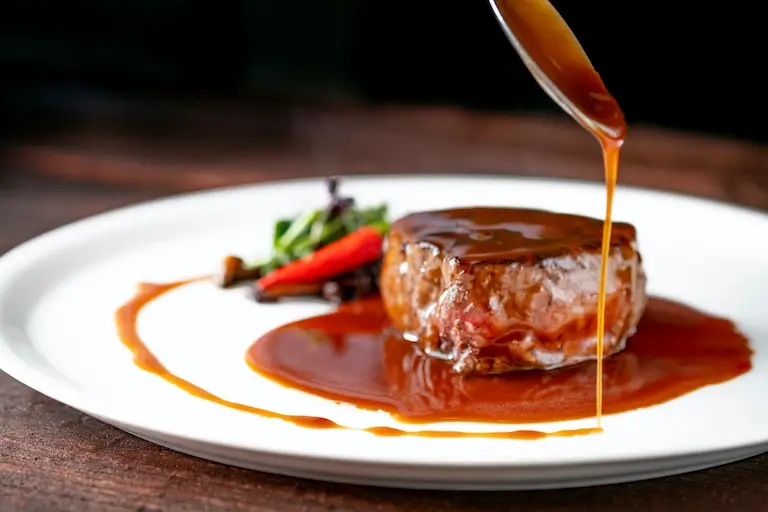
Demi-glace can be served with steaks and other meats or used to build additional brown sauces.
Before we break down the individual sauces, take a look at how these classical families fit together. This family tree highlights some of the best-known daughter sauces, although dozens of other variations exist. As you’ll see, some daughter sauces can even become the foundation for further sauces of their own.
Why Learn Daughter Sauces?
When you learn the daughter sauces, you can start to build an understanding of foundational techniques rather than isolated recipes. A relatively small number of techniques create a much larger repertoire, and that structure teaches cooks to think about many important elements in the kitchen, including balance, consistency, reduction, emulsification, enrichment, and seasoning. It can also give aspiring professionals the classical vocabulary they can encounter in culinary school and professional kitchens.


Take the Culinary Career Survey
We’ve compiled a checklist of all of the essential questions into one handy tool: career options, culinary interest surveys, educational opportunities, and more.
How the Mother Sauces Branch Out
As you build your classical cooking skills, you don’t necessarily need to memorize every daughter sauce at once. Instead, start by recognizing the mother sauce behind each one, the change that creates the daughter sauce, and the dishes where you’re most likely to encounter it. Use this chart as a quick reference as you practice.
Classic Daughter Sauces at a Glance
| Mother Sauce Family | Daughter Sauce | Key Addition or Change | Classic Dishes and Uses |
| Béchamel | Mornay | Gruyère, Parmesan, or another grated cheese | Macaroni and cheese, vegetable and seafood gratins, eggs Florentine, croque monsieur |
| Béchamel | Soubise | Slowly cooked, puréed onions | Veal Prince Orloff, lamb chops, roast chicken, roasted vegetables |
| Hollandaise | Béarnaise | Vinegar-and-wine reduction with shallots, tarragon, and chervil | Steak frites, grilled meats, fish, eggs, asparagus |
| Hollandaise | Mousseline | Unsweetened whipped cream | Poached sole, poached salmon, lobster, scallops, asparagus |
| Hollandaise | Maltaise | Blood orange juice and zest | Asparagus à la Maltaise, artichokes, broccoli, cauliflower, delicate seafood |
| Velouté | Suprême | Reduction and heavy cream | Suprêmes de volaille, poached or roasted chicken, poultry vol-au-vent |
| Velouté | Allemande | Egg yolk-and-cream liaison with lemon juice | Blanquette de veau, poached chicken, eggs, vegetables |
| Velouté | Normande | Shellfish or mushroom cooking liquids with an egg yolk-and-cream liaison | Sole à la Normande, poached sole, turbot, scallops, shellfish |
| Espagnole | Demi-glace | Equal parts espagnole and brown stock, reduced by half | Steaks, veal chops, roast beef, lamb, and the foundation for chasseur, Madeira, and bordelaise |
| Demi-glace, from the Espagnole family | Bordelaise | Red wine and shallot reduction, traditionally finished with bone marrow | Entrecôte à la bordelaise, filet mignon, beef tenderloin, grilled steak, lamb |
| Sauce Tomate | Provençale | Garlic, onion, olive oil, and Provençal herbs | Cod Provençal, chicken Provençal, eggs à la provençale, Mediterranean vegetables |
| Sauce Tomate | Créole | Onion, celery, bell pepper, garlic, herbs, and heat | Shrimp Creole, crab, catfish, chicken, grilled meats |
| Sauce Tomate | Portugaise | Tomato concassé, onion, garlic, and parsley | Eggs à la Portugaise, beef, chicken, fish, vegetables |
Can Daughter Sauces Have Daughters?
Yes! Some daughter sauces can become the foundation for even more variations. Sauce choron, for example, builds on béarnaise with the addition of tomato, creating another branch of the Hollandaise family. In other words, once you learn the foundations, the classical sauce family tree can keep growing.
The sections that follow focus on several of the best-known daughter sauces, but they represent only part of each family. As you explore them, keep an eye out for additional variations listed in each section.
1. Béchamel Daughter Sauces
Béchamel is a creamy white sauce made from milk thickened with a white roux, used on its own in dishes like creamed spinach or lasagna. Because it is neutral and mild, two of its most common daughter sauces take opposite approaches: Mornay adds richness with cheese, while Soubise adds sweetness with onions.
Other sauces in the béchamel family include Nantua, crème, and mustard sauce.
Mornay Sauce
If you love the silky cheese sauce coating a pan of baked macaroni and cheese, you may already be a fan of Mornay. This classic daughter sauce is made by enriching béchamel with grated cheese, traditionally Gruyère, Parmesan, or a combination of the two.
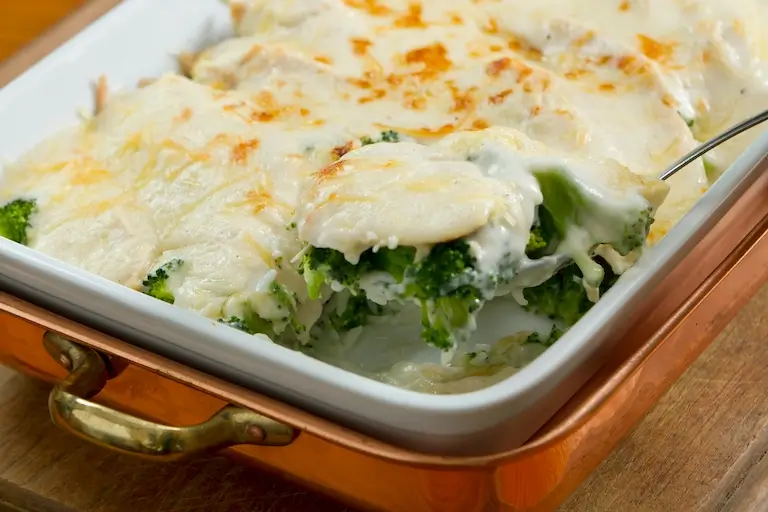
Béchamel enriched with cheese becomes mornay, a classic choice for bubbling vegetable gratins.
The cheese is stirred in once the béchamel is off direct heat, added gradually so it melts smoothly rather than turning grainy or separating. A classical starting point is about 2 to 4 ounces of cheese per cup of béchamel, adjusted to taste and to the thickness a dish calls for.
Mornay is best known as the base for gratins, such as cauliflower, potato, or seafood gratins, and it also shows up in baked vegetable dishes, egg preparations such as poached eggs Florentine, and dishes like croque monsieur, where a thick layer of mornay may be spread over the sandwich before broiling, creating its classic rich, moreish, bubbling, golden-brown top.
Soubise Sauce
If you enjoy the mellow sweetness onions develop when cooked slowly in butter, soubise turns that flavor into a smooth, creamy sauce. This classic béchamel daughter sauce combines the white sauce with tender onions that have been cooked gently without browning.
To prepare the onions, slice them thinly and cook them gently in butter under a cartouche for about 20 to 30 minutes, stirring occasionally, until meltingly soft but still pale. A cartouche, or circle of parchment paper placed directly over the onions, helps retain enough moisture for them to soften without browning.
The cooked onions are then combined with the béchamel and puréed or passed through a fine sieve. Some classical preparations finish the sauce with cream and butter for additional richness.
Soubise is perhaps best known as a component of Veal Prince Orloff, an elaborate preparation that layers the sauce between slices of roast veal alongside mushroom duxelles before coating the entire dish with Mornay. While you may not be assembling Veal Prince Orloff on an average weeknight, soubise can also bring its mellow onion flavor to more approachable dishes such as lamb chops, roast chicken, or roasted vegetables.
2. Hollandaise Daughter Sauces
Rich and buttery with a welcome touch of acidity, hollandaise is a warm emulsion made with egg yolks and clarified butter, typically balanced with lemon juice. By changing its acidic ingredients or adding herbs, citrus, or cream, chefs can take the sauce in several new directions.
Three classic variations you may encounter in the kitchen are béarnaise, mousseline, and maltaise. Additional sauces in the hollandaise family include Choron, Foyot, Paloise, and Dijon.
Béarnaise Sauce
If you’ve ordered steak frites at a French bistro, you may already know béarnaise as the creamy, herb-flecked sauce served alongside it. Béarnaise uses the same warm emulsion of egg yolks and clarified butter as hollandaise, but gains its acidity and distinctive flavor from a reduction of vinegar, white wine, shallots, and herbs rather than primarily from lemon juice.
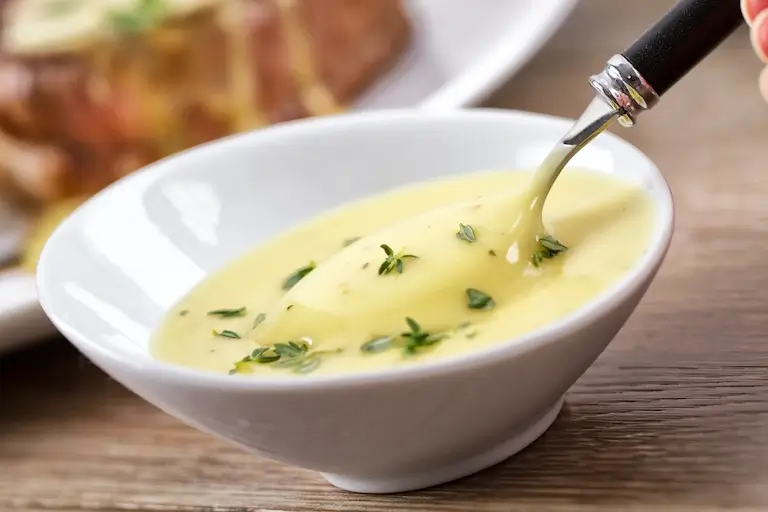
Béarnaise transforms hollandaise with a fragrant reduction of vinegar, shallots, tarragon, and other herbs, creating a classic accompaniment for steak and other grilled meats.
To prepare the reduction, vinegar and white wine are simmered with shallots, peppercorns, and tarragon until the liquid is concentrated. The reduction is strained and whisked with the egg yolks before the clarified butter is gradually incorporated. Fresh tarragon and, traditionally, chervil are added at the end, giving the finished sauce a savory, herbaceous flavor.
Béarnaise is a classic partner for steak and other grilled meats, but it can also accompany fish, eggs, asparagus, and other vegetables.
Mousseline Sauce
Hollandaise may be known for its rich, velvety texture, but folding in whipped cream gives it a surprisingly light and airy finish. Known as mousseline or sauce Chantilly, this daughter sauce preserves hollandaise’s buttery flavor and gentle acidity while giving it a softer, more delicate consistency.
The unsweetened cream is whipped to soft peaks and gently folded into warm hollandaise just before serving. Folding helps preserve the air bubbles in the cream, creating a sauce that feels lighter on the palate even though it remains quite rich.
Mousseline is classically served as sauce mousseline with poached sole, where its airy texture complements the delicate fish. It also appears in preparations such as poached salmon with mousseline sauce, asparagus with sauce mousseline, and eggs Benedict with mousseline in place of traditional hollandaise. The sauce can also accompany lobster, scallops, and other gently cooked seafood.
Don’t Confuse the Two: Mousseline sauce is a savory hollandaise variation. Crème mousseline is a pastry preparation made by enriching pastry cream with butter.
Maltaise Sauce
If you enjoy hollandaise with asparagus, maltaise offers a brighter, fruitier variation on the familiar pairing. This daughter sauce flavors hollandaise with the juice and zest of blood orange, adding gentle sweetness, citrus fragrance, and a subtle rosy hue.
The blood orange juice is stirred into the finished hollandaise, while finely grated or julienned zest intensifies the orange aroma. In classical preparations, the zest may be blanched first to soften its texture and temper any bitterness. The result should retain the richness of hollandaise while allowing the citrus to come through clearly.
Maltaise is best known in asparagus à la Maltaise, where the sauce is spooned over cooked asparagus. It can also accompany artichokes, broccoli, cauliflower, and delicate fish or shellfish.
3. Velouté Daughter Sauces
Velouté begins with a simple pairing: a light stock thickened with a blond roux. But the stock you choose, traditionally chicken, veal, or fish, determines the flavor of the sauce and the daughter sauces it can produce.
Chicken velouté can become suprême, veal velouté provides the base for allemande, and fish velouté can be transformed into normande. You may also come across these sauces in the velouté family: Bercy, vin blanc, poulette, and ravigote.
Suprême Sauce
A well-made chicken velouté is already smooth and savory, but cream and careful reduction turn it into the aptly named suprême sauce. This classic daughter sauce begins with chicken velouté, which is gently simmered to concentrate its poultry flavor before being enriched with warm cream.
As the sauce reduces, some of its water evaporates, intensifying the flavor and creating a fuller consistency. The cream adds richness and softens the savory notes of the stock. Suprême is often strained for an especially smooth finish, then balanced with a little lemon juice and, in some preparations, finished with butter.
Suprême sauce is classically served with poached or roasted chicken, particularly chicken breasts or suprêmes de volaille. It can also accompany turkey, veal, and poultry-filled preparations such as vol-au-vent.
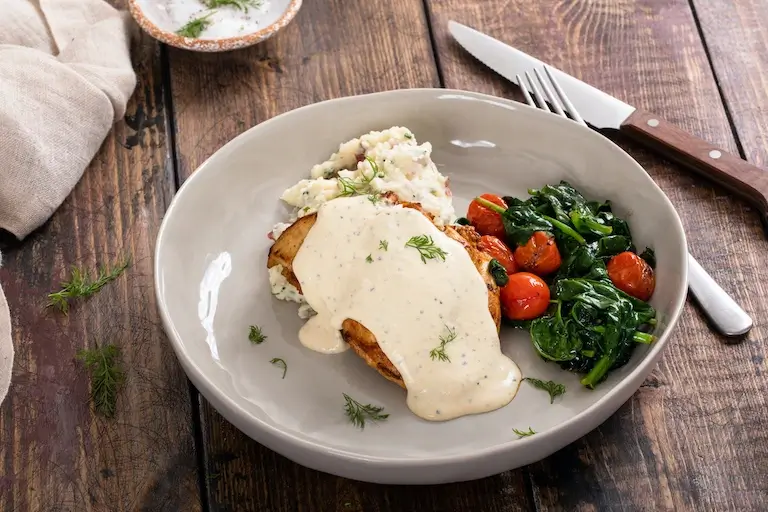
Sauce suprême enriches chicken velouté with cream, creating a smooth, luxurious accompaniment for roasted or poached poultry.
Allemande Sauce
Allemande takes velouté in an especially silky direction. Traditionally made with veal velouté, the sauce is enriched with a liaison of egg yolk and cream, then brightened with lemon juice to balance its richness.
In classical cooking, a liaison is a mixture used to thicken and enrich a preparation. Although this makes allemande slightly more technical than some daughter sauces, the key is simply controlling the temperature. Whisk the egg yolk and cream together, then temper the liaison by gradually whisking in a little hot velouté. Slowly incorporate the warmed mixture into the remaining sauce and heat it gently without allowing it to boil, which could curdle the yolk.
Allemande is classically used with poached chicken, veal, eggs, and vegetables. You may also encounter its flavors and finishing technique in dishes such as blanquette de veau, where a pale veal sauce is enriched with egg yolk and cream and balanced with lemon.
Normande Sauce
Named for Normandy, a region celebrated for both its seafood and rich dairy products, normande brings those elements together in one luxurious sauce. It begins with fish velouté and is enriched with cream and egg yolks, while classical versions gain additional depth from mushroom and shellfish cooking liquids.
These cooking liquids, sometimes called liquors, are the flavorful juices left after cooking ingredients such as mushrooms, mussels, or oysters. Simmering them with the velouté concentrates their savory flavor, while a liaison of egg yolks and cream gives the sauce a smooth, rich finish. As with allemande, the liaison should be tempered and heated gently without boiling.
Normande is perhaps best known as part of sole à la Normande, an elaborate seafood preparation that may pair sole with mussels, oysters, shrimp, or mushrooms before coating everything in the finished sauce. It can also accompany poached sole, turbot, scallops, and other delicately cooked fish or shellfish.
4. Espagnole Daughter Sauces
Unlike the other mother sauces, espagnole is rarely the final stop. Made with brown stock, brown roux, vegetables, and tomato, this deeply savory sauce is typically reduced and refined into other preparations rather than served directly with a dish.
Two important sauces that grow from this foundation are demi-glace and, one branch farther along the family tree, bordelaise. More sauces in the espagnole family include chasseur, Madeira, Robert, and marchand de vin.
Demi-Glace
That glossy, deeply savory brown sauce served with a restaurant steak often begins with demi-glace. In the classical method, demi-glace is made by combining espagnole with brown stock and slowly reducing the mixture until it develops concentrated flavor and a rich, spoon-coating consistency.
Reduction allows water to evaporate, concentrating the flavors of the stock and aromatics. It also concentrates the stock’s natural gelatin, giving demi-glace body and sheen without requiring additional roux. The finished sauce is strained for a smooth, polished texture.
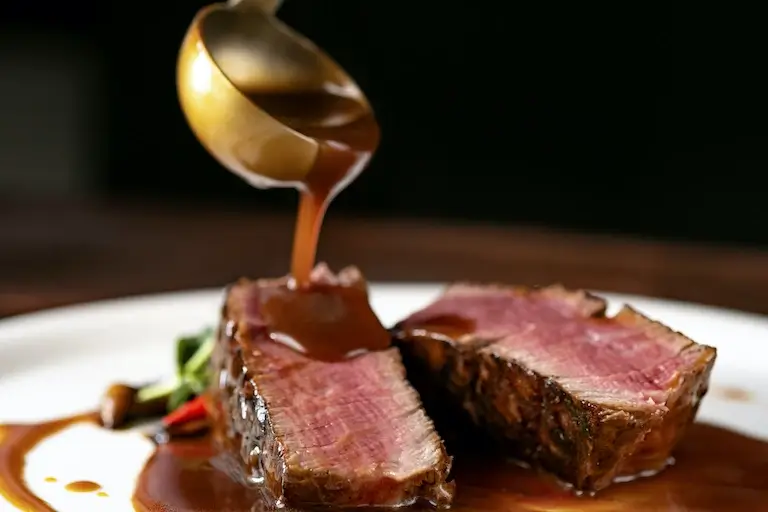
Reduction evaporates water, concentrating a sauce’s flavor while helping it develop body and sheen.
Demi-glace can accompany steaks, veal chops, roast beef, lamb, and other meat preparations. It also provides the foundation for numerous finished brown sauces, including chasseur (mushrooms, shallots, white wine, and herbs), Madeira (Madeira wine), and bordelaise, described below.
Bordelaise Sauce
If demi-glace is built for meat, bordelaise takes the pairing one step further with red wine, shallots, and, traditionally, bone marrow. Named for the Bordeaux wine region of France, this deeply savory sauce is a classic accompaniment to beef.
Red wine is simmered with finely chopped shallots and aromatics such as thyme, bay leaf, and black pepper until reduced and concentrated. Demi-glace is then added to provide body and deepen the savory flavor. Traditional versions are finished with poached bone marrow, which adds richness and a distinctive silky texture.
Bordelaise is best known in entrecôte à la bordelaise, a preparation of rib steak served with the finished sauce. It can also accompany filet mignon, beef tenderloin, grilled steaks, lamb, and other roasted or grilled meats.
5. Sauce Tomate Daughter Sauces
Sauce tomate goes beyond the simple tomato sauces you might spoon over pasta. In classical French cooking, tomatoes are slowly cooked with aromatics and other ingredients to create a deeply flavored mother sauce that can support many variations.
Adding herbs, peppers, onions, garlic, or other regional influences transforms that foundation into daughter sauces such as provençale, créole, and portugaise. Some other variations to look out for in the sauce tomate family include milanaise and piquante.
Provençale Sauce
If you enjoy the flavors of garlic, olive oil, tomatoes, and fresh herbs, provençale sauce brings them together in a distinctly Mediterranean variation of sauce tomate. Inspired by the cooking of Provence in southern France, the sauce builds on the tomato base with garlic, onions, and herbs such as parsley, thyme, or basil.
The onions and garlic are gently cooked in olive oil before being combined with sauce tomate and simmered so the flavors can meld. Some variations also include olives, capers, or additional chopped tomatoes, although these ingredients are not essential to every classical preparation.
Provençale sauce appears in dishes such as cod Provençal, chicken Provençal, and eggs à la provençale. It can also accompany grilled or roasted fish, lamb, poultry, eggplant, zucchini, and other Mediterranean vegetables.
Créole Sauce
If you’ve eaten shrimp Creole, you already know how peppers, aromatics, and a little heat can transform a tomato sauce. In the classical sauce-family framework, créole sauce builds on sauce tomate with onion, celery, green bell pepper, garlic, herbs, and seasonings.
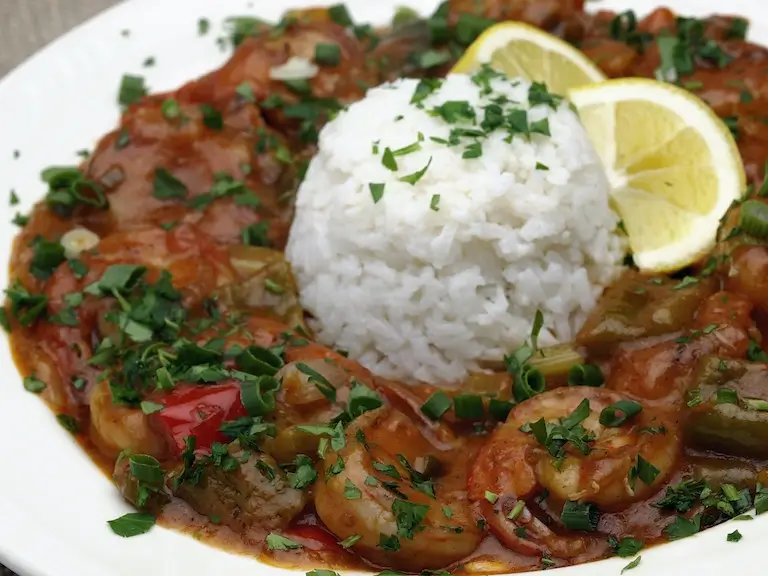
Shrimp Creole showcases how peppers, aromatics, herbs, and seasonings can transform sauce tomate into a vibrant daughter sauce.
Onion, celery, and bell pepper form the aromatic combination often called the Creole holy trinity. These vegetables are gently cooked before the sauce tomate is added, creating a fresher, more textured sauce than the mother sauce alone. Garlic, thyme, bay leaf, cayenne, or hot sauce may provide additional depth and heat, although recipes vary across Creole cooking traditions.
In shrimp Creole, shrimp are simmered directly in the seasoned sauce and commonly served with rice. Créole sauce can also accompany chicken, crab, catfish, grilled meats, and other savory preparations.
Portugaise Sauce
Portugaise puts the tomato itself front and center. The sauce builds on sauce tomate with sautéed onion, garlic, parsley, and tomato concassé, giving it a fresher flavor and chunkier consistency than the smooth mother sauce.
To make it, onions are softened in oil before adding garlic and the tomato concassé (tomatoes that have been peeled, seeded, and roughly chopped). Sauce tomate is then stirred in and simmered gently, finished with a final toss of fresh parsley.
Portugaise is classically featured in eggs à la Portugaise, where cooked eggs and tomatoes are coated with the thick sauce. It can also accompany beef, chicken, fish, and vegetables.

Get the Culinary Education Planner & Checklist
Are you ready to embark on your journey to culinary school? Utilize this planner to craft a clear and actionable educational path.
Branch Out From the Mother Sauces
Learning daughter sauces can help you move beyond simply following individual recipes and start understanding how classical techniques connect. Once you recognize how a foundational sauce can be adapted through reductions, emulsions, enrichments, and other techniques, you can begin to approach cooking with greater confidence and versatility.
At Auguste Escoffier School of Culinary Arts, students can explore foundational cooking techniques while developing the skills and culinary knowledge they may need in a professional kitchen. Ready to keep building your culinary foundation? Contact us today to learn more about our programs and take the next step toward your future in food.