Listen to This Article:
Pastry is visual, tactile, and precise, yet most job applications force you to compress your work into plain text. A resume tells an employer you know laminated dough, but a portfolio shows them your lamination after it leaves the oven.
More than just a collection of pretty desserts, a portfolio can prove your range, consistency, and technique. While a single plated dessert shows you can execute, a whole tray of perfectly matching tartlets demonstrates you can repeat that execution.
Early in your career, this proof could do more for you than your resume. A longer track record eventually speaks for itself, but a portfolio can be your clearest way to show a hiring chef what you’d bring to their kitchen before you ever walk through the door.
What to Include in a Pastry Chef Portfolio
Every element of a pastry portfolio tells a hiring chef something specific. As a general guideline, keep a PDF or printed portfolio to around 8 to 12 pages, or 3 to 4 tabs if you’re building a website. That’s enough space to show your range across each category below, without turning into more than a busy chef has time to get through.
Pastry Chef Portfolio Essentials at a Glance
| Portfolio Element | What It Shows Employers | Example | Suggested Length |
| Professional introduction | Career direction and role fit | Name, current status, target role, short pastry philosophy | 1 page |
| Education, experience, and certifications | Training and kitchen readiness | Degree or diploma, externships, food safety certifications | 1 page |
| Pastry work samples | Range and repeatable technique | Cakes, tarts, breads, chocolate work, photos of matching batches | 3-5 pages |
| Recipe or menu development | Practical creativity | An original recipe or a seasonal menu concept | 1 page |
| Event, production, or specialty work | Real-world execution at volume | Wedding cakes, catering quantities, dietary-specific items | 1-2 pages |
| Digital and physical formats | Professional presentation | A PDF or website for applications, a printed copy for interviews | 3-4 tabs |
1. A Short Professional Introduction
In the introduction, share a quick overview of yourself and your career goals. The depth of your experience will be shared in the sections that follow.
A bakery, a hotel, a wedding cake studio, and a restaurant pastry program are each looking for different skills, and a hiring chef reading your portfolio wants to know within a few seconds whether you’re aiming at what they’re offering.
Include your name and contact information. Then mention where you are right now, whether you’re still in school, just graduated, or already working and looking to move up. Name the type of pastry role that you’re after, too.
Also include a sentence or two about your pastry philosophy. What draws you to this work? What kind of pastry chef are you trying to become? You don’t need a mission statement, but provide enough for a hiring chef to get a sense of who they’d be bringing into their kitchen.
Also include a headshot or professional-looking photo of yourself in your chef’s apron.
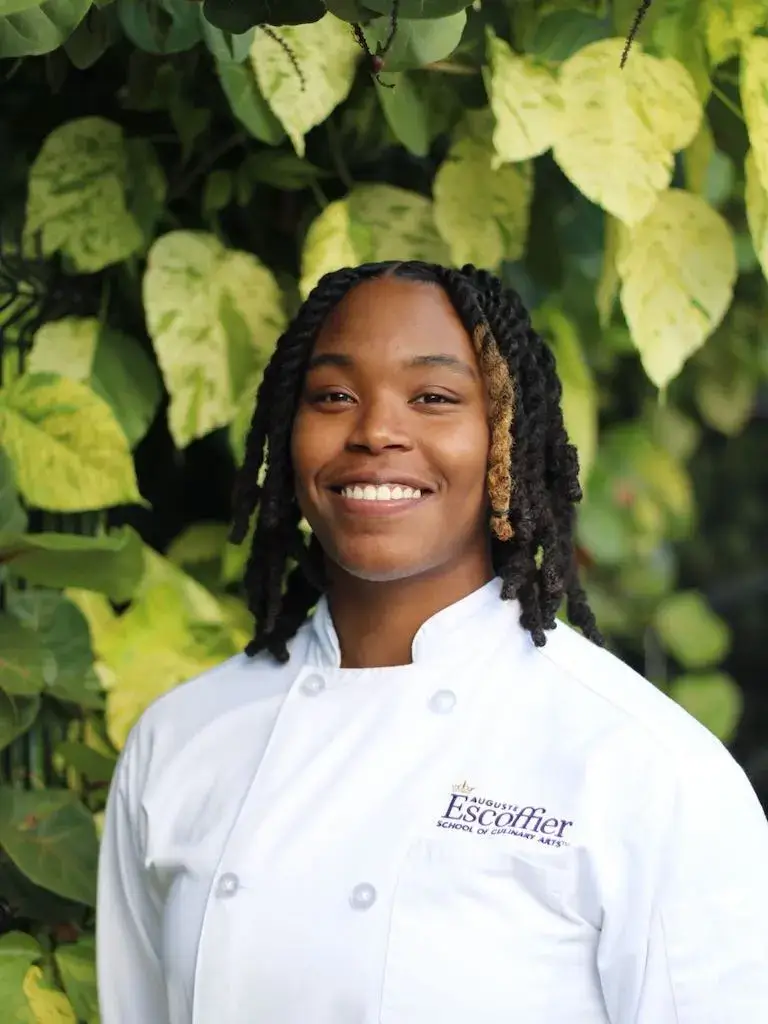
A clear, professional photo like this one helps a hiring chef put a face to the portfolio in front of them.
2. Education, Experience, and Certifications
Instead of a full job history, focus on sharing what’s relevant to pastry and the kind of role you’re applying to.
Your resume shares basic information about your education and experience, such as “Pastry Arts Diploma, 2026” or “Externship, Sweet Leaf Bakery,” but your portfolio allows you to expound upon those experiences. You can include what stations you worked in during your externship or a particular class that you excelled in.
Highlighting your certifications can demonstrate that you already understand fundamental food safety and sanitation, while an externship can prove you’ve already worked under real-time production pressure.
You can also note any specialized pastry training, like chocolate work, sugar art, or cake decorating courses, if it’s not already captured elsewhere in your credentials.
3. Pastry Work Samples That Show Range, Consistency, and Technique
This is the core of your portfolio, so it deserves the most thought. Depending on the kind of role you want, include work such as:
- Cakes
- Plated desserts
- Tarts
- Breads
- Viennoiserie
- Cookies
- Confections
- Dessert displays
Hiring chefs will quickly lose interest in a 50-page portfolio, so stick to your strongest work. If you’re applying to a specialized business, like a custom cake shop, let decorating take center stage, but keep enough foundational pieces to show you’re well-rounded.
For most general pastry roles, showing range is essential; a portfolio full of one specialty may leave a chef wondering if you can handle the rest of the job.
Across every category, employers are usually looking for clean edges, even layers, neat piping, and consistent sizing. While a photo of a single plated dessert highlights your creativity, a tray of identical croissants can prove your reliability.
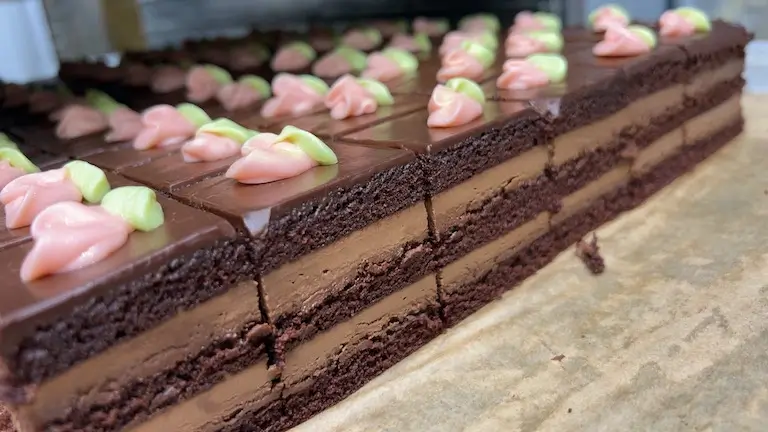
Clean layers, balanced color, and precise piping can demonstrate the kind of detail work a hiring chef is likely looking for. Created by Escoffier graduate Rita D.
4. Recipe Development or Sample Menus
Most pastry roles need someone who can execute recipes, refresh menus, and contribute ideas that fit the business. This section is where you show how you meet those operational needs.
Choose one or two examples of your own concept work, like an original dessert, a seasonal feature, or a sample tasting menu. One fully explained dish can do more work than five rattled off without context.
With each example, explain the thinking behind it. Outline the season it was built for, the flavor pairings you chose, and why it works. A hiring chef wants to know you can think past the recipe itself to consider the menu, the season, and the customer ordering it.
Get the Culinary Education Planner & Checklist
Are you ready to embark on your journey to culinary school? Utilize this planner to craft a clear and actionable educational path.
5. Event, Production, or Specialty Experience
Use this section to showcase your work in weddings, catering, wholesale production, or dietary specialties like gluten-free and vegan desserts. If you’ve managed event delivery or setup, include that here as well.
This section shows a hiring chef how you perform at scale, a critical factor for volume-driven operations like hotels or catering teams. It can demonstrate that the consistency you highlighted earlier holds up under high-volume production.
Briefly describe your exact role and output. If you built a wedding cake, note the guest count, number of tiers, flavors, and decorating techniques. If you prepped a high-volume brunch shift, mention your item counts. Or, if you adapted a standard tart recipe to be gluten-free, explain your process and the result.
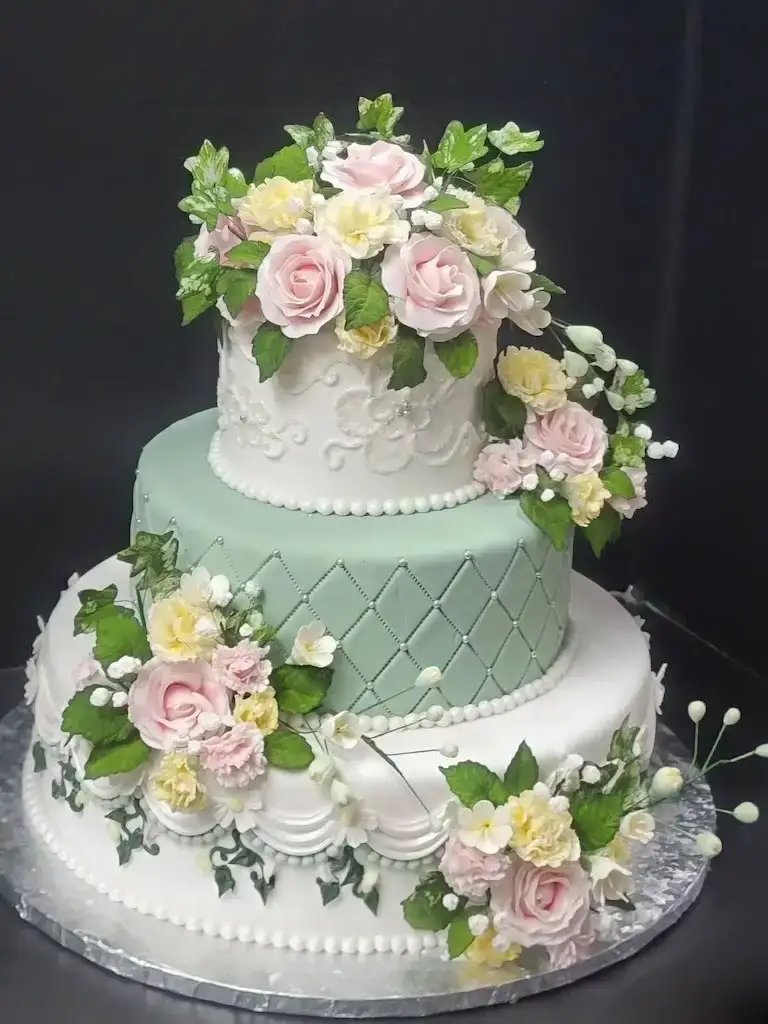
A wedding cake like this can show a hiring chef your ability to handle large guest counts, complex tiering, and detailed decoration.
6. Professional Kitchen Skills
While pastry is a creative discipline, it’s also a business that requires sanitation, cost control, and team reliability.
Beyond that, pastry work comes with distinct operational demands—scaling recipes by weight, tracking high-cost ingredients like butter and chocolate, and managing strict timelines for overnight proofing or event prep.
Include a brief section, or add notes to your photo captions, to highlight your experience with food safety, inventory, ordering, opening and closing duties, or staff training.
A few clear lines of text are all you need. The point is to show a hiring chef that you understand and respect the operational realities of a working kitchen.

Digital vs. Physical Pastry Portfolio
You’ll likely want to create both a digital and a physical version of your culinary portfolio.
A digital portfolio can work best for online applications, emailing a hiring chef directly, or linking from a resume. It’s also the easiest version to keep current, so you can swap in new images as soon as you finish baking. A PDF, a simple website, or a well-organized Google Drive folder can all work well.
A physical portfolio can be useful for interviews, career fairs, or externship meetings, where handing someone a book they can flip through can make a stronger impression than pulling up a link.
How to Photograph and Document Pastry Work
A few adjustments to lighting, angle, or plating can make the difference between a dessert that looks flat and one that captures its true texture and sheen.
Quick Tips for Photographing Pastry Work
- Use natural light when you can. Avoid harsh flash.
- Keep the background clean so nothing competes with the food.
- Get close enough to show texture: crumb structure, layers, glaze, piping.
- Photograph more than one angle. A whole cake and a sliced interior tell different parts of the story.
- Show wide shots for scale and close-ups for finishing detail.
A caption should guide the hiring chef through details a photo alone can’t convey.
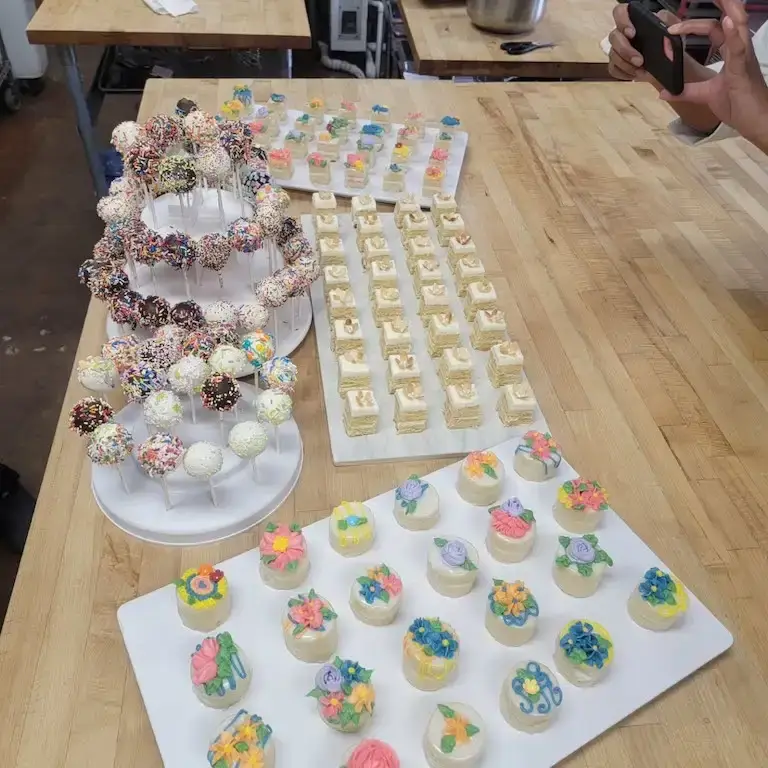
Photographing a full batch, like these cake pops and decorated cookies, shows a hiring chef you can produce consistent quality across dozens of pieces. Created by Escoffier Baking & Pastry student, Ruby F.
How to Tailor a Pastry Portfolio to the Job
A portfolio built for a wedding cake studio should look very different from one built for a hotel banquet department. A cake shop wants to see detailed design work up front, while a banquet chef looks for volume and consistency. Lead with the skills that matter most to that specific business so the hiring chef sees what they need right away.
What to Lead With, by Role
| Role | Lead With |
| Restaurant Pastry | Plated desserts, seasonal concepts, service-ready presentation, collaboration with the culinary team |
| Bakery | Breads, cookies, cakes, tarts, breakfast pastries, batch production, bakery case presentation |
| Hotel or Resort | A range of banquet desserts, plated desserts, displays, production planning, event experience |
| Wedding or Event Pastry | Cake decorating, custom designs, tastings, mini desserts, dessert tables, delivery and setup, client communication |
| Entry-Level Pastry Cook | Fundamentals, clean execution, school projects, externship work, food safety, reliability, willingness to learn |
Tailoring doesn’t mean building a new portfolio for every application. The order changes, but the core work stays the same.
For a bakery job, your bread and batch production photos might open the portfolio instead of sitting in the middle. For a wedding cake role, your custom decorating work moves to the front. The rest of your portfolio, including the range, the consistency, and the background, remains unchanged.
Common Pastry Portfolio Mistakes to Avoid
Beyond basic clutter or poor organization, the biggest mistake you can make in a portfolio is misrepresenting your actual skill level.
Adjusting exposure or lighting so a dish is clearly visible is completely fine, but avoid heavy filtering, AI generation, or manipulative editing.
In pastry, visual cues—like the sheen of tempered chocolate, the color of caramelized sugar, or the foot of a macaron—signal technical accuracy. Over-edited photos obscure the details a hiring chef is trying to evaluate, and generating fake imagery destroys your professional credibility before you even enter the kitchen.
A few other missteps can undercut an otherwise strong portfolio:
- Overstating your role in a project you didn’t lead
- Using an unpolished or personal social media account.
- Including work that doesn’t match the job you’re applying for
- Forgetting to update your portfolio before sending it out
- Including 30 variations of the exact same cake or cookie technique.
How to Enroll in Escoffier: Get the Essential Guide
Attending culinary school is a major decision! In this one-stop guide to Escoffier, explore what makes our school different, programs you can study, how to enroll, pay for your education, and more!
How Escoffier Career Services Can Help
Career Services is there to help, whether that means talking through your photo choices or just helping you stay on track.
“You are never alone,” says Online Baking & Pastry graduate Joyce Brown. “You also have great help from the success coaches, tutors, and career services.”*
Escoffier’s Career Services team works with students and graduates on job-search materials, including resumes, externship support, and help building a Customized Marketing Portfolio, or CMP: a package designed to present your skills clearly to potential externship hosts and employers.
Building Your Portfolio, One Piece at a Time
A pastry chef portfolio takes time to build, growing alongside your skills one project, one event, one recipe at a time. While a resume lists past job titles, a portfolio gives a hiring chef direct visual proof of your range, consistency, and technique.
Beyond the job search, the assembly process offers you the opportunity to see your work gathered into a complete collection, revealing what you’re capable of, sometimes before you’ve realized it yourself.
Developing those job-ready materials is an integral part of formal culinary training. Escoffier’s Career Services team works with students and graduates on job-search materials, including resumes, externship support, and help building a Customized Marketing Portfolio, or CMP: a package designed to present your skills clearly to potential externship hosts and employers.
Whether you’re just starting out or looking to formalize years of kitchen experience, building a professional portfolio begins with sharpening your foundational skills. Contact us to discuss how structured training and career guidance could help you turn your passion into a job-ready showcase.
INTERESTED IN LEARNING MORE ABOUT A BAKING AND PASTRY CAREER? READ THESE NEXT:
- How to Write a Chef Resume
- What Are the Career Opportunities in Baking and Pastry?
- How You Can Become a Pastry Chef
FAQs
Update it after any major school project, externship, competition, or event, and any time you’re preparing to apply for a new role. It’s also worth replacing older or weaker work as your skills improve, so your portfolio always reflects your current skill level rather than where you started.
Not always, but it can be an advantage, especially for specialty roles like wedding cake studios, high-end bakeries, or freelance pastry work. A portfolio gives a hiring chef a clearer sense of your skill and style than a resume alone, which can matter more in a visual, detail-driven field like pastry.
As early as possible. Start photographing your work from your first pastry class, and keep documenting through externships, competitions, and any professional experience along the way. Building this habit early can mean you’ll have a stronger, more complete portfolio ready by the time you’re job hunting.
You don’t need a professional photographer to build a strong portfolio. Good natural lighting, a clean background, and a steady hand with your phone camera can go a long way. Focus on capturing your work clearly and consistently, since a well-lit photo you took yourself often works better than a poorly lit one taken by someone else.
There’s no exact number, but quality matters more than quantity. A focused selection that shows your range, consistency, and best work will usually serve you better than an exhaustive collection. If you’re unsure, aim for enough to cover a few different categories without repeating similar items multiple times.