
What baker doesn’t want a line out the door upon opening and an empty case by 10 a.m?
While that may feel like success, it also exposes a ceiling on your business. You can always bake more, but you’re still only able to sell your baked goods to whoever happens to walk in that day.
Sales don’t have to stop at your counter. Just beyond your front door, office managers need breakfast for team meetings, grocery shoppers want your branded bags on store shelves, and out-of-state fans are waiting to order your cookies online.
With the right distribution channels, you can grow your revenue significantly without needing a bigger kitchen or a second location.
This guide covers seven ways to sell beyond the counter, outlining what it takes to launch each one and which bakery types tend to thrive with them.
How to Know Which Channel Is Right for You
Each bakery needs a distribution channel tailored to its unique strengths and stage of growth. A cottage bakery with no storefront is in a very different position than a bakery with three years of steady retail traffic behind it.
Before picking a direction, take an inventory of your current setup:
- Can your kitchen handle a second, larger production run on top of your daily retail bake?
- Do you have the staffing for custom orders, or is your team already at capacity?
- Is your cash flow steady enough to float front-end costs until wholesale invoices are paid?
Seeing where you stand today can give you the clear picture you need to choose your next step and prepare for the ones after that.
Distribution is just one piece of growing a bakery. If you’re also thinking about production efficiency, staffing, or getting a better handle on your finances, our guide to scaling a bakery covers that ground too.
To help you weigh your options, here’s how seven of the most common channels compare at a glance.
| Channel | Best Suited For | What It Can Take to Start | Real-World Example |
| Wholesale | Bakeries with spare production capacity and one or two standout, transportable products | A repeatable production schedule, food safety/labeling compliance, and cash flow to cover the payment lag from wholesale accounts | King’s Hawaiian |
| Licensing | Established bakeries with a recognizable product, signature recipe, or brand name | Legal agreements protecting your recipes or brand, plus clear quality standards for licensees | Cinnabon |
| Subscription Services | Storefront or cottage bakeries with shippable products seeking predictable recurring revenue | Packaging and shipping logistics that preserve freshness, plus a subscription platform | Milk Bar’s First Bite Club |
| Online Sales | Bakeries with shelf-stable or shippable products and a strong visual brand | High-quality product photography, reliable packaging/shipping, and compliance with cottage food laws for interstate sales | Levain Bakery via Goldbelly |
| Strategic Partnerships | Bakeries looking to grow visibility without heavy capital investment | Finding a complementary partner business with an aligned customer base and brand positioning | Blue Bottle Coffee and Sugarbloom Bakery |
| Catering | Bakeries with staffing flexibility for irregular, large-volume orders | Flexible staffing schedules, dedicated ordering systems, and pricing structured for customization and delivery | Panera Bread |
| Franchising | Bakeries with a proven, well-tested brand and operating system | Franchise disclosure documents and systems for quality control across locations you don’t directly manage | Great Harvest Bread Co. |
1. Wholesale
Wholesale involves baking larger quantities to sell to other businesses—like cafes, restaurants, grocery stores, or specialty shops—who then resell them to their customers. It can be an ideal expansion strategy if you have a few reliable bestsellers that are easy to bake in high volume.
Robert’s Bakery in Hilo, Hawaii, opened its doors in 1950 selling Portuguese sweet bread. The bread quickly became popular, and owner Robert Taira eventually turned the bread into rolls and expanded through multiple channels, including selling products through the supermarket. The company rebranded, grew to multiple manufacturing sites, and is now a product many Americans consider part of their holiday meal—King’s Hawaiian rolls.
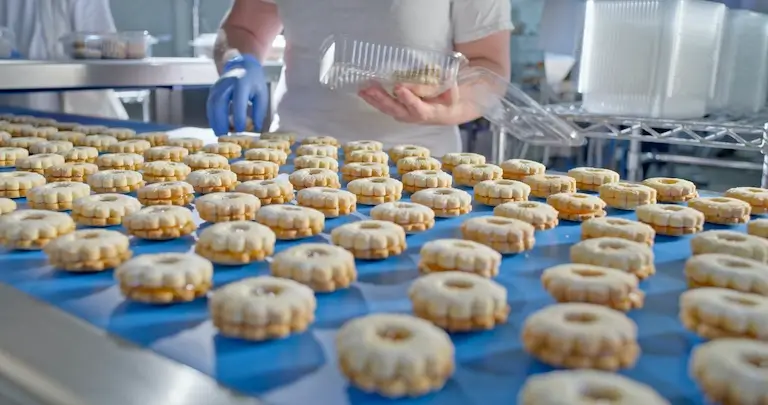
Wholesale means scaling up production to meet demand from other businesses, not just your daily counter traffic.
Pricing Wholesale Without Cutting Yourself Short
When pricing for wholesale, remember that you’ll need to leave room for the seller to make a profit as well, which often leads to thinner margins that are made up for through volume.
Keystone pricing is a common baseline in retail where the final price is set at double the wholesale cost (though actual margins can vary depending on the retailer). Under standard keystone pricing, if your cookies retail for $18 a dozen, the retailer will expect to buy them from you for $9. Before offering that rate, audit your labor and ingredient costs to make sure a $9 wholesale price still leaves you with a healthy profit.
You’ll also want to account for the lag time that typically comes with wholesale payments. While you may be able to work out a contract for prepayment, it’s also normal for payment terms to be net 7 days all the way up to net 60 days. So you’ll want to ensure you have the budget to cover continued operating expenses while you wait.
Get the Baking & Pastry Career Plan & Checklist
Aspire to be a pastry chef or baker? Use this 10-step checklist that includes a 90-second career assessment quiz and resume template to take the next step!
2. Licensing
With licensing, other businesses pay to make and sell your signature products under your brand name, expanding your reach without adding to your daily kitchen operations. Franchising, on the other hand, sells a full business model. A licensee pays to put your frosting on their snack cake; a franchisee pays to open an entire copy of your bakery.
Licensing tends to work best for bakeries with a recognizable name, like Cinnabon.
In 2001, the company had no licensing program. It sold products through mall kiosks and airport locations. Since becoming a global licensor, the Cinnabon name (and signature cinnamon) is used in more than 70 products through partnerships with companies such as General Mills and Kellogg’s. Cinnabon isn’t running any of the locations producing those products.
Protecting Your Brand Before Licensing
Licensing puts your brand name on something you aren’t baking yourself, making quality control critical to protecting your reputation. You’ll want a legal agreement that clearly outlines quality standards and consequences if those standards aren’t met, so be sure to consult an attorney before signing an agreement.
It’s also important to set realistic timeline expectations. Licensing income tends to build more slowly than other channels, and success hinges on finding the right strategic partner rather than jumping at the first offer.
3. Subscription Services
A subscription box, club, or membership program turns one-time buyers into recurring revenue, with customers paying on a set schedule in exchange for regular deliveries or ongoing perks. It can help you predict how much you need to bake instead of estimating what walk-in customers will want to order each day.
This channel can work well for both traditional and cottage bakeries, since it doesn’t require a storefront, but it does depend on having products that ship well or hold up over a few days.
Members of Milk Bar’s First Bite Club get early access to new desserts straight from Milk Bar’s development bench, months before the products are on the regular menu. The program sold out within a few days of launching. The subscription club provided a reason for loyal customers to join while creating a way for the bakery to test new products.
Getting the Timing of Subscriber Engagement Right
Running a subscription or membership program means you need to be able to package and ship products so they stay fresh. You’ll also need a platform to handle recurring orders and billing.
Research shows subscription programs can increase how much customers spend, but keeping a subscriber engaged over time is a different job than selling them a single product. How and when you ask subscribers to engage with a box, not just whether they engage, can affect whether they stick around and keep spending.
4. Online Sales
Selling online can expand your customer base beyond your local footprint. Back in 1995, a giant chocolate chip walnut cookie at Levain Bakery in New York’s Upper West Side became so popular that people lined up around the store to buy them. Levain has since built a nationwide shipping model around baking fresh and shipping same-day so your baked goods arrive ready to eat. The bakery has also expanded into branded merchandise like cookie jars, candles, and apparel.
This can be a viable option for bakeries that have shelf-stable, shippable products like cookies, breads, and packaged goods. A strong brand and high-quality photographs can play an important role in bringing in sales since online buyers can choose from companies in any location instead of the bakery on the corner.

A strong, well-lit photo can be the difference between a scroll-past and a sale.
Online sales can also be a great option to grow a cottage bakery since it doesn’t require you to have a storefront. If you start selling online across state lines, check your state’s cottage food law to see if it restricts or prohibits sales outside your state, and consider speaking with an accountant about any tax obligations that come with selling in multiple states.
5. Strategic partnerships
A partnership allows you to work with a complementary business to expand your reach together, without combining your operations.
Blue Bottle Coffee and San Francisco’s Tartine Bakery once explored a merger that would have put Tartine’s bread in Blue Bottle’s cafes. They called it off, deciding it was better for both companies to stay separate. Sugarbloom Bakery found a different way in. Instead of merging with Blue Bottle, the bakery partnered with them to put its pastries into Blue Bottle’s cafes. They focused on choosing items that paired well with different coffee varieties.
Other complementary businesses could include a gift shop or event venue. You could also co-brand products with another company, form a referral arrangement, or share marketing, all while keeping your business independent.
If you’re looking to build brand awareness without a heavy upfront investment, this growth channel can be a good fit, especially if you’re the kind of bakery whose customers already know the coffee shop next door or the florist down the street.
Finding a Partner Worth the Effort
When choosing a partner, look for a business with a customer base and brand positioning that aligns with yours, not just any business willing to say yes. This channel is usually more about visibility and customer acquisition than direct sales volume, so decide upfront what success looks like, whether that’s referral traffic or co-branded sales.
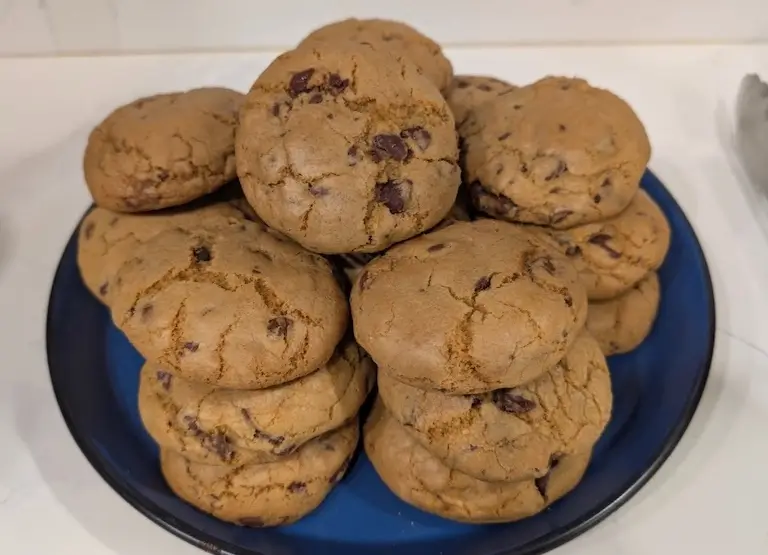
Getting your cookies into a local coffee shop’s case can be a relatively low-risk way to grow alongside another independent business.
6. Catering
Catering can be as simple as dropping off a tray of bagels for a Tuesday morning meeting, or as involved as running a full event with a custom menu, delivery, and setup included.
It can work well if you’re comfortable talking directly with customers about what they need, when they need it, and how it’s getting there, and if your kitchen can flex for orders that don’t follow your usual daily rhythm.
Panera Bread added catering by building a dedicated online ordering option with same-day delivery available. They made catering fast and easy enough to become a real channel instead of an occasional request.
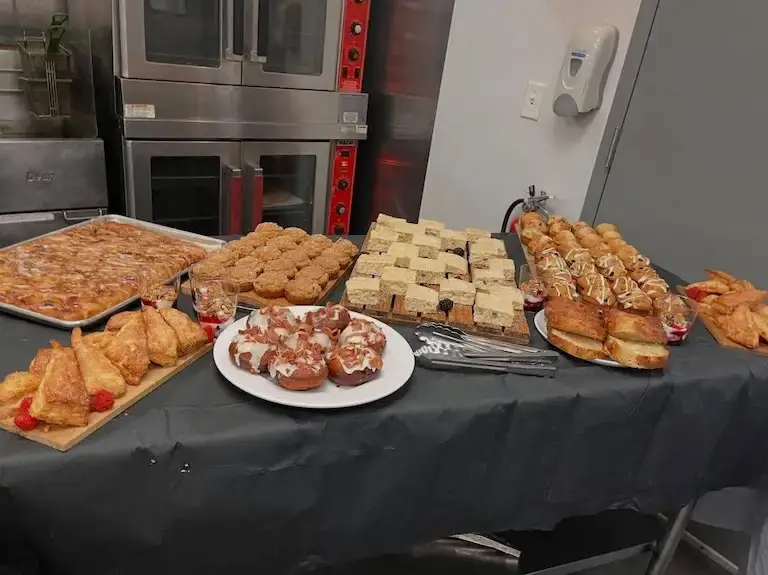
A well-set spread can turn a one-time order into a repeat customer.
Staffing and Pricing for Uneven Catering Demand
Catering orders can be unpredictable and run on a different schedule than your regular bakery counter business. It may be quiet for weeks, and then several events can happen in the same weekend, which means you’ll need staff who can flex with that rhythm instead of a fixed daily schedule built only around counter traffic.
Account for the additional expenses that can come with customizing and delivering orders when pricing your services. It can also help to start slowly as you learn how much catering volume you can handle at once. Taking on too much at one time could strain your staff while they continue to work on the normal daily bake.

Get the Home-Based Bakery Guide
Ready to kickstart your flexible food venture from the comfort of home? Discover secrets to pricing, social media marketing, and more in this guide to launching your home-based bakery!
7. Franchising
Franchising allows others to open and operate new locations of your bakery using your established business model, branding, and recipes.
Great Harvest Bread Co. is a classic bakery franchise model. Pete and Laura Wakeman were newlyweds fresh out of college when they opened the original location in 1976 in Great Falls, Montana, sourcing wheat from local farms and milling it fresh daily.
Two years later, the company began franchising and has now grown to more than 150 locations across the country. Each franchisee comes to the headquarters to learn about the company before opening their own location.
What You’re Signing Up For
Franchising comes with legal and financial complexity. Clear franchise disclosure documents can help you maintain quality control across locations. Talk with both an attorney and a financial professional before you move forward since this channel involves business formation and investment decisions with financial stakes.
Moving from Baker to Business Owner
You don’t have to pick a single distribution channel and stick with it forever. The most successful bakeries often combine channels over time, perhaps starting with online sales to test demand, expanding into wholesale as production capacity grows, and adding catering once staffing allows.
The right starting point simply depends on what your kitchen, team, and cash flow can support. Whichever path you choose first, give it room to establish traction before layering on the next.
However, running a bakery well and scaling one are two different skill sets. Expanding beyond the counter means refining true portion costs, managing cash flow through payment lags, and building systems that keep operations running smoothly.
A formal culinary education could make all the difference. Depending on your selected program, Auguste Escoffier School of Culinary Arts, offers coursework in business planning, inventory control, management, and digital marketing, giving you the practical tools to transition from hands-on baker to confident business owner.
Contact us to find out more about how Escoffier’s programs can give you the numbers, systems, and support to grow your bakery with intention instead of guesswork.
READY TO LEARN MORE ABOUT RUNNING A FOOD BUSINESS? CHECK OUT THESE ARTICLES NEXT!
- Food Entrepreneurship 101: Succeeding as a Culinary Business Owner
- How to Start a Food Business from Home
- The Ultimate Guide to Starting a Home-Based Catering Business
FAQs
No. You may start with one channel, like online sales or wholesale, and add others once production capacity and staffing allow. The right combination depends on what your bakery makes, how much you can produce, and how much support you have on hand. There’s no rule that says you have to pick just one and stick with it.
Look at your current production capacity, staffing flexibility, and cash flow before adding anything new. Can your kitchen handle extra volume on top of your daily bake? Do you have staff who can take on custom orders? A channel that adds meaningful revenue without straining what you’re already doing is usually a good sign it’s the right next step.
Online sales and subscription boxes can be good distribution channels for cottage bakeries because you don’t need a storefront. Check your state’s cottage food law before selling across state lines. Some states restrict interstate sales for cottage-licensed businesses.
Try starting small before taking on a big catering event. Starting with a standing order, like weekly office pastries, can help you test how catering fits in your schedule. Keep a simple system for tracking orders separately from your daily bake list, and set a clear cutoff for how much advance notice you need.