
Listen to This Article:
You’re standing in your kitchen at midnight, scrolling through pastry videos on your phone while a batch of sourdough starter bubbles on the counter. Maybe you’ve been dreaming about opening your own bakery for years, or you’re already working in restaurants but feel drawn to the artistry of pastry. Perhaps you’re completely new to the culinary world but can’t shake the feeling that this is your calling.
Whatever brought you here, you may be wrestling with the question of whether you really need a degree in baking and pastry arts. Maybe you’re thinking formal education might be a detour and that you could be earning money now and building on-the-job experience instead.
But consider this: a degree goes beyond learning to bake. It can also help position you to thrive in a competitive field.
A Baking and Pastry Degree May Help You Compete for Better Jobs
According to the federal Bureau of Labor Statistics, employment for bakers is projected to grow 6% through 2034, while ZipRecruiter reports an average annual income of $52,042 for pastry chefs (as of January, 2026).
If you want to compete for a career in this field, here’s another important figure from ZipRecruiter: about three-quarters of pastry chefs have a degree, with 49% holding an associate degree specifically.
Together, these numbers point to a field that’s growing—but also becoming more competitive.
A Baking and Pastry Degree May Help Fast-Track Career Advancement
Chris Puga knew that he wanted to be a chef from a young age. He enrolled in community college in El Paso, Texas, but found the program didn’t expand much beyond what he’d already learned in his vocational high school program. On top of that, the pay for executive chefs in his hometown was well below the national average. Chris realized that if he wanted to advance beyond his limited local opportunities, he needed to make a big move.
His decision to enroll in the Baking & Pastry Arts program at Escoffier’s Boulder campus paid off. Chris landed a role as executive pastry chef at the Omni Hotel in Dallas soon after graduation, and he didn’t stop there. By the age of 28, Chris had achieved his goal of becoming a food and beverage director—17 years ahead of his original timeline.
“I graduated [from] Escoffier, and I told myself I want to be a food and beverage director by the time I’m 45,”* Chris said.
He took every opportunity outside of class to connect with his peers and Chef Instructors, and his Escoffier degree and the experience Chris gained while attending school helped him change his career trajectory.
*Information may not reflect every student’s experience. Results and outcomes may be based on several factors, such as geographical region or previous experience.
Develop Technical Skills and Discover the Science of Baking
“I can just learn on the job” is sometimes a common misconception about culinary education. Although you can learn basic techniques on the job, that’s different from understanding how butter temperature affects texture or how altitude changes rise times.
Wes Duckworth, a self-described “hardcore sugar addict” who had always loved cookies, thought he understood baking when he enrolled at Escoffier. But the program opened Wes’ eyes to something deeper.
“Escoffier really teaches you the science behind food,” he said. “You understand what each component does down to the molecular level. It’s a lot easier to change recipes or figure out how it’s going to work because baking is chemistry. It’s just knowing what those ingredients are going to do.”*
*Information may not reflect every student’s experience. Results and outcomes may be based on several factors, such as geographical region or previous experience.
Classical Techniques Meet Modern Innovation
Escoffier programs cover classical French techniques as well as contemporary approaches. Imagine practicing the art of creating airy pâte à choux that puffs into perfect cream puffs, or honing the precise folding technique to create buttery, flaky layers in croissants. You can also explore modern plating techniques that could turn desserts into visually striking, Instagram-ready presentations.
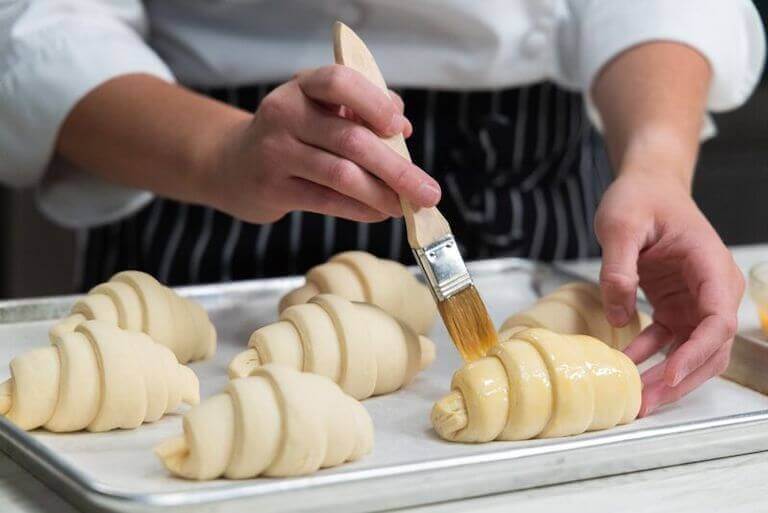
A pastry student carefully brushes egg wash onto shaped croissant dough, demonstrating the precision required in classical French baking techniques.
This comprehensive approach can help you work confidently in a variety of environments, from traditional French patisseries where every éclair must be just right to cutting-edge restaurants where chefs experiment with liquid nitrogen and unexpected flavor combinations.
“I can pretty much make anything,” Wes said of his post-graduation confidence. “I have really good core recipes that I can kind of tinker with. Most flavors, I can at least get a good version of it the first few tries.”*
*Information may not reflect every student’s experience. Results and outcomes may be based on several factors, such as geographical region or previous experience.
Business Skills Can Help Pastry Professionals Stand Out
Technical skills can help get you in the door, but business knowledge may help you advance. Whether you dream of running your own bakery or climbing the ranks in established restaurants, understanding the business side can separate successful pastry professionals from those who plateau at entry-level positions.
Technical skill and business knowledge don’t always develop together. Without those business fundamentals, even talented pastry professionals can struggle to stay profitable. And an employer may value a team member who knows how to calculate profit margins or who can suggest ideas to save on costs.
Escoffier’s Baking and Pastry curriculum can include business topics like cost control, menu design, legal compliance, and entrepreneurship. You can also explore food safety regulations, how to accurately calculate food costs and pricing, and discover how to manage inventory and reduce waste.
Gain Experience and Build Connections
If you’re entering the field without restaurant experience or making a career change, Escoffier’s externship program can provide hands-on industry experience in a professional kitchen or foodservice establishment. Online students, like their campus counterparts, are required to complete one or two externships based on their program requirements.
With a PhD in architecture, Marc Mole was starting fresh when he enrolled in Escoffier’s online program. His externship at a French bistro under Chef Francis Layrle gave him professional kitchen experience while he completed his studies.
“At 45, I thought to myself, if I don’t do it now, I will never do it,” Marc said. That externship led to a job offer, where he worked for two years before eventually opening his own restaurant in England.*
Cassie Wallace pursued a career in early childhood education before deciding she needed a change. While working as a barista at Starbucks, Cassie found herself continually baking at home and bringing her baked goods to co-workers. Cassie finally decided to make a career of it and enrolled in Escoffier.
Cassie completed her externship at The Mixing Bowl Bakery in Richmond, Virginia, landed a job at another bakery shortly after graduation, and started a cottage industry baking business on the side.
“Find your niche,” she said, “because if you find that niche, you’ll go places. I found my passion, and I was able to leave my old job… Now I’m living my best life. Play to your strengths, because you will succeed in life.”*
*Information may not reflect every student’s experience. Results and outcomes may be based on several factors, such as geographical region or previous experience.
Professional Networks Can Influence Career Opportunities
In baking and pastry, opportunities often grow out of real-world experience and the connections formed along the way. Suhalia Gant experienced this firsthand when her externship at a local patisserie led to a permanent position. Her Escoffier background also helped her gain acceptance to École Ducasse in Paris for advanced training.
“It was invaluable,” Suhalia said about studying in Paris. “It just showed me how valuable my education at Escoffier was. When I got there, I had the background knowledge that I had from being online at home, and also I had the six weeks at my patisserie.”*
*Information may not reflect every student’s experience. Results and outcomes may be based on several factors, such as geographical region or previous experience.
Escoffier’s experienced Chef Instructors can become mentors, and you may also enjoy connecting with other graduates through our Alumni Association. This can be helpful when looking for professionals to collaborate with or when searching for a job.
Flexible Options for Any Stage of Life
Escoffier’s programs are designed to be flexible; approximately 15-23 hours per week is spent on school related activities depending on program, credential and personal pace.
The online culinary curriculum at Escoffier includes live and archive video class sessions, cooking demonstrations, reading assignments, cooking theory lessons, and hands-on cooking assignments. As long as students meet their weekly program deadlines, they can complete this coursework whenever it’s convenient for them.
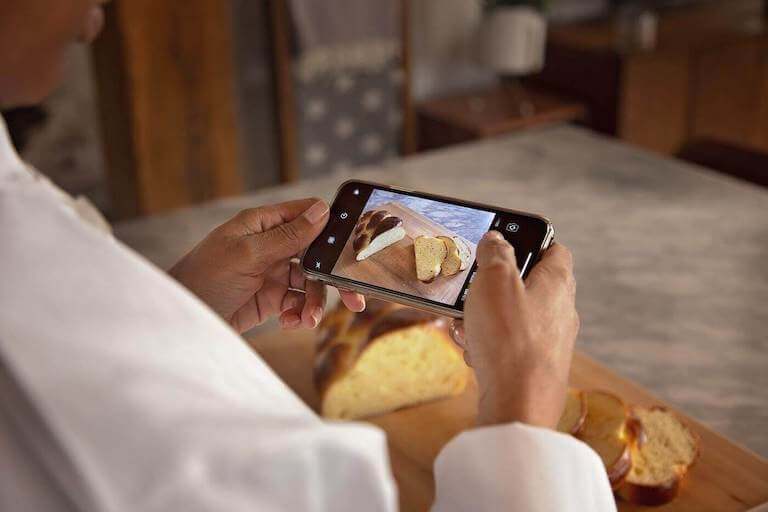
Escoffier’s online format allows students to practice baking techniques at home while maintaining their current responsibilities, making culinary education accessible for working adults.
While Marc Mole attended school, he balanced his classes while caring for his wife, who was undergoing cancer treatment. Suhalia completed her program while taking care of her stepchildren and transitioning from her fitness career. Chris made his move from Texas to Colorado knowing he had the flexibility to focus on his studies without overwhelming time commitments.
Invest in Your Future Self
A baking and pastry degree can support long-term career development, not just skill building. It can also create space to develop confidence and professional relationships.
From opening your own bakery to working in world-class restaurants, a degree can provide the foundation to turn passion into a profession.
Ready to take the next step? Contact us to find out more about how our Baking & Pastry Arts program works and how it could help you.
INTERESTED IN LEARNING MORE ABOUT BAKING AND PASTRY ARTS? READ THESE ARTICLES NEXT:
- What Are the Career Opportunities in Baking and Pastry?
- Commercial Baking: A Guide to Scaling Your Bakery Business
- Confectionery Arts: The Sweet Side of Baking & Pastry