
Listen to This Article:
You’ve reached a hard-earned milestone: you opened a food business, and it’s going well. So well, in fact, that you’re starting to think about adding a second location. But how do you know when the timing is right?
Your experience as a business owner can give you a real advantage. You’ve already navigated startup decisions, financial uncertainty, and the day-to-day realities of running a business. Still, expanding beyond a single location isn’t a simple repeat of what worked the first time.
Growth brings new demands—different systems, higher capital needs, and a shift in how you lead and manage your team. But with the right preparation and strategy, expanding may be the next right step to grow your business.
Below, we’ll look at the factors that can help you decide when expansion makes sense and how to approach it.
Is Your Food Business Ready for Another Location?
You’ve already proven that your concept works. You probably have a loyal customer base and are connected within your local community. That’s a big accomplishment, but it doesn’t always mean the business is ready to expand.
If you open another location, you’ll need to find and train new staff, secure licenses and approvals, and manage the build-out. Although you’ve been through many of these steps before, opening a new location means doing it again while also keeping an existing business running.
So before you sign a second lease or start scouting spaces, take an honest look at three critical areas of readiness.

Expanding a food business takes strategic planning and operational focus.
1. Is Your Business Financially Prepared to Expand?
Your business needs to be able to fund, survive, and stabilize a second location without putting the first one at risk.
This can include:
- Consistent positive cash flow and profitability
- Cash reserves to help keep both locations running while the second becomes profitable
- Capital for the new build-out
- Realistic financial projections that take into consideration how long it will take to become profitable at the new location
The business will need enough cushion to keep the original in a healthy position even if the new location takes longer than expected to stabilize.
2. Do You Have Operational Systems in Place?
Your business isn’t ready to expand if it only runs well when you’re physically there doing the work. Business expansion requires documented systems for processes like recipes, prep sequences, service standards, and opening and closing routines.
These systems or Standard Operating Procedures (SOPs) should be documented so anyone within your business can follow them and get the same results that you do.
3. Are You Ready to Lead People Instead of Running Shifts?
Your role changes when adding a second location. You can’t be the person filling gaps, fixing mistakes, or stepping in on every shift at both locations. Expansion requires you to move out of day-to-day execution and into leading people who run the business for you.
That may mean developing managers you trust, setting clear expectations, and letting go of tasks you may still enjoy or feel most comfortable doing. The business may struggle to grow if every decision and problem still flows back to you.
Red Flags That Signal You Should Wait
When expansion is on your mind, it’s natural to look for signs pointing toward the answer you want to hear. But it’s just as important to spot the warning signs and be realistic about what they mean.
If cash is tight at your first location, and you find yourself juggling vendor payments or running with less than a few months of operating expenses in reserve, expansion is probably too risky.
If the quality of service drops at the restaurant when you’re not physically present, it’s a sign that the business depends on you instead of being driven by established systems.
And if you lack a strong management team or your processes exist mostly in your head rather than in written procedures, replication will be nearly impossible.
If any of these are true, pause and strengthen your foundation first.
Self-Assessment: Are You Really Ready?
Here are a few frank questions that can help you cut through wishful thinking:
- “If my top two managers quit tomorrow, do I have systems and a bench strong enough that guests wouldn’t notice?” This forces you to confront whether your success is built on a couple of exceptional people (or yourself) instead of a repeatable, resilient operation.
- “Can I describe my business model in numbers — not vibes — without looking at my POS or calling my accountant?” For example: average check, weekly break-even sales, target food and labor percentages, and typical monthly profit range. Owners who can’t do this are usually running on intuition more than a proven, controllable model.
- Do I have a plan and capital to keep both locations running if the new location loses money for 6-12 months? You don’t want to move forward only thinking about best-case scenarios.
- Is a second location necessary to accomplish my goals? You may want to shift gears if you’re able to accomplish your expansion goals by improving and growing your existing location without the risks of opening a new one.
How Can I Add Locations?
There are various ways you can expand your business. Options like catering, starting a food truck, or creating a product line can help you reach new customers.
But if you’re interested in expanding to multiple locations, there are two main options. Each comes with distinct trade-offs in terms of control, capital requirements, speed of growth, and operational complexity.
Expansion Model Comparison
| Company-Owned Locations | Franchising | |
| What It Is | You own and operate each location directly | Others pay to operate locations under your brand and systems |
| Capital Need | High — you fund everything | Low to moderate — franchisees fund locations |
| Control Level | Maximum control over all decisions | Shared control through franchise agreements |
| Growth Speed | Slower, limited by your capital | Faster, using others’ capital |
| Profit Potential | Keep all unit profits | Franchise fees + royalties (smaller per-unit) |
| Your Role | Operations leader managing managers | Brand leader supporting franchisees |
| Best For | Hands-on owners with capital who value control | Owners with proven concepts who want faster, systems-driven growth using others’ capital |
Company-Owned Expansion
With company-owned expansion, you directly own and operate each location. You lease the space, fund the build-out, hire the team, and manage operations through employees you bring on.
This approach often appeals to hands-on, detail-oriented owners with access to significant capital who want to maintain tight operational control while building long-term equity.
Growth tends to be more measured since each location requires significant investment and direct management attention. As you add units, you’ll likely need to build out management infrastructure, like regional directors and operations teams, or explore hybrid models to support continued growth.
Franchising Your Concept
Franchising flips the financial equation. Franchisees pay you for the right to open locations using your brand, systems, and recipes.
Your franchisees take on the financial risk and day-to-day tasks of running the location, while you provide oversight and support. Although this approach may seem simpler on the surface, it introduces a different set of challenges.
To expand through franchising, you need well-established systems and required legal documentation, such as a Franchise Disclosure Document. Beyond that, success depends on having a repeatable process to recruit, train, and support franchise owners.
With this approach, your role shifts from operating a single restaurant to building and teaching a brand, requiring a new set of skills and priorities.
Hybrid and Alternative Models
As you make your expansion decisions, you don’t have to commit to a single model. A hybrid approach can allow you to retain direct control over flagship locations while using franchising to enter new markets.
If you already operate a few strong company-owned locations, you might franchise in other cities while keeping your core stores under direct control. Licensing can also be effective when your concept fits naturally within places like hotels, arenas, or grocery stores.
Partnerships can offer another path, allowing you to contribute the brand and operational expertise while a partner brings capital, real estate, or infrastructure.
These alternative models can become more relevant as your business continues to grow.
What Is the Right Path to Expansion?
The right expansion model depends on what matters most to you. Do you want to maintain control? Are you aiming for faster growth? Do you want to limit how much of your capital is at risk?
If you have strong access to capital, prefer to retain control, and enjoy hands-on operations, a company-owned model may be the best fit.
If your concept is well-defined, you’re comfortable leading and supporting other operators, and you want to grow more quickly while limiting your own capital risk, franchising or selective licensing may align better with your goals.
Understanding these models is the foundation. Next, it’s time to think strategically about where those additional locations should be.
Choosing Where to Open a Second Location
Location matters when choosing to open a second store. Place the second location too close to the first and you risk splitting your existing traffic instead of reaching new customers. Or, place your new location in an area with little demand and it may be hard to keep the business afloat.
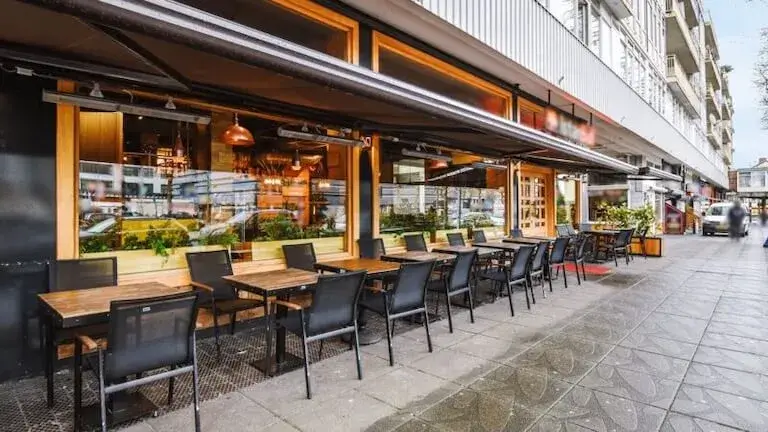
Location decisions affect visibility, accessibility, and your concept’s fit with the surrounding area.
Consider the following factors when deciding where to expand:
Demographics and local demand: Does the local population match the income, lifestyle, and dining habits of your existing customers? Your concept might thrive in one neighborhood and struggle in another just a few miles away.
Visibility, access, and traffic patterns: Can people easily see, reach, and park at the business in the normal flow of their day? A great concept in a hard-to-find location will often struggle.
Competition and neighborhood fit: Is there clear room in the market, taking cuisine, price point, and experience into consideration? Or are you battling too many similar options nearby? You want to fill a gap, not fight for the same customers everyone else is chasing.
Economics of the site: Do rent, common area maintenance charges, and local labor costs leave enough margin for profit at realistic sales levels, not just best-case projections? A “deal” on rent doesn’t help if the economics don’t work.
Testing Before You Commit
Before investing in formal market research, there are practical ways to gauge demand in a new area. You can try running a short pop-up series in the target neighborhood. Or, you can test the waters by offering delivery-only service to new areas while continuing to operate from your existing kitchen. Track orders, customers, and feedback over a few months.
While these experiences won’t give you perfect data, they can help reveal if there is interest before you commit to signing a lease.
Once you’ve chosen your expansion model and identified the right market, the next question is how to pay for it.
Financing Your Growth
You’ve opened one location, so you already know the process can be expensive. But running a second unit alongside your first can bring new costs you didn’t face during your initial launch.
What Gets Overlooked
Beyond the obvious build-out expenses, owners frequently under budget for:
Pre-opening and ramp-up. Before the doors fully open, you’ll be paying staff during training and covering ongoing expenses like rent, utilities, inventory, and payroll while sales build.
Increase operational overhead: Your business overhead can double in areas like accounting, HR, insurance, and technology licenses.
Grand opening and ongoing marketing: You may want to run additional marketing to announce your grand opening, followed by ongoing local marketing, promotions, and community outreach to build awareness in a new area.
The inevitable delays. Permitting, inspections, contractor overruns, and equipment issues almost always add unexpected cost and time.
New restaurant locations rarely hit their stride immediately. A conservative approach typically builds in a six- to twelve-month ramp-up period (or longer) while the new location gets established.
Setting Realistic Financial Expectations
It’s easy to underestimate capital needs during expansion, especially when current demand is strong. That’s why taking a careful look at the numbers matters before moving forward.
Beware of thin cash reserves, unrealistic revenue projections, and too much debt. You don’t want to create a plan that inadvertently depends on the first location propping up the second indefinitely.
These mistakes can turn what could have been smart growth into a cash crisis that threatens both locations.
Your Financing Options
After you’ve mapped out the real costs of expansion and confirmed you’re financially prepared, it’s time to look at the most common ways to fund your next phase of growth.
Self-funding from profits. Using retained earnings from your existing location is the gold standard if you can swing it. You avoid debt payments and keep full control. The trade-off may be slower growth and pulling cash from your existing business.
Traditional bank loans. Commercial loans typically require strong credit, collateral, and at least two years of profitable operations. You’ll usually need a 10-20% down payment. The trade-off is predictable payments but strict requirements and potential personal liability, as many lenders require personal guarantees, even when the business is structured as an LLC.
SBA loans. In recent years, the SBA’s 7(a) and 504 programs have backed tens of billions of dollars in small business loans annually, with accommodation and food services among the top recipients. SBA 7(a) loans often offer better terms and lower down payments than traditional bank loans with longer repayment periods. The SBA guarantee makes banks more willing to lend to small businesses, though the process takes longer and involves more paperwork.
Private investors and strategic partners. You’re trading equity or profit share for capital and, in some cases, expertise. The advantage is avoiding debt and gaining guidance, while the trade-off is sharing ownership, profits, and control. Be clear on expectations, decision-making authority, and exit strategies before taking on partners.
Alternative financing. Crowdfunding can work for businesses with strong local followings. Revenue-based financing offers flexibility but can also be expensive. Equipment financing can help reduce upfront capital needs. These alternatives can fill gaps but often come with higher costs or complexity.
With financing in place, the next critical question is whether you have the operational systems ready to support multiple locations.

Financing options often involve partnerships and professional guidance.
What Systems Are Needed to Open a Second Location?
Clear systems can help keep everyone on the same page and maintain consistency between locations. They’re repeatable, remove the guesswork, and can make it easier for employees to work between both locations. Systems help replace you needing to be everywhere at once.
What to Document in Systems
Document anything that affects guest experience, safety, or money:
- Recipes and prep standards: Ingredients, portions, plating photos, cooking times
- Service steps: Greeting, order taking, handling complaints, closing out
- Daily routines: Opening/closing checklists, cleaning schedules, temp logs, cash handling
- Back-of-house systems: Inventory counts, ordering procedures, receiving, storage, waste logging
- Safety and compliance: Food safety, hygiene, emergency procedures, equipment maintenance
You can’t systematize everything at once. So start with the things that impact customers and cash flow the most. Food safety, core recipes, and cash handling come first. Then move on to building out inventory management, training processes, and the rest.
Supply Chain and Technology
The biggest supply chain mistake is treating each location like its own island with different products, vendors, and ordering habits. That can destroy both consistency and your buying power.
Coordinated purchasing, negotiating volume pricing, and using standard products across all locations are cost-effective strategies that can help reduce expenses.
On the technology side, cloud-based POS systems that pull data from all locations, inventory software that tracks real-time usage and food costs, scheduling tools to manage labor across units, and platforms for checklists and audits can help keep things running smoothly.
Without the right tech, you’re flying blind. You won’t have a clear picture of sales, food cost, or labor until problems show up in your bank account.
Maintaining Quality
Consistency starts with standard recipes, portion tools, and equipment settings in every kitchen, backed up with photos of how each dish should look plated.
It can help to run regular audits with scores covering food, service, cleanliness, and brand standards. Train your managers to coach to the standards, not their own preferences.
Day-to-day quality control can include line checks and tastings each shift, temp logs and visual checks of key menu items, daily use of checklists and SOPs, plus spot checks on ticket times, order accuracy, and guest feedback. You might also schedule monthly or quarterly audit visits with clear scores and follow-up action plans for each unit.
The goal of all these systems and checks is to protect what made your first location successful in the first place. As Escoffier graduate and Geno’s Steaks owner Geno Vento puts it, “I want to ensure Geno’s resonates with new audiences while maintaining the authenticity and standards that have made us what we are today.”*
That’s the real challenge of expansion: reaching more people without diluting the experience.
Systems can keep things running when you’re not there. But they only work if you have the right people leading each location.
How to Manage Multiple Locations for Your Food Business
With multiple locations, you rely on managers, systems, and reports instead of personal presence and instinct. Problems such as staffing issues, quality slips, and cash-flow surprises now happen in parallel, so weak systems or unclear expectations get exposed sooner.
The Leadership Shift You Need to Make
There’s a story in E-Myth Revisited about a woman who opens a pie shop. She has a great recipe and enjoys the work, but over time, the business wears her down because everything depends on her. Even after she hires help, the pressure doesn’t ease because she’s still the one making the pies and solving every problem.
Expanding to more than one location can bring this challenge into focus. A business can’t rely on one person being everywhere at once. Instead of personally handling daily issues, your role shifts toward supporting managers, setting clear expectations, and making sure each location operates the same way. Growth depends less on individual effort and more on leadership that works through people and shared standards.
Building a Team You Can Trust
For two locations, it can be helpful to employ at least one strong manager at each store who can run shifts, handle guest issues, and make decisions within clear guardrails. Define clear roles, so you’re not the default fixer for everything. Your managers should understand the brand’s standards and be able to coach others to those standards, not their own preferences.

Building a strong management team is essential for successful multi-unit operations.
There’s a difference between managing a single location and leading across multiple units. A single-location manager keeps one store humming day-to-day. As a multi-unit leader, you spend more time coaching managers, reading numbers, and shaping culture across stores. You’re managing managers, not just staff.
Common Multi-Unit Pitfalls
- Staying in shift-runner mode: Jumping between stores instead of building managers and trusting them with real authority
- Failing to standardize: Each store makes up its own way of doing things, so performance varies wildly
- Ignoring the numbers: Relying on gut feel instead of consistent KPI review, so problems show up as cash-flow crises
- Letting culture slip: One location feels on-brand while another feels chaotic; shortcuts become normal because no one’s coaching to the standard
Do You Even Want to Expand?
You’ve already absorbed a lot: readiness indicators, expansion models, financing options, location strategy, systems requirements, and management challenges. Expansion is complex, and going in with your eyes open is crucial.
But now it’s worth stepping back and asking a simpler question: Is another location what you actually want?
Other Ways to Grow
Multiple locations isn’t the only path forward for a successful food business. You could grow revenue and impact by going deeper instead of wider.
Catering can open up corporate accounts, weddings, and private events without the overhead of a second location. A food truck can add mobility and let you test new markets or serve events while keeping your base of operations at one address. Premium offerings, seasonal menus, or exclusive experiences can increase your average check and profitability at your existing location.
These alternatives might not have the same appeal as opening another storefront, but they can be just as rewarding and often come with less complexity and risk.
Protecting What Matters
When excitement is high and you’re focused on possibilities, it’s easy to overcommit. Make sure you have the time and energy to take on running another location and stepping into this new leadership role while still protecting your personal life and health.
Expansion will demand more from you, not less, especially in the first year or two. If you’re already stretched thin, adding a second location will amplify that.
The best expansion decisions come from a place of readiness and intention, not just ambition or opportunity.
So here’s the final question to sit with: Will opening a second location move you closer to the life and business you actually want?
Deciding What’s Right for You
Expansion is a transformation, not just replication. Opening a second location changes everything about how you run your business, from your daily role to your financial structure to how you maintain quality and culture.
It’s exciting, but it’s also demanding in ways that success with one location doesn’t fully prepare you for.
The owners who expand successfully do so deliberately. They’ve built strong systems, confirmed their financial readiness, chosen an expansion model that aligns with their goals, and honestly assessed whether they’re ready for the leadership shift required.
If you’re considering expansion, take your time with this decision. Test your assumptions and strengthen your foundation.
Make sure your first location can thrive even while your attention is divided. And remember that growing strategically, even if that means growing more slowly or in a different direction than you first imagined, is always better than growing reactively.
If you’re looking for more structure and support as you make these decisions, Auguste Escoffier School of Culinary Arts offers Food Entrepreneurship programs that can help you develop the strategic thinking and operational skills needed to grow a food business successfully. Contact us today to explore our Food Entrepreneurship programs.