


Listen to This Article:
From K-pop to K-drama, Korean culture continues to shape what people are watching, listening to, and increasingly, what they’re eating. In the U.S., kimchi has found its way into everyday cooking, and Korean BBQ has become a familiar dining experience.
But beyond those entry points, Korean cuisine opens into a much wider landscape, one built on balance, fermentation, and five core flavor principles: sweet, salty, sour, bitter, and spicy. Gimbap offers neatly layered bites of rice, vegetables, and protein, each slice balanced in flavor and texture. A table of banchan arrives as a vibrant spread of small dishes, bringing together fermented, fresh, crisp, and savory elements. Desserts are gaining attention as well—especially thanks to satisfying videos on TikTok—with a heightened focus on texture, from chewy rice cakes to soft, cream-filled pastries.
For chefs and culinary students, understanding these ingredients, approaches, and techniques can bring a new perspective to how flavor, texture, and structure all come together in one meal.
Understanding the Korean Table
If you’ve ever sat down to a Korean meal and felt like everything on the table just worked together, there is a reason for that. Rooted in the traditional Korean concept of ohmi (오미, five flavors) and its connection to Taoist principles of balance, Korean cuisine aims to layer the five taste principles—sweet, salty, sour, bitter, and spicy—often within a single dish and always across a full meal.
The Five Flavor Principles of Korean Cuisine
Sweet: Sweetness in Korean cooking comes from natural sources like fruit, honey, and rice, used to balance heat and salt rather than dominate a dish.
Salty: Salt provides depth and seasoning, often delivered through fermented ingredients like soy sauce and doenjang rather than salt alone.
Sour: Acidity, most often from fermentation, brightens dishes and cuts through richness — kimchi being the most familiar example.
Bitter: Bitter notes, found in greens and certain vegetables, add complexity and keep the palate engaged across a full meal.
Spicy: Heat, typically from gochugaru or gochujang, adds intensity and warmth while contributing to the layered flavor profile Korean cuisine is known for.
A bowl of doenjang jjigae (a savory Korean stew) brings fermented depth alongside fresh tofu and vegetables. A plate of the stir-fried dish, japchae, balances the sweetness of glass noodles against sesame, soy, and wilted greens.
That structure becomes more visible through banchan, or the small dishes served alongside a meal. These dishes might be described as “sides,” but that doesn’t fully capture their role.
What is Banchan?
Banchan are the small dishes served alongside a Korean meal, each contributing a specific flavor or texture to the table. Unlike Western side dishes, which are often secondary to a main course, banchan are integral to the meal—arriving together, replenished as needed, and eaten throughout rather than in sequence.
A typical spread of banchan might include a fermented vegetable, a quick cucumber salad, seasoned spinach (sigeumchi namul), marinated bean sprouts (kongnamul), braised potatoes (gamja jorim), or small dried anchovies glazed with soy and sugar (myeolchi bokkeum). Some are served cold, others at room temperature, and a few may be warm.
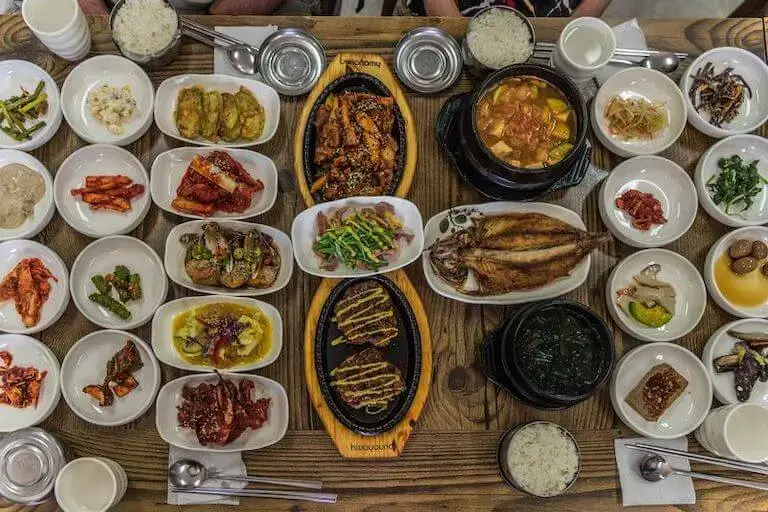
A traditional Korean table features a wide variety of banchan alongside shared main dishes.
Each dish brings a specific element to the table. Fermented vegetables add acidity, namul brings freshness and texture, and braised or marinated dishes add sweetness or depth. Together, they create contrast across the meal without relying on a single plate to carry everything. That’s where banchan becomes more than a collection of sides.
For chefs, this offers a practical way to think about composition. Instead of building contrast into one dish, you can distribute it across multiple components. A menu can include elements that refresh, add texture, or deepen flavor, allowing the diner to engage with the meal in a more flexible way.
How Korean BBQ Works: Cuts, Marinades, and Technique
Korean BBQ is where many people begin their introduction to Korean cuisine, and it’s easy to see why. The experience is immediate, interactive, and social. But what makes it worth studying professionally goes well beyond the tabletop grill.
At its core, Korean BBQ is a study in how meat, marinade, heat, and accompaniment work together as a system. Each component has a role, and understanding those roles changes how you think about the whole experience.
Start with the cuts. Galbi, short ribs cut flanken-style across the bone, are typically marinated in a mixture of soy sauce, Korean pear, garlic, sesame, and sugar. The pear is not a sweetener so much as a tenderizer: it contains enzymes that break down protein and allow the marinade to penetrate deeply. The enzymes in Korean pear work gently, which matters because stronger tropical fruit enzymes can over-tenderize meat and produce a mushy texture.
Bulgogi uses thinly sliced ribeye or sirloin with a similar marinade profile, cooked quickly over high heat. Samgyeopsal, thick-cut pork belly served unmarinated, relies entirely on the quality of the meat and the skill of the cook to develop flavor through browning via the Maillard reaction at the grill.
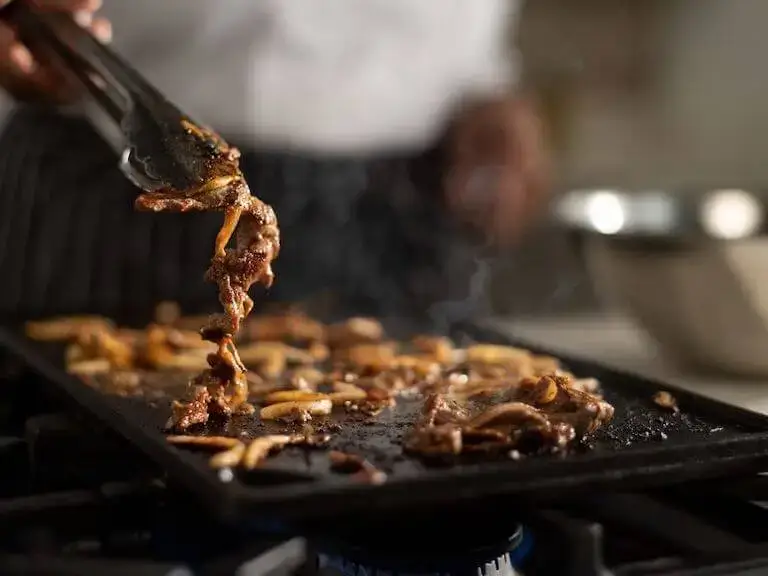
Bulgogi — thinly sliced beef marinated in soy, sesame, and sugar — is one of the clearest expressions of Korean cuisine’s five taste principles at work.
The dipping sauce and accompaniment structure is equally deliberate. Ssamjang, a blend of doenjang and gochujang, both described more in the next section, provides a fermented, spicy counterpoint to rich grilled meat. Perilla leaves, sliced garlic, and pickled vegetables are functional elements of the dish that shift the flavor and texture of each bite.
In many ways, Korean BBQ is a hospitality philosophy as much as a cooking technique. The pacing, the communal format, the way banchan arrives and is replenished, are designed to create a specific kind of shared experience.
Korean Fermentation Explained: Kimchi, Doenjang, Gochujang, and Jang
If Korean BBQ is a common entry point to the cuisine, kimchi often serves as an introduction to Korean fermentation. This traditional fermented cabbage dish is widely used across restaurant settings and home kitchens, bringing brightness, acidity, and depth.
There are more than 200 documented varieties of kimchi, shaped by region, season, and available ingredients. Napa cabbage kimchi (baechu kimchi) is the most widely recognized, but radish kimchi (kkakdugi), cucumber kimchi (oi sobagi), and fresh, lightly seasoned versions like geotjeori all play distinct roles on the table.
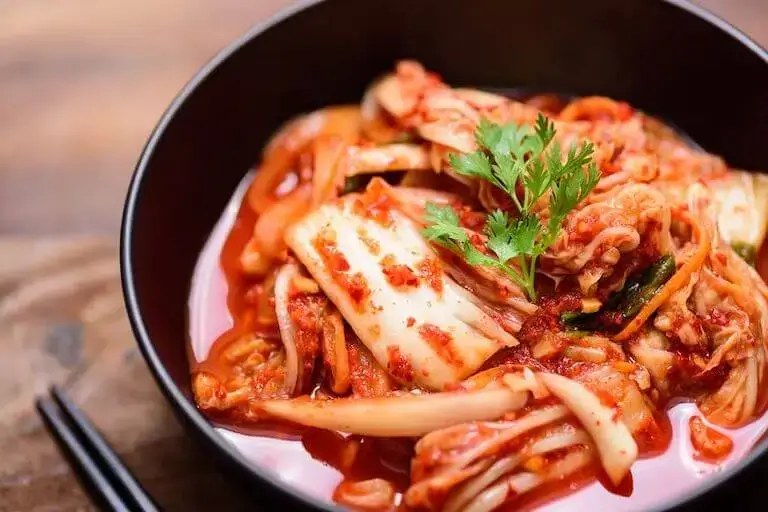
Kimchi, a staple of Korean cuisine, is known for its bright acidity and complex, fermented flavor.
Kimchi is especially useful in the kitchen because it changes over time. Early-stage kimchi is bright, crisp, and lightly acidic, while more developed kimchi becomes deeper, more sour, and complex, making it well suited for cooked dishes like stews, braises, and pancakes.
This range allows kimchi to function in multiple ways across a menu, from a fresh, textural element to a source of acidity or a deeply developed base ingredient.
But kimchi is just one part of a much larger fermentation tradition.
Key Korean Fermented Bases (Jang)
Spend some time cooking Korean food, and you’ll start to notice that many dishes are built from the same core ingredients. These are known as jang, a group of fermented pastes and sauces that form the foundation of the Korean pantry.
Doenjang and ganjang trace their origins to the Three Kingdoms period, with records dating to at least the 7th century CE, while gochujang is considerably newer — it couldn’t exist until chili peppers reached the Korean Peninsula in the late 16th century.
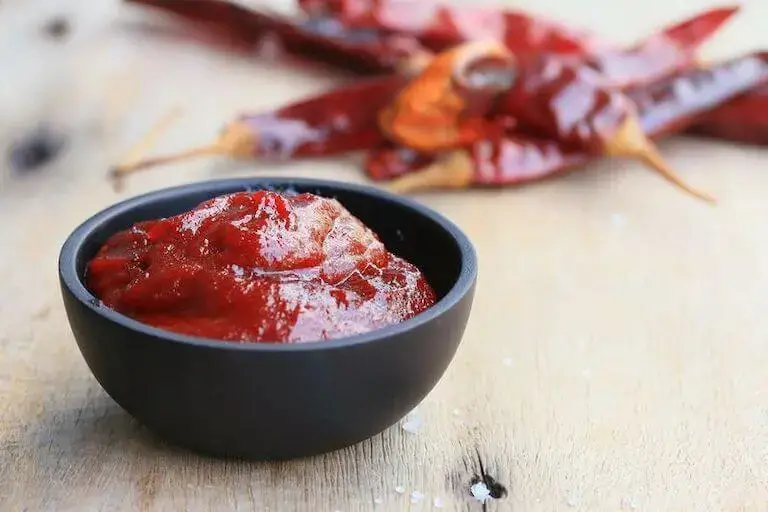
Gochujang, a fermented chili paste, adds heat, sweetness, and depth to many Korean dishes.
The three most essential are doenjang (fermented soybean paste), ganjang (soy sauce), and gochujang (fermented chili paste). Each one brings its own depth, shaped by time, environment, and technique. Rather than being used sparingly like a condiment, they often serve as the base layer of a dish, carrying flavor from the very beginning of the cooking process.
Key Korean Fermented Bases (Jang)
| Ingredient | Flavor Profile | Texture | Common Uses |
| Doenjang (fermented soybean paste) | Deeply savory, pungent, earthy | Thick, coarse | Soups, vegetable dishes, sauces, ssamjang |
| Ganjang (Korean soy sauce) | Salty, umami, clean | Thin liquid | Marinades, braises, seasoning |
| Gochujang (fermented chili paste) | Spicy, sweet, umami | Thick, smooth | Tteokbokki, marinades, sauces |
In practice, you’ll see them used both on their own and in combination, depending on the dish. Doenjang often anchors soups and stews, where its fermented, savory depth defines the entire dish. Ganjang is foundational in Korean braises and marinades, such as galbi or jangjorim, where it provides salt and umami. Gochujang brings heat, sweetness, and body to dishes like tteokbokki or spicy marinades for grilled meats.
They’re also layered together. A marinade for bulgogi might combine ganjang with sweetness, garlic, and sesame, while a dipping sauce like ssamjang blends doenjang and gochujang to create something deeper and more complex than either on its own.
Once you start cooking with them, you’ll notice they function less like interchangeable seasonings and more like distinct building blocks. Choosing one over another or combining them is part of how you shape the direction of a dish from the start.
Key Korean Cooking Techniques
Knowing your ingredients is a strong foundation. Pairing that knowledge with the right techniques is what brings Korean cuisine fully to life. Here are three methods that come up repeatedly and are worth adding to your repertoire.
Namul Preparation
Namul is a term that refers to both a category of seasoned vegetable dishes and the technique used to make them, and it’s one of the most common building blocks of a Korean meal.
To prepare namul, you start with a brief blanch, then a cold water shock to preserve color and texture, and finish with a firm squeeze to remove excess moisture. Spinach, bean sprouts, and fernbrake are among the most common vegetables you will prepare this way. Preparation time and method vary by vegetable; fernbrake, for example, requires extended soaking or boiling from dried form.
From there, seasoning is minimal: sesame oil, garlic, soy sauce, worked in by hand to distribute evenly without breaking down the vegetable. You will find the finished dishes served as banchan and as components in bibimbap, where several namul are arranged together over rice.
Jjigae Building
Jjigae is the Korean term for stew, and learning to build one correctly starts with understanding the sequence. Before you add any liquid, you bloom your fermented paste in oil, such as doenjang for a savory, earthy base, or gochujang for heat and body (or both together for something deeper). That step rounds out the fermented edge and develops flavor before the broth goes in.
Next, you add proteins and vegetables in stages based on cook time: firmer ingredients like potatoes and zucchini go in early, delicate ones like tofu go in last. The result is a broth that carries layers of flavor from the start and ingredients that are each cooked correctly.
Dolsot Cooking
Dolsot refers to both the heavy stone pot used in Korean cooking and the technique built around it. The pot is brought to high heat before anything goes in, then coated with sesame oil. When rice is added, the grains in contact with the stone begin to crisp and brown, developing a crust at the bottom called nurungji.
In a dish like dolsot bibimbap, you mix the toppings down into the rice as you eat, scraping up that crust as you go. The pot stays hot through the entire meal, which is part of the experience as much as the cooking itself.
How Korean Cuisine Is Evolving: Fine Dining, Gimbap, and Global Trends
As Korean cuisine continues to gain more serious professional attention, chefs are doing something more interesting than simply adding Korean flavors to existing menus. They are rethinking familiar formats entirely, on their own terms.
Gimbap is one of the clearest examples of this shift. For years, Western diners and media defaulted to comparing it to sushi—a shorthand that Korean chefs have increasingly pushed back on. The formats share a rolled structure, but gimbap is built around harmony of ingredients rather than the simplicity of seasoned rice and fish. It emphasizes variety, texture contrast, and balance across multiple fillings, and it functions more like a composed sandwich than a piece of nigiri.
In New York, chef Jihan Lee opened TBD Gimbap in Manhattan’s West Village after training at two-Michelin-starred Masa and co-founding the Japanese hand roll bar Nami Nori. Rather than leaning on his fine dining pedigree, Lee sought to make Korean food accessible and everyday, without being simplified. His menu draws on traditional fillings like beef bulgogi alongside specials that reflect his Japanese culinary training, testing what gimbap can hold without losing what makes it distinctly Korean.
In Los Angeles, chef Jihee Kim of Perilla describes her approach as a reimagination of Korean banchan through California produce. Her gimbap is built around textural intention — something salty, something crunchy, something fresh, and something pickled in every roll. She serves it with hot mustard rather than soy sauce, a deliberate choice that reflects how the fillings are already seasoned and don’t need the addition.
At Super Peach, executive chef Nick Picciotto has made gimbap the highest-selling item on the menu, with varieties like spicy bluefin tuna with avocado and crushed rice crackers, and galbi-glazed beef with dill pickles and caramelized onions. The price point is deliberately approachable, a lesson Picciotto draws from his time at Kawi, where gimbap sold for between $30 and $70 and met resistance despite strong reviews.
Beyond gimbap, the broader evolution of Korean fine dining reflects a culinary culture that has always prioritized texture alongside flavor. It’s also one of the reasons that Korean food videos have become so popular on social media, often driving food trends.
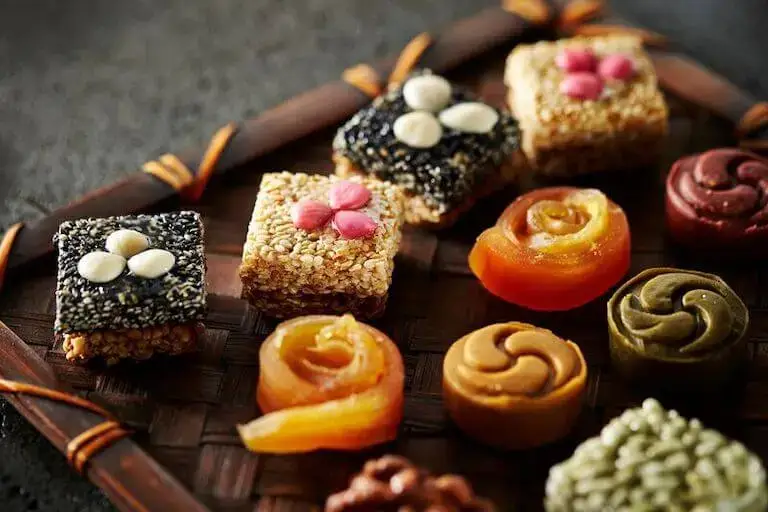
Korean desserts often highlight texture, from chewy rice cakes to delicately crafted confections.
Butter rice cakes have surged in popularity in South Korea for their contrast of crisp exterior and dense, chewy interior.
Seasonal ingredients like jjukkumi, a roe-filled webfoot octopus harvested in spring, are gaining renewed attention specifically for their granular, chewy texture—a quality long appreciated in Korean cuisine that is now finding a wider audience through social media. These are not new ingredients or new techniques. What has changed is the platform and the professional confidence with which Korean chefs are presenting them.
That shift—from centuries of regional tradition to global conversation—is exactly what makes this moment in Korean cuisine worth paying attention to.
As you continue to explore Korean cuisine further, the following terms will come up repeatedly across recipes, menus, and professional kitchens.
Key Korean Culinary Terms
For culinary students new to Korean cuisine, here are some key terms:
- Banchan: Small side dishes served alongside a Korean meal — fermented, fresh, braised, or pickled — creating balance across the table. Kimchi is the most iconic example.
- Kimchi: Fermented vegetables, most commonly napa cabbage, seasoned with gochugaru, garlic, and ginger. Served as banchan and used as a cooking ingredient throughout Korean cuisine.
- Ganjang: Korean soy sauce, foundational to marinades, braises, and seasoning across nearly every dish.
- Doenjang: A fermented soybean paste with deep, savory flavor, used as a base for soups, stews, and sauces.
- Gochugaru: Korean red pepper flakes — the primary source of heat in kimchi, soups, and stews.
- Gochujang: A fermented chili paste made with gochugaru (red pepper flakes), glutinous rice, fermented soybean powder (meju), malt, and salt that brings heat, sweetness, and body to dishes and marinades.
- Jjigae: The Korean term for stew, built by blooming fermented paste in oil before layering broth, protein, and vegetables in stages.
Building Your Skills Through Global Culinary Traditions
Korean cuisine offers more than a collection of recognizable dishes. It presents a way of thinking about food that centers on balance, fermentation, and composition across the table. From banchan to jang to the structure of Korean BBQ, each element reflects a system that has been refined over time.
For chefs and culinary students, engaging with that system can open up new approaches to building flavor, working with texture, and designing a cohesive dining experience. These are skills that can translate across cuisines and continue to shape modern kitchens.
If you’re interested in developing that kind of perspective, culinary school can offer the structure and hands-on experience to explore it more deeply. At Escoffier, students have the opportunity to explore global cuisines, foundational techniques, and emerging trends, building a well-rounded understanding of how food continues to evolve. Contact us today to find out more.
EXPLORE THESE ARTICLES NEXT:
- Top 10 Countries with the Most Michelin Stars
- What Is Fusion Cuisine?
- Beef Cuts Explained: Different Cuts of Beef Every Professional Cook Should Know
FAQs
While both cuisines emphasize fresh ingredients, balance, and careful preparation, they differ significantly in flavor profile and technique. Korean cooking tends to be bolder, built around fermented ingredients, chili heat, and layered seasoning. Japanese cuisine generally favors subtlety, umami, and restraint. The two traditions are distinct culinary systems with their own ingredients, techniques, and philosophies.
American BBQ typically involves slow cooking large cuts of meat over indirect heat, often with regional spice rubs or sauces. Korean BBQ centers on thinly sliced, often marinated meats cooked quickly over direct heat at the table. The communal, interactive format and the role of accompaniments like banchan and ssamjang make it as much a dining experience as a cooking method.
Gochujang is a fermented chili paste made with gochugaru (red pepper flakes), glutinous rice, fermented soybean powder (meju), malt, and salt. It tastes spicy, sweet, and deeply savory all at once — with a complexity that comes from fermentation rather than fresh chili heat. It is used as a base ingredient, marinade, and condiment across Korean cooking.
Banchan are the small dishes served alongside a Korean meal. They can include fermented vegetables, seasoned greens, braised potatoes, marinated proteins, and more. Each dish contributes a specific flavor or texture to the table, creating balance across the meal as a whole.
Banchan are shared dishes, not individual portions. Diners eat them alongside rice and soup, taking small amounts with each bite rather than finishing one dish at a time. They are meant to be mixed, contrasted, and explored throughout the meal — which is central to how Korean cuisine creates balance at the table.