

Before Erin Seidemann judges chocolate in her New Orleans home, she unplugs the air fresheners. She avoids garlic, scented lotion, and the spicy dishes she normally loves. Erin waits until enough time has passed since her last meal, then sits down with a notebook and a collection of chocolates she cannot identify.
The judging is blind. Erin may know a bar’s cacao percentage or country of origin, but not who made it. A filled chocolate may hold several components — a layer of fruit pâte, a ganache, a caramel, or a crisp sablé — and she considers each one before evaluating how they work together. She takes detailed notes throughout, specific enough that if a bonbon wins an award, she can look back, identify it by its components, and track it down to buy.
Erin also knows that the scores she submits may help determine whether a small maker earns recognition that could meaningfully affect their sales.
“This isn’t just a fun competition, which it is,” she says. “But it’s also literally people’s livelihoods.”
For Erin, a finance professional who came to chocolate entirely by accident, it’s also a life she never could have imagined during the many years when her oven served primarily as storage. It took formal culinary training at Auguste Escoffier School of Culinary Arts and three levels of chocolate certification to transform her into the expert judge she is today.
Finding Something That Made Her Happy
Erin Seidemann grew up in New Orleans, where memorable food was never difficult to find. Cooking it was another matter.
Neither of her parents cooked much, and Erin never felt the need to learn. The family ate out most of the time because her parents were too tired from working to cook. When Erin attempted to bake on her own, the results rarely encouraged her to try again.
“Why do people waste their time with a lot of ingredients that you have to go buy at the grocery store?” she remembers thinking. “As a non-baker, you don’t keep any of that stuff around. So why would you waste the money?”
That began to change during a difficult period in her adult life. Erin thought about the way her face lit up when someone arrived at work or a gathering with cake or brownies. If baked goods could bring her that much joy, she reasoned, why was she waiting for someone else to make them?
So, she started making simple recipes she found on Facebook, anything with fewer than five ingredients that looked forgiving enough for a beginner. A neighbor pointed out that Erin was stress-baking. Erin dismissed her. Then she went home, looked it up, and thought, “Yeah, okay. I’m stress-baking.”
Erin assumed she would stop when the difficult period passed. Instead, she got hooked.
Baking gave her a way to decompress from a demanding finance career — “It’s just sort of my kind of me time,” she says — but it also gave her something she hadn’t anticipated: food she could share with people.
A licensed pilot, Erin met a group of fellow pilots for lunch at her local airport every week. She started arriving with brownies, sheet cakes, and fruit cobblers.
“It was one of those things that I had never experienced before, since I hadn’t cooked—that I can share my food with other people, and they loved it,” she says. “I really looked forward to seeing their reaction to what I would bring.”
During one holiday season, Erin pushed herself and made peppermint truffles. They weren’t perfectly tempered (she knows that now), but her friends at the airport couldn’t tell. One of them, a pilot who worked in high-risk insurance, told Erin the truffles were so good she should open a chocolate shop, and he offered to help fund it himself.
She didn’t take him up on it. But she didn’t forget it either.
The Chocolate That Refused to Cooperate
That conversation with her pilot friend helped Erin realize that what she was making was pretty good, and it inspired her to dig in more. That’s when she started to realize that when she worked with chocolate, it didn’t always go so well.
When her chocolate ran a little too thick, she would reach for vanilla to thin it out.
“I love vanilla — who doesn’t love vanilla?” she says. “Let me just add some vanilla and it’ll thin (the chocolate) out.”
But not only did the vanilla not thin the chocolate, it turned the entire batch into an unusable rock that Erin had to throw away, and she couldn’t figure out why.
“It just defied all logic,” she says. “I’m like, okay, I’m not stupid. What is going on here?”
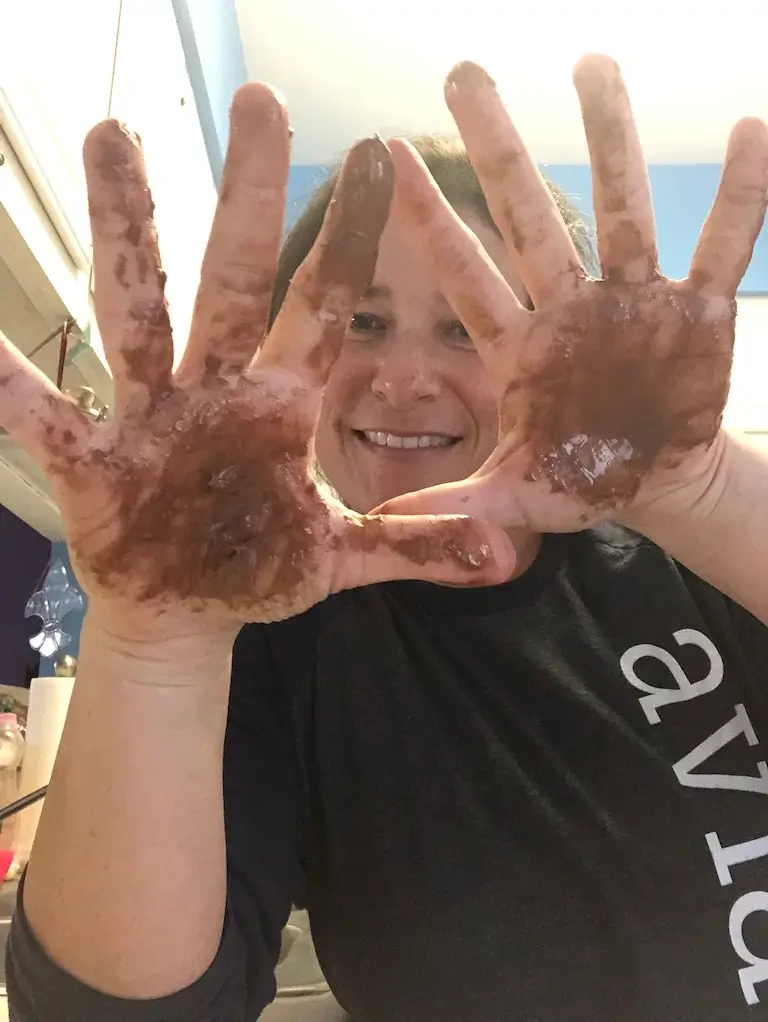
Erin rolling chocolate truffles with hands that were too warm.
Erin is quick to admit she usually drops things that don’t click quickly, but chocolate was different. Its unpredictability made her want an explanation. She went searching for chocolate courses online and found two: an online professional chocolatier program through Ecole Chocolat, a Canadian school, and a five-day in-person tasting course in London.
She enrolled in both, doing the chocolatier program first so she’d understand how chocolate was made before learning how to evaluate it.
Traveling to London to take a course felt natural. Erin grew up in a family that traveled whenever they could — van trips to the Grand Canyon when money was tight, summers in Europe once her father’s business took off.
“It just instilled this wanderlust,” she says, “and now, with the culinary side of my life, there’s always that wanderlust. But now it’s like I want to check out food all over the world too.”
Learning to Taste What Others Might Miss
In London, Erin found herself in a room full of people who knew far more than she did. There were people who had grown up on cacao farms, built businesses around chocolate, or who came from coffee and tea backgrounds for the overlapping sensory skills.
Together, the group studied how cacao is grown, harvested, fermented, dried, roasted, and transformed into chocolate. One day the instructors laid out more than 100 small containers, each holding a different aromatic — typical notes found in craft chocolate. Stone fruit. Tobacco. Earth. Florals. Things Erin had never smelled in her life. She tried to keep up, smelling and writing and smelling and writing.
Another session focused on defects, such as chocolate that had been over-roasted, under-fermented, or fermented too long. That final day of the course turned out to be one of Erin’s favorites. Severely over-fermented chocolate, she’ll tell you, tastes like vomit or sweaty socks — and watching a room full of experienced tasters encounter it at the same moment was one of those memories that stays with you forever. She grabbed her phone to capture the faces around the room.
“Each day was something new and completely fascinating,” she says. “I had never gone into anything like that in depth with any food.”
From London to India
After completing the combined level one and two course and passing the certification exam, Erin applied to judge for the International Chocolate Awards almost immediately. But she wasn’t finished learning.
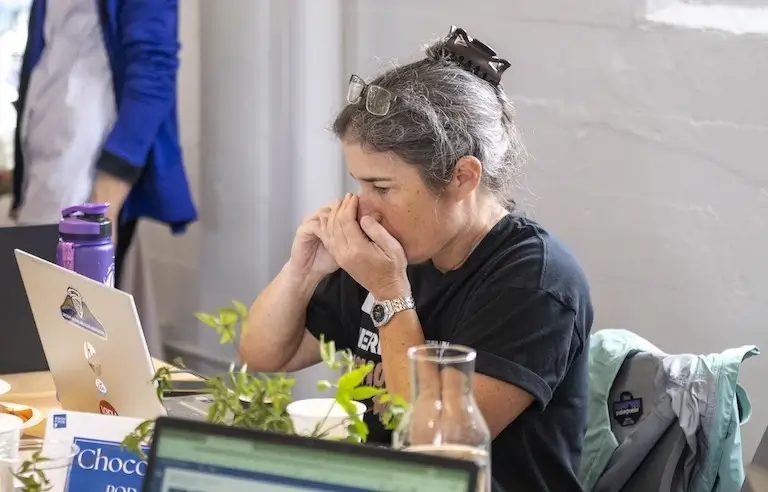
Erin evaluating aroma at the Good Food Awards chocolate judging in San Francisco, 2025. Photo credit: @sf.rene
When the International Institute of Chocolate and Cacao Tasting (IICCT) offered a level three course in India, she signed up without hesitation. Seven days visiting cacao farms, fermentation centers, and drying facilities, followed by six tests: a group presentation, a regular taste test, a regular smell test, a blindfolded taste test, a blindfolded smell test, and a written exam.
The experience was more demanding than anything the earlier levels had required, and Erin worried whether she had done enough to pass.
“I actually remember where I was when I learned that I passed,” she says.
By then, however, Erin had discovered another gap in her knowledge — one that a tasting certification alone couldn’t fill.
Learning Pastry to Become a Better Judge
Judging plain chocolate bars depended heavily on sensory evaluation. Filled chocolates, with their complex layers of ganache, caramel, or pastry, required something more.
Erin could evaluate those flavors and textures, but she wanted to understand the techniques behind each element. Her motivation, she says, was two-fold.
“One of them was completely selfish — I was liking baking and I wanted to learn more about it,” she says. “And then the other one was that I also knew it would make me a better chocolate judge, at least as far as filled chocolates go.”
She adds simply, “If you like something, why wouldn’t you want to learn more about it?”
Erin considered attending a culinary school near New Orleans, but the schedule would have required full days in class followed by late shifts at work. She was also helping care for her father, who had been diagnosed with brain cancer. The online Baking & Pastry program at Auguste Escoffier School of Culinary Arts allowed her to remain close to her family while continuing to work.
That did not mean the experience was necessarily easy. During the busiest stretches of her finance job, Erin was working 10, 12, and 14-hour days — and still had four school baking assignments (“bakes”) to complete that week.
“It was a struggle,” Erin says. “But when you want to do something, you will make it happen, no matter what.”
Her morning runs were non-negotiable, so she baked when she could and often slept less than she needed. But even during the hardest weeks, she was excited for the next bake.
Something to Look Forward To
School gave Erin something to focus on beyond work, caregiving, and the uncertainty surrounding her father’s health.
“Rather than being a burden, (school) was something that I looked forward to from work,” she says. “It was a blessing in so many ways.”
Her father had diabetes and had always been careful about sweets, so Erin would offer him just a bite or two of whatever she made that week — enough for him to taste without overdoing it. Then chemotherapy began causing his blood sugar to fall dangerously low. Suddenly, desserts weren’t merely something he enjoyed; at times, they were something he needed.
“I hated the circumstances,” she says, “but the fact that he actually needed — not just wanted, but needed — my bakes was really nice. I loved being able to provide that for him instead of going to the grocery store and buying some junk. The formulas from school were clean ingredients.”
One day her parents sent her a photograph. Her father was holding up an empty container that had once held one of her school bakes, wearing a sad expression because it was gone. She still treasures that picture.
“I would have loved the school at any time, but that made it even more special,” Erin says.
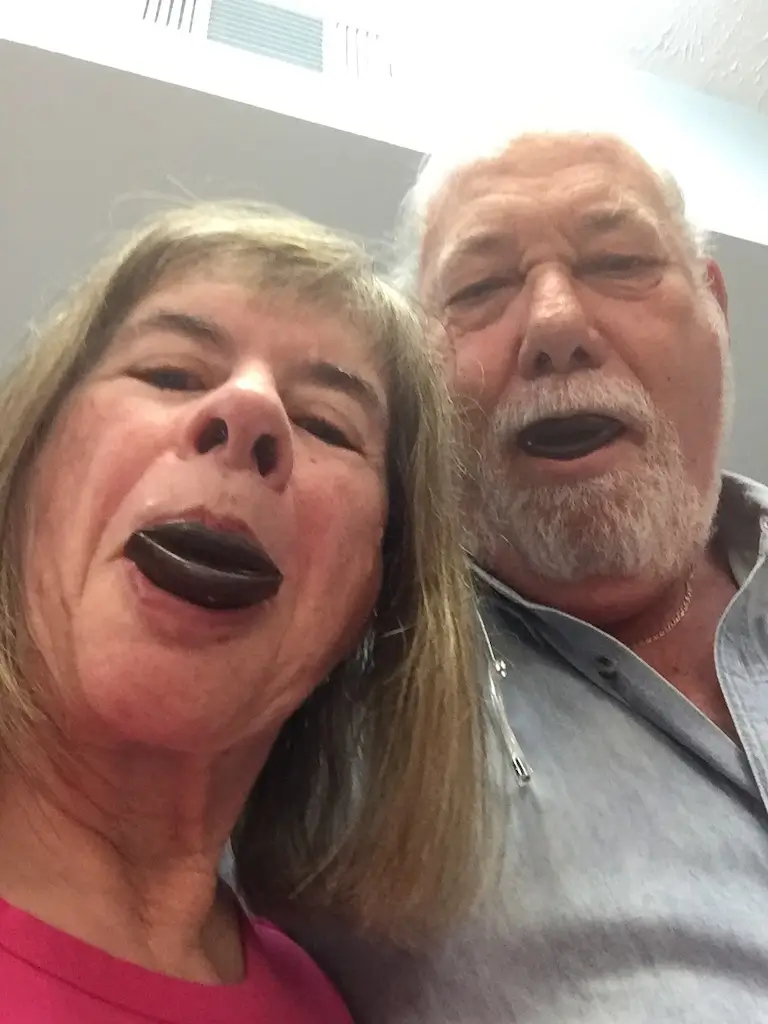
Erin loved having the chance to share her chocolate and baking assignments with her parents while attending Escoffier’s online baking and pastry program.
Her instructors became part of that season, too. One Chef Instructor’s words still come back to her whenever Erin works with a batter: no lumps, dumps, clumps, or bumps.
That instructor also had a habit of closing every class by reminding his students that people loved them and that they mattered.
“At first I’m like, what place does that have in culinary school?” she says. “And yet it grew on me. When you have somebody who you love in your life who’s dying, it does change your perspective on a lot of things. And it was just nice. Sometimes you need that reminder.”
Bringing Greater Care to the Judging Table
Escoffier strengthened Erin’s own baking, but it also changed the way she evaluated other people’s work.
She understood more clearly how a caramel could go wrong, what created the texture of a sablé, and how several pastry components should function within one filled chocolate. Her own mistakes in the kitchen had also shown her how much skill and persistence chocolate actually demanded. That knowledge goes with her whenever she judges.
“It’s not as simple as munch, munch, munch — I like this, or I don’t,” she says.
She evaluates aroma, flavor, texture, balance, execution, and possible defects, and she takes extensive notes throughout. Blind judging creates a peculiar dilemma: Erin may taste a chocolate she loves without ever knowing who produced it. If a filled chocolate is distinctive enough — a specific fruit pâte paired with a particular ganache, a sablé at the base — and it later wins an award, her notes may be detailed enough to identify it and track it down.
That habit has contributed to what she describes as a large but not embarrassing chocolate collection.
“I have chocolate, probably four or five times a day,” she says. “It’s just like a small piece usually, but that’s how big a part of my life it is.”
Using Chocolate to Advocate for Others
Traveling to cacao farms and production facilities changed the way Erin understood chocolate.
She saw how many people contribute to a single bar — farmers, harvesters, fermenters, dryers, makers, and chocolatiers — and she learned more about the exploitative labor practices that exist in parts of the commercial cacao industry.
The commercial chocolate world has a well-documented child labor problem concentrated primarily in West Africa, and once Erin understood the full picture, she couldn’t stay quiet about it.
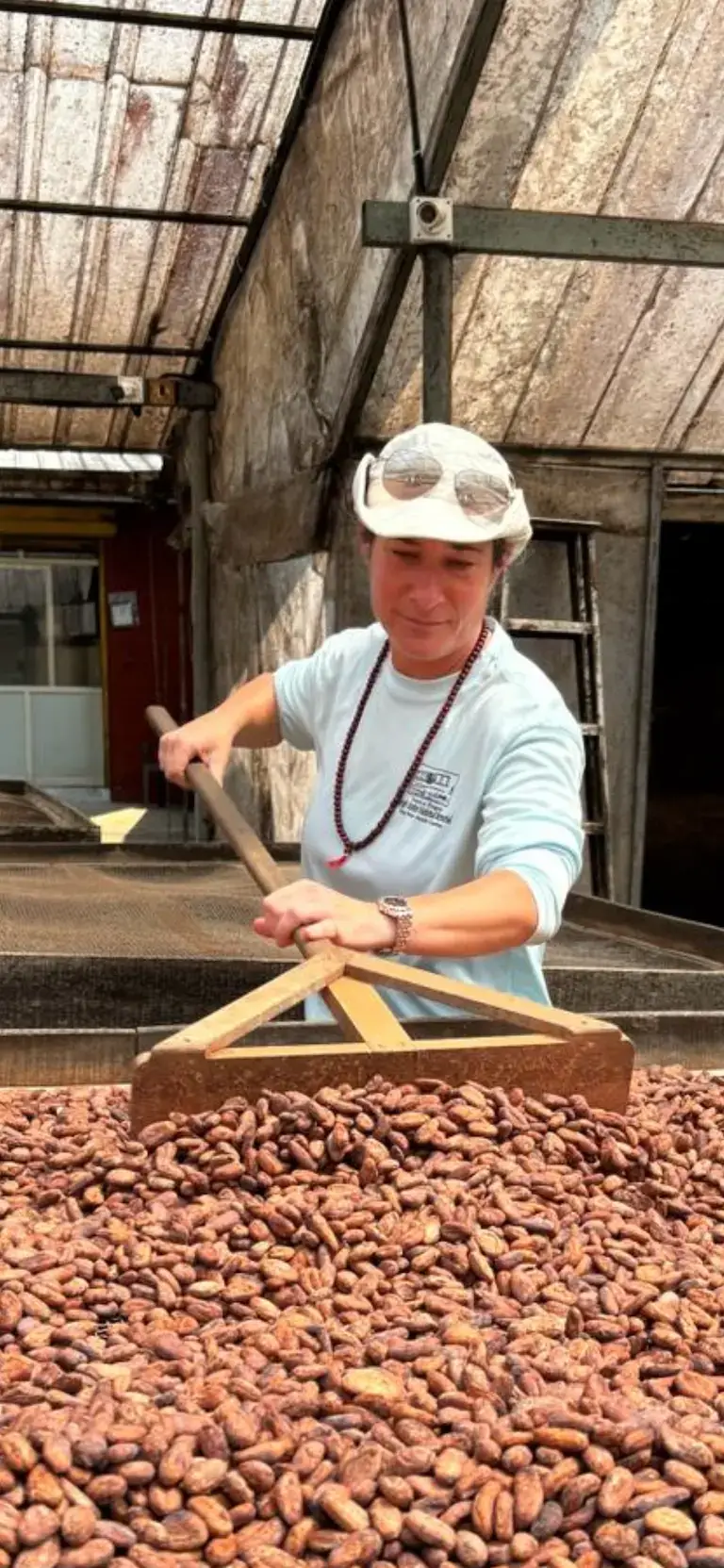
Raking cacao beans on a drying rack in Kerala, India, one of the stops on Erin’s level three course that showed her how much work goes into every bar before it reaches a maker.
“What you buy from those big company names that are literal household names, it’s not good for you,” she says. “It’s not good for the environment. It’s not good for anybody in the supply chain.”
Erin talks about it on social media, in presentations, and in conversations like this one. Rather than lecturing, she believes that when people understand what they’re buying, they often choose differently—and making the switch is easier than they may think.
View this post on Instagram
Erin encourages everyone to start by reading the label. A good dark chocolate has two ingredients: some form of cacao listed first, then sugar. If sugar comes first, it’s candy. Milk chocolate adds milk as a third ingredient.
Beyond that, Erin says, you’re looking at an industrial product. She once encountered an ingredient in her own research that was four random letters she had to look up.
“Why are we eating things that we don’t even know what they are?” she says.
From there, look at what the bar says about where it came from. Any craft chocolate maker, she says, will tell you far more than you’d ever think to ask about their sourcing and how their farmers are paid. That transparency tends to show up right on the packaging because it’s something those makers are proud of.
Many craft competitions also require strict traceability, which is part of why Erin values her role as a judge. When a small maker wins recognition, it gives them visibility they might not have found otherwise.
“When you can put on your chocolate bar that this won an award at whatever competition, it’s gonna sell more,” she says. “The makers say that it is definitely worth entering their chocolates into these competitions because then people can see that they’ve won awards.”
That’s not a small thing for a craft maker whose livelihood depends on finding the right customers. It’s why Erin refers to herself online not as a chocolate judge but as “your humble chocolate judge.”
“It’s so humbling that anybody even trusts me with my expertise to judge these things,” she says. “By judging, I literally influence people’s lives.”
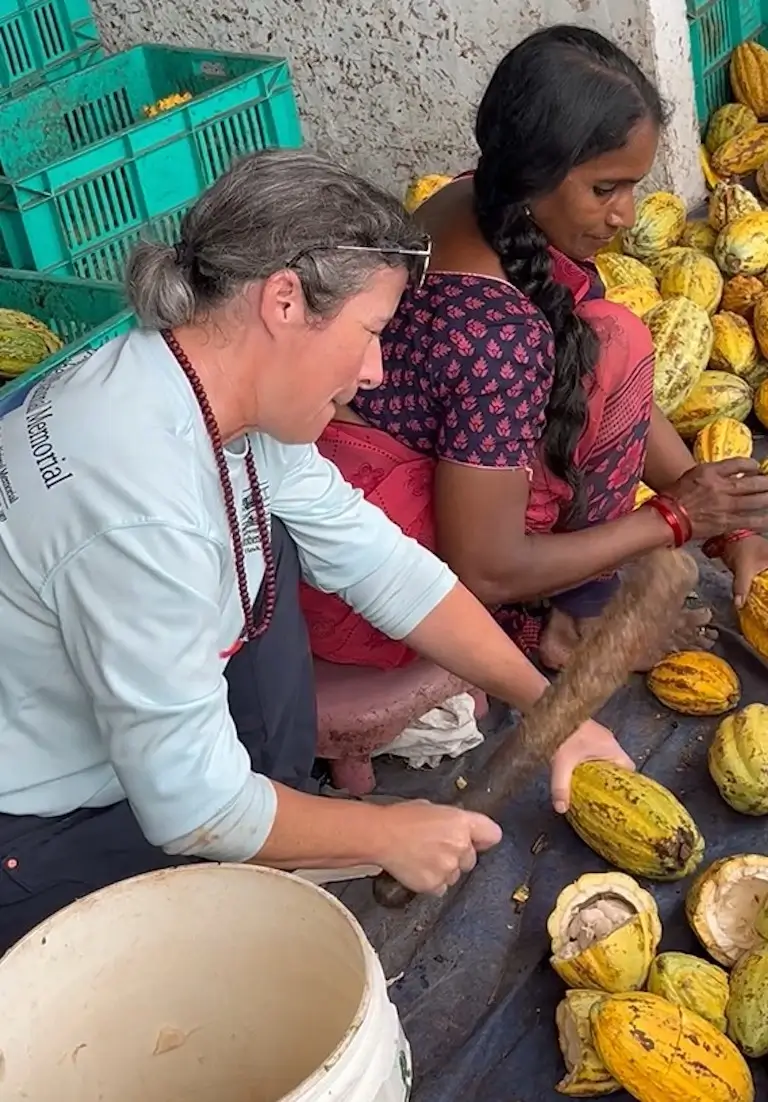
During her level three certification course in India, Erin visited cacao farms and fermentation centers to understand the full journey from pod to bar.
Staying Open to What Life Brings
Erin hopes to expand her chocolate education work and would pursue a level four tasting certification if the IICCT makes one available. She has also considered opening a chocolate business, though she’s thought carefully about what that would realistically look like day-to-day — full days of production isn’t the vision, but owning a shop or building something in retirement hasn’t left her mind entirely.
Erin could not have known where a few simple recipes would lead when she began stress-baking. She could not have predicted the tasting classrooms in London, the cacao farms in India, the judging samples spread across her New Orleans home, or the school bakes she would share with her father. She found all of it by following a question she couldn’t let go of, one small step at a time.
“I found these paths in my life by complete accident and chance,” she says. “I try to never take that for granted.”
Her oven is no longer used for storage. Her pantry, however, is another story.
WANT TO HEAR MORE SUCCESS STORIES FROM ESCOFFIER GRADUATES? CHECK OUT THESE ARTICLES NEXT!
- The Power of Saying Yes: Chef Marion Lancial’s Journey Across Three Countries
- How Escoffier Student Richard Hodgkiss Found Healing in the Kitchen
- From Culinary School to Food Science: Ellen Doerr’s Career Reinvention