Listen to This Article:
As a child, Marion Lancial spent many hours in her grandmother’s hotel kitchen in Normandy, watching steam rise from giant pots and observing the team work with precision.
“Her hotel was our playground,” Marion said. “The potato peeler machine, the smells, the team—it was all magical to me.”
But unlike some chefs who follow a straight line from childhood dreams to professional kitchens, Marion’s path was anything but linear. She was a serial experimenter, always willing to say yes to new opportunities, so her culinary career started much later, after years spent exploring completely different fields. And it’s exactly that openness to trying something new that would define her approach to everything that followed.
Today, Marion is a head chef at a French gastropub in Belfast, Northern Ireland. She teaches pastry classes, hosts a podcast called The Secret Life of Chefs, and runs her own series of online baking courses. She’s baked macarons for royalty, overcome imposter syndrome, and built a career that spans three countries.
And through it all, she’s held tightly to one powerful belief: try anyway.
A Creative Spirit, Searching for the Right Canvas
One year it was graphic design. The next, music festivals. Marion would pick up her guitar, then switch to piano, even attempt violin (though that didn’t last long). She changed jobs every single year, driving her mother crazy.
“I always liked obviously being in the kitchen and trying and baking and cooking in general,” Marion said. “But no, I did so many other things before ending up in the kitchen.”
Each pursuit fed her creative spirit in different ways. Graphic design satisfied her visual eye. Music festivals let her work behind the scenes—”like this little mouse that just makes things happen but no one can see,” she said. She loved meeting people from different countries and cultures, sharing their experiences backstage.
But there was always something missing. Whether she was designing, performing, or organizing events, Marion couldn’t picture herself doing any of these things for the rest of her life.
Then, while living in France, an unexpected opportunity pulled her back into the kitchen.
“There was a restaurant across the street from where I lived,” she said. “I ate there a lot, and became friendly with the staff. One day they said, ‘You love food. Would you come help us?’ That was it. I started in the veg and cold sections, then moved to pastry. I learned so much.”
It was at this restaurant that Marion not only discovered her passion for pastry—she also met her future husband. Almost three years later, their daughter was born.
Marion worked her way through different stations in that kitchen. But the pastry section was where something clicked.
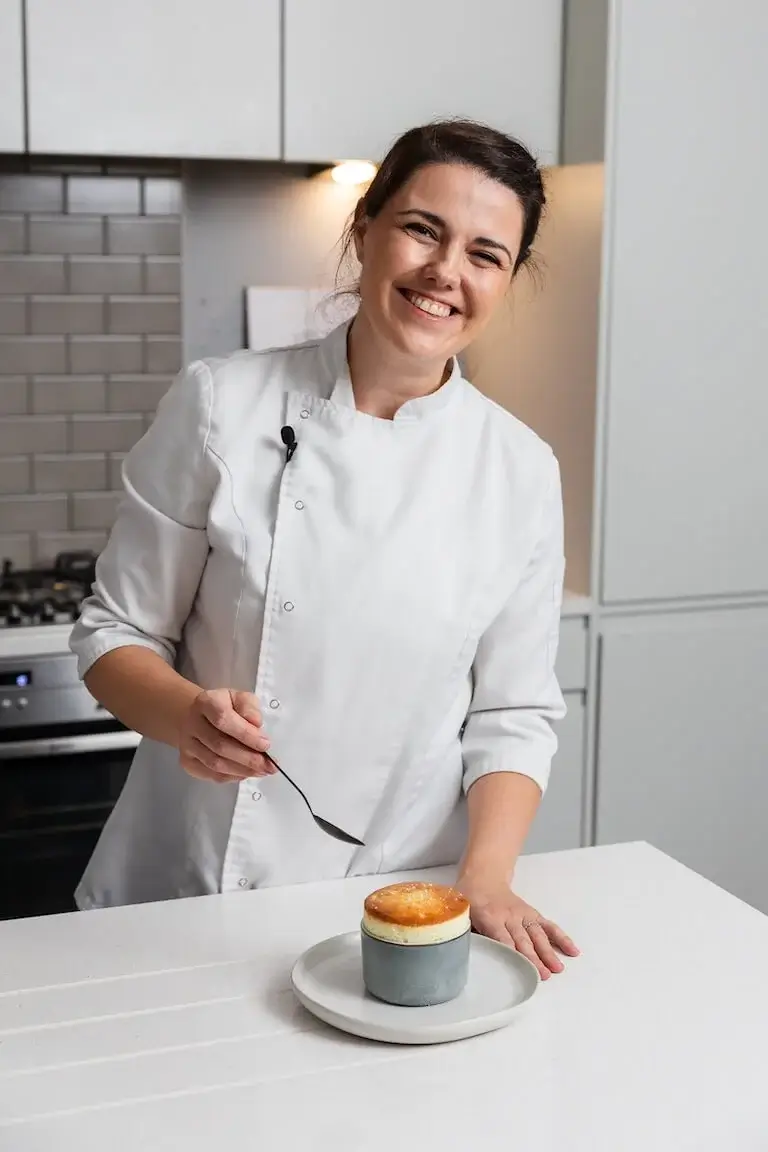
Chef Marion Lancial discovered her passion for pastry’s blend of technical precision and creative artistry.
“I realized this is what I want to do. I like the technicality of it,” she said. “I like the chemistry of all the ingredients, and I think you can do absolutely fantastic things with pastry.”
Still, she wasn’t sure what a future in food might look like. That changed when her family moved to the United States in 2016 for her husband’s diplomatic post.
Reinventing Herself in a New Country
The timing couldn’t have been better. In 2016, France felt heavy—the Bataclan attacks had shaken the country, and Marion’s family was ready for a fresh start. Freshly married and with their three-year-old daughter, moving to Washington, D.C., felt like stepping into safety and possibility.
“It was obviously very different from France,” Marion said. “We felt as a family very safe where we were. So it was absolutely fantastic.”
Still, the adjustment required patience.
“You think you know what America is like from TV, but it’s very different when you live there,” she said. “I had to stay quiet, observe, and learn how things worked.”
But first, there were practical hurdles to navigate.
“You’re not sure what you want to do, where you’re to work, are you even allowed to work?” Marion said. “So I had to figure out all those questions first and finally got the green light from the government so I was able to work.”
Knocking on Doors and Finding Her Way
Once she had work authorization, Marion saw an opportunity. Because of her husband’s diplomatic work, she found herself in proximity to embassies and government circles. She seized the moment with characteristic boldness.
“I had to find something,” she said. “So I just knocked on some doors and said, like, ‘Hey, I’m French, I can do pastry!’ And it worked. The American dream.”
Soon she was working as a private chef around diplomats and government officials. The work was rewarding, but Marion wanted to push herself further. She moved into restaurant work, beginning at a Lebanese restaurant where she discovered completely new flavors and techniques.
“It was … absolutely not related to anything I used to do,” she said. “Which is absolutely fantastic. It’s full of flavors and things I didn’t know.”
From there, she transitioned to a fine dining establishment that was a fusion of American and French cuisine led by a French head chef. Marion worked alongside him on seasonal menus using local produce. But as the sole pastry chef, she hit a wall.
“I was alone in the kitchen in this pastry chef job and loads of things weren’t working and I couldn’t understand why,” she said. “It was extremely frustrating for me.”
Without the technical foundation to troubleshoot her recipes, she felt stuck. She had been in America for around two years and realized, “That’s when I knew I needed culinary school.”
Why She Chose Escoffier
“It was Escoffier or nothing,” Marion said. “I mean, coming from France, Escoffier is obviously a classic name and it’s… referred to excellence, elegance, classic. I learned music through (classical training) because if you want to be free in your art, you have to start with the base and you have to have a strong foundation. And I think this is exactly what Escoffier is.”
She enrolled in the online pastry program at Auguste Escoffier School of Culinary Arts—right in the middle of the COVID-19 pandemic. At the time, she had a newborn at home, a daughter doing school online, a husband working remotely, and a job of her own.
“Ingredients were complicated to find. Flours and butters and things like this. So it was interesting,” she said with a laugh.
Despite the chaos, Marion found the experience transformative. She loved having chef instructors challenge her and provide honest feedback.
“I always had this imposter syndrome,” she admitted, “thinking like, I never went to a culinary school, I never did anything really professional. So I was doubting myself a lot. Having the chance to have that feedback from all those chef instructors was essential for me.”
Chef Marion Lancial talks about her decision to attend Escoffier and some of the most important lessons she learned in culinary school.
“Bake It Anyway”: Words That Changed Everything
One instructor in particular made a lasting impact.
“I adored my first chef,” Marion said. “I’m so grateful for her because she was so encouraging. Always had kind words.”
Even when Marion felt discouraged by her own work, this instructor found ways to build her confidence.
“Even if I was not always very happy with what I was doing, she always tried to see the bright side,” Marion said.
Then came the advice that would reshape Marion’s entire approach to cooking.
“She said, ‘Listen, if you bake something and you make an error or it’s a failure or you feel like it’s not going to work, bake it anyway,’” Marion said, “‘Because two things can happen: One, yes, it’s a failure, but you can learn about it; Or two, well, you have a pass and it works. Well done.’”
The impact was immediate and lasting.
“Since that day I always do that and I always have her on my shoulder saying, ‘No, no, bake it anyway. You’ll have [a] positive [outcome], whatever the situation is.’” she said.
Learning Through Beautiful Disasters
Marion approached every assignment with determination to push beyond what was required.
“Every type of knowledge that is given to you, then that’s your responsibility to take it and use it in the best way possible,” she said. “Don’t just take what’s given to you. Always try to do a little bit more.”
One assignment tested this mindset in an unforgettable way. Marion decided to experiment with an açaí panna cotta, crafting what she thought would be an elegant, sophisticated dessert. When it came time to plate and photograph her creation, everything looked perfect.
“My God, the plate was stunning. Amazing,” she recalled. But when she tasted it for the required flavor description, reality hit hard. “It was disgusting. Absolutely horrible.”
Instead of trying to sugarcoat her critique, Marion wrote exactly what she experienced: “It is not edible. It’s so bad. It’s so bad.” Her chef instructor laughed and later shared the honest assessment with the entire class.
“She talked about it in class after, saying like, ‘You know what? That’s okay. That’s okay. Now you know you’re not using that flavor and you’ve learned something. So that’s fine.'”
Teaching, Leading, and Baking for Royalty
After graduation, Marion’s family moved away from the United States, and she spent the summer at her mother’s house in France during their transition before relocating to Belfast, Northern Ireland.
While staying with her mother, Marion began planning her next move. She spotted the culinary schools in Belfast and sent out three emails with her Escoffier diploma and curriculum. It felt like a long shot.
The response was immediate.
“Within an hour… I had an answer saying, listen, when you arrive, give us a call. We’d love to meet you. And that’s how I got my first job here,” she said.
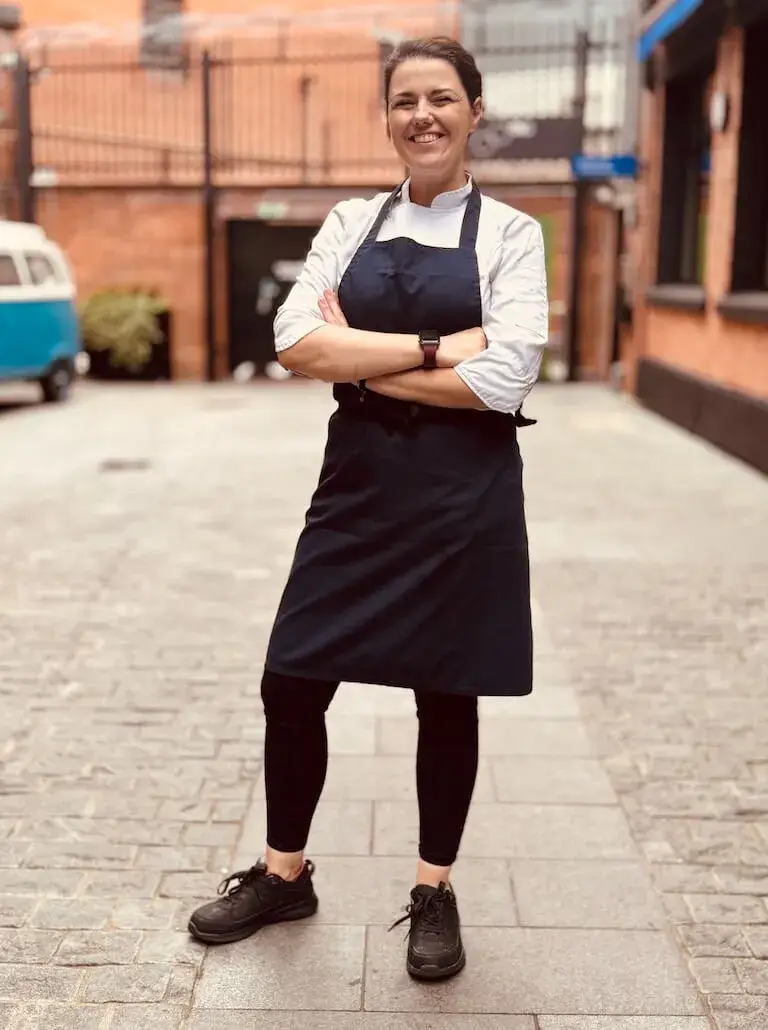
Marion embraces new challenges in each country she calls home, from Washington D.C.’s diplomatic circles to Belfast’s bustling culinary scene.
Stepping Up to Head Chef
The school was part of a large building complex that included the cookery school, a restaurant, multiple rooms, and event spaces. Marion began as a chef instructor, teaching French food, French pastry, and macarons. Soon, she transitioned from teaching into the restaurant’s kitchen as the pastry chef.
Then came an even bigger opportunity: head chef at a gastropub just across the street. Marion now juggles both roles—continuing to teach at the cookery school while managing her head chef responsibilities.
Being a head chef meant managing inventory, suppliers, staffing, food cost, health inspections, and creative direction. At times, it was overwhelming, but her Escoffier education had prepared her for more than just cooking. While she initially felt like food costs and learning how to design a menu were extras, she has since realized how important they truly are in a professional setting.
“This is so important,” Marion shares. “And thank God we (learned those) as well, because it’s helping me every day.”
The business knowledge proved especially valuable during her first health inspection as head chef.
“Oh my gosh. I feel like I graduated again when I passed,” she said.
Macarons for Royalty: An Unforgettable Day
And then there was the Tuesday her boss asked her to work an extra shift. He mentioned they had very important guests but couldn’t say who. Marion had a hunch.
“And I said to him, ‘Do they maybe wear a crown on their head?’” she said. “He said, ‘Yes, maybe.’”
She was baking macarons for the King and Queen.
“I couldn’t believe it,” she said. “It was such a fun experience.”
What struck Marion most was how at ease the royal couple seemed.
“They are both very relaxed,” she said. “You can tell they’re used to it. They’re used to going and seeing people and talking to them and shaking hands.”
In contrast, Marion and the two other chefs were nervous about protocol and proper etiquette.
“We were very like, ‘Be careful what you say.’… And they were so, so relaxed. So they talked to us, I think more than we talked to them. But it was an amazing day.”
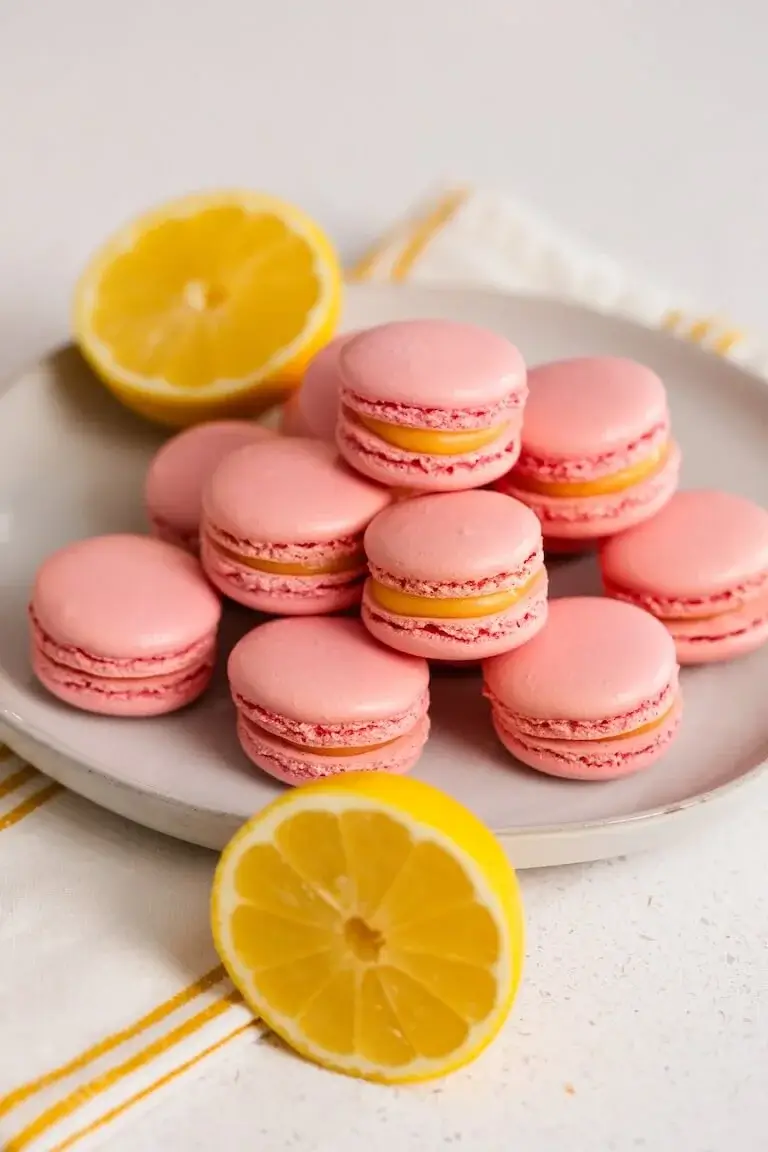
Marion’s signature approach to macarons balances the sweet shells with tart, acidic fillings—the same technique she used when creating macarons for the King and Queen.
The Power of Saying “Yes”
Whether she’s teaching, managing a team, or launching a new project, Marion’s philosophy remains consistent: say yes first, and figure it out as you go.
This approach has led her to take on even more projects alongside her head chef position and cookery school teaching. She now hosts The Secret Life of Chefs, a podcast where she interviews chefs around Belfast to explore what drives them behind the scenes. It’s not just about recipes or trends—it’s about mindset.
“I was scared of cameras and microphones,” she said. “I didn’t like how my voice sounded. But I did it anyway. And now I get to talk with amazing people who inspire me.”
While continuing to balance her restaurant and teaching responsibilities, Marion has also launched her own online pastry classes, sharing the methods and flavor philosophies she’s developed over years of experimentation. One of those philosophies challenges a fundamental assumption about pastry: that it needs to be loaded with sugar.
“I don’t like sugar because I don’t think that we need as much sugar,” she explained. “I know as a pastry chef it’s a bit funny. I’m always trying to remove sugar from the recipe as much as I can.”
For macarons, she’s found creative solutions.
“Because the shells are very sweet and you cannot change the formula for that, you can play with all the fillings,” Marion said. “… I love to have very sour, acidic lemon curd, passion fruit curd. And I think you can balance everything with that. I like when you bite in the desserts, you don’t have just the taste of or the sensation of sugar. You have the taste of all the ingredients you’ve put in.”
Even her home life reflects her adaptability and experimentation. Her young son has an egg allergy, which pushed her to reimagine recipes without eggs.
“You just need to understand what role the egg plays—binding, moisture, structure—and find an alternative that serves the same purpose,” she said.
Building a Life Through Adventure and Bold Choices
Behind the skills and accomplishments, Marion’s story is one of adventure and an unwavering belief in taking the leap before you’re ready.
On her podcast, Marion asks every guest the same question: What’s your secret ingredient? When she turns that question on herself, her answer reveals the heart of her cooking philosophy.
“If I had to ask myself that question, I would say that consistency (is) important, but (my secret ingredient is) emotions,” she said.
For Marion, food is about connection and feeling.
“Food…carries emotion, or at least for me it has to. And if when you have a dish in front of you, no matter how small, no matter how complicated, fine dining, not fine dining, if you feel an emotion, for me that’s a win. If you don’t feel an emotion, well, you have to work on that dish again.”
But perhaps her most powerful ingredient is her willingness to start before she feels ready.
“It doesn’t have to be perfect for you to start, right?” she said. “… I used to think everything needed to be perfect. Everything needed to be under control, everything. No, that’s not true. First step and then experiment, adjust.”
She applies this philosophy to everything, including her podcast.
“I’m sure that in a year when I will look back to the first video I will say, dear, that’s so bad,” she said. “That’s okay. It’s the first video. It’s not supposed to be good anyway. You’re learning. You’re trying. You’re putting yourself out there. So do the first step and then you’re going to do the second step and then you’re going to learn and then you’re going to do the third step and just one step at a time and you’ll get there.”
And She’s Not Done Saying Yes
True to form, Marion continues to embrace new challenges. She’s currently competing on Season 21 of The Great British Menu, bringing her philosophy of emotion-driven cooking and her willingness to try anyway to one of the UK’s most prestigious culinary competitions.
Is It Your Turn to Say “Yes”?
Marion’s path from trying new careers each year to building a lasting role in the culinary world shows that meaningful change can begin at any time. She discovered her calling in a pastry station in France, found her confidence through Escoffier’s online program during a pandemic, and built her current success by knocking on doors in Belfast with nothing but her diploma and determination. Each step required saying yes before she knew exactly what came next.
Today, whether she’s teaching a macaron class, managing her gastropub kitchen, or interviewing fellow chefs on her podcast, Marion carries the same message she learned from at Escoffier years ago: bake it anyway. Try it anyway. Start anyway.
Ready to explore your own culinary journey? Discover how Escoffier can help you build the technical foundation and business skills you need to pursue your passion.
Want to hear more success stories from Escoffier graduates? Check out these articles next!
- From Drafting to Dining: How Marc Mole Reinvented His Life Through Culinary Arts
- The “Ratatouille Moment”: Chef Rodney Smith Serves Memory and Home on Every Plate
- Three Aprons, One Journey: How Daniela Peregrina Reset Her Life at 53
*Information may not reflect every student’s experience. Results and outcomes may be based on several factors, such as geographical region or previous experience.