

Listen to This Article:
When people consider culinary school, the questions can feel big. Some worry about money. Others aren’t sure how to balance school with work or family. For a few, location feels like a locked door. And for many, past rejections have chipped away at their confidence.
Many Auguste Escoffier School of Culinary Arts alumni faced similar challenges before they enrolled. Here, five of them share why they chose Escoffier—and how they discovered a path that made culinary school possible.
From financial support and flexible learning formats to finding a program that felt tailor-made, these graduates show that seemingly overwhelming obstacles can often be met with practical solutions.
Amy Kimoto-Kahn: I Needed Formal Credentials
Amy Kimoto-Kahn had already built an impressive food career—food blogger, published author of two cookbooks, and culinary class instructor. But she discovered that her experience alone wasn’t enough to help her get hired at local cooking schools.
After Kimoto-Kahn was turned down for multiple jobs and a potential employer pointed out that she lacked “a full formal culinary background,” she started researching culinary schools and landed on Escoffier. Kimoto-Kahn chose the Associate degree instead of a certificate program because she wanted to explore history and food business.
Looking back, she understands what was missing from her already impressive resume. She had raw skill, but lacked the formal terminology, classical systems, and structured foundations valued in a professional kitchen.
“I didn’t know what a rondeau was, or fine brunoise,” she said. “I knew some of the mother sauces, but I didn’t know all of them, (or) the whole kitchen brigade system that [Auguste] Escoffier is well known for. I didn’t know a lot of that, and so I can appreciate and be humbled by just honing something new every day.”

Despite her experience in the culinary industry, Amy Kimoto-Kahn struggled to get hired without formal culinary training, leading her to enroll at Escoffier.
The Value of Formal Training
Kimoto-Kahn’s experience is one that other self-taught cooks or food entrepreneurs may face. Many employers look for education as proof of comprehensive culinary training, even if the candidate has experience in the industry.
*Information may not reflect every student’s experience. Results and outcomes may be based on several factors, such as geographical region or previous experience.
Estefania Colamarco: Financial Aid and Support Made It Possible
Money was tight when Estefania “Effy” Colamarco was growing up in Ecuador.
“There were times when I was growing up that we didn’t have money to buy protein; we would only eat eggs and rice,” she said.
To make extra money to help support her family, Colamarco started making cupcakes to sell in high school, and discovered a love for baking. After moving to the U.S. and spending time in Philadelphia and Kansas, Colamarco was researching her next move when she discovered Austin’s culinary scene.
“And then I found Escoffier,” she said. “I saw everything online and I was like, ‘I’m gonna study there when I move.'”
Starting over in a new country and working with limited resources, Colamarco questioned how she could afford culinary school. When she called the Austin campus, she found out how to navigate the financial aid process, which ultimately helped make her dream achievable. Colamarco spent about a month and a half getting everything in order, including securing financial aid from Escoffier.
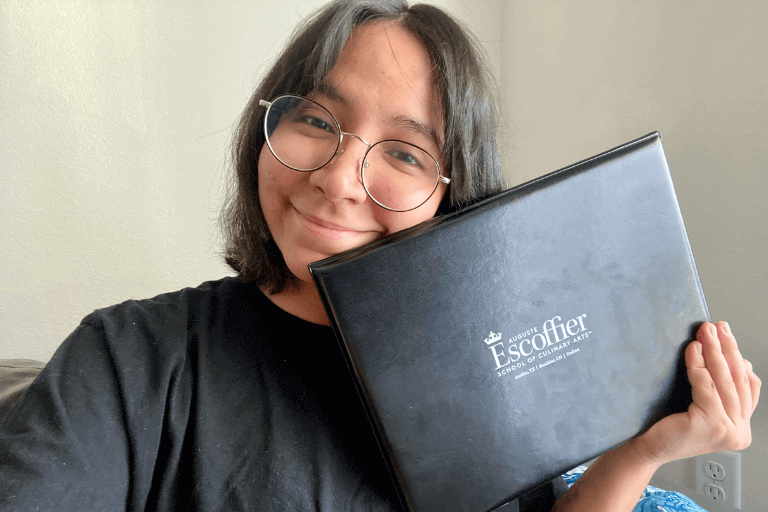
Effy Colamarco was able to pursue her culinary goals with the help of financial aid at Escoffier.
Making Culinary Education Accessible
Colamarco’s experience demonstrates that financial barriers don’t have to end culinary dreams. At Escoffier, 95% of Austin students and 59% of Boulder students who entered postsecondary education for the first time received some financial assistance in 2022-23 for those who applied and qualified**.
Interested students don’t have to walk through this process alone. Escoffier can help students explore federal aid options, scholarship options, and payment plans.
*Information may not reflect every student’s experience. Results and outcomes may be based on several factors, such as geographical region or previous experience.
**Consider your situation and resources to determine what is affordable for you. Financial aid is available to those who apply and qualify.
Mike Carrillo: Flexible Online Learning Worked with My Life
Mike Carrillo’s interest in a culinary education started when he experienced a health crisis that almost cost him his life. He struggled with severe Type 2 diabetes and ended up having emergency surgery when a minor infection turned septic.
It was the wake-up call Carrillo needed. The experience motivated him to commit to a plant-based lifestyle, which led to dramatic health improvements. He lost more than 100 pounds and was able to stop taking all of his diabetes medication.
But he didn’t stop there. Carrillo wanted to help others understand how food can be medicine. He finally decided to try Escoffier’s plant-based culinary program and enrolled in the online option. It proved to be a good fit while he balanced work, life, and school. Carrillo was building a new career focused on health coaching, which required flexibility that traditional programs couldn’t offer.
“I went from one of those students trying to sit in the back of the class to one of those students that was in front of the class,” he said. “I was always asking questions. I always had my hand up. I always did my homework.”
Initially planning to earn just a certificate, Carrillo’s positive experience with the online format spurred him to continue.
“When I got done with that certificate, I was just so overjoyed with my whole experience,” he said. “I said, I’m this close. I’ll just go back and get my associates.’”

After changing his life through healthy eating, Mike Carrillo enrolled at Escoffier to help teach others how to do the same.
Why Online Learning Works
Online culinary education can be as rigorous as traditional classroom learning. Escoffier’s online programs also include at least one hands-on industry externship. In addition, the flexible schedule can allow students to balance school with their other commitments. Students generally spend 15-23 hours a week on schooling, depending on their program of choice and personal pace.
*Information may not reflect every student’s experience. Results and outcomes may be based on several factors, such as geographical region or previous experience.
Christopher Puga: I Chose to Leave My Small Town for Better Opportunities
Christopher Puga’s passion for baking started when he was a child in El Paso, Texas. Puga would watch Emeril Lagasse on TV and run around the house imitating Lagasse’s famous “Bam!” catchphrase. In high school, Puga attended a culinary-focused vocational program and enjoyed baking for his teachers.
But passion doesn’t always translate to local opportunities. When Puga continued his education at the local community college, he hit a wall.
“When I graduated high school and then went into the community college, that high school program was so strong that the college program was a replica of what I discovered at the vocational school,” he said. “So I felt like I wasn’t getting anywhere … It wasn’t enough.”
The local culinary scene at the time offered few opportunities for growth, and Puga had a negative experience working for a local bakery owner. Puga realized if he wanted to continue advancing his career, he was going to need to make a big change.
He eventually decided to enroll at Escoffier’s Boulder campus.
“I thought, I don’t want to stay in Texas, I want to do something different. If I’m going to take a leap, I’m going to take a leap,” he said.
Boulder was 12 hours away, but Escoffier helped make the relocation easier by pairing Puga with a roommate and helping them find housing options.
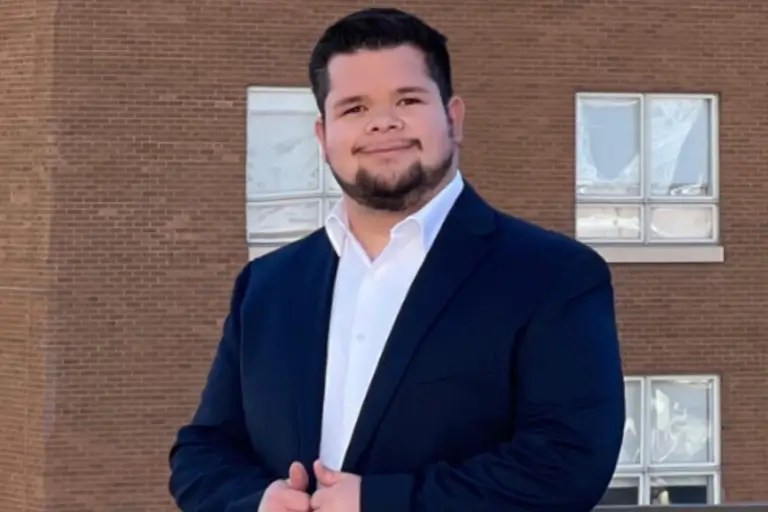
Attending the Boulder campus helped Chris Puga expand his culinary opportunities and go after his career goals.
Why Location Matters
Sometimes, pursuing culinary dreams means making the difficult decision to leave familiar surroundings for better opportunities. For Puga, the Boulder campus offered an immersive culinary environment that his hometown couldn’t provide. He learned from experienced Chef Instructors and made connections with a larger industry network.
*Information may not reflect every student’s experience. Results and outcomes may be based on several factors, such as geographical region or previous experience.
Bree Chumley: I Wanted a Plant-Based Program
When Bree Chumley saw an online ad for plant-based culinary education, she wasn’t sure whether to believe it.
“I never thought I wanted to go to culinary school…but when I saw it was a legit plant-based program with an associate degree, I was like, this sounds too good to be true,” Chumley said.
Chumley had been hesitant about enrolling in culinary school because she didn’t want to butcher meat. Even the thought of handling knives around meat was enough to stop her from pursuing a culinary education. But that barrier disappeared when she discovered Escoffier’s plant-based program.
“The relief and ease of a program where I could explore the arts of culinary techniques without EVER worrying about butchering meat was a gigantic, obvious moment to me,” she said. “Plant-based culinary arts programs eliminated a fear I had, and that was apparently the only motivation I needed for a new endeavor to completely enthrall me.”
Once Chumley realized the program existed, her decision came quickly.
“It happened in a matter of more than two weeks but less than a month—I applied, I got in, I was excited, and I just kind of took off with it,”* she said.
*Information may not reflect every student’s experience. Results and outcomes may be based on several factors, such as geographical region or previous experience.

At the Waterloo Vegan Market, Bree served up small-batch vegan cheeses, dips, and spice blends.
Finding the Right Fit
Chumley’s experience shows that the right program can make all the difference. Discovering a program that allowed her to specialize in a field that aligned with her values changed everything.
Escoffier offers programs in culinary arts, baking & pastry, plant-based, hospitality and restaurant operations management, food entrepreneurship, and holistic nutrition and wellness. The breadth of programs can mean that whether a student is drawn to artistry, management, innovation, or wellness, there’s probably a program to match.
*Information may not reflect every student’s experience. Results and outcomes may be based on several factors, such as geographical region or previous experience.
Your Path Forward
These five alumni stories show something important: often, the biggest roadblocks to culinary school exist in our heads, not in the real world. Each of these graduates decided to move forward even without knowing exactly what the future would hold.
Whether you prefer an online program or an on-campus experience, Escoffier offers specialized programs—from plant-based to hospitality and restaurant operations management—along with flexible scheduling that could fit into your life. Financial aid is available for those who apply and qualify, so your culinary journey doesn’t have to wait for perfect circumstances.
Curious about how culinary education could fit into your life? Contact us to discuss your goals and find out about the program options that may be right for you.
Interested in this article? Check these out next!