
Listen To This Article
You’ve perfected Thanksgiving dinner for twelve. Your homemade pasta is legendary among friends. You can eyeball measurements, improvise with whatever’s in the fridge, and nail complex recipes on the first try.
What many home cooks don’t realize is that professional cooking has its own sort of hidden curriculum, built on a set of visible and invisible skills that go far beyond following a recipe. Consider this your potential roadmap from the home kitchen to the professional one, with an inside look at the skills that shape a chef’s craft, the training that refines them, and the journey that begins when you decide to make cooking your career.
What Separates Home Cooking from Professional Craft
Moving from home cooking to professional training doesn’t just mean sharpening your knife skills or memorizing recipes. It’s a complete recalibration of how you think, move, and work in the kitchen. Culinary school breaks that transformation into layers of learning that build upon each other, turning personal passion into professional discipline.
Here are six elements where culinary students often feel the biggest shift from home cook to professional:
#1 From Home Cook to Professional: Developing a Chef’s Mindset
The gap between home cooking and professional cooking often starts with mindset. At home, cooking is about pleasure and creativity. You can adjust flavors freely, cook when inspiration strikes, and serve people you know.
In a professional kitchen, consistency is king. Chefs follow exact standards and tight timing while serving paying guests. They replicate dishes again and again, keeping the same quality no matter how long the shift or how busy the service.
Those differences shape everything in the kitchen. Where a home cook might gather ingredients and improvise, a professional relies on systems. Mise en place—“everything in its place”—is a mindset built on organization and preparation. Every detail, from the prep list to the station setup, supports focus and control once service begins.
That structure extends throughout the kitchen. Food safety means tracking temperatures and preventing contamination. Sanitation follows strict routines. Communication runs through the brigade system, where clear roles and teamwork keep the pace steady.
Home cooking thrives on creativity and flexibility. Professional cooking still celebrates creativity, but it also demands consistency, precision, and discipline.

The brigade system teaches teamwork, communication, and leadership, essential skills for thriving in professional kitchens.
#2 Refining Techniques: The Foundation of Culinary Confidence
Consider chicken piccata with a classic pan sauce. As a home cook, you might nail it one night with perfectly browned chicken, a silky lemon-butter sauce with just the right balance of acid and richness. The next time, the sauce breaks, tastes flat, or the chicken is unevenly cooked. You’re not sure what changed or how to fix it.
A professional chef understands exactly why.
They know how to identify a good fond, or those browned bits on the pan that provide deep flavor. They understand the chemistry of emulsification, why butter needs to be incorporated off-heat to prevent breaking, and how acid interacts with fat. They can taste the sauce and know instantly whether it needs more lemon, a touch of stock to loosen it, or another minute of reduction. Professional cooking is all about proficiency in technique, not memorization of recipes.
This technique-based knowledge transforms cooking from hit-or-miss to reliably excellent.
The Professional Edge: Turning Skill into Consistency
The difference between home and professional cooking often lies in refinement. Chefs rely on practiced technique to transform familiar skills into consistent results.
| Skill Area | Home Cook Approach | Professional Chef Approach |
| Sauce Making | Mix ingredients according to recipe and hope for the right texture | Controls temperature and emulsification methodically |
| Knife Skills | Cuts by feel and size preference | Uses uniform and precise cuts for even cooking and presentation |
| Heat Control | Adjusts as needed during cooking | Anticipates reactions and manages heat for precision |
| Flavor Balance | Tastes and tweaks at the end | Builds flavor layers and adjusts throughout |
| Consistency | Each dish is unique | Every plate matches the standard |
At Auguste Escoffier School of Culinary Arts, Chef Instructors can teach students these standardized techniques not to stifle creativity, but to build a foundation of understanding. As a future chef, you can see how uniform knife cuts ensure vegetables cook evenly or understand how perfecting the five mother sauces provides the framework for thousands of variations. Learning proper sautéing, braising, and roasting techniques can give you control over outcomes rather than leaving results to chance.
Having a strong foundation of education can also help professional chefs stay current as the industry evolves. For example, with a 62% increase in plant-based dishes on U.S. restaurant menus over the last decade and 48% of all restaurants now offering plant-based options, chefs need technical versatility. A great chef will take the same skills that create the perfect beef demi-glace and adapt those techniques for building complex flavor in vegetable-forward dishes. These sort of shifts often require knowledge of new ingredients, techniques, and flavor-building approaches that extend far beyond substitution.
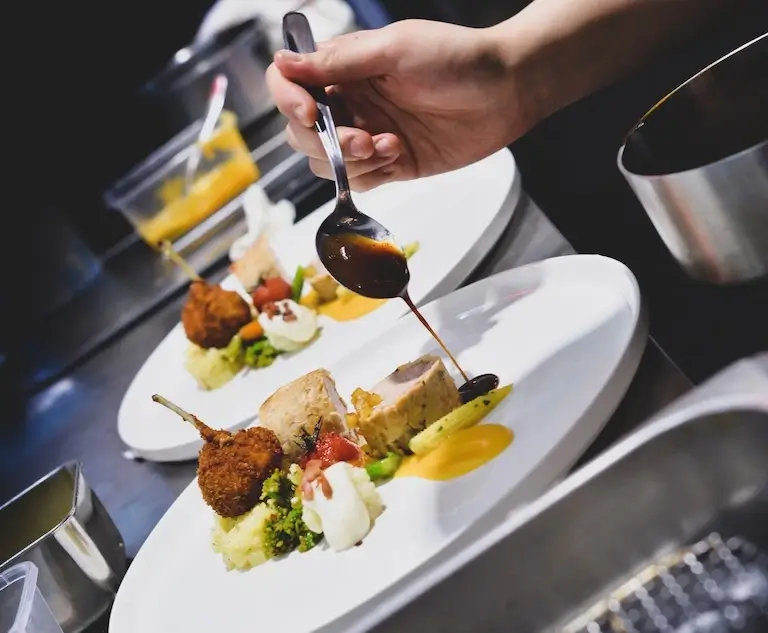
Precision, consistency, and plating design are part of the hidden skill set that transforms a home cook into a culinary professional.
#3 Speed & Efficiency: Learning to Move at the Pace of a Professional Kitchen
Back to that impressive Thanksgiving dinner. Maybe you made a perfectly roasted turkey, rich gravy, and multiple sides that all came together beautifully. If dinner lands on the table at 9 p.m. instead of the promised 5 p.m., your family might tease you, but they’ll still eat gratefully and compliment your cooking. In a restaurant, that four-hour delay would be catastrophic.
Professional kitchens operate with time as an absolute constraint. You’re not cooking one turkey; you’re managing a station where multiple tables need their entrées finished at the same time and at the right temperature, all while coordinating with other stations so that table 8’s four different dishes arrive together, perfectly plated, during a rush when dozens of other orders are firing at the same time.
This is where the efficiency gap of a home cook vs. a professional chef becomes visceral. Speed in professional cooking isn’t about rushing or cutting corners. It’s about building muscle memory through repetition until your hands move efficiently.
From the Field
In a professional kitchen, rarely is there idle time as you’re waiting for one dish to finish. Instead, you’re coordinating multiple cooking processes simultaneously: while proteins rest, you’re finishing sauces and plating sides. While one pan sears, you’re checking temperatures and adjusting heat on three others.
That’s the difference between cooking on your own (sometimes generous) schedule and executing flawlessly on the kitchen’s schedule.
The physical demands in a professional kitchen can surprise some career changers. Professional cooking requires stamina to maintain precision and speed for 10-12 hour shifts, manage extreme heat, and perform repetitive motions thousands of times without injury. As any pro will tell you, a sense of urgency is critical.
Culinary school can build this capacity in a systematic way, such as cooking the same dishes repeatedly and gradually increasing speed without sacrificing quality. Towards the end of your program at Escoffier, students will also participate in hands-on industry externships to build real-world experience that can put all of these skills and knowledge to the test.
#4 Flavor Building: Training Your Palate Like a Chef
Each skill builds on the last. Once you can move with speed and confidence, a new gap emerges: the ability to taste, analyze, and adjust with precision. That’s where a chef’s palate begins to form.
Home cooks often follow recipes, measuring salt and adjusting at the end. Professional chefs taste constantly and adjust intuitively throughout the cooking process.
The difference lies in seasoning with intention. Chefs know when to layer salt at different stages, when acid will lift a dish rather than overpower it, and how fat carries flavor. They understand how heat can sharpen or soften ingredients. None of this is guesswork. Rather, it all comes from deliberate practice.
Professional chefs develop palate memory through repetition. They know what properly seasoned food tastes like at every stage of cooking and can detect small imbalances before they become noticeable. When something is slightly off, they can fix it instinctively. That kind of intuition forms only after cooking the same dishes many times with close attention to how flavors evolve.
When making the leap from home cook to chef, culinary school is a great place to learn because culinary schools structure this sensory training intentionally. Students are developing the skills to cook, yes, but they’re also building a reference library of tastes at the same time. As a student, you can learn to identify what’s missing in a dish and how to correct it. Repetition is how professional chefs internalize flavor principles that home cooks, cooking each dish occasionally, rarely develop to the same depth.
Moving beyond recipes to intuitive flavor building allows chefs to adapt in real time, cook without measurements, and create consistent flavor regardless of ingredient variation.
#5 Beyond the Plate: The Systems That Make a Kitchen Run
It’s one thing to keep a home pantry stocked and cook a few standout meals when time allows. It’s another to start thinking like an operator.
In a professional kitchen, every dish is standardized with precise yields and portions. Each ingredient has a cost that influences menu pricing and profitability. Shifts run on prep lists, par levels, and waste tracking—all systems that determine whether the kitchen runs smoothly or struggles to stay afloat.
Home cooks focus on making one great dish. Professional chefs think in systems: How do I prep efficiently for 200 covers? How do I maintain quality from the first plate to the hundredth? How do I document this recipe so any trained cook can replicate it? This kind of thinking extends to inventory management, equipment workflow, and kitchen organization that maximize both consistency and efficiency.
In many kitchens, sustainability is now central to those systems, too. Formal training helps bridge that gap, with 72 percent of culinary schools integrating sustainable cooking practices into their curriculum. Students can explore how to approach operations with environmental responsibility, waste reduction, and long-term viability in mind. Professional chefs balance quality with cost, creativity with consistency, and innovation with sustainability.
Understanding the business side matters just as much as having a command of flavor. Food cost percentages, labor management, and pricing strategies all shape a kitchen’s success.
The gap between home and professional cooking here is fundamental. Home cooks aim to feed people well. Professional chefs must feed people well and run a profitable, sustainable operation. Learning to think like a business owner, not just a cook, is what transforms a good cook into a great chef.

Professional chefs think beyond recipes, managing costs, staffing, and systems that keep a kitchen running efficiently.
#6 Soft Skills and Kitchen Culture
Even the most skilled cook can struggle in a professional kitchen without understanding how it functions as a workplace. In your own kitchen, you’re typically a one-person show. Step into a restaurant kitchen, and you’ll become part of the brigade system, the classical structure used in professional kitchens. This system creates clear communication and defined roles, helping teams coordinate smoothly under pressure.
But kitchen culture runs deeper than hierarchy. It’s about collaboration, timing, and awareness. Cooks work shoulder-to-shoulder during busy services, support one another through inevitable mistakes, and figure out how to stay composed when things get hectic. Direct feedback is part of daily life, and developing the ability to give and receive it respectfully is key to growth.
Leadership starts early. Even entry-level cooks are expected to communicate clearly, follow directions precisely, and lend a hand when needed. As responsibilities grow, so does the need to delegate, manage personalities, and uphold consistency. Professional conduct, including showing up on time, being prepared, and respecting the chain of command, is also highly valued.
Then there are the subtle parts of kitchen life: how to move efficiently in a shared space, when to speak and when to listen, how to ask for help without breaking the flow. These unspoken cues take time to learn but shape how kitchens operate day to day.
Less Obvious (But Incredibly Valuable) Chef Skills:
Great chefs don’t just memorize recipes. They notice details, explore endlessly, and bring artistry to every element of the dining experience.
- Cultural curiosity: Traveling, eating globally, and exploring immigrant-owned markets can broaden perspective and deepen respect for culinary traditions.
- Ingredient hunting: Seeking out rare or local ingredients—whether a smoked salt from Iceland or seasonal produce from a neighborhood grower—keeps cooking exciting and personal.
- Deep dives: Many chefs become obsessed with perfecting one thing, like fermentation, handmade pasta, or regional spice blends. These passions often define their cooking style.
- Design awareness: An eye for plating, color, and composition elevates how a dish feels before the first bite. Understanding balance and contrast on the plate helps food look as good as it tastes.
- Storytelling: The ability to share the “why” behind a dish gives guests a connection to the chef’s creative process.
- Language and listening: Nearly 49 percent of chefs in the U.S. who speak a second language speak Spanish, a valuable skill in the diverse workspace of professional kitchens.
- Observation: Great chefs notice everything—from the aroma of toasting spices to how the light catches a sauce. Awareness sharpens intuition.
- Continuous learning: Curiosity can fuel growth. Reading, tasting, and experimenting beyond the job keeps chefs inspired and evolving.
Bridging the Gap: Steps Toward the Professional Kitchen
If all of this excites you rather than intimidates you, the professional kitchen could be the right place for you. Culinary school can be a great place to start bridging that gap. Here’s how:
Before You Enroll
You can begin developing professional habits now, even in your home kitchen:
Practice knife skills. Focus on consistent, uniform cuts, not just speed. Watch professional technique videos and practice basic cuts like brunoise, julienne, and chiffonade until your muscle memory takes over.
Adopt mise en place at home. Before you start cooking, prep and organize everything. Time yourself. Notice how planning and setup change your cooking flow and stress levels.
Study flavor fundamentals. Read about salt, fat, acid, and heat. Practice tasting and adjusting throughout the cooking process, not just at the end.
Build physical stamina. Professional cooking is physically demanding. Work on standing for longer periods, building core strength, and developing heat tolerance.
Stage in a professional kitchen. Many restaurants allow aspiring cooks to shadow or volunteer for a shift. There’s no substitute for experiencing the pace, pressure, and culture firsthand before committing to culinary school.
What Culinary School Can Provide
While self-teaching can develop some skills, culinary school can offer structured progression that’s nearly impossible to replicate on your own. At Escoffier, students move systematically from fundamental techniques, building competency in a logical sequence rather than jumping randomly between skills.
Feedback makes the crucial difference. Chef instructors watch you work, correct technique in the moment, and push you to improve in ways that YouTube videos and cookbooks simply can’t. Simulated pressure environments, like mock service scenarios or team-based kitchen labs, can prepare you for real-world conditions before you step into your first professional role.
Access to professional equipment and ingredients also expands what you can develop skill in. Commercial ranges, blast chillers, sous vide circulators, and specialty tools become familiar rather than intimidating. And when you’re ready to bridge classroom learning and real kitchens, externships can allow students to work in restaurants, hotels, or catering operations where they apply skills under actual service conditions.
You can also build a network and find mentorship through connections with Chef Instructors, fellow students, and industry professionals that may lead to job opportunities and career guidance long after graduation.
This comprehensive approach explains why 73% of professional chefs choose formal training even though it’s not technically required in many kitchens. At Escoffier, students can get a comprehensive education that starts with classical French techniques up to contemporary approaches, like plant-based cooking techniques and global flavors that reflect how the industry has evolved. You’re discovering both timeless foundations and current innovations, preparing for the profession as it exists today.
From Culinary Student to Chef: The Realistic Timeline
Escoffier offers program options designed for different schedules and career goals: diploma and degree programs follow different timelines, with diplomas taking between 30-60 weeks and associate degrees typically taking 60-84 weeks, with both online and on-campus formats available to fit your life.
Most culinary school graduates start in entry-level positions, such as a line cook, prep cook, or commis, regardless of age or previous career success. A typical progression might look like: line cook (1-2 years), senior line cook or chef de partie (2-3 years), sous chef (3-5 years), and eventually chef de cuisine or executive chef (5-10+ years). The timeline varies based on work ethic, opportunity, and the type of establishment.*
*Information may not reflect every student’s experience. Results and outcomes may be based on several factors, such as geographical region or previous experience.
Chef Miguel Omeldo, a Chef Instructor at Escoffier, encourages students to seek out jobs that stretch them.
“If you really have the passion, find a workplace that’s going to teach you different stations,” he says. “It makes you more valuable, stronger, and more adaptable.”
And while he’s all for fine dining and small restaurant experience, Chef Miguel advises students not to stay in one place too long.
“Learn from it. But don’t stay there forever,” he says. “Move around every two or three years to gain more experience.”
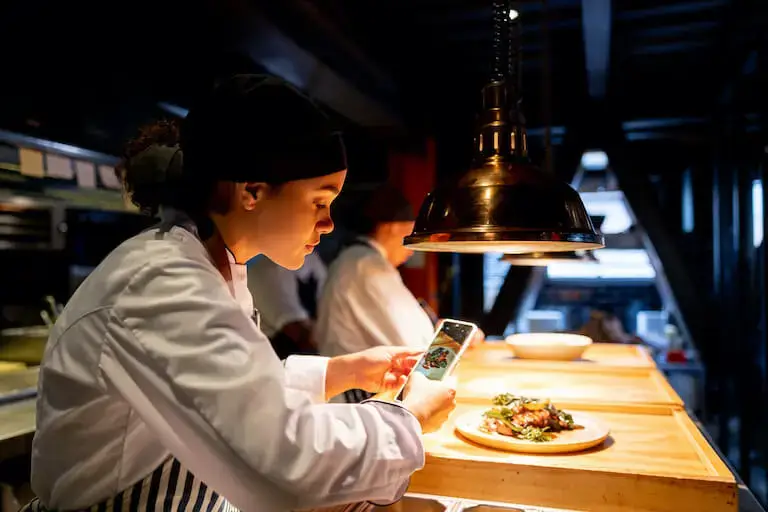
Attention to detail matters as much as flavor. Culinary students and chefs alike study plating, color, and presentation to create dishes that engage every sense.
The culinary world often references the 10,000-hour principle, or the idea that real command of a craft requires extensive practice. Even with culinary school providing foundational training, becoming truly skilled requires years of hands-on work. Every chef you admire has put in those hours.
Here’s the encouraging part: 56% of chefs in the U.S. are 40 or older. It’s never too late to start, and maturity often becomes an asset in an industry that values discipline, professionalism, and life experience.
Career paths extend far beyond restaurant kitchens too. Graduates pursue catering, private chef work, food media, recipe development, culinary education, food styling, and product development, each offering different lifestyle demands and growth trajectories.

Culinary training can open doors to many careers, from restaurant kitchens to food media, education, and entrepreneurship.
How to Know if the Chef’s Life Is Right for You
Before you trade your home apron for a chef’s coat, take a moment to reflect. Cooking professionally can be deeply rewarding, but it also requires energy, patience, and adaptability. Asking yourself a few honest questions can help you decide if this path feels right for you.
- Do I thrive under pressure? Professional kitchens move fast. Some people find that pace exciting, while others find it stressful.
- Am I open to feedback? Growth in the kitchen depends on repetition and critique. Can you take feedback in stride and use it to improve?
- Do I enjoy structure and routine? Behind every creative dish is a system. Are you comfortable following processes while still adding your own touch?
- How do I handle long hours and physical work? Cooking professionally means standing for long stretches, lifting heavy items, and staying focused even when tired.
- Do I care about the story behind food? Many chefs see cooking as a form of connection—between people, places, and ingredients. If that idea inspires you, you may be in the right place.
- What’s my long-term vision? Culinary training can lead to restaurants, catering, food media, education, or entrepreneurship. Knowing your “why” helps guide your direction.
At Escoffier, many students started just like you: passionate home cooks who are ready for growth. They bring curiosity, drive, and a desire to turn skill into purpose. Through structured training, mentorship, and hands-on experience, they gain confidence in both their craft and their career path.
If these questions make you feel excited about what’s next, that may be your sign to take the next step. Contact us today to take the first step toward the culinary future you envision.