
Listen to This Article:
The baker’s life is one of precision and attention to detail. It’s a daily dance of creating perfectly baked bread with a mouth-watering crunch, delicate, evenly-sized macarons, and show-stopping, flavor-filled cakes.
If you love to focus on tiny details—knowing by feel whether a dough is too dry or too sticky, reading a loaf’s crust color to judge doneness, or sensing when a proofing dough has hit its window and needs to go in the oven right now—then you may have the makings of a baker.
That intuition matters even more at the professional scale. Joy Wilson, founder of Joy the Baker, knew she was a skilled home baker before she took her first job in a professional bakery, but she was surprised by how different the work felt.
“Working in a bakery is different,” she said.
The exacting consistency standards, the volume, and the pace of a professional kitchen raise the bar on every skill you already have. Whether you’re an amateur who wants to go pro, or a total novice who’s just testing the waters, here’s what it could take to become a professional baker.
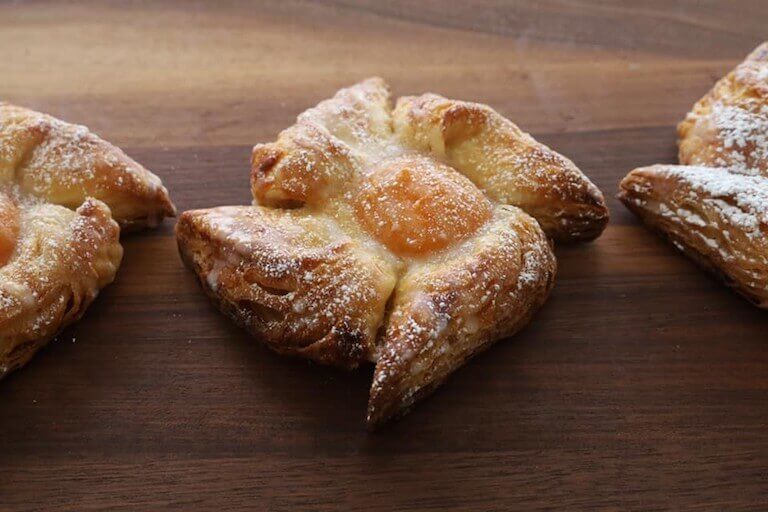
A viennoiserie created by Escoffier student Danny N.
What Does a Professional Baker Do?
Professional bakers produce baked goods across a range of settings: bakeries, cafés, restaurants, grocery stores, and large-scale commercial facilities. The specific work depends on where you land, but the through-line at every level of the profession is consistency. When you’re producing bread or pastries for paying customers, every batch needs to meet the same standard regardless of what the humidity is or whether your oven is running hot.
Developing that kind of reliability takes a working understanding of how dough behaves, from why it rises at different rates to how fermentation time affects flavor and texture. If those terms are new to you, here’s a quick reference for some of the vocabulary that comes up most in professional baking:
| Term | What It Means |
| Blind baking | Pre-baking a pie or tart shell before adding filling; can help prevent a soggy bottom |
| Crumb | The interior texture of baked goods, including their air pockets, softness, and structure |
| Crumb coat | A thin layer of frosting applied to a cake before the final coat to seal in crumbs |
| Creaming | Beating butter and sugar together at room temperature to incorporate air, which affects texture in cakes and cookies |
| Docking | Pricking dough with small holes before baking to prevent unwanted puffing |
| Fermentation | Yeast or sourdough cultures convert sugars into gas and acids, creating rise and developing flavor |
| Folding | Gently combining ingredients to preserve air in batters or doughs |
| Kneading | Working dough to develop gluten, which gives bread its structure and chew |
| Laminating | Folding butter into dough repeatedly to create thin, flaky layers, as in croissants or puff pastry |
| Mise en place | Measuring and preparing all ingredients and tools before baking begins |
| Proofing | The rise before baking, where dough relaxes, expands, and develops texture, typically until they double in size |
| Scoring | Cuts made on the dough’s surface before baking to control how it expands in the oven |
| Tempering | Slowly adding a hot liquid to a cold ingredient (like eggs) to raise its temperature without cooking or curdling it. |
The Difference Between a Baker and a Pastry Chef
Bakers specialize in baked goods like bread, pies, rolls, cakes, pastries, donuts, and buns, and generally don’t venture into plated desserts. Pastry chefs are usually responsible for a broader range of desserts including custards, ice cream, French pastries, chocolates, and plated presentations.
In practice, plenty of professionals do both, and many baking and pastry programs train students in both disciplines. But when you’re looking at job titles and kitchen roles, these are often key distinguishing factors.
Baker or Pastry Chef: How to Choose
If you love the rhythm of high-volume production, working with dough, and prefer working in a quiet kitchen, baking may be the better fit. If you’re drawn to intricate detail work, plated desserts, the artistic side of the kitchen, or love baking but never want to wake up before the sun rises, pastry might be your lane.
The Life of a Baker
Most professional bakers are at work while the rest of the world is still asleep. Shifts often begin by 3 a.m. to ensure bread and pastries have time to mix, proof, and bake before the first customers arrive. If you aren’t naturally an early riser, this is a reality worth considering before committing to the craft.
The physical demands of baking at volume can be intense, especially if you run a bakery business from home. Jennifer Relph, a former cottage food business owner, recalls a Thanksgiving where she spent three consecutive 14-hour days on her feet. She ran her home ovens until they faltered and transformed her garage into a makeshift cooling room to keep up with orders.
“Honestly, the thing that was probably the hardest was the toll that it takes on your body when you’re standing for that long,” she said.
Padded floor mats and cushioned footwear can help, but whether in a home or commercial kitchen, baking is often physically demanding work.
Despite the rigor, Relph finds baking to be therapeutic, a way to quiet the world and focus entirely on the task at hand.
“You’re truly giving your passion, your love, your effort to someone else,” she said.
What Qualifications Do You Need to Become a Baker?
Like all of the culinary arts, there are no industry-wide requirements to become a baker. Some bakeries may require their incoming employees to have a baking and pastry education. Others will only hire those with a certain amount of experience.
In any new position, there is an element of training, so you can learn the recipes and procedures unique to that employer. But bringing a solid foundation of key skills, like food safety, baking fundamentals, and some specialty skills, like piping, with you to the job can make you a more attractive candidate.
A food safety certification, such as a ServSafe Food Handler certificate, is worth having regardless of where you work. Many employers expect it, and some require it.
If you’re thinking about running a home-based or cottage bakery rather than working in a commercial kitchen, the requirements expand further. Depending on your state, you may need to complete a food safety course, register your business, obtain permits, and follow specific rules about what you can sell and in what quantities. Those requirements vary significantly by location, so it’s worth researching your state’s cottage food laws before you get started.
How Long Does It Take to Become a Baker?
Everyone’s path to the role of baker will look a little different. An online baking and pastry degree or diploma can take as little as 60 weeks, and completing a formal program may help you move into professional roles more quickly than building experience entirely on the job. For those who go the on-the-job route, some find it can take several years to move out of assistant or apprentice roles and into a position with more responsibility.
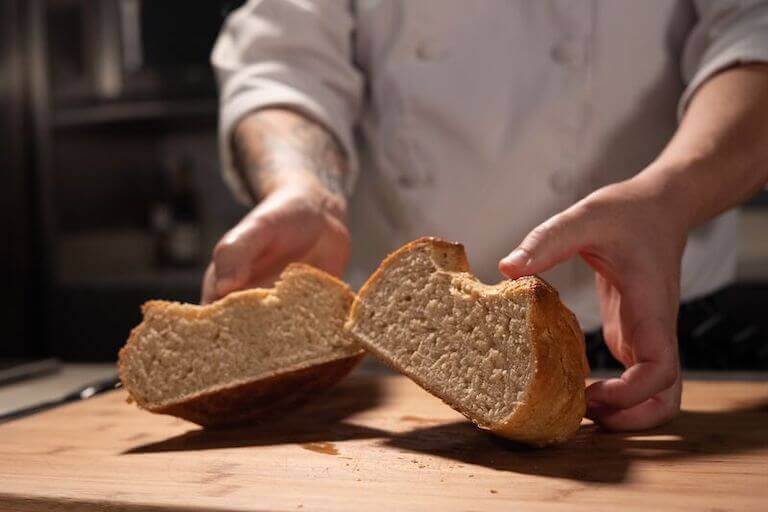
Professional bakers need to practice to perfect even their basic skills, like baking a beautiful loaf of bread.
Three Steps That Could Help You Become a Professional Baker
Every baker’s journey to the professional kitchen is a little different, but most follow a few core steps to build their expertise. If you’re dreaming of an oven-centered career, here are three steps that could help you launch your professional journey.
1. Get Your High School Diploma or Equivalent
There are no formal education requirements for becoming a baker. However, some culinary schools, like Escoffier, may require you to be at least 16 years old and have your high school diploma or equivalent before enrolling.
Even if you don’t choose to attend baking school, many employers across all industries often like to see applicants who have at least finished high school or received an equivalent credential like their GED. It can show that you can follow through with assigned work and display a minimum level of responsibility.
Get the Baking & Pastry Career Plan & Checklist
Aspire to be a pastry chef or baker? Use this 10-step checklist that includes a 90-second career assessment quiz and resume template to take the next step!
2. Learn the Baking ABCs at Baking & Pastry School
Though you may have experience as a home baker, there is so much to learn beyond the home kitchen skill you’ve acquired so far. All bakers have to start at the beginning.
Baking is a scientific art, combining chemistry with design to create something both delicious and beautiful. Baking school teaches students not only how to bake things like a loaf of bread, but why flour, salt, water, and yeast turn into bread when heat is applied.
In baking and pastry school, you may be introduced to these types of baking fundamentals, which you can then build on for the rest of your career. This education can prepare students for their first jobs in the industry. As Melissa Trimmer, ACF Certified Executive Pastry Chef, puts it: “Once [you have] that base, then you can go off and do anything.”
That classical foundation is what lets you follow someone else’s recipes with confidence early in your career, and eventually develop and refine your own.
Exploring the science behind baking can give you the tools you may need to not only get good results while following someone else’s recipes, but also the theory of how to experiment and create your own baked goods. While attending baking and pastry school is not the only way to learn professional baking skills, that degree or diploma may make it easier for you to find your first job.
In Pastry and Baking school, students can learn everything from baking basics to complex finish techniques like piping.
3. Get Your First Baking Job or Apprenticeship
After completing your baking program, it’s time to enter the kitchen as a baking professional. Bakeries don’t always have consistent job titles, but many entry-level and apprentice positions fall under the umbrella of baker’s assistant or associate.
These jobs usually include anything necessary to make the head baker’s job easier, like stocking ingredients, cleaning, kneading dough, preparing fillings, and possibly helping customers. They may also do some of the more basic baking.
Your first job in a bakery is where you’ll get to try out the schedule and lifestyle of a professional baker. Baking shifts often start in the early morning—think 3 a.m.—so that the baked goods, whether that’s bread or pastries, are ready for customers during regular business hours.
Sometimes, your baking and pastry school can help you find your first job. For example, at Escoffier, students must complete one or two hands-on industry externships before they receive their degrees or diplomas. This externship is not only part of their education experience; it sometimes turns into full-time employment. In addition, top-tier culinary institutions might offer career services and networking opportunities to get you connected with the right people.
Baking Careers: Roles and Salaries
Depending on your interests and how you develop your skills over time, you could move into production leadership, specialize in custom cake design, or eventually run your own operation. Here’s a look at some of the roles professional bakers work toward, along with general salary benchmarks:
| Role | What They Do | Salary Range |
| Baker | Produces baked goods across bakeries, cafés, restaurants, and grocery stores | Median $34,950; top 10% around $46,980 |
| Head Baker | Oversees all baking production, manages staff, maintains quality and consistency | Median $53,543; range roughly $44,858 to $71,467 |
| Wedding Cake Designer | Creates custom cakes for weddings and special events | Average $85,906; majority earn $36,500 to $121,500 |
| Bakery Owner | Manages all aspects of running a bakery business | Median $74,495; range roughly $68,054 to $79,403 |
Sources: Occupational Employment and Wages, May 2023: Baker, U.S. Bureau of Labor Statistics, Head Baker Manager Salary in the United States, Salary.com, Wedding Cake Designer Salary, Zip Recruiter, Bakery Owner Salary in the United States, Salary.com.
Salaries vary significantly based on location, experience, specialization, and employer. The wedding cake designer range in particular reflects how wide the spread can be in specialty roles, with early-career designers and established names working high-end events occupying very different parts of that range.
The Job Outlook for Bakers Is Healthy
The market for bakers is expected to grow 6% between 2024 and 2034 according to the US Bureau of Labor Statistics, which is faster than the national average for growth. BLS also projects 39,900 openings for bakers each year from 2024 to 2034.
Take the Culinary Career Survey
We’ve compiled a checklist of all of the essential questions into one handy tool: career options, culinary interest surveys, educational opportunities, and more.
What Can You Learn in Baking & Pastry School?
You can certainly learn on the job, but for many, baking school provides the most direct leap into a professional kitchen. With both in-person and online programs available, you have more flexibility than ever to find the right fit.
While every curriculum is a bit different, here are the core skills that most top-tier baking programs focus on.
Baking Basics
Culinary programs typically start with basic skills, such as safety and sanitation, knife skills, the concept of mise en place (measuring and preparing all your ingredients before beginning to cook), and keeping your workstation clean and organized.
Of course, you can also learn specific baking skills. Baking programs may teach multiple methods for making and mixing doughs, custards, dessert sauces, and pâte à choux. Plus, they’ll usually dive into the foundations of bread, exploring the right temperature for starters, pre-ferments, and various doughs for a variety of breads and rolls.
And though the hands-on baking is certainly the most fun and delicious, baking math is another essential skill for bakers, so you can accurately convert recipes to smaller or larger yields as needed and keep your kitchen profitable.

Pastry, Desserts, and Specialty Skills
Building on those basics, students typically move into more advanced pastry and dessert work. Cake design and decorating, fine piping, icing, and fondant work are common.
Many programs also introduce students to confiserie, the art of candy making, along with chocolate work, sugar sculpting, fruit desserts, and frozen desserts. These are technically demanding areas where professional training can give you a real edge over someone who learned entirely on the job.
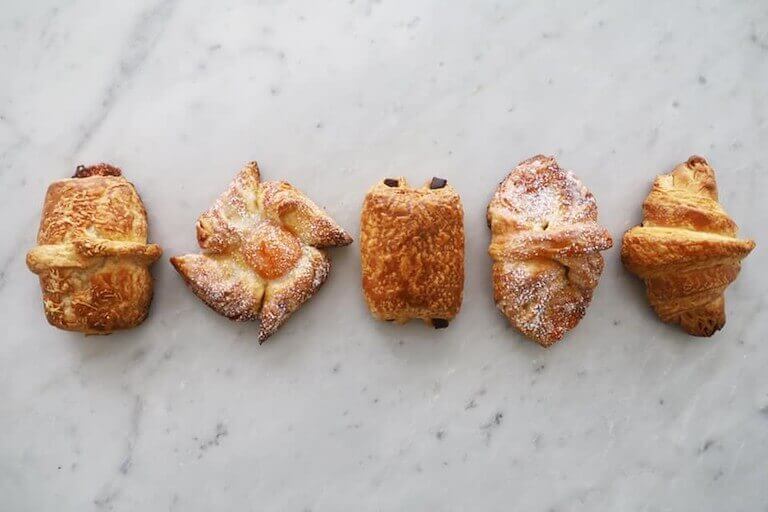
Baking and pastry arts school trains you in many special techniques, from sauces, pastries, bread baking, cake making, and more.
Foodservice & Business
Beyond the baking, there’s more to cover to help you become a well-rounded baker. Bakeries are businesses. Like any food service business, they need sound financial planning and operation to be competitive in the marketplace.
A good quality baking and pastry arts program can provide you with education on topics such as menu planning, cost control, and inventory management to help you make plans to properly price your baked goods and stay profitable.
Coursework in business planning, management, and business ethics can also help students to become leaders in their future bakeries.
Once You’re a Working Baker, Consider Bakery Certifications
Once you’re working in the field, earning additional certifications can be a great way to build your credibility and authority. While these credentials aren’t a strict requirement for success, many of the industry’s top bakers pursue them as they advance.
Organizations like the Retail Bakers of America (RBA) offer certifications that require both deep experience and the ability to pass demanding practical exams. Proving your skills at this level could also boost your earning potential.
The Retail Bakers of America offers the following certifications:
Certified Journey Baker or Certified Journey Decorator
These introductory certifications are for those early in their careers who assist in the production of baked goods for commercial bakeries. Bakers must have at least 2,000 hours of experience or a combination of experience and education.
Certified Baker or Certified Decorator
The next level is Certified Baker or Certified Decorator. These more advanced certifications are for those who are further into their careers and have a higher degree of responsibility in the bakery. Candidates typically need at least four years of experience, or a Journey certification plus an additional three years in the field.
Certified Master Baker
The Certified Master Baker represents the highest level of achievement from the RBA, for industry veterans who manage high-volume output and mentor other bakers. To qualify, bakers must meet rigorous education standards and have more than 10 years in the field. Alternatively, you can move up from a Certified Baker role after three additional years of professional growth.
Candidates must also pass rigorous tests.
“It’s 16 hours of baking,” Escoffier Chef Instructor and Certified Master Baker Colette Christian said of her two-day exam, “with the judge literally standing right over you. It’s not like you present them with four Danishes. You present 32 Danish pastries, and they weigh every single one of them. And you can’t be off; everything has to be perfect.”

Are You Ready to Rise to the Challenge?
Every master baker, from French pastry chef Dominique Ansel to cake master Claire Ptak, had to start somewhere on their baking journey. Do you think you have what it takes to become a detail-oriented bread, pastry, or confection artist? Escoffier is here to help you pursue your baking dreams! Whether you’re looking for an in-person or online Baking and Pastry Arts program, we have you covered.
Reach out to our Admissions Department to find out more about how to make baking and pastry school a real possibility for you.
TO LEARN MORE ABOUT THE BAKING AND PASTRY ARTS, TRY THESE ARTICLES NEXT:
- How to Start Your Own Bakery
- A Guide to Sourdough Bread: Recipes, Traditions, and Bakery Tips
- Do You Need Pastry School to Be a Pastry Chef?
This article was originally published April 27, 2022 and has been updated.
FAQs
No, there are no formal education requirements to become a baker. However, employers may prefer candidates with baking and pastry training, and a degree or diploma can help you stand out as a job applicant.
Some bakeries or high-end restaurants with a dedicated baking and pastry staff may hire based on experience alone, while others might require formal education, so having credentials from a culinary school baking program may improve your employment prospects.
Bakers specialize in baked goods like bread, pies, rolls, cakes, pastries, donuts, and buns, and generally don’t venture into plated desserts. Pastry chefs are usually responsible for a broader range of desserts including custards, ice cream, French pastries, chocolates, and plated presentations.
Pastry chefs could work in bakeries or restaurant pastry departments, while bakers typically work in bakeries or restaurants that serve breakfast or homemade bread.
You can earn a degree or diploma in baking and pastry arts in 30-60 weeks at Escoffier, depending on the program. If you’re gaining experience on the job without formal education, it could take several years to move out of apprentice or assistant roles into a baker position. Attending a baking and pastry program may reduce the time necessary to take that next step in your career.
The market for bakers is expected to grow 6% between 2024 and 2034 according to the U.S. Bureau of Labor Statistics, faster than the national average. The BLS also projects there will be about 39,900 baker positions to fill each year through 2034, indicating healthy ongoing demand for bakers.
Baking school can cover foundational skills like safety and sanitation, knife skills, and mise en place, along with specific techniques for making doughs, custards, dessert sauces, and various types of bread. Students may also study cake design and decorating, confiserie (candy making), and business skills like menu planning, cost control, and inventory management to help them develop well-rounded industry skillsets.