
Listen to This Article:
If you’re just starting out, or considering a career change to the culinary industry, chances are good you may hear some conflicting advice:
“Go to culinary school right away!”
“Learn on the job!”
“Go to school, but not until you’ve worked in the industry for at least a year!” (Or two years, or three years…)
To help clear up the confusion, we’re taking a closer look at what culinary school could offer across three distinct levels: zero experience, a little experience, and a lot.
Culinary School at Every Experience Level
Every student path looks a bit different, and each stage of experience brings its own unique set of advantages and learning curves. Here is a quick look at how your background might shape your culinary school experience:
| No Experience | Some Experience | Years of Experience | |
| The Advantage | • A clean slate with no bad habits to unlearn.
• Open to exploring foundational techniques the right way first. |
• Baseline comfort in a kitchen environment.
• Confirms interest in food before investing time and money. |
• Strong instincts, speed, and real-world industry knowledge.
• Understanding of kitchen dynamics. |
| The Challenge | • No firsthand sense yet of the intense physical demands of a kitchen. | • Risk of bringing shortcuts or bad habits that need correcting. | • Breaking old habits can be frustrating; requires patience as you review foundational techniques from a new perspective. |
| Typical Goals | • Build a comprehensive, structured foundation from the ground up.
• Explore classical techniques in an immersive environment. |
• Formalize current training and fill in technique gaps.
• Translate casual kitchen exposure into a professional credential. |
• Transition into kitchen management or business ownership.
• Prepare for advanced, specialized industry roles. |
Do You Need Experience to Go to Culinary School?
Students arrive from every kind of background: some straight out of high school, some in the middle of a career change, and some who have already spent years working in a kitchen.
While prior kitchen experience isn’t required, applicants across the Boulder, Austin, and Online programs must meet a few standard criteria. You must be at least 16 years old (anyone under 18 will need written parent or guardian permission to sign the school’s Enrollment Agreement). From there, the admissions process involves submitting a formal application and completing an admissions interview.
You will also need to provide proof of high school graduation or an equivalent. Escoffier accepts a wide range of standard documentation for this, including high school diplomas and transcripts, high school equivalency exams (like the GED, HiSet, or TASC), qualifying college transcripts, state-recognized home school certificates, or a veteran’s DD-214.
If you are planning to attend the Austin campus in person, you will have a few extra onboarding steps. These include a physical tour of the facility and completing standard enrollment paperwork, such as a record of your previous education and a FERPA information release form
For the most up-to-date documentation requirements, check out the Campus Catalogs or consult an Admissions representative for guidance.
Want a Head Start Before School Begins?
While not required, some students still prefer to gain a little experience before culinary school starts. This might include:
- Practicing holding a knife properly
- Familiarizing yourself with mise en place
- Learning some basic kitchen terminologyReading a few books (On Food and Cooking by Harold McGee is one popular choice)
- Shadowing a chef
- Getting a part-time kitchen job
Starting Culinary School With No Experience
Imagine you just arrived on campus for your first day of culinary school. Your chef’s coat is crisp, your brand new chef’s knives have never been wielded, and your honing rod is still in its box.
But what if the Chef Instructor puts you on the spot and asks you to demonstrate a technique in front of the class? Some people are nervous about that scenario, understandably. But in reality, if the school you apply to doesn’t require any culinary experience, then you’re not expected to bring any expertise to your first day of class.
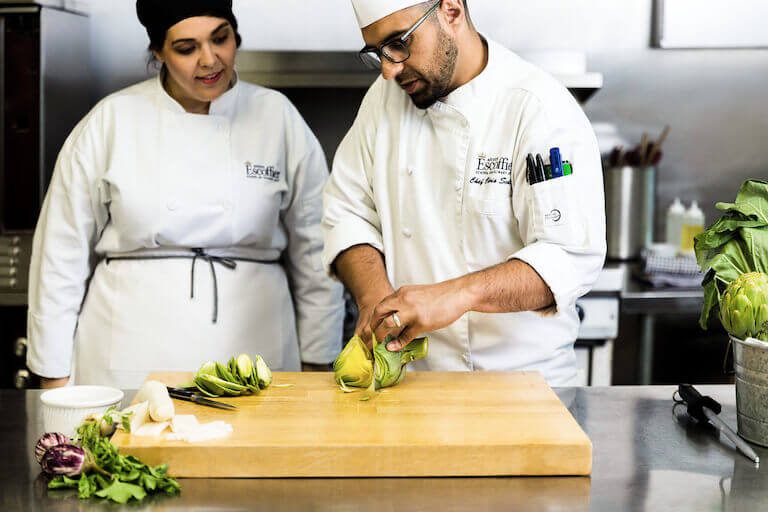
Chef Instructors often demonstrate techniques and provide student feedback.
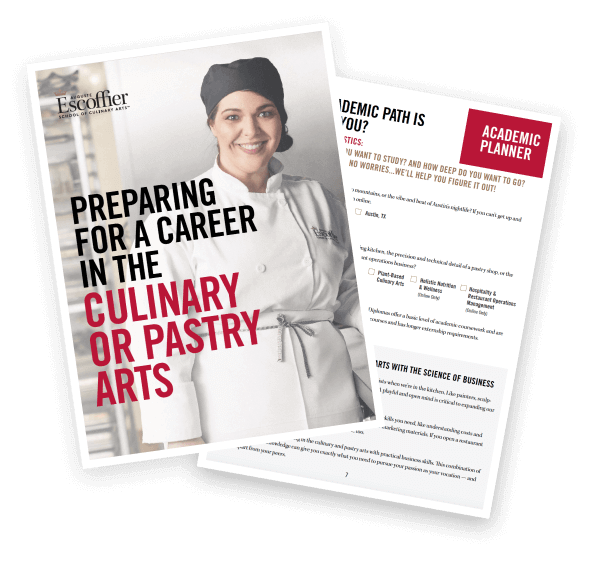
Get the Culinary Education Planner & Checklist
Are you ready to embark on your journey to culinary school? Utilize this planner to craft a clear and actionable educational path.
The Benefits of a Blank Slate
There are some benefits to attending culinary school with no experience. You bring no preconceived notions, no bad habits, and nothing to “unlearn.”
A high-quality culinary school curriculum progresses course by course. At Auguste Escoffier School of Culinary Arts, for example, students typically begin with a culinary foundations course which covers topics like knife skills, seasoning, and terminology. As they progress through the program, they can discover more complex and advanced techniques.

Going Back to Culinary School With Years of Experience
Now imagine you arrive for your first day of culinary school after pulling your new Escoffier chef’s coat out of a closet packed with well-worn coats in a rainbow of colors. Your knives have been sharpened and sharpened again until they’re practically an extension of your hands. So what’s the point of sitting in a classroom next to someone who’s never touched a knife?
Closing Gaps in Knowledge and Fixing Bad Habits
Even with plenty of experience, there will be gaps in your knowledge. You may have picked up bad habits over time. Your sanitation knowledge could be out of date. You might also realize you have significant gaps when it comes to financial and business management.

In culinary school, you’ll return to the basics. You can hone your skills and may get a valuable refresher on some skills you might have forgotten. After getting through the culinary foundations, you can move on to business and culinary topics that you may never have been exposed to. You might explore international cuisines, discover more efficient inventory processes, or find out more about the origins of food in the Farm to Table® Experience.

And you can have the opportunity to network with both new and experienced culinary professionals. You could be studying alongside a recent high school graduate, an intermediate pastry cook, and a current executive chef all at once.
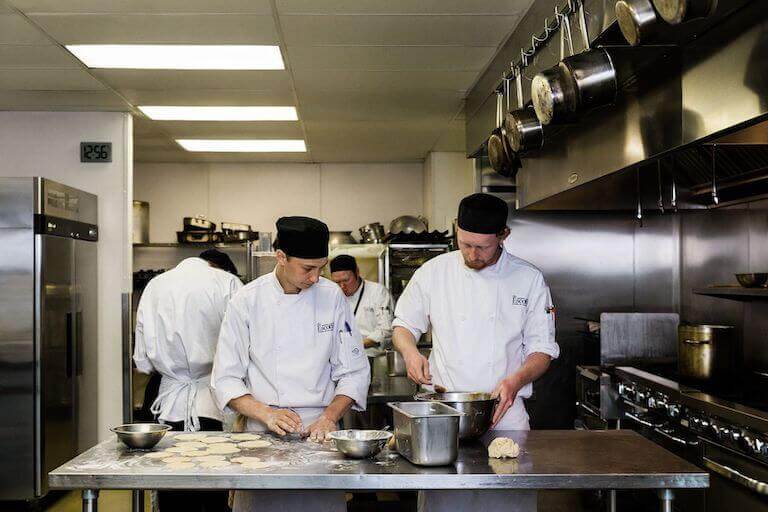
Whether you have years of kitchen experience or are just starting out, culinary school offers a structured environment to return to the basics and refine your foundational techniques.
Should You Get Kitchen Experience Before Enrolling?
You can absolutely be successful if you go to culinary school with no experience.
But if you want to become a chef or cook, it can still be a good idea to spend some time in or around a professional kitchen beforehand. This isn’t so much about picking up skills, but rather confirming that the culinary life is for you. Kitchens can be boisterous, steamy, and quick-moving. They’re also exciting and buzzing with energy. It’s an environment that many people thrive in, but it’s not for everyone.
Ways to Test the Waters
It can be helpful to get in the kitchen before you commit time and money to a culinary education.For example, you might:
- Work as a prep cook: Take on some shifts chopping and portioning ingredients before the kitchen opens for service.
- Wash dishes for a summer: While you won’t be cooking, you can experience what it’s like staying on your feet for an entire shift and matching the fast-paced rhythm of the kitchen.
- Work as a food runner or host: You can see how the front and back of the house work together in a busy environment.
- Request a stage: Shadow a kitchen during live service to observe how the line operates (these experiences are typically short and unpaid).
- Look into ProStart: If you are still in high school, this program offers structured, hands-on food service training before graduation.
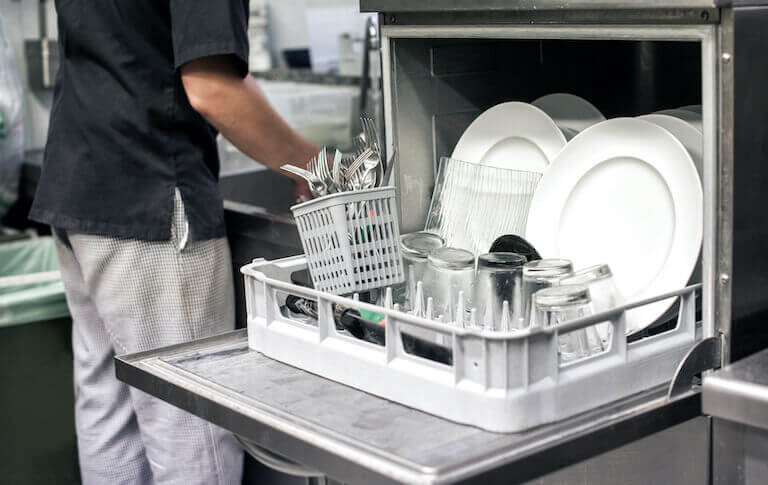
Getting some experience in a professional kitchen can help you explore your interest in the industry before culinary school.
Come Ready to Learn
From total beginners building a foundation to industry veterans looking to step into management, the right education meets you where you are. You don’t need a flawless kitchen resume to succeed, just a willingness to learn and grow.
Let us help you navigate the next steps. Contact us to discuss our programs and see how Escoffier can help you reach your full potential.
TO LEARN MORE ABOUT CULINARY EDUCATION, TRY THESE ARTICLES NEXT:
- How Long Does it Take to Get an Online Culinary Arts Degree?
- How Much Education Might You Need to Become a Chef?
- Complete Guide to Culinary School Scholarships
FAQs
No. Many students start with zero hands-on experience, and the curriculum is built to begin with fundamentals so everyone starts at the same point.
The admissions process at Escoffier focuses on a few core steps, including proof of high school completion, a completed application, and an interview, rather than competitive requirements.
Yes. Many students enroll directly after graduating, with no prior kitchen experience needed beyond a willingness to learn.
It’s not required, but spending time in a kitchen first, even in an entry-level role, can help confirm whether the pace and environment suit you before you commit.
Culinary school can often help fill in gaps in business skills and cuisines or techniques you haven’t worked with yet. Unlike in a kitchen job, culinary school can provide the opportunity to study with different types of chefs who bring varied backgrounds and expertise.