


Listen to This Article:
Have you ever wondered what it really takes to rise to the rank of chef or executive chef?
You might wonder whether it requires lots of training, or whether a few years of experience as a professional cook suffice. Certainly, there are those who have attained the role of chef by working their way up through the kitchen ranks, from dishwasher to executive chef.
But while this route is possible, it may not be the best option if you long to call yourself “chef.” Many of the food world’s most successful chefs got their education in culinary school.
Let’s examine the role of education in a chef’s success, the merits of different training paths, and how you might fast-track your way into the industry.

Chefs manage many aspects of a restaurant kitchen, from finances and budgeting to recipe standardization.
Do You Need a Degree to Become a Chef?
No, you don’t need a degree to enter the kitchen, but the higher you aim, the more a formal credential can start to matter. According to the U.S. Bureau of Labor Statistics (BLS), the education expectations for cooks and chefs can differ considerably, and understanding that gap can help you plan your path more strategically.
Chef Roles & Typical Education Levels
| Role | Typical Education | Median Annual Wage (2024) |
| Cook (Restaurant) | No formal education typically required; high school diploma preferred | $36,830 |
| Chef/Head Cook | High school diploma plus experience; many attend culinary programs | $60,990 |
(Sources: How to Become a Cook, BLS, Chefs and Head Cooks, BLS, Cooks, Restaurant, O*NET, Chefs and Head Cooks, O*NET)
What Are the Types of Chef? Understanding the Brigade
The culinary industry organizes kitchen roles into a structured system called the brigade de cuisine, a hierarchy originally developed by Auguste Escoffier in the late 1800s to help kitchens run efficiently at scale.
The structure starts with foundational roles like prep and line cooks, rising through specialized station chefs to the leadership of the sous and executive chefs. As roles move up the brigade, the scope of responsibility expands, bringing higher expectations and a greater need for formal education and seasoned experience.
And even after you reach the top, your growth continues.
“Even when I was [an] executive chef, I still needed to learn,” says Escoffier Culinary Arts Graduate Lance McWhorter, Executive Chef/Owner of Heritage East at Culture ETX. “I still needed to grow. Everything about you—your cooking chops, your palate, your knowledge base, your creativity—needs to always be expanding…History, terminology, calculating COGS, profit margins, profit/loss, product waste—there’s so much more to learn than just cooking.”
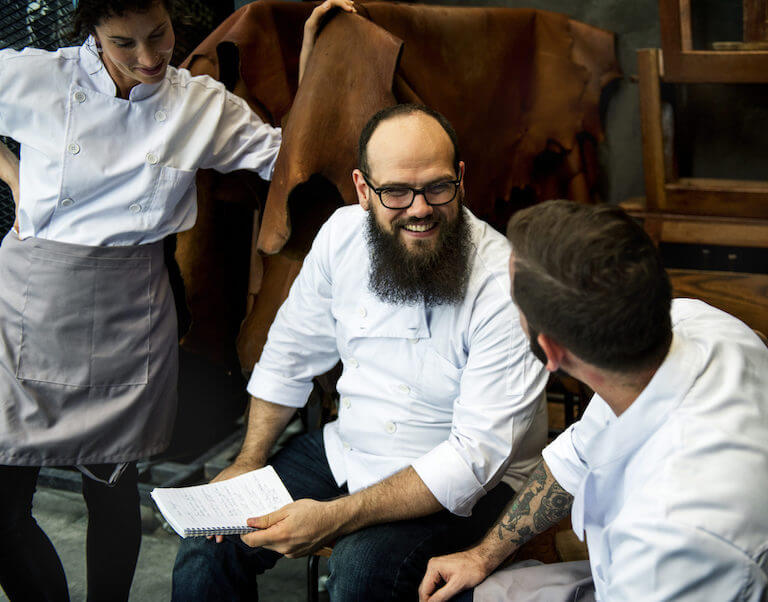
Executive chefs work to keep the kitchen community working like a well-oiled machine.
How These Skills Grow With Your Role
There’s a reason the industry distinguishes between cooks and chefs. Cooks generally execute, whereas chefs often oversee. And the further up the brigade you go, the more the job expands beyond the kitchen itself.
Skills by Brigade Level: How Responsibilities Evolve
| Skill Area | Line Cook / Commis | Station Chef / Sous Chef | Head Chef / Executive Chef |
| Culinary Technique & Specialty | Executes recipes accurately and consistently within assigned station | Maintains proficiency across all stations; covers gaps as needed | Sets kitchen-wide standards and maintains proficiency of all techniques |
| Menu Development & Ingredient Knowledge | Follows established recipes and prep lists | Collaborates on menu development; provides input on seasonal specials, costing, and sourcing decisions | Owns menu vision and strategy; manages vendor relationships, seasonal planning, and recipe documentation |
| Leadership & Communication | Focuses on individual tasks and teamwork | Supervises line during service; coordinates timing, delegates tasks, and manages real-time problem-solving | Manages entire kitchen operations including hiring, training, culture development, and cross-department coordination |
| Business, Cost Control & Food Safety | Adheres to portioning standards and sanitation protocols | Monitors daily operations including waste reduction, food costs, labor efficiency, and compliance enforcement | Holds P&L accountability; makes strategic decisions on pricing, labor costs, compliance, and profitability |
Note: Actual responsibilities vary by kitchen size, concept, and organizational structure. In smaller operations, roles may overlap; in larger establishments, additional positions (Chef de Partie, Junior Sous Chef, Pastry Chef) may further divide these responsibilities.
What Might a Chef Need to Know?
So, what kinds of specific knowledge and skills might a higher-level chef need to succeed? Let’s take a look at some of the roles a chef may play in the kitchen.
Menu Planning and Recipe Development
To create delicious recipes, chefs must be skilled in flavor profiles, food pairings, and food science.
Beyond creating new dishes, the chef must document them precisely to ensure the kitchen staff can replicate them consistently while staying within budget. This role requires a rare blend of culinary artistry, technical writing, and financial literacy—a skillset that can be difficult to cultivate without formal training.
Communication and Leadership
As chefs advance, they transition from individual contributors to managers, and they need to communicate effectively with their staff. Kitchens are unique work environments similar in some ways to a factory assembly line. Each part of the kitchen staff helps keep the restaurant efficient, but this doesn’t happen automatically. A skilled executive chef knows how to keep their line staff happy and busy in a high-pressure, stressful environment. A chef who succeeds with this task can reduce staff turnover and produce better food quality.
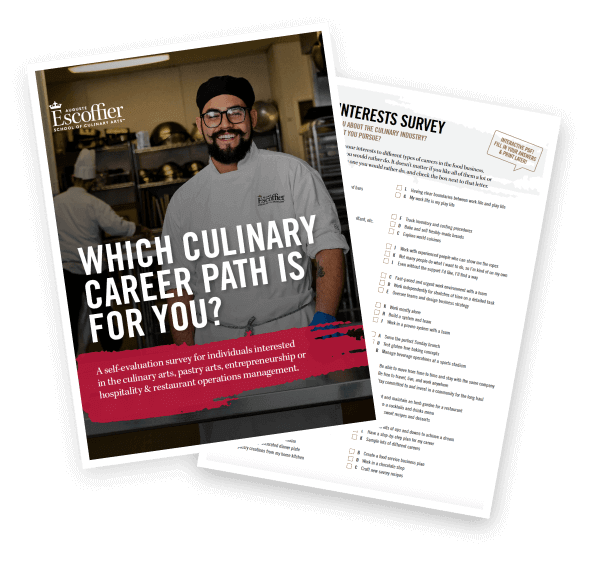
Take the Culinary Career Survey
We’ve compiled a checklist of all of the essential questions into one handy tool: career options, culinary interest surveys, educational opportunities, and more.
Cost Control and Basic Foodservice Accounting
Chefs are not accountants, but carefully managing labor and food costs is necessary to ensure restaurant profitability. Profit margins are often tight in restaurants, and something as basic as serving five ounces of steak instead of four can throw those margins off.
The same applies to labor. The executive chef and team must carefully watch labor costs to prevent expensive overtime and avoid overstaffing on slow shifts.
Extensive Knowledge of Ingredients and Seasonality
A chef’s expertise goes far beyond the recipe—it’s about knowing the “when” and “where” of every ingredient. A chef’s deep understanding of seasonality can help ensure they aren’t just chasing better prices, but better taste. Sourcing locally and seasonally can help keep costs down and quality high.
At the same time, the best chefs never stop exploring. By integrating ingredients from different culinary traditions, they can bring a sense of adventure and global perspective to their menus.
How to Enroll in Escoffier: Get the Essential Guide
Attending culinary school is a major decision! In this one-stop guide to Escoffier, explore what makes our school different, programs you can study, how to enroll, pay for your education, and more!
Chef Specialties
In addition to these general chef requirements, depending on your preferred area of focus, you may need additional training in certain specialties. If desserts are your jam, you may need training in the pastry arts. If you prefer savory grilling, you may need training with a pitmaster or grill chef. Other types of chef specialties include saucier (sauce chef), garde manger (cold food and deli chef), research and development chef, or ethnic cuisine chef.
There are typically two ways to earn all of this knowledge: in a culinary program or on the job. Though there are advantages to each, let’s take a look at how these two methods of learning the ropes are different.
Getting Your Chef Education in Culinary School
Culinary school can be a powerful alternative to learning on the fly. It can give students a technical edge, allowing them to enter the industry far more prepared.
For example, Culinary Arts programs at Auguste Escoffier School of Culinary Arts are available as in person or online experiences, and range from 30 to 84 weeks. These programs are carefully planned so that by the end, students are armed with the comprehensive skills they may need to be ready to advance in professional kitchens.

Escoffier students can learn the essential skills executive chefs may need to be successful.
What Culinary School Covers
Culinary school is designed to develop the full range of skills the industry expects at the chef level.
Students at Escoffier can explore a well-rounded path that covers everything from menu planning to business communication. These courses are designed to build the leadership and operational know-how that becomes vital as you transition into chef-level roles.
Aspiring chefs can also sharpen their financial instincts through classes in accounting and cost control. Some Culinary Arts programs at Escoffier also include a Farm to Table® Experience, which gives students the opportunity to work directly with local farmers and ranchers, exploring where food comes from and how to incorporate sustainability principles into their kitchens and menus.
Additional coursework in pastry arts, world cuisine, kitchen foundations, nutrition, and more are part of various programs’ curricula, depending on the credential and specialty you pursue.
Types of Culinary Credentials and How Long They Take
Once you have a sense of where you want to land in the kitchen hierarchy, the next question is what kind of credential might help you get there.
- Certificate and diploma programs: These are often the most direct entry point, and may run anywhere from a few months to about a year, depending on the school and format. At Escoffier, on-campus diploma programs can be completed in as little as 30 weeks, while online diploma options generally take 60 weeks to accommodate more flexible scheduling.
- Associate degree programs: These programs build upon and cover a wider breadth of information than diploma programs. Escoffier associate degree programs take 60 to 84 weeks, depending on the specialty and format.
- Bachelor’s degree programs: These are usually the most comprehensive, taking around four years to complete. These programs tend to cover more depth in advanced food science and include general education requirements.
Culinary education may also include apprenticeship or externship programs that combine classroom instruction with kitchen experience. At Escoffier, diploma programs include one hands-on industry externship experience, and associate degree programs include two.
Credential Types at a Glance
| Credential | Typical Length | Focus | May Be Best For |
| Diploma / Certificate | A few months to ~1 year (30–60 weeks at Escoffier) | Culinary technique, kitchen operations, and foundational business skills | Entering the workforce efficiently |
| Associate Degree | ~2 years (60–84 weeks at Escoffier) | Expanded culinary training and business coursework | Those building toward chef-level roles |
| Bachelor’s Degree | ~4 years | Full culinary curriculum plus liberal arts and food science | Food media, R&D, corporate roles, culinary education |
The Externship Experience
At Escoffier, culinary school students complete one or two hands-on industry externships (depending on the program), where they can get real-world experience and see how their training applies to a live kitchen environment.
Online vs. On-Campus Options
On-campus programs at Escoffier’s Boulder and Austin campuses are structured around a full weekly commitment, with students typically spending around 25 hours per week on academics and kitchen work. Online students can expect to commit approximately 15-23 hours per week to school-related activities depending on the program, credential, and personal pace.
Both formats include the same externship requirements, so hands-on industry experience is part of the journey regardless of how you study.

Getting Your Chef Education On the Job
Not everyone thinks they have the time or money to attend culinary school, so some cooks hope to move into a chef position by being mentored on the job.
Chefs who take this path have varying levels of success. On the one hand, you could receive the exact training you need to succeed in that specific restaurant, and many of those skills likely apply in any restaurant kitchen.
However, the restaurant environment is fast-paced, and restaurant owners and managers are (rightfully) more interested in providing a good experience to the guests than in educating their staff. Though it is certainly possible to attain the position of chef by getting training in the kitchen, here’s why trying to gain a chef education “on the job” can be slower than getting educated in culinary school.

Discover Fewer Techniques
In a restaurant, you may only learn the techniques you need to execute that restaurant’s menu. You may have to spend years at a variety of restaurants to learn the same number of skills you could learn in a much shorter time in a culinary arts program.

Access to a Narrower Range of Mentors
Many nuances of cooking can be learned from mentors who have direct experience. In school, you can learn from a number of Chef Instructors who can help answer questions and provide advice. Escoffier Chef Instructors have various industry experiences and knowledge to share with students.
Not All Restaurants Maintain the Same Standards
While many restaurants do focus on a high level of sanitation, food quality, and good kitchen habits, not all are as diligent. If you find yourself in a lax kitchen, you may not even realize you’re picking up bad habits until you move on to your next position.
Regardless of how you start, you will continue to learn as you work your way through the kitchen ranks. That doesn’t stop when you graduate. But you may be able to reach the goal of chef more quickly if you have a culinary arts education.

Getting an education in culinary arts can help you gain the skills needed to be an executive chef faster than learning on the job.
Culinary School vs. On the Job
| Culinary School | On-the-Job Learning | |
| Skill Range | Comprehensive curriculum covering technique, business, and operations | Hyper-focused on the specific needs and menu of one kitchen |
| Mentorship | Access to a diverse faculty of Chef Instructors | Guidance from the chefs and cooks you work alongside |
| Standards | Consistent, formal training in global techniques and food safety | Varies by restaurant |
| Hands-On Experience | Externship(s) built into the program | All experience is hands-on |
| Time to Chef Role | A broad foundation designed to accelerate your move into leadership | Progression is tied to available openings and your specific kitchen’s growth |
| Cost | Tuition required; financial aid may be available. Online programs may allow students to work while completing their education | Earn while you gain experience |
Is Culinary School Worth It?
Ultimately, the requirements to succeed as a chef vary, but this much is clear: you may need enough education to be able to:
- Create inventive new dishes
- Document them
- Manage the kitchen’s staff, inventory, costs, and labor
- Provide training
- Maintain high sanitation and quality standards, and
- Be a mentor while you’re at it.
While a formal chef’s education in culinary school is not a requirement to become a chef, the knowledge is. Inexperienced cooks who find themselves donning the chef’s hat can quickly get overwhelmed, and the whole restaurant can suffer.
No single path guarantees success. Some chefs have built impressive careers entirely through on-the-job experience, while others have found that a formal culinary education gave them a meaningful head start. If you’re wondering whether culinary school might be the right choice for you, connect with a member of our Admissions Team to discuss options.
FIND OUT MORE ABOUT THE BENEFITS OF A CHEF’S EDUCATION WITH THESE RESOURCES:
- Is Being a Chef a Good Career Choice?
- What You Can Learn from a Culinary School Externship
- What to Look For in a Good Culinary Arts Curriculum
This article was originally published on July 30, 2021 and has been updated.
FAQs
No formal degree is required to become a chef, but a culinary education can potentially help your career. A degree or diploma from Escoffier can signal to employers that you’ve had the opportunity to develop a well-rounded skill set covering cooking techniques as well as principles such as cost control, menu planning, and kitchen management.
A culinary credential can also demonstrate commitment to your craft, potentially helping you stand out from other candidates when applying for chef jobs.
Yes, it’s possible to work your way from entry-level kitchen positions to a chef role without formal education. However, on-the-job learning can offer a narrower experience, exposing you to just one restaurant’s techniques and standards rather than a broad curriculum. Culinary school may help you develop a wider range of skills in less time than working your way up alone.
Culinary school can give aspiring chefs a meaningful head start. Graduates may enter the workforce with a broader skill set than someone who has spent the same time working a single kitchen role, and employers often recognize that culinary credentials can mean less onboarding time. If you want to become a chef, the combination of formal training and hands-on externship experience offered through culinary school may help you advance your career.
Program length varies depending on the credential you pursue. At Escoffier, diploma programs can be completed in 30-60 weeks, while associate degree programs can be completed in 60-84 weeks. Online options may offer added flexibility for students balancing work or family commitments while completing their culinary education.
Culinary school can expose students to a wider range of techniques, cuisines, and instructors with varied industry backgrounds, while on-the-job training tends to be narrower and focused on one kitchen’s specific needs. School can also provide instruction in business skills like cost control and food math—areas that may be harder to develop through restaurant work alone.