
Listen to This Article:
If you’re under 18, a professional kitchen can sometimes seem full of roadblocks. You might worry about labor laws, late shifts, safety restrictions on equipment, or whether an experienced culinary team will take you seriously.
These are all valid concerns, but they shouldn’t hold you back. Age may shape your starting point, but it doesn’t have to limit your ability to begin and to grow. There are plenty of ways to build momentum right now: practice techniques at home, join culinary programs and competitions, shadow professionals, take on age-appropriate food jobs, and start building the habits chefs rely on every day.
This guide will walk you through how professional kitchens are structured, where young cooks often start, which skills can matter most, and how you can begin preparing for a future in food now.
What Does It Actually Mean To “Be a Chef”?
When you picture a chef, you might imagine the fast, high-pressure kitchen scenes you’ve seen on shows like The Bear, MasterChef Junior, or Next Level Chef. Orders are called out, plates move across the pass, and experienced cooks work through a busy service.
Those scenes usually focus on chefs leading the line or competing at a high level. A young cook’s first experience will probably look much different. You may begin by washing dishes, helping with prep, stocking ingredients, or watching how a station runs.
To understand how those early roles connect to becoming a chef, it may help to see how a professional kitchen team is organized.
Understanding the Brigade System
Many professional kitchens use some version of the brigade system, a kitchen hierarchy created by Auguste Escoffier that organizes the team by role and responsibility. Here’s what that looks like:
How the Kitchen Works
| Kitchen Role | What They Typically Do | Can a Young Person Do This?
(Age & Entry Reality) |
| Executive Chef | Oversees the menu, kitchen team, food standards, staffing, and operations. | Not as a first role. This takes years of cooking, leadership, and business experience. |
| Sous Chef | Helps lead the kitchen, manage prep and service, and supervises the stations. | Unlikely. Requires advanced culinary skills and the ability to command a line. |
| Station Chef | Runs one area of the kitchen, such as grill, sauté, garde manger, or pastry. | Usually not at first. An experienced older teen may begin helping on a station before taking full responsibility for it. |
| Pastry Chef | Leads the production of breads, pastries, desserts, and baked goods. | Rarely as a lead. But a great department to target for an apprenticeship or assistant role if you love baking. |
| Line Cook | Prepares dishes during live service at a specific station. | Sometimes (16-18+). Possible for older teens with some experience, but demanding and subject to late-night labor laws. |
| Prep Cook | Washes, cuts, portions, and organizes ingredients before service begins. | Yes! Great starting point. Perfect for beginners to learn knife skills and kitchen pace without the pressure of live service. |
| Dishwasher | Cleans dishes, tools, and equipment to keep the kitchen moving. | Yes! The classic foot in the door. Many famous chefs started here at 14 or 15. It can teach grit, speed, and kitchen culture. While a common first job, rules still apply to hours, hot surfaces, chemicals, and certain equipment. |
Smaller kitchens may use fewer titles, but the idea is similar. Every person has a job, and every job plays an important role during service.
Where Young Cooks Often Start
If you want your first kitchen job as a teen, you probably won’t start by cooking full dishes on the line. You may start by washing dishes, bussing tables, helping with prep, working a bakery counter, stocking supplies, or supporting a café, market, or catering team.
That kind of work still puts you close to the rhythm of a real food business. You can start to see how ingredients are stored, how orders move, how cooks talk to each other during a rush, and why timing, cleanliness, and organization matter so much.
Over time, you may be trusted with more focused kitchen tasks, such as chopping herbs, peeling vegetables, portioning ingredients, labeling containers, setting up a station, or helping with pastry prep. These jobs may look small from the outside, but they are part of how every professional kitchen runs. Learn them well, and you can already be building the habits that stronger cooks rely on.
How to Become a Chef: Get the Career guide!
Have your sights set on wearing the chef’s hat? Discover the steps that may be required to start your culinary career and earn the title of ‘chef’.
How To Start Building Chef Skills as a Teen
Strong chefs are built through smaller skills practiced repeatedly, not through impressive one-time projects. Here are useful places you can start.
Practice One Technique at a Time
Choose one skill at a time, such as knife cuts, eggs, sauces, baking basics, and repeat it. Making an omelet once is useful, but making it several times and noticing how heat, salt, fat, and timing change the result is how you can develop real understanding of a technique and ingredient.
Chef Flynn McGarry’s story shows how far focused practice can go. Now a renowned chef based in New York City, McGarry started cooking at age 10 for his family. His parents gave him Thomas Keller’s The French Laundry Cookbook for his 11th birthday, and by 12, McGarry had worked through most of it, an impressive feat for a book known for its advanced restaurant recipes and demanding techniques.
Long before he had a restaurant, McGarry was using his home kitchen as a place to study, repeat, and improve.
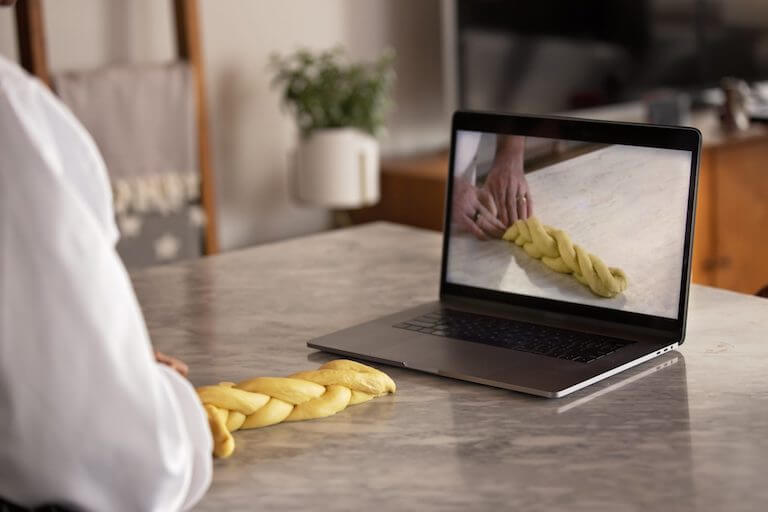
Culinary skills can start in many places, including the home kitchen. Watching a technique, practicing it, and repeating it can help turn curiosity into real progress.
Cook for Other People
Cooking for other people changes the game. Suddenly, you’re not only thinking about the recipe. You’re thinking about when the food will be ready, how much to make, what people like, how the plate looks, and how the whole meal feels.
Flynn McGarry learned that early. After studying The French Laundry Cookbook and practicing at home, he launched a supper club called Eureka out of his family’s California home. At just 13, he was serving multi-course tasting menus to paying guests. The food had to be ready on time, plated with care, and served to people who arrived with real expectations.
Your version might be dinner for your family, cupcakes for a friend’s birthday, snacks for a club meeting, or soup for a neighbor. The point is to practice cooking with someone else in mind. That is where you can start learning timing, portions, hospitality, and feedback.
Easy Ways To Cook for Other People
You don’t need to host a full dinner party to practice cooking for others. Start with something manageable, then pay attention to timing, portions, feedback, and how the food is served.
- Make breakfast for your family on a weekend
- Bake a birthday cake or dessert for a friend
- Prepare a snack board for a study group or club meeting
- Help cook one dish for a holiday meal
- Make soup, pasta, or a simple casserole for a neighbor or relative
- Pack a homemade lunch for a sibling, parent, or friend
- Bring cookies, muffins, or quick bread to a school event
- Volunteer to help with food at a community event or school fundraiser
Build on What You Already Know
Creativity doesn’t always start with a brand-new idea. Sometimes it starts with the food you grew up eating, the dishes your family makes often, or the flavors you keep coming back to. For a young cook, those familiar foods can become a starting point for something more personal.
Chef Dara Yu’s path shows how family food traditions can shape a culinary point of view. Yu first competed on MasterChef Junior at 12, after years of cooking alongside her grandmother, a former teacher of traditional Chinese cooking, and spending summers at cooking camps.
After the show, Yu kept building her skills, eventually enrolling in culinary school and graduating in 2021. When she returned to compete on MasterChef: Back to Win, she became the youngest champion in the show’s history.
Yu later brought that same personal connection to her pop-up, Congee & Crullers. She grew up eating a savory Asian rice porridge known as congee, or jook, made by her grandmother and mother, especially when the weather was cold or when she was sick.
For the pop-up, Yu used that family tradition as a starting point and created her own versions, including a mushroom and brown-rice porridge, one inspired by Thai coconut soup, and another that borrowed flavors from pozole, a Mexican soup traditionally made with hominy and meat. She also served a passion fruit and black sesame mochi doughnut.
That can be a useful lesson for any young cook. Yu didn’t leave the original family dish behind. She studied what made it comforting and meaningful, then used her own training, taste, and creativity to build from there. You can do the same by starting with a dish you know well and asking: what flavor, texture, ingredient, or memory makes this special?
Join a School Program or Competition
If your school offers culinary classes, clubs, or career and technical education programs, start there. You may also be able to join student organizations or competitions like ProStart, FCCLA, and SkillsUSA, which are built for high school students and often include timed challenges that feel closer to real kitchen work.
Preparing for a competition can teach you how to read guidelines, plan a dish, divide tasks, manage time, and stay focused when something goes wrong. Those are the kinds of skills that can carry into professional kitchens, school kitchens, catering teams, and almost any food job.
Keep a culinary notebook or portfolio
As you cook, start keeping track of what you make. Save recipes, take photos, and write quick notes about what worked, what didn’t, and what you would change next time. You might notice that your knife cuts are getting cleaner, your seasoning is improving, or your plating is starting to look more intentional.
Over time, those notes can become a simple culinary portfolio. It doesn’t have to be fancy. A few clear photos, short dish descriptions, and reflections on what you learned can show your progress. That can be useful when applying for scholarships, competitions, school programs, or even a first food job.

Practicing small techniques, like poaching fruit or finishing a dessert with sauce, can help young cooks build confidence with timing, texture, and presentation.
Shadow a chef
A restaurant, bakery, café, catering company, or hotel kitchen may allow students to shadow a chef for a few hours. Shadowing means observing, not jumping in to cook. You are there to watch how the kitchen works, listen to how the team communicates, and ask thoughtful questions when the timing is right.
Arrive on time, dress neatly, stay out of the way during busy moments, and send a thank-you note afterward. Even a short visit can help you understand the pace, pressure, and teamwork of a professional kitchen.
As young cooks build more skill, some may move from shadowing to a stage, a short working experience in a professional kitchen. This usually requires enough technique, maturity, and permission to be useful and safe in that environment. Flynn McGarry took that kind of step early. By 15, he had spent time staging at respected restaurants, including Eleven Madison Park in New York and Alma in Los Angeles.
Most teens will not follow that exact path, and that’s okay. The lesson is to watch closely, learn from people ahead of you, and look for safe, age-appropriate ways to get closer to the work.
Are There Age Limits in Professional Kitchens?
Professional kitchens are exciting places to learn, but they can also have guidelines designed to protect young workers.
Depending on your age, where you live, and the type of kitchen, there may be limits around how many hours you can work, what equipment you can use, and which tasks you are allowed to do.
For example, a teen may be allowed to wash produce, portion ingredients, stock supplies, or assemble simple items, but may not be allowed to operate a meat slicer, use certain commercial mixers, perform baking tasks, or work with cooking equipment that requires more training.
Explore food beyond the kitchen
A culinary career doesn’t always mean working the line in a restaurant. Food stylists, recipe developers, food writers, photographers, videographers, cookbook authors, brand consultants, and content creators all work in food, too. Many of these careers still require culinary knowledge, but they also use skills like writing, photography, video, storytelling, social media, and business.
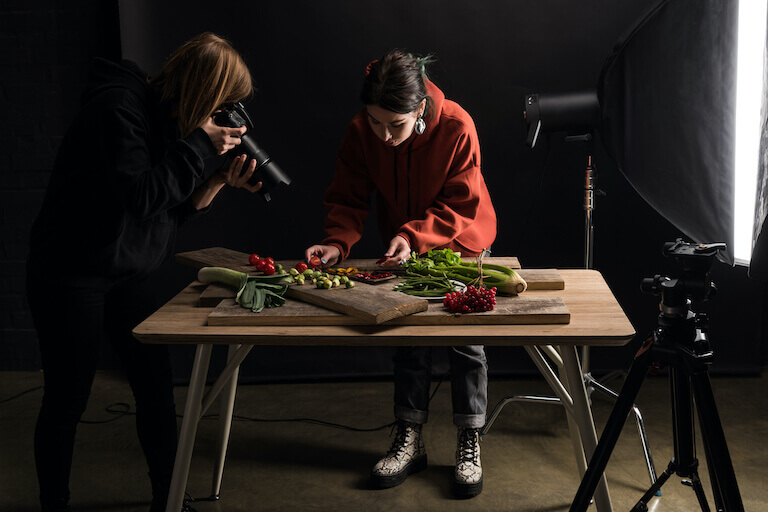
Culinary careers can extend beyond the restaurant kitchen. Food styling, photography, recipe development, and media work all use culinary knowledge in creative ways.
Eitan Bernath, now a celebrity chef, author, and social media influencer, started exploring that side of food early. At 11, he launched a food blog and challenged himself to post a new recipe every week. That meant he was not only cooking, he was choosing recipes, testing them, writing them clearly, and learning how to share food with an audience.
At 12, Bernath appeared on Food Network’s Chopped, and his path kept growing from there. He has since built a career across social media, television, publishing, and brand partnerships. His work has included a cookbook, food writing for outlets like The Washington Post, Food & Wine, and Saveur, a recurring role on The Drew Barrymore Show, and his own production company.
You can start building these skills in small ways. Write a recipe so clearly that someone else could follow it. Photograph a dish and notice what makes it look appealing. Film a short cooking demo and pay attention to what needs to be explained. Plan a simple menu and estimate what the ingredients might cost. These are small projects, but they can help you understand how food, communication, and business can work together.
Start Here: 6 Ways You Can Build Your Culinary Skills This Month
- Cook one dish three times, changing one thing each round
- Email a local restaurant or bakery and ask about shadowing a chef
- Start a culinary notebook — photos, notes, what worked, what didn’t
- Cook a full meal for someone else and ask for feedback
- Watch a professional technique video and try to replicate it at home
- Research one culinary school program and write down three questions you’d want answered
Do You Need Culinary School To Become a Chef?
There’s no single path to becoming a chef. Some people start in restaurants, bakeries, catering companies, or family food businesses and build their careers through hands-on experience. Others choose culinary school because they want a more structured, and often faster, way to learn techniques, get feedback, and prepare for the industry.
For a young cook, that structure can be helpful. Culinary school can give you a place to practice the fundamentals that professional kitchens often expect, such as knife skills, food safety, classic sauces, stocks, proteins, and kitchen organization. It can also introduce you to areas of food you may not have explored yet, like pastry, plant-based cooking, menu development, recipe testing, or restaurant operations.
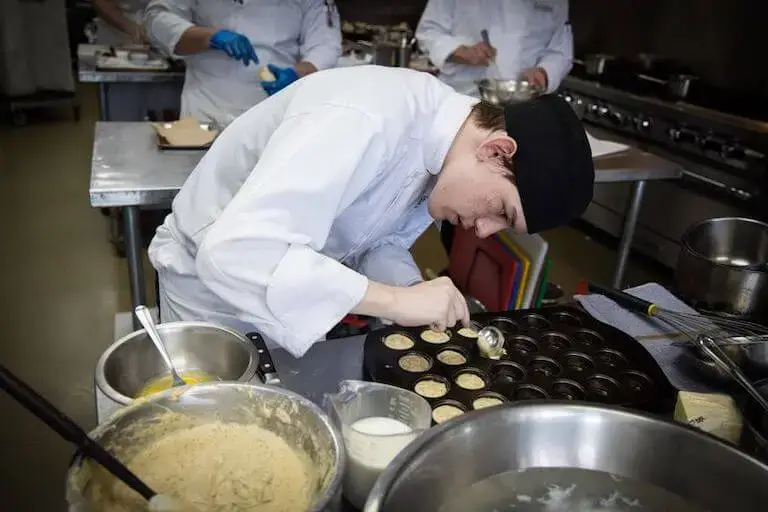
Developing professional culinary skills takes focus, precision, and hands-on repetition.
Programs at Escoffier also include industry externships and career support, which can help students begin connecting classroom learning to real food businesses. For a teen thinking about the future, that combination of structure, practice, mentorship, and industry exposure can make culinary school worth considering as part of the path.
Your Culinary Path Can Start Today
Every recipe you try, every technique you practice, and every meal you share can help you build the foundation for a future in food. The more you practice now, the more prepared you may feel when the next opportunity comes along.
If culinary school is on your radar, start exploring what that path could look like after high school. In the meantime, keep cooking, keep asking questions, and keep paying attention to the kind of food work that makes you want to learn more.
Have questions about culinary school? Contact us to find out more about Escoffier’s programs, financial aid options, and what your path forward could look like.
DID YOU FIND THIS ARTICLE HELPFUL? YOU MIGHT ENJOY THESE, TOO.
- Culinary School Guide For High School Students and Parents
- How Parents Can Support a Teen Interested in the Culinary Arts
- How Long Does It Take to Finish Culinary School?
FAQs
You can start building chef skills as a teenager, but many professional chef roles require more training, experience, and seniority. Teens can begin by cooking at home, taking culinary classes, joining competitions, shadowing professionals, building a portfolio, or looking for safe, age-appropriate food jobs.
You can start learning basic culinary skills at almost any age with safe supervision. For teens, high school can be a great time to practice cooking, explore school culinary programs, enter competitions, and begin researching culinary school options for after graduation.
Start with simple dishes that teach useful skills, such as eggs, soup, roasted vegetables, rice, pasta with sauce, salad dressing, or a basic cake. Repeating a simple recipe several times can teach you more than trying something complicated once.
Culinary school is not the only way to become a chef, but it can provide structured training, feedback from Chef Instructors, hands-on practice, industry externship experience, and career support. For many students, that guidance can help turn an interest in food into a clearer career path.
Depending on your age and local labor laws, you may be able to start with entry-level food jobs such as hosting, bussing, dishwashing, bakery counter work, café support, market work, or helping with a family food business. You can also gain experience through school programs, competitions, volunteer events, and chef shadowing.