

Listen to This Article:
Being a pastry chef can seem like a pretty sweet gig from the outside, but what does a day in the life actually look like from inside the kitchen?
You might picture whipping glossy Swiss meringue buttercream, layering delicate entremets, or baking a deliciously aromatic bread to accompany the main course. That’s part of the job, of course, but so are inventory checks, hours of repetitive production, recovering from split custards or fallen cakes, and plenty of heavy lifting.
Plus, the schedule can also look very different depending on the kitchen. A bakery pastry chef may start before sunrise, while a restaurant pastry chef working dinner service may begin in the afternoon and work through the final dessert orders of the night. Restaurants that serve lunch may have pastry staff working earlier or staggered shifts to cover both services.
This timeline follows one possible restaurant pastry shift, centered on dinner service, with bakery notes along the way to show how the pace and priorities can change. Together, they offer a closer look at the precision, repetition, creativity, stamina, and problem-solving that shape a real day in pastry.
1:00 p.m. | Arriving and Reading the Day
If you’re working as a pastry chef at a restaurant, you will most likely arrive at the kitchen in the early afternoon, hours before most guests will sit down for dinner. Savory chefs and prep cooks will already be hard at work at their stations, preparing elements for the starters and mains for the evening.
You change into your chef’s uniform, tie on your apron, and step into the pastry station to see what the day is asking of you.
Like a savory chef, a pastry chef often starts their shift by taking a look at the prep list, sometimes called the production list. Here, you can check what might have been completed earlier in the week, what is running low, and what needs to be made before service begins.
How Team Size Can Shape Your Shift
The size of a pastry team depends on the restaurant. In a smaller kitchen, you may handle production, plating, inventory, and cleanup on your own. In a larger restaurant or hotel, a head pastry chef may lead pastry cooks who divide the work. Smaller teams can offer broader experience, while larger teams may give you more support and room to specialize.
What If You Work in a Bakery?
Thinking a bakery position may fit your schedule better? By 1:30 p.m., you may already be nearing the end of your shift. Bakery pastry chefs often begin well before sunrise so breads, viennoiserie, cakes, and display-case pastries are ready when customers arrive. Your busiest production hours may happen while much of the city is still asleep.
2:00 p.m. | Production Begins
Once you understand what the evening requires, production begins. You weigh ingredients, gather tools and equipment, and organize your station so you can move through several preparations without losing track of any of them. You might kick up your mixer to start kneading brioche while tart shells are baking in the oven, all while fruit compote reduces on the stove, and chocolate decorations set nearby.
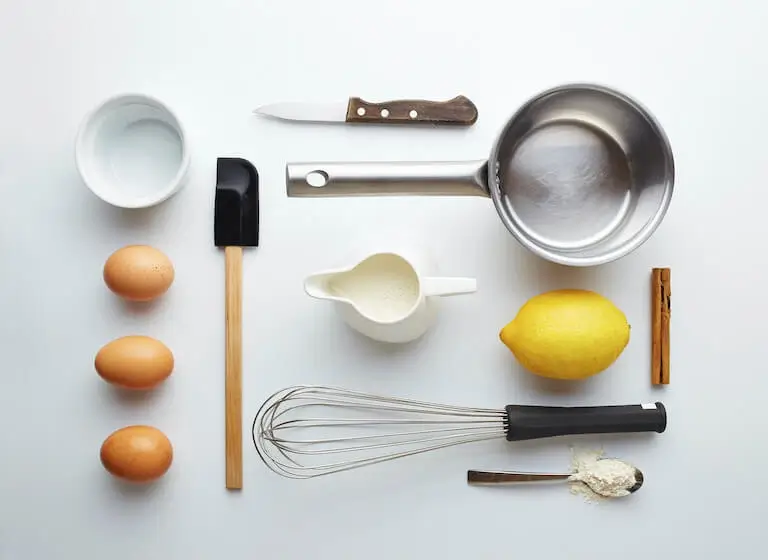
Good mise en place starts with having the right tools and ingredients ready before production begins
Pastry work depends on precision. You may work from formulas that list ingredients by weight, follow exact temperatures, and time each step carefully. A few extra degrees can affect tempered chocolate, while overmixing a batter can change the texture of a finished cake. Even when you know a formula well, you still need to watch how the ingredients are behaving and adjust when necessary.
That scientific understanding has been especially valuable for Escoffier graduate and pastry chef Wes Duckworth. During pastry school, Duckworth kept practicing some of the areas he initially found most challenging, including cookies and bread, and later built a career around artisan baking.
“Escoffier really teaches you the science behind food,” he says. “You understand what each component does down to the molecular level. It’s a lot easier to change recipes or figure out how it’s going to work because baking is chemistry. It’s just knowing what those ingredients are going to do.”
That kind of knowledge becomes practical very quickly during a shift. You may need to adjust a dough that is fermenting too quickly, recognize why a ganache has broken, or decide whether a mousse has reached the right consistency before portioning it.
Organization also becomes essential as you move through production tasks. Keeping tools in the same place, labeling containers, and cleaning as you go can help you stay ahead of the work instead of reacting to it.
Bakery Production Starts Before Dawn
In a bakery, this production push may happen around 3:00 or 4:00 a.m., well before customers arrive. Several doughs may be proofing at once, ovens can be full, and the team is working against a firm opening time. Instead of preparing components for dinner service, you may be shaping croissants, baking breads, filling pastries, and stocking the display case for the morning rush.
Get the Baking & Pastry Career Plan & Checklist
Aspire to be a pastry chef or baker? Use this 10-step checklist that includes a 90-second career assessment quiz and resume template to take the next step!
3:30 p.m. | Repetition, Cleaning, and the Less Glamorous Work
By midafternoon, you have likely been on your feet for a couple of hours, and the physical side of pastry work may start to register. You might find yourself lifting heavy mixer bowls filled with dough or batter, moving sheet pans in and out of the oven and onto speed racks, pulling ingredients from lowboys, and carrying items back and forth between your station and the ovens.
All that production work also creates a steady cycle of cleanup. You may need to scrape dough remnants from your work surface, unstick sugar from the countertops, and wipe away flour that seems to settle everywhere.
While dedicated dishwashers may handle much of the heavier cleaning, you still need to make sure your smaller tools are washed, returned, and accounted for. A missing offset spatula or bench scraper can slow you down later when you’re in the weeds. Cleaning as you go helps keep the kitchen safe and organized, but it also adds another layer of movement to an already active shift.
Repetition can be tiring in its own way, too. You may spend long stretches shaping dough, filling molds, dipping pastries, forming tuile garnishes, or arranging components in the same pattern again and again. The task itself may be simple, but maintaining the same size, shape, and finish across every piece requires focus, especially as your shoulders, back, and feet begin to feel the hours.
This is where stamina matters in pastry work, as the field requires you to stay precise even when the task is repetitive, the kitchen is hot, and a full dinner service is still ahead.
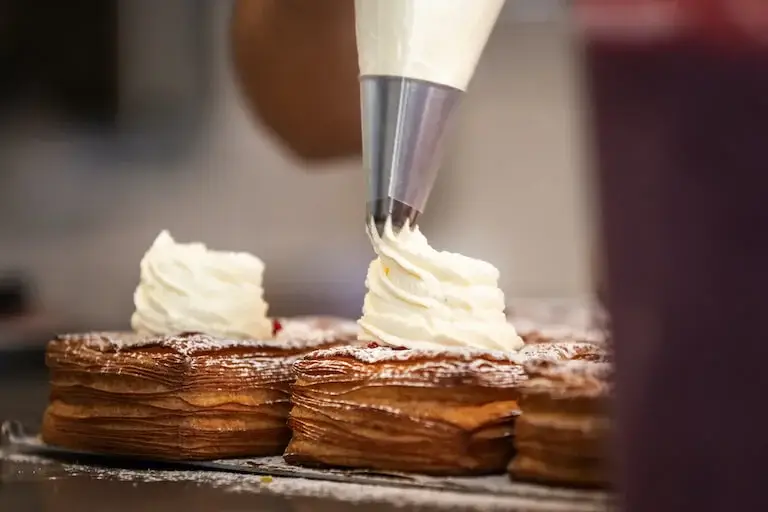
Repetition is a major part of the job, especially when piping the same finish across an entire batch of pastries.
4:30 p.m. | Something Does Not Go to Plan
Even with a detailed production list and a clear plan of action, your shift may not unfold exactly as planned. A batch of choux pastry may bake unevenly, a sponge cake may tear during assembly, or an ice cream base may still be too soft to portion. At the same time, a delivery could arrive short, the savory team may be in a panic to use the oven that you planned to use, or the dining room may add a large reservation to the evening’s count.
This is where a multitude of your skills can come into play, apart from just the technical skill sets. A great pastry chef learns to assess the problem quickly. Some issues can be repaired, some can be repurposed, and others need to be remade. That damaged cake layer might be trimmed and used elsewhere, while a missing ingredient could mean adjusting a component or simplifying the final presentation.
A great pastry chef also knows when to communicate. That might mean coordinating oven time with the savory kitchen, updating your fellow chefs, or letting the front-of-house team know that a special request will need extra preparation.
Your main goal when things go awry is to keep the rest of the shift moving. Strong pastry chefs stay flexible, protect the quality of the dessert, and work with the time, ingredients, and equipment they have.


5:30 p.m. | Preparing the Station for Service and Taking a Breather
As production winds down, your focus begins to shift toward service. This is the time to make sure every component is portioned, labeled, and within reach. Sauces go into squeeze bottles, frozen elements are checked for the right texture, garnishes are covered, plates are stacked, and the tools you will need most are placed where you can grab them quickly.
You also review any allergy notes or substitutions one more time. A well-prepared station can make the difference between a smooth service and one that feels chaotic, especially once several dessert tickets arrive at once.
Before the dining room fills, the kitchen may pause for family meal, the staff meal served before service. You eat with the rest of the team, usually quickly, and take a few minutes to reset before returning to your station. Then you make one final check, wipe down the counter, refill anything that looks low, and get ready for the first dessert ticket.
6:30 p.m. | Dinner Service Begins
The first dessert tickets usually arrive at a steady pace, giving you a chance to settle into the rhythm of service. You read the ticket, confirm any modifications, and begin building the plate.
A single dessert may involve several separate components. You might warm a slice of cake or pastry, for example, while you begin building out the plate. Perhaps you spoon or pipe a sauce onto the plate, or assemble a crumble of cocoa nib streusel, candied peanuts, and chocolate crémeux. Maybe you add fruit or a crisp element to the slice when it’s out of the oven, and finish with a scoop or quenelle of ice cream or sorbet. Garnishes come last, followed by a quick wipe of the rim before the plate is sent to the pass.
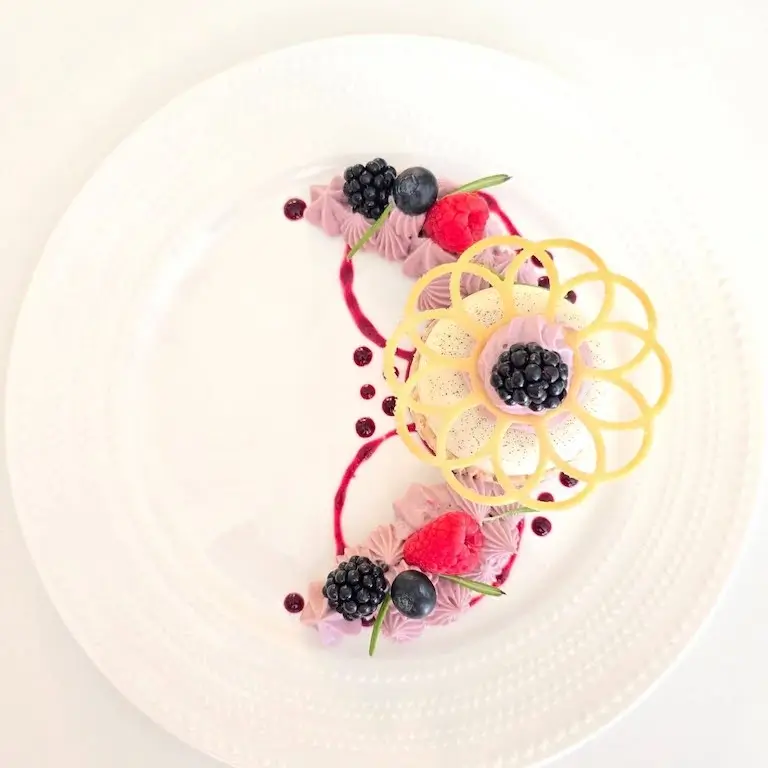
A plated dessert, like this one by Escoffier Online Baking and Pastry Graduate Rita D., may look effortless at the table but can involve hours of baking, chilling, glazing, and careful assembly.
At this point, speed is paramount, but consistency matters just as much. Each plate should look like the one before it, even as more and more tickets begin to arrive. This is where you might see the organization you put into your station earlier starting to pay off, helping you move quickly without having to search for tools or ingredients.
8:00 p.m. | The Rush
By now, it’s full steam ahead, and dessert tickets may be arriving several at a time. A typical night could look like one table ordering three different desserts, another needing two plates without nuts, and a server checking on a birthday dessert that needs to leave with the rest of the table’s order. You’re no longer building one plate from start to finish; rather, you’re managing several at once.
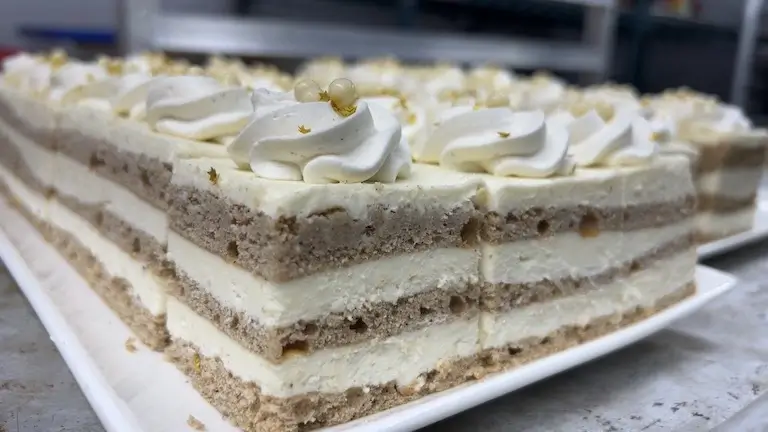
Identical layers and carefully placed garnishes show the precision required when preparing desserts in volume—especially during a rush. Dessert by Keirra C., Escoffier Online Baking and Pastry Student.
That means deciding what needs to happen first. A warm component may need to be fired before you begin plating, while ice cream should stay chilled until the final moment. You may call for a runner, confirm an allergy modification with a server, or coordinate with another pastry cook so every dessert for the table reaches the pass together.
Chances are, the kitchen is a bit louder now, too. Ovens open and close, timers sound, cooks call behind you, and tickets keep printing. This is where the pace of restaurant pastry can feel most exciting—and perhaps a bit stressful, depending on the night! For this stretch of service, your attention narrows to the next ticket, the next plate, and the next table, all while keeping your attention to detail at a top level.
What the Rush Looks Like in a Bakery
In a bakery, the rush may hit around opening time or during the morning commute. Instead of dessert tickets printing, customers are lining up, preorder boxes need to be finished, and popular pastries are disappearing from the case faster than expected. You may be glazing a fresh batch, restocking croissants, slicing loaves, answering questions about ingredients, and coordinating with the front counter while the ovens are still running.
The pressure comes from keeping the case full without sacrificing consistency. A bakery pastry chef has to balance last-minute production with packaging, special orders, and a steady stream of customers, all while planning ahead for the next round of baking.
10:30 p.m. | The Last Desserts
By late evening, the savory line may be slowing down, but the pastry station is often still very active. Guests are finishing their main courses, and dessert tickets may continue to arrive after other cooks have started breaking down their stations.
You may begin cleaning what you can, but you still need to keep enough mise en place ready for another order. The challenge is to close gradually without getting caught unprepared.
One table may order several desserts to share, or you may be waiting on the last guests only to learn they have decided to skip dessert. That is when you may hear the call, “All in,” meaning every order is in and service is officially finished. Only then can you fully break down the station and begin closing for the night.
11:00 p.m. | Cleaning and Preparing for Tomorrow
Once the last plate leaves the pass, it’s time to wrap and label the remaining components, return ingredients to storage, record what is running low, and update the next day’s production list. Anything that can be prepared ahead for tomorrow may be set in motion now, depending on the restaurant or the menu.
Then comes the final cleanup. You might wash smaller tools, wipe down equipment, clean work surfaces, sweep and mop the floor, take out trash, and make sure refrigerators and freezers are closed and holding the right temperature. Mixer attachments, piping tips, containers, and molds all need to be returned to their proper places.
By the time you change out of your uniform, you may have been on your feet for most of the day. The shift ends with a clean station, a clear prep list, and the knowledge that the next pastry chef can walk in and understand exactly where the work left off. You, meanwhile, may head home with flour on your shoes and the faint smell of butter and sugar following you out the door.
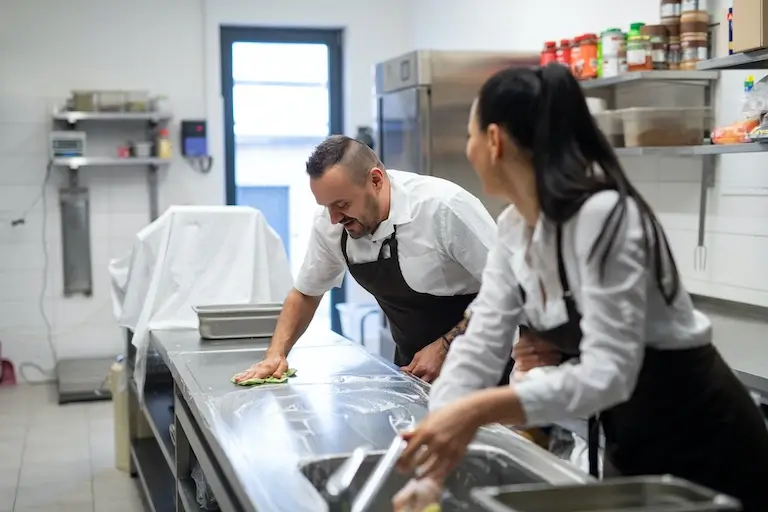
Cleaning is part of the shift from start to finish, helping pastry chefs stay organized during production and leave the station ready for the next day.
Could You See Yourself in This Kitchen?
A day in the life of a pastry chef can be demanding. It may ask you to stay on your feet for hours, repeat the same movement dozens of times, solve problems quickly, and keep your standards high even late in the shift. It can also offer the creative satisfaction of watching separate components come together into something guests remember. Pastry chefs, in a way, get to be part of all kinds of celebrations, big and small, and that’s pretty exciting.
If that balance of creativity and discipline appeals to you, formal pastry training may help you build the technical foundation and confidence to step into a professional kitchen. At Escoffier, Baking & Pastry Arts students can study techniques, ingredient function, kitchen organization, and the business side of the industry while preparing for the realities of pastry work. Contact us today to find out more.
TO LEARN MORE ABOUT CAREERS IN BAKING AND PASTRY, TRY THESE ARTICLES NEXT:
- What Are the Career Opportunities in Baking and Pastry?
- How You Can Become a Pastry Chef
- How Online Pastry School Works
FAQs
Restaurant pastry chefs may begin in the early to mid-afternoon and work through dinner service, while bakery pastry chefs often start before dawn. Exact hours vary by workplace, menu, and staffing.
A pastry chef may work an 8-10 hour shift, but shifts can frequently stretch to 12 or 14 hours during busy times, holidays, events, or when production runs behind. Shift length can also vary depending on how the kitchen is staffed and managed, with some kitchens regularly scheduling longer hours than others.
Yes!. Pastry chefs may spend most of the shift standing, lifting mixer bowls and sheet pans, reaching into refrigerators, and repeating detailed movements for long periods. Ingredients like flour and sugar are often ordered in bulk, requiring pastry chefs to frequently lift a 50-lb bag.
Some do, especially in smaller restaurants or bakeries. Larger restaurants, hotels, and resorts may have a head pastry chef overseeing a team of pastry cooks.
It is usually a mix of both. Developing flavors and presentations can be highly creative, while daily production often requires repeating the same techniques with precision and consistency.
Many do, since restaurants, bakeries, hotels, and catering businesses are often busiest during weekends, holidays, and special events.