

Listen to This Article:
Most people picture becoming a chef as learning recipes or perfecting techniques. In reality, the job asks much more of you, often all at once.
The skills that make a great chef aren’t always the ones people expect. Knife technique and seasoning knowledge matter, but so does the ability to lead a team under pressure, manage food costs, and adapt when service goes sideways.
This guide explores the key skills that can help you become a chef or grow within the role, from foundational techniques to the habits that can keep a kitchen moving and evolving.
What Is a Chef?
You may have seen glimpses of kitchen life on screen: the pace, the pressure, the constant movement. But before stepping into a professional kitchen, it can be hard to fully understand what a chef actually does day to day.
From the outside, it might seem like the role centers on cooking. In practice, it extends far beyond the plate. A professional chef is responsible for how a kitchen runs as a whole, from developing menus and creating recipes to sourcing ingredients, managing a team, and maintaining consistency across every dish that leaves the line.
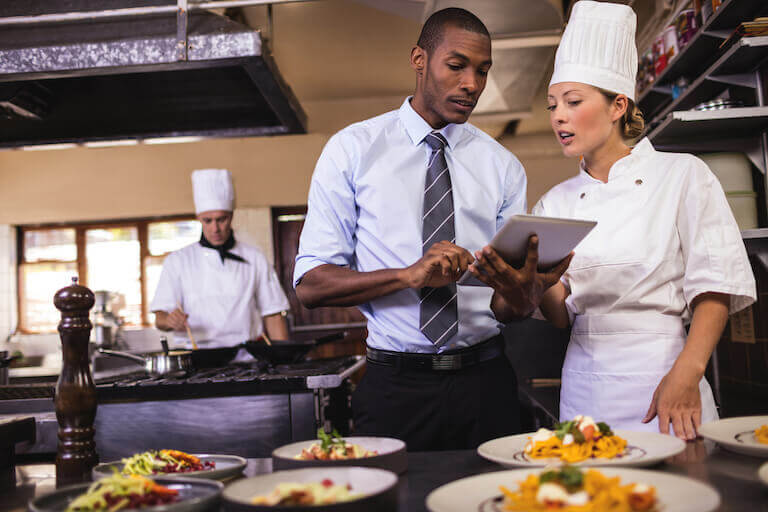
Effective kitchen management means staying aligned across all levels of restaurant operation.
Most professional kitchens run on a brigade system, with chefs at the top of the structure. An executive chef oversees the whole operation, a sous chef manages day-to-day kitchen flow, and specialized roles like pastry chef or saucier lead their respective areas.
Under them, line cooks execute the actual cooking: working specific stations, maintaining speed and consistency during service. For many aspiring chefs, that line cook role is the starting point, and culinary training is how you can begin building toward the positions above it.
Core Chef Skills Overview
| Skill Category | Key Skills | What It Impacts in the Kitchen |
| Technical Skills | Knife skills, cooking techniques, sauce making, butchery, baking | Food quality, consistency, execution |
| Kitchen Management | Time management, inventory control, food safety | Efficiency, cost control, kitchen flow |
| Creativity & Innovation | Menu planning, flavor profiling, plating | Guest experience, originality, brand identity |
| Leadership & Communication | Team management, communication, mentorship | Team performance, morale, service success |
| Physical & Mental Stamina | Endurance, stress management, adaptability | Longevity, consistency under pressure |
7 Technical Culinary Skills You May Need to Become a Chef
Technical skills form the foundation of working in a professional kitchen. From choosing when to sauté or braise to understanding how heat and timing affect texture, these decisions shape the final dish in ways that are immediately noticeable.
Not every chef relies on the same techniques. A pastry chef, for example, works with precision and structure in a very different way than a saucier, whose focus may be on reduction, balance, and depth of flavor.
Below are some of the core culinary skills many chefs develop over time. As you explore different paths within the industry, you may find that certain techniques become more central to your work than others, but consider these skills a strong starting point.
How to Become a Chef: Get the Career guide!
Have your sights set on wearing the chef’s hat? Discover the steps that may be required to start your culinary career and earn the title of ‘chef’.
1. Knife Skills
Knife skills are where most practical culinary training begins, and for good reason. Precision cuts like a julienne, dice, or chiffonade directly affect how ingredients cook or how a finished dish looks on the plate. Consistent technique can also reduce food waste, making the most of every ingredient rather than losing usable product to uneven or imprecise cuts.
A chef who moves confidently through prep work can set the pace for everything that follows. Keeping knives properly maintained is part of that too; a sharp knife can be faster, safer, and more consistent than a dull one.
2. Seasoning Knowledge
There’s a reason restaurant dishes hit your tastebuds differently than dishes cooked at home. Professional chefs know how salt, acid, fat, and heat interact, and how to layer those elements throughout the cooking process rather than adjusting only at the end. That understanding can be the difference between a dish that tastes good and one that’s genuinely memorable.
Culinary students at Auguste Escoffier School of Culinary Arts can be taught these principles during the Culinary Foundations course, building the kind of seasoning instinct that can take years to develop otherwise.

3. Cooking Techniques
Professional chefs rely on a range of cooking techniques, but the real skill lies in choosing the right one for the moment. The same ingredient can yield completely different results depending on whether it’s roasted, braised, or blanched, and a trained chef knows how to match technique to the desired outcome.
Common cooking techniques include:
- Sautéing: Cooking food quickly over high heat in a small amount of fat or oil and turning only once.
- Braising: Browning meat, typically with vegetables, in oil or fat, then adding a small amount of liquid and cooking slowly. It is generally used on tough cuts of meat.
- Grilling: Cooking food on metal racks directly over the heat source or open flame.
- Steaming: Using steam to cook the food to help preserve nutrients and texture.
- Poaching: Cooking food slowly in simmering liquid.
- Roasting: Cooking food with dry heat in an oven or over an open fire on a spit.
- Blanching: Reducing the final cooking time by first cooking food in boiling water. Typically used with vegetables but can be used with fish and meat.
- Frying: Cooking food in oil or fat.
Chef Eli Kulp, Food & Wine’s Best New Chef of 2014 and partner of High Street Hospitality Group, credits that deeper understanding as essential to his development.
“I do believe that knowing what’s happening at a chemical level, at the molecular levels of what’s happening to something while it’s cooking, while you’re marinating, is really important to have,” Kulp says. “I think what the culinary school did was it really set me up and gave me an understanding of what’s out there in the world, what are the possibilities.”
4. Sauce Making
From foundational stocks to complex reductions and emulsions, sauces are important in elevating flavors and enhancing dishes. In classical French cuisine, the saucier is one of the most respected positions in the kitchen, responsible for nearly all of the cooked sauces, stocks, and braised dishes that define a restaurant’s depth of flavor.
Professional chefs need to understand ingredient ratios, heat control, and seasoning to ensure each sauce complements rather than overwhelms the dish.
That understanding starts well before anything goes on the heat. As Escoffier Chef Instructor Pietro Vitelli puts it: “Taste the raw item before you start to cook it. Understand what that tastes like. Say you’re making a sauce, and you’ve got to sweat out some carrots and onions. Taste them while they’re sweating — get a spoon and see what they taste like when they start to soften up. And then once they’re fully sweated out, taste those vegetables. Know what that layer is all about.”
Building that kind of layered awareness is what separates a technically competent cook from a chef who can truly command a sauce.
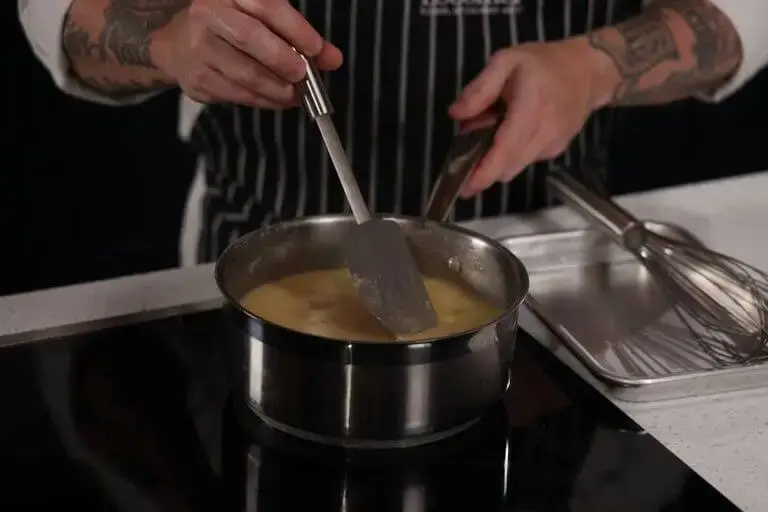
The saucier is responsible for nearly all of the cooked sauces, stocks, and braised dishes that define a restaurant’s depth of flavor.
5. Butchery Skills
Butchery is a foundational skill that professional kitchens depend on. Breaking down whole animals, making precise cuts for specific dishes, and understanding meat anatomy all fall under a chef’s butchery responsibilities. When a chef is proficient in butchery, they can reduce waste, make consistent cuts, and ensure optimal use of the ingredients to enhance flavor profiles.
Skilled butchery can also look different from kitchen to kitchen. Escoffier Lead Chef Instructor Albert Schmid says “the ability to learn and adapt is probably the best quality in somebody that is going to be in this industry.”
Breaking down a chicken is a good example of why. Chef Schmid explains that there are at least three accepted methods, each valid, each slightly different depending on how a chef was trained. A chef who stays open to doing things differently can pick up something new every time.
6. Fish Fabrication
Fish fabrication is indispensable for chefs specializing in seafood cuisine. From filleting and skinning to handling delicate textures, chefs can ensure each piece is prepared with precision and care. It’s important for chefs to understand fish anatomy, knife techniques for various species, and proper storage practices to ensure freshness and quality.
7. Baking and Pastry Skills
Even for chefs who specialize in savory cooking, a working knowledge of baking and pastry skills can broaden their repertoire in meaningful ways. Understanding how doughs behave, how sugar interacts with heat, or how to produce a well-structured pastry can add range to a menu and deepen a chef’s overall technical foundation.
But pastry is also a distinguished discipline in its own right. Pastry chefs operate with a level of precision that differs from savory cooking as measurements, temperatures, and timing have less margin for improvisation.
The field spans bread baking, chocolate work, sugar artistry, plated desserts, and more, each requiring specialized knowledge and technique. For students drawn to that side of the kitchen, dedicated pastry training can open doors to a career path that stands entirely on its own.
Kitchen Management and Organization
While technical skills can help make a great cook, kitchen management skills are crucial to helping a chef create a harmonious and productive culinary environment. They can help ensure a smooth workflow and high productivity.
Below are some management and organization skills that can help a chef succeed professionally.
Time Management
While running a kitchen, chefs may need to know how to create schedules, delegate tasks, and use prep lists to help manage time effectively.
Mise en place, batch cooking, and similar techniques can help save time in a busy kitchen. In addition, automation tools, like smart appliances and time-tracking software, can further enhance time management in a professional kitchen.
Inventory and Cost Control
Minimizing waste and keeping track of ingredients is essential for cost-effective kitchen management. By implementing strategies like buying in bulk, using seasonal ingredients, and storing items properly, chefs can streamline inventory management and reduce unnecessary expenditures.
Using inventory management software and conducting regular audits can help improve inventory control and management. These practices contribute to financial savings and also support sustainability efforts by reducing food waste and ensuring ingredients are used optimally.
Food Safety and Sanitation
Maintaining a safe kitchen is one of a chef’s most fundamental responsibilities. Professional kitchens operate under strict health codes, and chefs are expected to understand proper food handling, storage temperatures, cross-contamination prevention, and sanitation protocols. Culinary training builds these habits early, because in a professional environment the consequences of poor food safety practices can be serious and immediate.
Creativity and Innovation
Technical skill gets a chef through service. Creativity is what makes their food worth talking about. The chefs who stand out over a long career are typically those who develop a genuine point of view about food and keep finding new ways to express it.
Menu Planning
Menu planning is one of the most visible expressions of a chef’s creativity. Crafting signature dishes, building specials around seasonal ingredients, and drawing from diverse culinary traditions all require both imagination and practical judgment. Staying curious about global cuisine, emerging techniques, and flavor trends can help chefs build menus that feel current and distinctly their own.
Flavor Profiling
Understanding flavor profiles is essential for creating dishes that are balanced and complex rather than simply seasoned.
Chef Vitelli suggests that chefs cultivate an internal reference point.
“We have in our minds what’s called this flavor bank, and all these flavors start to store up inside of them,” he says.
The way to build it, he says, is straightforward.
“Taste everything,” he says. “Taste everything you can — whether you like it or not, it doesn’t matter. The importance of that is, you can understand textures and flavors — things that you’ve never tasted, even things that you thought would never work.”
Advanced techniques like molecular gastronomy can push that further, giving chefs new tools to explore texture, temperature, and taste in ways that weren’t possible in traditional kitchens.
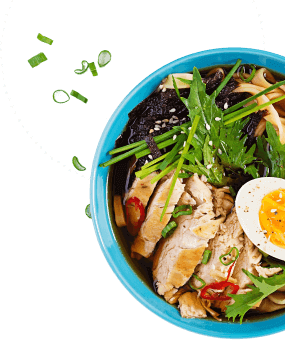
Plating and Presentation
The presentation of a dish shapes a diner’s first impression before they take a single bite. Chefs skilled in plating can balance colors, portions, and textures to create visually compelling dishes, using arrangement and garnish to reinforce the story the food is already telling.
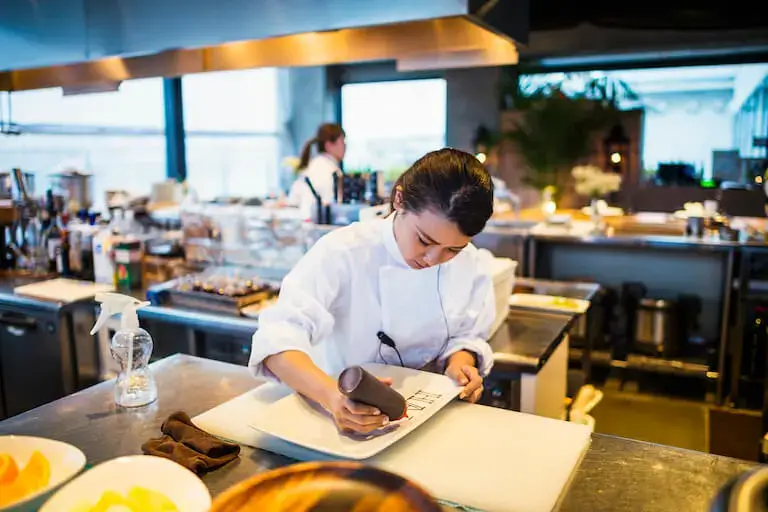
Precise plating reflects a chef’s attention to detail and their ability to turn a finished dish into a visual statement.
Leadership and Communication
With so many cooks in the kitchen, effective leadership and clear communication are essential. The kitchen can be a high-pressure environment, and chefs must know how to operate successfully in it while keeping things running smoothly and consistently.
Team Management
Chefs must provide clear instructions, offer support, and acknowledge the achievements of those around them to help motivate the team. Understanding and using team-building activities and knowing conflict resolution strategies can help keep the team and kitchen running smoothly.

Communication Skills
Using clear communication can help prevent mistakes and ensure smooth kitchen operation. There are three forms of communication that can impact the performance of staff:
- Horizontal: Communication between employees at the same level (e.g., a sauté cook checking in with the grill station to make sure plates are ready at the same time)
- Downward: Communication from superiors to subordinates (e.g., a chef giving the team instructions before dinner service begins)
- Upward: Communication from subordinates to superiors (e.g., a chef updating the restaurant owner or general manager about kitchen performance or supply needs)
Regular briefings and feedback sessions can help keep everyone aligned and avoid the kind of miscommunication that slows a kitchen down.
Mentorship and Developing Others
As chefs advance, developing the cooks around them becomes as important as their own technical ability. The kitchens that consistently produce great food are usually the ones where knowledge is actively passed down, where senior chefs invest in teaching technique, giving honest feedback, and creating space for younger cooks to grow.
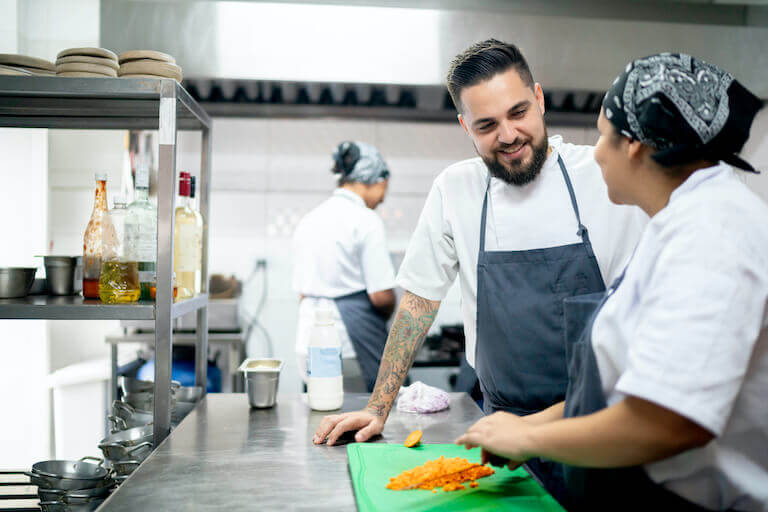
In professional kitchens, chefs often take on a mentorship role, guiding cooks through techniques and building a cohesive team.
“Any great chef, any great leader, is going to get the most out of their people, but they’re also going to show those people how great they can be. Because a lot of people just don’t understand,” says Chef Eli Kulp. “They don’t know that greatness exists inside them; they just need somebody to pull that out of them.”
How Your Skills Grow in the Kitchen
| Stage | Focus | What You’re Learning |
| Beginner | Fundamentals | Knife skills, basic cooking methods, seasoning |
| Intermediate | Application | Sauce work, timing, station management |
| Advanced | Refinement | Menu development, leadership, consistency under pressure |
Physical and Mental Stamina
A chef’s job can be both physically and mentally demanding, requiring endurance, resilience, and the ability to overcome obstacles while working long hours. Regular exercise, good nutrition, and adequate rest can help you stay feeling your best while working in the kitchen.
Physical Fitness
Chefs are often required to work long shifts on their feet, maneuvering in tight spaces and handling heavy equipment. Physical fitness activities like cardio, strength training, and flexibility exercises can support stamina and reduce the risk of workplace injuries. Taking a proactive approach to health can enhance your performance and longevity in the culinary field.
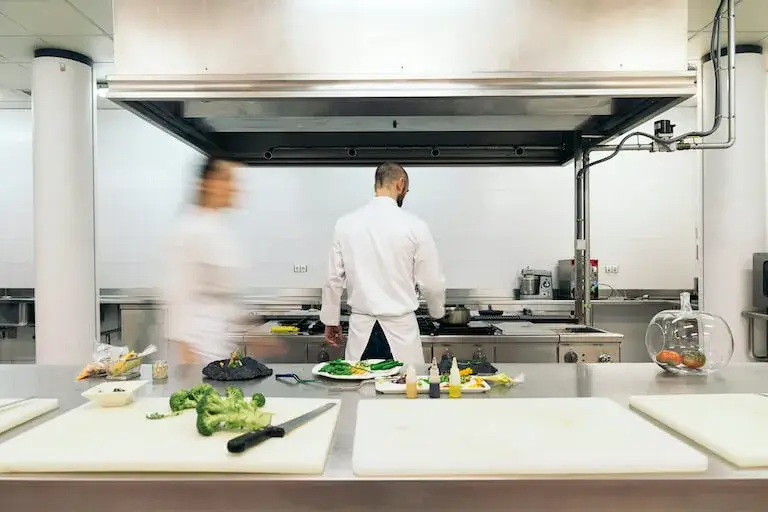
The pace of a professional kitchen demands physical endurance — chefs are on their feet for long shifts, often moving quickly through tight spaces.
Kitchen Accessibility
Accessible kitchen design can remove the physical barriers that limit participation, allowing a chef’s talent to define their role in the brigade. Adjusting countertop heights, using ergonomic tools, and opening clear pathways can make a significant difference in accommodating chefs and kitchen staff of diverse abilities.
Stress Management
Knowing how to manage stress is crucial when operating in a high-pressure environment. Mindfulness, yoga, meditation, taking breaks, and seeking support from family and friends can help you effectively manage stress and avoid the burnout that chefs can experience.
Escoffier offers Success Coaches to help support online students through the stress and questions of culinary school. In addition, professional counseling can also play a vital role in protecting your mental health when needed, so don’t be afraid to reach out for help.
The Best Chefs Never Stop Learning
The culinary industry doesn’t stand still, and neither do the chefs who build lasting careers in it. New techniques, ingredients, and dining trends emerge constantly, and the chefs who stay curious, seeking out new experiences, learning from peers, and pushing their own boundaries, are the ones who tend to stay relevant and inspired over the long haul.
If you’re ready to start building those skills, explore what culinary education at Escoffier looks like. Contact us today to find out more about our programs and find the path that fits your goals.
HUNGRY FOR MORE? TRY THESE ARTICLES NEXT:
- What Are the Career Opportunities in Baking and Pastry?
- What Is a Sous Chef?
- Is Culinary School Hard to Get Into?
FAQs
Chefs often need a combination of technical culinary skills—knife techniques, cooking methods, sauce making, and plating—alongside management abilities like inventory control, cost management, and time management. Leadership and communication skills can be equally important for keeping a kitchen team motivated and running smoothly. Physical stamina and stress management can round out the skill set, as professional kitchens can be demanding environments.
A cook typically works under the direction of a chef, focusing on prep and execution. A chef often carries broader responsibilities—overseeing kitchen operations, managing staff, developing menus, sourcing ingredients, and maintaining food quality and consistency. While both roles are essential, “chef” generally signals a higher level of training, authority, and accountability in a professional kitchen.
There are no formal licensing requirements to become a chef; that said, employers may value candidates with a diploma or degree from an accredited culinary school such as Escoffier. Pursuing a culinary credential can help you develop foundational skills, build hands-on experience, and demonstrate commitment to the craft—all of which can be assets when applying for jobs later.
You could start by applying for entry-level kitchen roles, like prep cook or dishwasher, that offer exposure to how professional kitchens operate. Another option could be to pursue a culinary education. Culinary school can be valuable for those starting from scratch, since it can offer a structured curriculum including techniques, food safety, and kitchen management that might otherwise take years to develop on the job.