

A passion for food can take you in dozens of distinct directions, from managing a high-volume restaurant kitchen to styling dishes for media or developing new products for retail shelves.
Because the culinary world is so diverse, finding the “right” career isn’t about following a single blueprint; it’s about matching your unique strengths, ideal working environment, and long-term lifestyle goals with the right role.
To help you map out your path, we’ve highlighted 15 careers across the food industry. We chose these roles to highlight the broad range of opportunities in today’s culinary world, pairing classic kitchen paths with creative and entrepreneurial options.
Below, you’ll find practical insights on average salaries, job growth projections, required skills, career timelines, and how educational programs at Escoffier can help bring your vision to life.
Note: Outcomes may vary based on individual experience, location, and other factors. This article offers general insights and is not a guarantee of employment or earnings.
15 Culinary Careers at a Glance
| Career | Work Environment | Key Skills | Median Salary* |
|---|---|---|---|
| Chef Consultant | Client sites, test kitchens, remote consultations | Culinary expertise, business acumen, communication | $76,893 |
| Chef Instructor | Culinary school, college, high school | Culinary expertise, mentorship, curriculum development | $52,989 |
| Chocolatier | Boutique shop, commercial facility, pastry kitchen | Tempering, precision, flavor development | $25,739 |
| Executive Chef | Restaurant, hotel, resort, corporate dining | Leadership, menu development, budgeting | $87,208 |
| Food Blogger | Home | Recipe development, food photography, content strategy | $43,900 |
| Food Stylist | Film sets, photo studios, ad agencies | Visual presentation, food science, collaboration | $71,121 |
| Ghost Kitchen Owner | Commercial kitchen | Business planning, delivery logistics, marketing | Varies considerably |
| Health Coach | Wellness center, corporate, home | Nutrition, coaching techniques, goal setting | $61,600 |
| Pastry Chef | Restaurant, bakery, hotel, pastry shop | Baking science, precision, artistic skill | $69,623 |
| Personal Chef | Client homes, commercial kitchen | Menu planning, client relations, time management | $62,500 |
| Pitmaster | BBQ restaurant, food truck, competition circuit | Meat science, fire management, consistency | $100,006 |
| Recipe Developer | Test kitchen or home kitchen | Food science, creativity, recipe testing | $92,020 |
| Restaurant Manager | Restaurant, cafe, hotel F&B | Operations, customer service, financial management | $57,239 |
| Sous Chef | Restaurant, hotel, resort | Kitchen management, team leadership, technique | $55,754 |
| Wedding Cake Designer | Home bakery, commercial kitchen, bakery | Cake design, client consultation, decorating | $42,080 |
*Salary sources are cited and linked within the corresponding career description sections below.
How to Choose Your Ideal Culinary Career
Before diving into specific roles, it may be helpful to jot down:
- Your preferred work environment. Do you prefer to work in an exciting but demanding kitchen? Maybe you want to become a famous chef decorated in Michelin Stars, or you might prefer more work-life balance.
- Whether you prefer solo or collaborative work. Do you see yourself in a busy kitchen setting, or maybe operating a business from home?
- Income goals. Careers in the food industry can have a range of incomes. Consider where this ranks in your priorities.
- Long-term growth potential and schedule flexibility. Some food jobs have more career growth potential than others.
- How much time and training you’re willing to invest upfront. A culinary education typically isn’t required, but it may increase your confidence and chance of landing the jobs you want.
Taking time to brainstorm what you want (and don’t want) in a food industry job can be a great first step to outlining your career. But if you’re totally unsure about what you’re looking for, that’s okay too. The industry can be a great place to explore different roles without having to make a huge commitment.
Job Growth & Career Potential in Culinary Arts
The food world spans a vast spectrum of work styles and income potential. In the U.S. alone, the culinary sector employs roughly 10% of the total workforce. Furthermore, employment for chefs and head cooks is projected to grow 7% through 2034, significantly faster than the national average for all occupations
Whether you aim for a traditional kitchen leadership role or a home-based business, there is ample room to build a lasting career. Let’s take a closer look at how these roles operate on the ground, starting with the top of the kitchen hierarchy.
Restaurant and Kitchen-Based Careers
Executive Chef
The executive chef sits at the top of the kitchen brigade (the hierarchy of roles first formalized by Georges Auguste Escoffier in the late 19th century). They may oversee everything that happens in a kitchen, including creating and approving menus, managing food costs and labor budgets, setting quality standards, hiring and training staff, and working with suppliers on sourcing.
Executive chefs may work in fine dining restaurants, luxury hotels and resorts, corporate dining programs, catering operations, and multi-unit restaurant groups. In larger operations, the executive chef may rarely cook on the line at all, instead functioning as the strategic and creative leader whose vision the rest of the team executes.
It often takes years of training, education, and hands-on experience to become an executive chef. Most chefs work their way through every level of the brigade—commis, chef de partie, sous chef—before stepping into the top role.
As award-winning chef and culinary consultant André Natera puts it, “you’re going to have to walk through fire to get to that coveted executive chef position.”
| Salary | Median: $87,208 Majority Range: $78,187 – $96,844 |
| Key Skills | Leadership, menu development, budgeting, kitchen operations |
| Estimated Years of Experience Needed | 5 years of experience as a chef de cuisine, executive sous chef, or chef in charge of food production |
| Possible Educational Pathway | Culinary Arts |
Note: Salary as of July 2026. Job outcomes may vary by location, experience, and other factors. Obtaining a culinary degree or diploma does not guarantee any job position.
Get Advice from Top Executive Chefs on The Ultimate Dish Podcast
Sous Chef
Positioned directly below the executive chef, the sous chef is the second-in-command in the kitchen brigade, responsible for the day-to-day operational reality of running a professional kitchen.
While the executive chef focuses on the big picture, the sous chef oversees prep, manages staff during service, and maintains quality standards. In larger operations, there may be multiple sous chefs (with an executive sous chef leading), while in smaller kitchens, there may only be one.
Most sous chefs have worked their way up through prep cook and line cook positions, which can take several years. As Escoffier graduate Dannie White III shares, “It’s been a long road to get to a management position as a Sous Chef. Long hours, sweat shed, onion tears cried, and blood spilled (those pesky accidental cuts)! All in all, I’m always still learning, and it’s the best part about the culinary industry.”
| Salary | Median: $89,219 Majority Range: $50,376 – $61,663 |
| Key Skills | Cooking technique, kitchen management, staff training and scheduling, quality control, and food safety |
| Estimated Years of Experience Needed | 3–5 years working up through prep cook and line cook positions |
| Possible Educational Pathway | Culinary Arts |
Note: Salary as of July 2026. Job outcomes may vary by location, experience, and other factors. Obtaining a culinary degree or diploma does not guarantee any job position.
Pastry Chef
If all other food is just an obstacle between you and dessert, you may wish to pursue a career as a pastry chef.
Pastry chefs work in restaurants, hotels, bakeries, pastry shops, and other locations. In a restaurant, the pastry chef may be responsible for the entire dessert program, including sweet sauces, baked goods, ice creams, and more. In a retail bakery setting, their focus may shift toward room-temperature baked goods like viennoiserie (croissants, brioche, and Danish) and travel cakes (gâteaux de voyage).
The work combines baking with high-end finish work for beautiful pastries or finished desserts. Pastry chefs often complete a degree or diploma in baking and pastry to develop the basics of their craft.
| Salary | Median: $69,623 Majority Range: $61,517 – $80,186 |
| Key Skills | Baking science, artistic skill, time management, consistency and precision |
| Estimated Years of Experience Needed | Several years of working in relevant entry-level jobs, a culinary education, and/or an apprenticeship are typically required |
| Possible Educational Pathway | Baking & Pastry Arts |
Note: Salary as of July 2026. Job outcomes may vary by location, experience, and other factors. Obtaining a culinary degree or diploma does not guarantee any job position.

Precision is key for pastry chefs to craft intricate pastries.
Restaurant Manager
A restaurant manager is responsible for executing the owner’s vision. They can help guide the rest of the team in creating a cohesive and pleasant restaurant experience for guests and may be responsible for hiring, firing, training, and day-to-day operations. They may stop by tables to chat with guests throughout the shift, and can help to ease interpersonal conflict among staff.
The role looks different depending on the setting. For example, a fine dining manager might focus heavily on guest relations and event execution, while a fast-casual manager might spend more time on scheduling and supply chain. Either way, hiring, training, inventory, financial reporting, and customer experience all fall within the manager’s purview.
Most managers work their way up through entry-level roles before getting their first management role, though a formal education in hospitality and restaurant operations management can help build financial literacy and business acumen.
| Salary | Median: $57,239 Range: $43,000 – $151,000 |
| Key Skills | Team management, customer service, scheduling, budgeting, conflict resolution |
| Estimated Years of Experience Needed | Varies significantly depending on restaurant type |
| Possible Educational Pathway | Hospitality & Restaurant Operations Management |
Note: Salary as of July 2026. Job outcomes may vary by location, experience, and other factors. Obtaining a culinary degree or diploma does not guarantee any job position.
Home-Based and Entrepreneurial Careers
Personal Chef
The entrepreneurial personal chef may have more control over their work life than other culinarians. Personal chefs batch pre-made meals that their clients can then heat and eat. The clients get the convenience of homemade meals without meal planning, grocery shopping, prep, or cooking.
Unlike a private chef, who usually works exclusively for one household as a full-time or live-in employee, a personal chef typically batch-cooks several days’ worth of meals in a single session for multiple clients.
Getting started typically involves building a culinary foundation, choosing a niche (like gluten-free, plant-based cooking, or high-end cuisine), and establishing a legitimate business structure, including permits, licenses, liability insurance, and pricing.
Because clients are inviting you into their homes, trust is everything. A professional website with photos of your work, client testimonials, and clear service descriptions can help establish credibility and market your services. Professional organizations, like the United States Personal Chef Association and the American Personal & Private Chef Association, offer chef directories, networking opportunities, and resources that can help new personal chefs get started.
While no particular education is required, a culinary or food entrepreneurship degree or diploma that demonstrates expertise and professionalism may make it easier to land clients.
| Salary | Median: $62,500 Range: $62,830 – $94,519 |
| Key Skills | Menu planning, time management, food safety, client communication, marketing, adaptability |
| Estimated Years of Experience Needed | According to many in the industry, becoming a personal chef requires a strong network, which many develop during 1-2 years of culinary school or professional culinary work |
| Possible Educational Pathway | Culinary Arts Degree or Diploma, Culinary Arts, Food Entrepreneurship, Plant-Based Culinary Arts, or Holistic Nutrition & Wellness |
Note: Salary as of July 2026. Job outcomes may vary by location, experience, and other factors. Obtaining a culinary degree or diploma does not guarantee any job position.
Food Blogger
Food bloggers create original recipes, cooking tutorials, restaurant coverage, and food culture content across websites, social media, and video platforms, building audiences they monetize through brand partnerships, cookbooks, online courses, and sponsored content.
The industry has evolved into a thriving, respected culinary field. Its most prominent creators—such as the minds behind Sally’s Baking Addiction, RecipeTin Eats, The Woks of Life, and Smitten Kitchen—can reach millions of readers and author bestselling cookbooks.
Escoffier graduate Amy Kimoto-Kahn built her blog, Easy Peasy Japanesey, to share her heritage through accessible recipes, an effort that ultimately launched her culinary career and two published cookbooks.
| Salary | Median: $43,900 Range: $87,832 – $113,330 |
| Key Skills | Recipe development, food writing, food photography, SEO and content strategy, social media, audience building, brand partnerships, video production |
| Estimated Years of Experience Needed | Varies significantly—most successful food bloggers build their platforms over several years; professional culinary experience and a strong niche can help |
| Possible Educational Pathway | Food Entreprenership |
Note: Salary as of July 2026. Job outcomes may vary by location, experience, and other factors. Obtaining a culinary degree or diploma does not guarantee any job position.
Ghost Restaurant Owner
Ghost kitchens, also called virtual restaurants or cloud kitchens, operate out of commercial kitchen space with no dining room, no front-of-house staff, and no retail storefront. All orders are fulfilled for delivery or pickup only, typically through platforms like DoorDash, Uber Eats, or Grubhub.
The lower overhead compared to a traditional brick-and-mortar restaurant can make this an attractive path for culinary entrepreneurs, though costs still vary widely depending on whether you rent shared kitchen space, lease your own, or use an existing kitchen.
Building a successful ghost kitchen requires a blend of culinary skill and business acumen. You may need to develop a focused, delivery-friendly menu, create a business plan, secure funding, obtain the necessary licenses and permits, and build a digital presence (which is especially important since you won’t get foot traffic). A background in food entrepreneurship or hospitality operations management can help lay the groundwork.
| Salary | Varies widely by business model and order volume |
| Key Skills | Business planning, marketing, operations management, food safety, delivery logistics, networking and attracting investors |
| Estimated Years of Experience Needed | Varies significantly |
| Possible Educational Pathway | Food Entrepreneurship, and/or Hospitality & Restaurant Operations Management |
Note: Job outcomes may vary by location, experience, and other factors. Obtaining a culinary degree or diploma does not guarantee any job position.
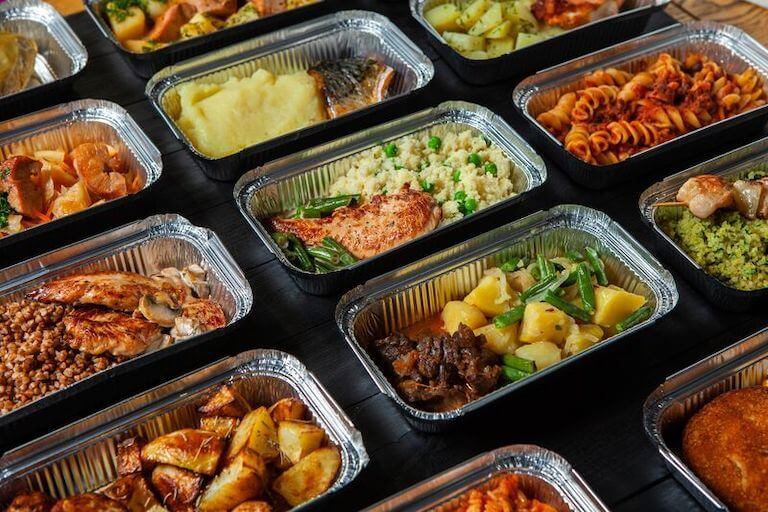
Ghost restaurants serve to-go and delivery customers only.
Wedding Cake Designer
A wedding cake is likely the single most expensive dessert a couple will ever buy, and unlike most food, it has to look perfect in photographs and taste exceptional all at once. Wedding cake designers combine baking expertise with high-end decorative skills—such as piping, fondant work, sugar flowers, hand-painting, and airbrushing—to create a showstopping centerpiece.
Many cake designers work independently and build their businesses around a signature aesthetic that they curate on social media.
Getting started typically requires a strong foundation in baking science before advancing to decorative technique, which is often developed in a baking and pastry arts program. Many designers build their portfolios by assisting established cake artists, entering competitions, and practicing independently before taking on paying clients.

A wedding-cake ready gum paste rose by Escoffier online Baking & Pastry graduate Irma H.
| Salary | Median: $42,080 Majority Range: $37,430 – $45,337 |
| Key Skills | Baking and decorating, piping, fondant work, design trends, client consultation, marketing, networking |
| Estimated Years of Experience Needed | Varies significantly, but many work as design assistants to build their portfolio and network |
| Possible Educational Pathway | Baking & Pastry Arts |
Note: Salary as of July 2026. Job outcomes may vary by location, experience, and other factors. Obtaining a culinary degree or diploma does not guarantee any job position.
Chocolatier
A chocolatier is an artisan who specializes in crafting chocolate confections, from hand-rolled truffles and filled bonbons to chocolate bars, chocolate-covered fruits and nuts, and elaborate showpieces for events and competitions.
The work demands a deep understanding of how cacao beans are sourced and processed, how ratios of cocoa solids, cocoa butter, and sugar affect flavor and texture, and how environmental factors like heat and humidity impact the final product. Chocolatiers may work in boutique chocolate shops, large-scale commercial production facilities, pastry shops, hotels, restaurants, or independent operations.
Becoming a chocolatier typically starts with a foundation in baking and pastry arts, where students explore core techniques like chocolate tempering, ganache production, molding, finishing, and showpiece design. From there, many people spend time working under an experienced chocolatier to hone their craft.
| Salary | Median: $25,739 Majority Range: $23,209 – $27,494 |
| Key Skills | Chocolate tempering, food science, precision, patience, flavor development, visual presentation |
| Estimated Years of Experience Needed | 1-2 years of culinary education, specialized training, and 1+ years of relevant entry-level work |
| Possible Educational Pathway | Baking & Pastry Arts |
Note: Salary as of May 01, 2026. Job outcomes may vary by location, experience, and other factors. Obtaining a culinary degree or diploma does not guarantee any job position.
Get Inspired by Chocolatier Katrina Markoff
- Listen to luxury chocolate maker Katrina Markoff, Founder, CEO, and Chocolatier of Vosges Chocolat, as she shares her fascinating story with Escoffier on The Ultimate Dish podcast.
Specialized Creative and Advisory Roles
Food Stylist
A food stylist prepares and stages food for film, television, commercials, cookbooks, magazines, and brand marketing shoots with the goal of making every dish look as appealing on camera as it does in real life. It’s a role that sits at the intersection of culinary skill, visual artistry, and on-set collaboration.
Food stylists work alongside food photographers, videographers, art directors, prop masters, and talent. Because most stylists operate as freelancers rather than staff employees, active networking and relationship-building are vital to securing steady work.
Breaking into the field usually starts with an apprenticeship—working as an assistant to learn specialized on-set techniques and compile a professional portfolio. While traditional training isn’t always standard for the role, formal culinary credentials can offer a significant competitive edge.
“In most cases, you’re responsible for everything: shopping for the ingredients, cooking the ingredients, [plating the dish],” Escoffier Culinary Arts graduate Lisa Spychala says. “You have to know how long the food is going to be on set. How many multiples do you have to make? Is anyone going to eat it? That’s a huge deal.”
| Salary | Median: $71,121 Majority Range: $66,193 – $82,366 |
| Key Skills | CAesthetic eye, trend tracking, plating skills, food science knowledge, collaboration, patience, attention to detail |
| Estimated Years of Experience Needed | Most work as a food stylist assistant for 2-3 years while building their portfolio, unique style, and network |
| Possible Educational Pathway | Culinary Arts Degree or Diploma, with supplemental coursework in photography recommended |
Note: Salary as of July 2026. Job outcomes may vary by location, experience, and other factors. Obtaining a culinary degree or diploma does not guarantee any job position.
Recipe Developer
Recipe developers may create recipes for restaurants, cookbooks, television shows, and magazines. They may work alongside chefs or create recipes on their own.
At its core, the job requires a solid grasp of food science. For example, a recipe developer may instruct home bakers to keep salt and yeast separated when scaling ingredients to prevent localized osmotic stress from temporarily retarding the yeast’s activity.
Breaking into the field typically involves building a strong culinary foundation first. From there, many recipe developers build a portfolio of original work, often starting with food blogs, social media, or freelance contributions before moving into staff or contract roles. Strong food writing skills matter as much as cooking ability, since a dish’s success relies heavily on clear, accessible instructions.
| Salary | Average: $92,020 Majority Range: $81,700 – $104,330 |
| Key Skills | Food science, creativity, communication, testing, iteration, and staging |
| Estimated Years of Experience Needed | Varies, though many recipe developers have at least some professional kitchen experience and/or a culinary education |
| Possible Educational Pathway | Food Entrepreneurship and/or Culinary Arts |
Note: Salary as of May 01, 2026. Job outcomes may vary by location, experience, and other factors. Obtaining a culinary degree or diploma does not guarantee any job position.

Recipe creation can take creativity and a wealth of background knowledge.
Chef Consultant
A chef consultant works with foodservice businesses and food producers on a project or retainer basis, bringing outside expertise to solve problems the client can’t solve on their own. That might mean reworking an underperforming menu, diagnosing why a profitable restaurant is suddenly losing money, developing a new packaged food product, building staff training programs, or guiding a new concept from idea to opening night.
Some consultants develop specializations in areas such as HACCP compliance, food cost reduction, or product commercialization. Others, such as Escoffier graduate Chris McAdams, work on a wider range of projects, including helping launch mom-and-pop cafes, design menus, and cross-train staff.
Most chef consultants have spent years across different kitchen environments and leadership roles before clients will pay for their perspective. A strong culinary foundation is essential, as is hands-on experience in the type of operation you want to consult in. Beyond cooking skills, successful consultants need financial literacy, sharp communication, and the ability to set realistic expectations.
| Salary | Median: $76,893 Majority Range: $68,939 – $85,3895 |
| Key Skills | Culinary expertise, business acumen, project management, specialty knowledge, client relations |
| Estimated Years of Experience Needed | Many years of professional kitchen experience, including several as an executive chef, are usually needed |
| Possible Educational Pathway | Culinary Arts, Food Entrepreneurship, and/or Hospitality & Restaurant Operations Management |
Note: Salary as of July 2026. Job outcomes may vary by location, experience, and other factors. Obtaining a culinary degree or diploma does not guarantee any job position.
Health Coach
Health coaches work with clients to build sustainable wellness habits. Unlike registered dietitians, who require specific academic credentials and licensure, health coaches work with the general population on lifestyle and behavior change rather than treating medical conditions.
They may work independently, in wellness centers, corporate offices, fitness centers, doctors’ offices, community health programs, or their own private practice.
“A lot of our health can be affected by our fork, by the food that we put in our mouth,” board-certified holistic health coach Julie Peláez says on The Ultimate Dish podcast.
There are many paths to becoming a health coach, but an education in Holistic Nutrition and Wellness can be a great place to start. Through coursework in subjects such as culinary foundations, nutrition, special diets, coaching techniques, and more, graduates may be prepared to get their first jobs working under more experienced health coaches.
Finding Balance with Health Coach Julie Peláez
- Listen as board-certified holistic health coach Julie Peláez shares her story and her wellness philosophy on The Ultimate Dish podcast.
| Salary | Median: $61,600 Majority Range: $53,000 – $69,700 |
| Key Skills | Nutrition knowledge, coaching strategies, communication, empathy, goal setting |
| Years of Experience to Get the Job | Some certifications, such as the National Board Certified Health and Wellness Coach, require 4,000+ hours of work experience or a relevant degree |
| Possible Educational Pathway | Holistic Nutrition & Wellness |
Note: Salary as of July 2026. Job outcomes may vary by location, experience, and other factors. Obtaining a culinary degree or diploma does not guarantee any job position.
Pitmaster
Pitmasters are meat specialists who specialize in the art and science of low-and-slow cooking, using smoke, fire, and time to transform tough cuts like brisket, pork shoulder, and ribs into something impossibly tender. Pitmasters may work in dedicated BBQ restaurants, food trucks, catering operations, or competition circuits.
A pitmaster’s day often starts the night before. Large cuts like brisket and pork shoulder can take 12 to 18 hours in the smoker, which means loading, lighting, and monitoring the pit well before most kitchen workers clock in.
Many start in this career by building a solid culinary foundation, developing knife skills, understanding meat fabrication, learning food safety, and studying how heat, fat, and smoke interact chemically during long cooks. From there, hands-on experience under an established pitmaster can be invaluable to learning how different wood varieties affect flavor, how to manage fire and airflow, how to read meat by touch and sight, and how to replicate results.
| Salary | Median: $100,006 Majority Range: $87,832 – $113,330 |
| Key Skills | Meat science and prep, smoking techniques, time management, knife skills, fire and equipment control, food safety |
| Estimated Years of Experience Needed | Varies, but many apprentice as a pitmaster assistant for several years |
| Possible Educational Pathway | Culinary Arts and recommended BBQ-focused externship |
Note: Salary as of July 2026. Job outcomes may vary by location, experience, and other factors. Obtaining a culinary degree or diploma does not guarantee any job position.
Chef Instructor
Chef Instructors teach the next generation of culinary professionals at culinary schools, community colleges, high schools, and universities. The role usually combines hands-on kitchen instruction with lecture-based teaching, curriculum development, and student mentoring.
For many experienced chefs, teaching can be a good way to stay deeply connected to food and cooking while trading the physical demands of restaurant service for a more predictable schedule.
At Escoffier, a minimum of five years’ experience as a chef in a management role is required for faculty. An associate degree is typically the minimum credential, and many instructors hold bachelor’s or master’s degrees as well.
What separates a qualified candidate from a great hire, according to Escoffier’s VP of Academic Affairs Kathleen Ahearn, is mentorship.
“What Chef Instructors are really doing is creating community, providing support, providing mentorship and leading discussions inside of our classroom,” Ahearn says. “Creating engagement and a good learning environment is what’s really important.”
The job typically comes with traditional work hours, instead of the late nights and long weekends sometimes required by restaurant work, and Chef Instructors have the opportunity to develop new skills.
“I learned more in my first two years of teaching about cooking than I did in the previous 20 years,” Escoffier Culinary Arts Chef Instructor Kevin Quinn says.
| Salary | Median: $52,989 Majority Range: $47,877 – $58,605 |
| Key Skills | Culinary expertise, communication, curriculum development, mentorship, patience |
| Years of Experience to Get the Job | At Escoffier, a minimum of 5 years experience as a chef in a management role is required |
| Possible Educational Pathway | Culinary Arts or Baking & Pastry Arts, with teaching experience or certifications preferred |
Note: Salary as of July 2026. Job outcomes may vary by location, experience, and other factors. Obtaining a culinary degree or diploma does not guarantee any job position.
Next Steps: Launch Your Culinary Education
Whether you’re drawn to the structure of a professional kitchen or the independence of running your own food business, every career on this list shares a common foundation: a passion for food, creative expression, and the drive to deliver exceptional results every day.
While learning entirely on the job is possible, building a career without formal training can be a slower climb, often leaving key gaps in technical foundation, business acumen, or industry credibility. A structured culinary education can bridge those gaps, equipping you with versatile skills that apply across virtually any food industry role.
Ready to take the next step? Reach out to Escoffier’s admissions team to explore which degree or diploma program could best align with your goals.
TO LEARN MORE ABOUT CAREERS IN FOOD, TRY THESE ARTICLES NEXT:
*This article was originally published on Oct. 2, 2025, and has since been updated.